iPROS Manufacturing
  • Search for products by classification category

    • Electronic Components and Modules
      Electronic Components and Modules
      63011items
    • Machinery Parts
      Machinery Parts
      76250items
    • Manufacturing and processing machinery
      Manufacturing and processing machinery
      103091items
    • Scientific and Physics Equipment
      Scientific and Physics Equipment
      36984items
    • Materials
      Materials
      38211items
    • Measurement and Analysis
      Measurement and Analysis
      55118items
    • Image Processing
      Image Processing
      15519items
    • Control and Electrical Equipment
      Control and Electrical Equipment
      55211items
    • Tools, consumables, and supplies
      Tools, consumables, and supplies
      66168items
    • Design and production support
      Design and production support
      12756items
    • IT/Network
      IT/Network
      46599items
    • Office
      Office
      14209items
    • Business support services
      Business support services
      28433items
    • Seminars and Skill Development
      Seminars and Skill Development
      6648items
    • Pharmaceutical and food related
      Pharmaceutical and food related
      35553items
    • others
      68351items
  • Search for companies by industry

    • Manufacturing and processing contract
      7367
    • others
      5046
    • Industrial Machinery
      4500
    • Machine elements and parts
      3400
    • Other manufacturing
      2907
    • Trading company/Wholesale
      2808
    • IT/Telecommunications
      2581
    • Industrial Electrical Equipment
      2338
    • Building materials, supplies and fixtures
      1816
    • software
      1702
    • Electronic Components and Semiconductors
      1617
    • Resin/Plastic
      1505
    • Service Industry
      1501
    • Testing, Analysis and Measurement
      1140
    • Ferrous/Non-ferrous metals
      1006
    • environment
      697
    • Chemical
      654
    • Automobiles and Transportation Equipment
      622
    • Printing Industry
      517
    • Information and Communications
      485
    • Consumer Electronics
      414
    • Energy
      341
    • Rubber products
      322
    • Food Machinery
      309
    • Optical Instruments
      285
    • robot
      284
    • fiber
      263
    • Paper and pulp
      233
    • Pharmaceuticals and Biotechnology
      178
    • Electricity, Gas and Water Industry
      169
    • Warehousing and transport related industries
      151
    • Food and Beverage
      140
    • Glass and clay products
      140
    • CAD/CAM
      126
    • Educational and Research Institutions
      119
    • Medical Devices
      116
    • retail
      111
    • Ceramics
      98
    • wood
      86
    • Transportation
      84
    • Petroleum and coal products
      67
    • Medical and Welfare
      62
    • Shipbuilding and heavy machinery
      52
    • Aviation & Aerospace
      50
    • equipment
      46
    • Fisheries, Agriculture and Forestry
      43
    • Materials
      41
    • Research and development equipment and devices
      37
    • Public interest/special/independent administrative agency
      32
    • Government
      23
    • self-employed
      23
    • Finance, securities and insurance
      17
    • Mining
      17
    • cosmetics
      16
    • Restaurants and accommodations
      10
    • Individual
      10
    • Police, Fire Department, Self-Defense Forces
      7
    • Raw materials for reagents and chemicals
      5
    • Laboratory Equipment and Consumables
      5
    • Contracted research
      5
  • Special Features
  • Ranking

    • Overall Products Ranking
    • Overall Company Ranking
Search for Products
  • Search for products by classification category

  • Electronic Components and Modules
  • Machinery Parts
  • Manufacturing and processing machinery
  • Scientific and Physics Equipment
  • Materials
  • Measurement and Analysis
  • Image Processing
  • Control and Electrical Equipment
  • Tools, consumables, and supplies
  • Design and production support
  • IT/Network
  • Office
  • Business support services
  • Seminars and Skill Development
  • Pharmaceutical and food related
  • others
Search for Companies
  • Search for companies by industry

  • Manufacturing and processing contract
  • others
  • Industrial Machinery
  • Machine elements and parts
  • Other manufacturing
  • Trading company/Wholesale
  • IT/Telecommunications
  • Industrial Electrical Equipment
  • Building materials, supplies and fixtures
  • software
  • Electronic Components and Semiconductors
  • Resin/Plastic
  • Service Industry
  • Testing, Analysis and Measurement
  • Ferrous/Non-ferrous metals
  • environment
  • Chemical
  • Automobiles and Transportation Equipment
  • Printing Industry
  • Information and Communications
  • Consumer Electronics
  • Energy
  • Rubber products
  • Food Machinery
  • Optical Instruments
  • robot
  • fiber
  • Paper and pulp
  • Pharmaceuticals and Biotechnology
  • Electricity, Gas and Water Industry
  • Warehousing and transport related industries
  • Food and Beverage
  • Glass and clay products
  • CAD/CAM
  • Educational and Research Institutions
  • Medical Devices
  • retail
  • Ceramics
  • wood
  • Transportation
  • Petroleum and coal products
  • Medical and Welfare
  • Shipbuilding and heavy machinery
  • Aviation & Aerospace
  • equipment
  • Fisheries, Agriculture and Forestry
  • Materials
  • Research and development equipment and devices
  • Public interest/special/independent administrative agency
  • Government
  • self-employed
  • Finance, securities and insurance
  • Mining
  • cosmetics
  • Restaurants and accommodations
  • Individual
  • Police, Fire Department, Self-Defense Forces
  • Raw materials for reagents and chemicals
  • Laboratory Equipment and Consumables
  • Contracted research
Special Features
Ranking
  • Overall Products Ranking
  • Overall Company Ranking
  • privacy policy
  • terms of service
  • About Us
  • Careers
  • Advertising
  1. Home
  2. Manufacturing and processing contract
  3. 吉田SKT
  4. Product/Service List
Manufacturing and processing contract
  • Added to bookmarks

    Bookmarks list

    Bookmark has been removed

    Bookmarks list

    You can't add any more bookmarks

    By registering as a member, you can increase the number of bookmarks you can save and organize them with labels.

    Free membership registration

吉田SKT

capital5000Ten thousand
number of employees200
addressAichi/Nishi-ku, Nagoya-shi/Hana no Ki 1-12-20
phone052-524-5211
  • Special site
  • Official site
last updated:Sep 14, 2026
吉田SKTlogo
  • Contact this company

    Inquiry Form
  • Before making an inquiry

    Download Profile
  • Company information
  • Products/Services(627)
  • catalog(106)
  • news(234)

吉田SKT Product Lineup

  • category

541~585 item / All 627 items

Displayed results

Filter by category

Understanding Fluoropolymer Coatings Understanding Fluoropolymer Coatings
PFAS-related information and PFAS-free surface treatment PFAS-related information and PFAS-free surface treatment
Improving Production Efficiency! Case Studies on Surface Treatment Solutions Improving Production Efficiency! Case Studies on Surface Treatment Solutions
Process improvement achieved through surface treatment technology! Process improvement achieved through surface treatment technology!
Introduction of Surface Treatment Development and New Technologies Introduction of Surface Treatment Development and New Technologies
Understanding surface treatment Understanding surface treatment
設備・部品のお困りごとから探す表面処理 設備・部品のお困りごとから探す表面処理
FAQ FAQ
[Free Offer] Coating Sample! Experience Kit Here [Free Offer] Coating Sample! Experience Kit Here
Examples of Mold Forming Applications / Utilization of Surface Treatment Examples of Mold Forming Applications / Utilization of Surface Treatment
Choose a non-stick coating. Choose a non-stick coating.
A must-see resource for equipment engineers, "Coating MAGAZINE" full of materials. A must-see resource for equipment engineers, "Coating MAGAZINE" full of materials.
Introduction of surface treatment robots in new fields - Utilizing CFRP! Introduction of surface treatment robots in new fields - Utilizing CFRP!
Handling of fluorine products Handling of fluorine products
Case Study Pickup: Surface Treatment by Industry Case Study Pickup: Surface Treatment by Industry
Select the optimal functional surface treatment. Select the optimal functional surface treatment.
Understanding Fluororesin Lining Understanding Fluororesin Lining
Surface treatment chosen in the automotive parts field. Surface treatment chosen in the automotive parts field.
Surface treatment chosen in the semiconductor and electronics fields. Surface treatment chosen in the semiconductor and electronics fields.
Surface treatment chosen in the food sector Surface treatment chosen in the food sector
Surface treatment chosen in the chemical industry. Surface treatment chosen in the chemical industry.
Surface treatment chosen in the medical field Surface treatment chosen in the medical field
class="retina-image"

Achieve slip resistance with wear-resistant coating! Coating solution case studies available.

An alternative to fluororesin coatings! A case study of a coating that achieves both wear resistance and slip properties that were previously given up on.

The resin caps immediately after molding are sticky and are coated with fluororesin to provide slip properties. However, fluororesin is prone to wear, and when it wears down, it can lead to foreign matter contamination. The document describes a solution to enhance "slip properties" without wear. For details, we will introduce a case study of mirin caps for a major beverage manufacturer! *For more information, please contact us or refer to the catalog.

  • Other surface treatment equipment

Added to bookmarks

Bookmarks list

Bookmark has been removed

Bookmarks list

You can't add any more bookmarks

By registering as a member, you can increase the number of bookmarks you can save and organize them with labels.

Free membership registration

Why does resin stick to the mold? The mechanism behind adhesion and release failure.

"Even with the use of release agents, the resin sticks to the mold..." This phenomenon is related to surface energy. We will introduce the mechanism of adhesion and the direction of countermeasures.

■Why "Sticking" Occurs When substances come into contact, a force that attracts them at the molecular level is generated due to the action of surface energy (surface tension). If the energy of the mold surface is high, molten resin or rubber is drawn to the mold surface, making it difficult to detach even after cooling and solidification. ■Cases Where Release Agents Alone Do Not Provide a Fundamental Solution Release agents are effective as a temporary measure, but they need to be applied each time a shot is made. Additionally, the components of the release agent can transfer to the product, leading to quality issues. ■Permanent Solutions Through Surface Treatment By applying surface treatment that lowers the energy of the mold surface, it is possible to ensure stable release properties even without a release agent. We have introduced a typical mechanism of release failure, but the causes of sticking vary depending on the type of resin, shape, molding temperature, pressure, and other factors at each site. The information provided is not exhaustive, and it is not uncommon for multiple factors to be intertwined. At Yoshida SKT, we carefully listen to our customers' molding conditions and materials to propose the optimal surface treatment. If you are struggling with release issues, please feel free to consult with us.

  • Processing Contract

Added to bookmarks

Bookmarks list

Bookmark has been removed

Bookmarks list

You can't add any more bookmarks

By registering as a member, you can increase the number of bookmarks you can save and organize them with labels.

Free membership registration

What is delamination? Introducing surface treatments that excel in delamination resistance.

[Presentation of Materials] What is release property? We will introduce methods to improve release property and coatings that are particularly excellent in release property.

Release properties refer to the characteristic of materials or products that allows them to be easily removed from molds or forming tools without sticking. This property is important in the manufacturing process and affects product quality and production efficiency. ■ Methods to Improve Release Properties By applying a release agent to the surface, a thin film is created between the mold and the product, preventing adhesion. Silicone and fluorine-based release agents provide excellent release properties for many materials. ■ Resin Coating Applying a resin coating to the surface exhibits non-stick properties, making it easier to remove the product. Fluororesin coatings are commonly used. ■ Metal Plating For example, chrome plating has high hardness and is less reactive with other substances, aiding in product removal. Fluororesin-containing types of plating also exhibit non-stick properties. ■ Surface Roughness Adjustment By designing the surface with fine uneven structures, the contact area is reduced, thereby decreasing adhesion. As mentioned above, there are various methods, but we will introduce surface treatment technologies and coatings that are particularly effective in enhancing release properties, reducing product defects, and improving productivity. For more details, please download the PDF document or feel free to contact us.

  • Processing Contract

Added to bookmarks

Bookmarks list

Bookmark has been removed

Bookmarks list

You can't add any more bookmarks

By registering as a member, you can increase the number of bookmarks you can save and organize them with labels.

Free membership registration

[Mold Release Case] Super Durable Fluorine-based Organic Coating 'Bicoat'

Adhesive sheet adhesion is almost zero! Mold surface treatment | Case study flyer

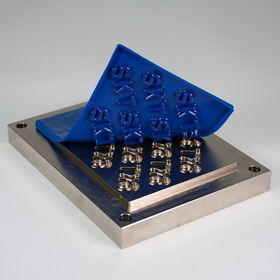
We would like to introduce a case where the adhesion of decorative sheets to molds during transfer was resolved. Decorative sheets with adhesive are set onto parts using molds and are then vacuum transferred. During this process, it was observed that excess sheets, aside from the parts, adhered to some parts of the mold. To prevent the adhesion caused by the adhesive of the decorative sheets, surface treatment for the molds was explored. By adopting our "Bicoat," significant improvements in adhesion prevention were achieved. The adhesion of decorative sheets was reduced to nearly zero, resulting in a level of effectiveness that satisfied our customers. [Key Points of the Case] - Purpose of Surface Treatment: Quality and operational stability, realization of development needs, reduction of replacement and material costs - Required Functions: Non-adhesive, release properties, long lifespan - Treatment Adopted: Bicoat(R) *For more details, please refer to the PDF document or feel free to contact us.

  • Processing Contract

Added to bookmarks

Bookmarks list

Bookmark has been removed

Bookmarks list

You can't add any more bookmarks

By registering as a member, you can increase the number of bookmarks you can save and organize them with labels.

Free membership registration

Fluororesin Coating: "What is the Non-Stick Property of Fluororesin?"

What are the characteristics of the representative property of fluoropolymer coatings, specifically Teflon coatings, known as "non-stick"? Here, we will introduce the non-stick functionality.

■ The "Non-Stick Property" of Fluoropolymer Non-stick property refers to the characteristic of being easy to release and not adhere, or to adhere less, even to strongly adhesive substances. For example, fluoropolymers excel in water and oil repellency, have a large contact angle, and possess a property of being difficult to wet due to their molecular structure. The measure of wettability, "critical surface tension (γc)," is extremely low for fluoropolymers, making it easy for liquids to be repelled and difficult to wet. Coatings that utilize this functionality are effective for release applications, applications where adhesion needs to be minimized, and for simplifying cleaning. 【Reference Data on Non-Stick Property】 ■ Contact Angle of Water (°) PTFE ... 114 PFA ... 105-110 FEP ... 115 ETFE ... 96 ■ Contact Angle of n-HD (°) PTFE ... 34-45 PFA ... >45 FEP ... 41-45 ETFE ... 28 ■ Surface Free Energy of Solids (dyn/cm) PTFE ... 18.5 PFA ... 17.8 FEP ... 17.8 ETFE ... 22.1 *For detailed information on non-stick properties, please download the PDF or contact us.

  • Resin mold

Added to bookmarks

Bookmarks list

Bookmark has been removed

Bookmarks list

You can't add any more bookmarks

By registering as a member, you can increase the number of bookmarks you can save and organize them with labels.

Free membership registration

Coating for Heat Seal Release for Packaging Materials

Release coating that suppresses adhesion troubles in the heat seal process and reduces the cleaning load on equipment.

In the heat sealing process of the packaging materials industry, the adhesion and residue of melted resin can lead to decreased production efficiency and quality defects, making reliable release properties essential. Especially in continuously operating equipment, minimizing resin adhesion to the sealing bar is crucial for stable product supply and simplifying maintenance. Our non-stick and release coatings demonstrate excellent release performance. [Usage Scenarios] - Prevention of resin adhesion to heat sealing bars - Reduction of maintenance frequency for sealing parts of packaging machines - Processing equipment for high-adhesive films [Benefits of Implementation] - Suppression of resin adhesion to sealing parts, stabilizing product quality - Reduction of downtime through simplified cleaning tasks - Improvement of equipment operating efficiency For more details, please download the materials or contact us.

  • Processing Contract

Added to bookmarks

Bookmarks list

Bookmark has been removed

Bookmarks list

You can't add any more bookmarks

By registering as a member, you can increase the number of bookmarks you can save and organize them with labels.

Free membership registration

What is a coating that excels in non-stick and release properties?

Introducing a coating that is effective for applications where you want to reduce product release and adhesion, and simplifies equipment cleaning with its excellent non-stick and release properties!

"Non-stick" refers to the property of being easy to release from strongly adhesive materials, meaning it either does not adhere or adheres with difficulty. For example, fluoropolymer resins excel in water and oil repellency, have a large contact angle, and possess a property of being difficult to wet due to their molecular structure. The measure of wettability, known as "critical surface tension (γc)," is extremely low for fluoropolymer resins, making them resistant to liquid adhesion and difficult to wet. Coatings that leverage such functions are effective for release applications, applications where adhesion needs to be minimized, and for simplifying cleaning. 【Selected Coatings (Partial)】 ■ Release properties, high hardness, dimensional stability (durable parts, molds) - Bi-Coat ■ Resin release at high temperatures - FSR Coating ■ Prevention of adhesion of high-viscosity materials - Adhesive Release Coating - CTT Fabric Sheet - MRS Coating (Silicone-based coating) *For more details, please refer to the PDF materials or feel free to contact us.

  • Processing Contract

Added to bookmarks

Bookmarks list

Bookmark has been removed

Bookmarks list

You can't add any more bookmarks

By registering as a member, you can increase the number of bookmarks you can save and organize them with labels.

Free membership registration

What are the differences between fluoropolymer coatings: PTFE, PFA, and FEP?

We will introduce the differences between fluoropolymer PTFE, PFA, and FEP.

Differences in Types and Characteristics of Representative Resins for Teflon Coating and Fluororesin Coating ■ Resin Name PTFE (Polytetrafluoroethylene) ■ Characteristics It has the highest continuous use temperature of 260°C, and in addition to heat resistance, it excels in non-stick and low friction properties. ■ Alternative Name Tetrafluoroethylene, 4F ■ Resin Name PFA (Perfluoroalkoxyalkane Polymer) ■ Characteristics An improved resin of PTFE, it has the same continuous use temperature of 260°C as PTFE. It has a low thermal melt viscosity, allowing for a continuous coating with fewer pinholes that could not be achieved with PTFE, making it the best-performing fluororesin for corrosion-resistant coatings. Additionally, PFA is superior in non-stick properties compared to PTFE for certain applications, making it suitable for high-temperature release coatings. ■ Resin Name FEP (Perfluoroethylene Propylene Copolymer) ■ Characteristics An improved resin of PTFE, but with lower heat resistance than PTFE. It can achieve a smooth coating with fewer pinholes through firing. ■ Alternative Name 4F6F, Tetra-hexafluoride

  • Secondary Cells/Batteries

Added to bookmarks

Bookmarks list

Bookmark has been removed

Bookmarks list

You can't add any more bookmarks

By registering as a member, you can increase the number of bookmarks you can save and organize them with labels.

Free membership registration

[Case Study on Problem Solving through Surface Treatment] Prevention of Adhesive Adhesion on Cutter Blades

Improving the poor cost-effectiveness of applying release agents! We will introduce a case of switching to silicone-based coatings.

We would like to introduce a coating that can solve the problems caused by adhesive from packaging films adhering to cutter blades. In one packaging machine, packaging films with adhesive frequently adhered to the cutter blades, resulting in poor cutting performance and film sticking to the blades, causing misalignment and necessitating line stoppages. This issue prevented us from achieving the production quantities calculated from the takt time. Initially, a release agent was applied, but its effects did not last, requiring repeated applications. Therefore, we adopted the silicone-based coating "MRS Coating." The coating eliminated adhesive adhesion, and since the processing temperature is below 250°C, there were no concerns about blade dulling. Additionally, the 1-micron thin film maintained the sharpness of the blade edge. [Key Points of the Case] - Purpose of Surface Treatment: Quality improvement, operational stability, speed enhancement, compliance with safety and environmental requirements - Required Functions: Non-stick, release properties, long lifespan - Treatment Adopted: MRS Coating (Mold Release Silicone) ▼ Free samples of improvement cases for the cutting process and trial sets are currently available on the site below! ▼

  • Processing Contract

Added to bookmarks

Bookmarks list

Bookmark has been removed

Bookmarks list

You can't add any more bookmarks

By registering as a member, you can increase the number of bookmarks you can save and organize them with labels.

Free membership registration

Coating that solves the problem of adhesive substances sticking to the cutter blade.

We will introduce a coating that can solve the problem of cutter blade adhesion, along with examples.

As a problem with the packaging machine, the adhesive film was sticking to the cutter, impairing its sharpness and causing misalignment of the film. This resulted in the production line being halted, leading to a situation where production could not proceed as planned. Initially, a release agent was used, but its effect was temporary, requiring frequent reapplication. The introduction of "MRS Coating" resolved the sticking issues. MRS Coating can be processed at temperatures below 250°C and maintains sharpness due to its 1-micron thickness. In this case, MRS Coating achieved stabilization of quality and operation, improved work speed, and addressed safety and environmental requirements. MRS Coating realizes non-stick properties and has a long-lasting effect. [Key Points of the Case] ■ Purpose of Surface Treatment: Stabilization of Quality and Operation, Speed Improvement, Safety and Environmental Compliance ■ Required Functions: Non-stick and Release Properties, Long Lifespan ■ Treatment Adopted: MRS Coating (Mold Release Silicone) ▼ Free samples and case studies on improving cutting processes are available on the website below! ▼

  • Processing Contract

Added to bookmarks

Bookmarks list

Bookmark has been removed

Bookmarks list

You can't add any more bookmarks

By registering as a member, you can increase the number of bookmarks you can save and organize them with labels.

Free membership registration

For preventing the scattering of glassware and scientific instruments: "Non-Skecoat"

Visible light transmittance of 95%!! This is an advanced coating that prevents the scattering of hazardous chemicals and expensive pharmaceutical raw materials inside.

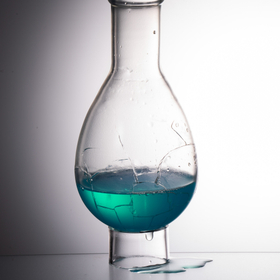
By applying a unique fluororesin coating to glassware such as beakers and flasks, as well as scientific instruments, we prevent glass shattering in the event of falls or accidents, ensuring safety on-site. Additionally, the amount of hazardous chemicals or expensive pharmaceutical raw materials that may scatter is reduced, thereby minimizing the risk of serious accidents or losses. The transparency is higher than that of standard fluororesin coatings, so visibility and measurement of the contents remain unaffected! ■ Features - Excellent adhesion prevents glass scattering - Minimizes exposure and loss of contents - Allows for normal operations with overwhelming transparency ■ Main Applications - Medical institutions, welfare facilities, testing organizations, universities, research institutions, etc. *For more details, please refer to the PDF materials or feel free to contact us.

  • Other physicochemical equipment

Added to bookmarks

Bookmarks list

Bookmark has been removed

Bookmarks list

You can't add any more bookmarks

By registering as a member, you can increase the number of bookmarks you can save and organize them with labels.

Free membership registration

Non-scratch coat for the chemical industry

Prevent glass shattering and achieve a safe working environment.

In the chemical industry, there is always a risk of accidents due to the breakage of glassware during experiments and manufacturing processes. Particularly when handling hazardous chemicals or expensive reagents, glass shattering can lead to serious accidents or loss of materials. Ensuring a safe working environment is a critical issue that affects not only employee safety but also the reliability of the company. Non-splash coatings effectively prevent glass shattering and ensure safety even in the event of breakage. 【Usage Scenarios】 - Experiments in laboratories - Manufacturing processes of chemical products - Analytical work in quality control 【Benefits of Implementation】 - Reduction of accident risks due to glass shattering - Prevention of secondary damage from the spillage of hazardous chemicals - Prevention of loss of expensive reagents - Ensuring the safety of workers For more details, please download the catalog or contact us.

  • Other physicochemical equipment

Added to bookmarks

Bookmarks list

Bookmark has been removed

Bookmarks list

You can't add any more bookmarks

By registering as a member, you can increase the number of bookmarks you can save and organize them with labels.

Free membership registration

[Data Presentation] Super Engineering Plastics Property List

Presentation of a list of characteristics for PTFE, PFA, FEP, PCTFE, ETFE, ECTFE, PVDF, PBI, PEEK, PAI, PES, and PPS.

【Super Engineering Plastic Properties Documentation】 ■PTFE (Polytetrafluoroethylene) ■PFA (Tetrafluoroethylene-Perfluorovinyl Ether Copolymer) ■FEP (Tetrafluoroethylene-Hexafluoropropylene Copolymer) ■PCTFE (Chlorotrifluoroethylene Homopolymer) ■ETFE (Tetrafluoroethylene-Ethylene Copolymer) ■ECTFE (Chlorotrifluoroethylene-Ethylene Copolymer) ■PVDF (Polyvinylidene Fluoride Homopolymer) ■PBI (Polybenzimidazole) ■PEEK (Polyether Ether Ketone) ■PI (Polyimide) ■PAI (Polyamide Imide) ■PES (Polyether Sulfone) ■PPS (Polyphenylene Sulfide) *For more details, please download the PDF and refer to it. The property tables are for general characteristics and do not guarantee the physical properties by our company. Thank you for your understanding in advance.*

  • Surface treatment contract service

Added to bookmarks

Bookmarks list

Bookmark has been removed

Bookmarks list

You can't add any more bookmarks

By registering as a member, you can increase the number of bookmarks you can save and organize them with labels.

Free membership registration

M-PTFE Pipe Liner | Yoshida SKT

There is almost no dimensional change even in high-temperature environments! Construction with fewer flange connections is possible.

The "M-PTFE Pipe Liner" is molded from modified PTFE and can accommodate piping from 1/2 inch to 20 inches. The pipes have uniform physical and mechanical strength after manufacturing, so there is almost no dimensional change during assembly in high-temperature environments or during high-temperature use. Straight pipes can be accommodated up to 2 to 6 meters, allowing for construction with fewer flange connections. 【Features】 ■ Molded from modified PTFE ■ Compatible with piping from 1/2 inch to 20 inches ■ No residual stress on the inner and outer surfaces of the pipe ■ Uniform finish in physical and mechanical strength *For more details, please refer to the PDF document or feel free to contact us.

  • Piping Materials

Added to bookmarks

Bookmarks list

Bookmark has been removed

Bookmarks list

You can't add any more bookmarks

By registering as a member, you can increase the number of bookmarks you can save and organize them with labels.

Free membership registration

[Case Study on Problem Solving through Surface Treatment] Prevention of Adhesion to Conveying Rolls of Uncured Rubber

The effect of preventing sticking lasts a long time! It has become possible to reduce costs and working time.

■Concern The manufacturing process of weatherstrips involved transporting extruded rubber on rolls while heating and drying it in a furnace. Due to changes in the rubber material formulation for environmental measures and durability, it became necessary to process the rubber at higher temperatures than before, resulting in the rubber becoming sticky immediately after entering the furnace. ■Issues It was confirmed that when a common fluoropolymer coating was applied to the transport rolls, the rubber would stick to them like a suction cup. ■Effect of Surface Treatment By adopting our "Super TP Coating," we significantly reduced the rubber's stickiness and achieved a relatively soft contact surface. 【Key Points】 ■Purpose of Surface Treatment: Quality and operational stability, reduction of work loss, compliance with safety and environmental requirements ■Required Functions: Non-stick and release properties, long lifespan ■Adopted Treatment: Super TP Coating *For more details, please refer to the PDF document or feel free to contact us.

  • Processing Contract

Added to bookmarks

Bookmarks list

Bookmark has been removed

Bookmarks list

You can't add any more bookmarks

By registering as a member, you can increase the number of bookmarks you can save and organize them with labels.

Free membership registration

Fluororesin coating "Types suitable for applications"

What types of fluororesins are suitable for applications such as non-adhesiveness, slip properties, and corrosion resistance? It is necessary to consider the characteristics and properties of the resin, as well as the selection of processing methods.

**Representative Types** ■ PTFE (Polytetrafluoroethylene) It has the highest continuous use temperature of 260°C and excels in non-stick and low friction properties. ■ PFA (Perfluoroalkoxyalkane Polymer) It has a low melt viscosity and can achieve a continuous coating with fewer pinholes than PTFE. It is the best-performing fluororesin for high-temperature corrosion resistance. ■ FEP (Perfluoroethylene Propylene Copolymer) An improved resin of PTFE, it has a lower continuous use temperature than PTFE but can achieve a smooth coating with fewer pinholes through sintering. ■ ETFE (Ethylene-Tetrafluoroethylene Copolymer) Due to its excellent mechanical properties, it is highly resistant to wear and is often used for anti-corrosion applications. ■ Modified Types ◎ High-temperature modified type ◎ Low-temperature modified type **Representative Processing Methods** ○ The enamel of fluororesin is applied using a painting machine or manually. ○ Fluororesin powder is applied using electrostatic or special painting machines. Coating processing is easily adaptable to complex shapes and is used in numerous industries. *For more details, please download the PDF and take a look.*

  • Surface treatment contract service

Added to bookmarks

Bookmarks list

Bookmark has been removed

Bookmarks list

You can't add any more bookmarks

By registering as a member, you can increase the number of bookmarks you can save and organize them with labels.

Free membership registration

Blister resistance increased by 10 times - Fluororesin lining 'MY Lining'

Achieves penetration resistance performance that greatly exceeds that of standard fluoropolymer lining. It demonstrates ten times the blister resistance compared to our standard PFA lining.

"MY Lining(R)" is a corrosion-resistant lining that significantly improves permeation resistance compared to standard PFA. It offers a lifespan that is expected to be several dozen times longer than that of conventional products (according to our coatings). It is suitable for environments that could not be used before and for places where the previous lifespan was unsatisfactory. It can also be lined in complex shapes such as eye plates and stirrers. 【Features】 ■ Dramatic improvement in permeation resistance performance (compared to our products) ■ Thick film processing is possible (MAX 2000μm) ■ Strong adhesion (vacuum resistance) ■ Seamless integrated processing ■ Can be lined in complex shapes such as eye plates and search machines *For more details, please refer to the PDF document or feel free to contact us.

  • Surface treatment contract service

Added to bookmarks

Bookmarks list

Bookmark has been removed

Bookmarks list

You can't add any more bookmarks

By registering as a member, you can increase the number of bookmarks you can save and organize them with labels.

Free membership registration

Surface treatment technology: "Surface treatment that achieves water and oil repellency and release properties at the nano level."

Achieve nano-level water and oil repellency through surface modification! Thin film surface treatment is possible while maintaining high surface precision with an ultra-thin film of 100nm.

■ "Nano Process" refers to - A super-thin film surface treatment technology that coats functional materials with a nano-thin film of less than 1 micron, allowing for surface modification without compromising the original precision and performance by preventing dirt adhesion, sticking of contaminants, and friction resistance. - Since the thickness of the surface treatment is almost negligible, there is no need to design the substrate with film thickness in mind, and it provides effects such as water and oil repellency and non-stick properties. - It enables surface modification of parts across a wide range of industries that require precision. - With a series of developments, it can be adopted for various usage environments and applications. *Hydrophilic surface treatments are also available. 【Examples of Nano Process Adoption】 - Dirt such as sludge adheres to the inner components in high-temperature environments, degrading performance. - Surface modification is desired to prevent sticking on the blades of adhesive devices, but cutting performance must not be compromised. - Coating processing is desired to prevent contamination on precision instruments, but maintaining accuracy is necessary. "Nano Process" is adopted to address challenges that were difficult to solve with conventional non-stick coatings. *For more details, please refer to the PDF materials or feel free to contact us.

  • Surface treatment contract service

Added to bookmarks

Bookmarks list

Bookmark has been removed

Bookmarks list

You can't add any more bookmarks

By registering as a member, you can increase the number of bookmarks you can save and organize them with labels.

Free membership registration

Surface treatment "Non-Skew Coat"

Visible light transmittance 95% - Prevents scattering of glassware and scientific instruments! Advanced surface treatment that prevents the scattering of hazardous chemicals and expensive pharmaceutical raw materials.

Through a special fluororesin surface treatment, our unique technology prevents glass shattering in the event of a fall or drop, ensuring safety in laboratories using glassware such as beakers and flasks. Additionally, it minimizes the amount of hazardous chemicals or expensive pharmaceutical raw materials that may scatter, thereby reducing the risk of serious accidents or losses. With higher transparency than standard fluororesin coatings, visibility and measurement of contents remain unaffected! ■ Features - Excellent adhesion prevents glass shattering - Minimizes exposure and loss of contents - Allows for normal operations with overwhelming transparency ■ Main Applications - Medical institutions, welfare facilities, testing organizations, universities, research institutions, etc. *For more details, please refer to the PDF document or feel free to contact us.

  • Other physicochemical equipment

Added to bookmarks

Bookmarks list

Bookmark has been removed

Bookmarks list

You can't add any more bookmarks

By registering as a member, you can increase the number of bookmarks you can save and organize them with labels.

Free membership registration

Fluororesin coating for plating jigs for electronic substrates.

New standard for plating jigs that achieve high durability and high insulation properties.

The fluororesin coating for plating jigs provided by Yoshida SKT Co., Ltd. addresses the challenges of quality stabilization and cost reduction in the electronic circuit board manufacturing industry. To overcome the deterioration and reduced insulation properties that were difficult to manage with conventional PVC-coated jigs, we adopted a special fluororesin coating. This coating offers superior processability compared to standard PFA coatings and allows for thick film processing. This results in the following advantages: - Increased lifespan: Achieves overwhelming durability compared to PVC coatings, reducing the frequency of jig replacements. - Reduced carryover of plating solution: Excellent water repellency prevents the carryover of plating solution to the next process over an extended period. - Stable insulation properties: Minimal deterioration from plating solution allows for long-term maintenance of insulation performance. - Total cost reduction: Although initial investment is higher, the increased lifespan of jigs and reduced maintenance frequency lead to long-term cost savings. As electronic devices become smaller and more high-performance, Yoshida SKT's innovative coating technology aims to enhance the performance and efficiency of plating jigs. *For more details, please refer to the PDF document or feel free to contact us.*

  • Processing Contract

Added to bookmarks

Bookmarks list

Bookmark has been removed

Bookmarks list

You can't add any more bookmarks

By registering as a member, you can increase the number of bookmarks you can save and organize them with labels.

Free membership registration

Coating Technology: "Innovative Silicone Coating"

Solve release agent issues with innovative silicone coating technology!

■What are the issues with release agents? Release agents are known to be applied in industrial fields to improve the separation of molded products from molds. In addition to facilitating mold release, release agents also need to have properties that make them resistant to degradation from heat during molding and minimize contamination of the mold. Silicone is often used as a release agent because it has high heat resistance, does not easily degrade with repeated heating during molding, has low surface tension which provides good wettability to the mold, and can reach every corner of the shape. While silicone release agents have excellent effects, they can also impose a burden on the working environment, increase the effort required for mold cleaning, and lead to variations in the amount applied by workers, which may negatively impact the final product. ■Silicone Coating Technology Silicone coating technology balances release properties and maintenance, leading to solutions for release agent issues. ▼For more details about the coating, please click the URL below or contact us.

  • Injection Molding Machine

Added to bookmarks

Bookmarks list

Bookmark has been removed

Bookmarks list

You can't add any more bookmarks

By registering as a member, you can increase the number of bookmarks you can save and organize them with labels.

Free membership registration

Surface treatment with excellent electrical properties.

Fluororesin is a high-performance insulating material that not only has high insulation properties (high resistivity) but also possesses an extremely low dielectric loss tangent tanδ.

Fluororesin has high insulation properties, with a volume resistivity of Ω·cm or more, and its arc resistance is more than three times that of general-purpose resins, making it superior. Compared to other resins, it is stable in various electrical environments. On the other hand, the coating surface is prone to charging, which can lead to issues such as the adhesion of foreign substances due to electrostatic attraction and electrostatic discharge hazards. In such cases, you can select fluororesin coatings with antistatic functions. [Preferred Surface Treatments] ■ Electrical Insulation - Fluororesin Coating (Teflon Coating) ■ Antistatic Properties - Safron - Safron AP+ *For more details, please refer to the PDF document or feel free to contact us.

  • Processing Contract

Added to bookmarks

Bookmarks list

Bookmark has been removed

Bookmarks list

You can't add any more bookmarks

By registering as a member, you can increase the number of bookmarks you can save and organize them with labels.

Free membership registration

Electrical insulation coating

Fluororesin is a high-performance insulating material with high insulation properties (high resistivity) and an extremely low dielectric loss tangent tanδ.

Fluororesin has high insulation properties, with a volume resistivity of Ω·cm or more, and its arc resistance is more than three times that of general-purpose resins, making it superior. Compared to other resins, it remains stable in various electrical environments. On the other hand, the coated surface is prone to charging, which can lead to issues such as the adhesion of foreign substances due to electrostatic attraction and electrostatic disasters. In such cases, you can choose fluororesin coatings with antistatic properties. [Selected Surface Treatments] ■ Electrical Insulation - Fluororesin Coating (Teflon Coating) - Polyimide Coating *For more details, please refer to the PDF document or feel free to contact us.

  • Processing Contract

Added to bookmarks

Bookmarks list

Bookmark has been removed

Bookmarks list

You can't add any more bookmarks

By registering as a member, you can increase the number of bookmarks you can save and organize them with labels.

Free membership registration

[Case Study] Non-stick Coating to Prevent Resin Adhesion on Heating Plates

Non-stick coating on the hot plate prevents sticking! Reducing work loss by speeding up the fusion process. Case study on surface treatment in the thermal welding process of resin.

We would like to introduce a case study that addresses the challenges faced by customers struggling with resin adhesion to hot melt plates. ■Problem In the process of bonding resin parts such as ASA, ABS, and PC for automotive component manufacturing through hot melting, the target resin is melted at approximately 180-210°C using a hot plate fixture (heat plate) for hot melting, and then bonded with another part. You were looking for a coating to prevent the phenomenon of the hot plate sticking to the resin or the melted resin stretching like threads during the hot melting process. ■Adopted Coating - FSR Coating ■Effects of Adoption Compared to conventional PFA coatings, an improvement in the durability of the release effect when used at temperatures above 200°C and an increase in lifespan were observed. ■Case Summary - Purpose of Surface Treatment: Quality and operational stability, speed-up, reduction of work loss - Required Functions: Non-stick and release properties, heat and cold resistance, wear resistance - Adopted Treatment: FSR Coating (Fluoro Super Release) *For more details on the coating, please refer to the external link or feel free to contact us.

  • Processing Contract

Added to bookmarks

Bookmarks list

Bookmark has been removed

Bookmarks list

You can't add any more bookmarks

By registering as a member, you can increase the number of bookmarks you can save and organize them with labels.

Free membership registration

For those unsure about choosing surface treatment: rust prevention, corrosion resistance, and protective coatings.

Fluororesin, which excels in chemical resistance among resins. It is ideal for protecting the substrate from corrosion! It is also an extremely low water-absorbent material. *Product information available.

Coatings that excel in rust prevention, corrosion resistance, and anti-corrosion properties are surface treatments designed to prevent deterioration or alteration caused by chemical agents (chemical resistance) and to provide a function that protects against dirt by making it difficult for water to penetrate. Fluororesin, which has excellent chemical resistance due to its structure, possesses extremely high chemical resistance against most acids, alkalis, and organic solvents, and is also a material with very low water absorption. Therefore, fluororesin coatings are suitable for protecting substrates from corrosion caused by chemicals in a versatile manner. 【Selected Surface Treatments (Partial)】 ■ Chemical Resistance - Fluororesin Coating (Teflon Coating) ■ Chemical Resistance + Penetration Resistance - MY Lining(R) ■ Chemical Resistance + Static Electricity Prevention - Saflon(R) AP+ ■ Chemical Resistance + Room Temperature Processing - Cerashield - Cerashield F ■ Weather Resistance - Fluororesin Coating (Teflon Coating) - Cerashield F *For more details, please refer to the PDF document or feel free to contact us.

  • Processing Contract

Added to bookmarks

Bookmarks list

Bookmark has been removed

Bookmarks list

You can't add any more bookmarks

By registering as a member, you can increase the number of bookmarks you can save and organize them with labels.

Free membership registration

Electrostatic Prevention Fluororesin Coating 'Safron(R) AP+'

Thick film processing that can be used for applications requiring corrosion resistance is possible. It also accommodates cases where static electricity is a concern and fluororesin coatings cannot be used.

■What is SafeLon(R) AP+? SafeLon(R) AP+ is an anti-static fluoropolymer coating that further enhances the functions of Yoshida SKT's anti-static fluoropolymer coating, "SafeLon(R)." ■Features of SafeLon AP+ By enhancing three functions: "release performance," "anti-static performance," and "blister resistance," improvements in corrosion resistance, non-stick properties, and coating lifespan can be expected. 【Upgraded Functions from SafeLon】 - Release Performance Improved release performance by creating a smoother surface. - Anti-Static Performance Achieves a leakage resistance value of 10^4-5Ω by directly dissipating generated charges to the substrate (metal). - Blister Resistance Reduces blister formation to about half that of conventional fluoropolymer coatings. *For more details, please refer to the PDF document or feel free to contact us.

  • Surface treatment contract service

Added to bookmarks

Bookmarks list

Bookmark has been removed

Bookmarks list

You can't add any more bookmarks

By registering as a member, you can increase the number of bookmarks you can save and organize them with labels.

Free membership registration

Why does unnecessary film form on the plating jig?

Unwanted plating film adhesion on the plating jig affects the jig's lifespan and plating quality.

In the plating process, unnecessary plating films adhere to the jigs used to apply plating to the products. ■ Why does plating adhere to the jigs? Since the jigs are also immersed in the plating solution, plating inevitably precipitates on the parts that come into contact with the solution. The accumulated plating film can reduce the dimensional accuracy of the jigs and, if it peels off and adheres to the products, it can cause quality defects. ■ Considerations for countermeasures Fluororesin coatings possess both electrical insulation and chemical resistance, making them suitable as coating materials for plating jigs. The optimal countermeasures vary depending on the type of plating, composition of the plating solution, shape of the jigs, target costs, and other factors. At Yoshida SKT, we have a track record of insulating and non-stick coatings for plating jigs. For details and case studies on the coatings, please download the PDF for confirmation.

  • Processing Contract

Added to bookmarks

Bookmarks list

Bookmark has been removed

Bookmarks list

You can't add any more bookmarks

By registering as a member, you can increase the number of bookmarks you can save and organize them with labels.

Free membership registration

[Case Study in the Electronic Components Industry] Adhesion Prevention for Plating Jigs - Non-Stick Coating

Case study of surface treatment solutions in the electroplating process of electronic components! Introducing a successful case of cost reduction through improved adhesion of plating and better drainage of plating solution.

Here is an example of preventing plating adhesion to jigs used in the plating process. ■Concern In the process of applying electroplating to electronic components, plating was adhering to the jigs used to secure the products, resulting in time and costs for the peeling process. Additionally, when plating adhered, the jigs tended to deteriorate more easily, leading to an increased frequency of replacements. ■Coating Effect By providing insulation through our "fluororesin coating," the amount of plating adhesion to the jigs was significantly reduced. It also demonstrated excellent corrosion resistance, providing protection from plating solutions containing acids and alkalis. Furthermore, the lifespan of the jigs improved, and the amount of plating solution taken out was reduced. Our customers were pleased with the successful cost reduction. 【Key Points】 ■Purpose of Surface Treatment: Quality and operational stability, reduction of replacement and material costs, compliance with safety and environmental requirements ■Required Functions: Non-stick and release properties, rust and corrosion resistance, electrical properties ■Adopted Treatment: Fluororesin Coating (Teflon Coating) *For more details, please refer to the PDF document or feel free to contact us.

  • Processing Contract

Added to bookmarks

Bookmarks list

Bookmark has been removed

Bookmarks list

You can't add any more bookmarks

By registering as a member, you can increase the number of bookmarks you can save and organize them with labels.

Free membership registration

"MRS coating" that does not stick even with soft hot melt adhesive.

Strong adhesive tape can be easily peeled off. The effect lasts even with solvent cleaning. It is also effective in preventing adhesive release and label sticking.

"MRS Coating" is an innovative silicone coating that has features not found in conventional silicone coatings. 【Series Features】 ■MRS-102 Maintains effectiveness even after cleaning with solvents. ■MRS-014 Preserves shapes such as thinness like a blade and textures. ■MRS-004 Heat resistance exceeding 200°C, comparable to fluororesin (remains non-stick even after 16 hours at 350°C). ■MRS-200 Can be processed at temperatures below 80°C, suitable for resin and rubber products. ■Release properties (non-stick) and excellent cleanability → The smooth surface makes it easy to wipe off dirt, and cleaning with solvents does not significantly change the release properties. ※Based on our durability tests. *Features vary by product type. For more details, please download the PDF or contact us.

  • Surface treatment contract service

Added to bookmarks

Bookmarks list

Bookmark has been removed

Bookmarks list

You can't add any more bookmarks

By registering as a member, you can increase the number of bookmarks you can save and organize them with labels.

Free membership registration

PFAS-free release agent 'MRS Coating' for logistics and packaging

Powerful adhesive tape can also be removed! Contributes to the efficiency of packaging work.

In the logistics and packaging industry, the application and removal of adhesive tape on packaging materials are frequently performed. In this process, adhesive residue from the tape can reduce work efficiency and compromise product quality. Additionally, the difficulty in applying and removing labels also increases the burden of the work. MRS coating addresses these challenges, contributing to the efficiency of packaging operations and product protection. 【Usage Scenarios】 - Packaging of cardboard boxes - Fixing with adhesive tape - Label application 【Benefits of Implementation】 - Improved efficiency in tape removal tasks - Prevention of adhesive residue - Enhanced usability in label application *Features may vary depending on the type of product. For more details, please download the PDF or contact us.

  • Surface treatment contract service

Added to bookmarks

Bookmarks list

Bookmark has been removed

Bookmarks list

You can't add any more bookmarks

By registering as a member, you can increase the number of bookmarks you can save and organize them with labels.

Free membership registration

[Food Industry Case Study] Preventing Product Jamming with Conveying Guides for Automatic Packaging Machines

Case study of solving issues with automatic packaging machines for frozen foods. The adhesion caused by moisture to the transport guide has been reduced, improving the sliding performance.

We would like to introduce a case where product jams were prevented in the conveying guide of a frozen food automatic packaging machine. During the 20-hour daily operation of frozen food packaging, a phenomenon occurred where the side guide became a resistance to product conveyance, causing the line to jam. This resulted in the equipment stopping and the line halting, which was a significant issue. Additionally, there was a problem where the products were being scraped due to friction with the guide. By adopting the "Super TP Hemisphere HL," a large convex surface created a gap between the product and the guide, reducing sticking due to moisture and improving sliding. The situation where products jammed and the equipment stopped has been improved. [Key Points] - Purpose of surface treatment: Reduce work loss, stabilize quality and operation - Required functions: Non-stick and release properties, sliding and gliding, wear resistance - Adopted treatment: "Super TP Hemisphere HL" *For more details, please refer to the PDF materials or feel free to contact us.

  • Processing Contract

Added to bookmarks

Bookmarks list

Bookmark has been removed

Bookmarks list

You can't add any more bookmarks

By registering as a member, you can increase the number of bookmarks you can save and organize them with labels.

Free membership registration

"CTT Fabric Sheet" that prevents the adhesion of sticky substances.

A sheet material in sticker form that prevents the adhesion of sticky substances just by sticking it on!

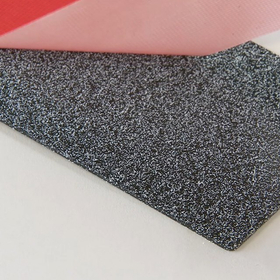
The "CTT Fabric Sheet" is a seal-like sheet material that prevents the adhesion of sticky substances. It is ideal for preventing the attachment of adhesives in manufacturing and transportation lines for adhesive tapes, raw rubber, seals and labels, and food products. Even when sticky substances come into contact, they can be easily removed, maintaining a smooth process. It has non-adhesive (release) properties that surpass silicone coatings, and it is resistant to deterioration even at high temperatures, offering excellent heat resistance and durability. It provides stable friction performance. This sheet material is easy to cut and can be applied like a sticker, allowing for simple installation without special knowledge or skills. *For more details, please download the catalog or contact us directly.

  • Composite Materials

Added to bookmarks

Bookmarks list

Bookmark has been removed

Bookmarks list

You can't add any more bookmarks

By registering as a member, you can increase the number of bookmarks you can save and organize them with labels.

Free membership registration

[Resin Molding Solution Case] Non-stick Coating for PET Blow Molding Molds

No worries about the coating film peeling off and contaminating! The transparency of the PET bottle has also improved.

We would like to introduce a case study of surface treatment for molds used in blow molding PET resin. ■Challenges In the molds used for blow molding PET bottles, a coating was applied to improve release properties, making it easier for the resin to detach after molding. However, with the previous coatings, there were instances where the resin, softened by heat, would slightly adhere and remain, potentially leading to cloudiness in the PET bottles, necessitating frequent maintenance of the molds. ■Effects of the Adopted Coating We adopted our "Super Bi-Coat NYK-01-F05." This coating maintains performance characteristics such as film thickness precision and hardness comparable to previous bi-coats while improving release and slip properties during high-temperature molding. It reduces resin residue on the molds and enhances the transparency of the PET bottles. 【Key Points of the Case Study】 ■Purpose of Surface Treatment Reduction of work loss, stabilization of quality and operation ■Required Functions Non-stick and release properties, sliding and slip properties, wear resistance ■Adopted Treatment 'Super Bi-Coat NYK-01-F05' *For more details, please refer to the PDF document or feel free to contact us.

  • Processing Contract

Added to bookmarks

Bookmarks list

Bookmark has been removed

Bookmarks list

You can't add any more bookmarks

By registering as a member, you can increase the number of bookmarks you can save and organize them with labels.

Free membership registration

For those unsure about choosing surface treatment: Coatings for sliding properties, slip properties, and lubrication properties.

We introduce surface treatments with excellent sliding properties, featuring various functions such as self-lubricating PTFE coatings, wear resistance, and contact area control.

In manufacturing equipment, improving the sliding properties (lubrication) of areas where two objects come into contact and move is essential for ensuring smooth operation and enabling movement with less force. - PTFE, a representative of fluororesins, especially Teflon fluororesin, has a low coefficient of friction, with the static friction coefficient being smaller than the dynamic friction coefficient, allowing for smooth sliding without stick-slip phenomena. - Bycoat(R) is a super-durable fluorine-based organic coating system that combines inorganic materials with high hardness and fluororesin, resulting in high hardness and excellent sliding properties. - Super TP coating allows for unique convex surface coating with all-fluorine even on flat substrates. It is a coating with excellent sliding properties achieved through control of the contact area. 【Selected Surface Treatments】 ■ Sliding and Low Friction - Teflon(TM) fluororesin coating ■ Lubrication, Wear Resistance, and High Hardness - Bycoat(R) ■ Sliding Properties through Contact Area Control (Fluororesin-based) - Super TP - Super TP Hemispherical Graphic *For more details, please refer to the PDF document or feel free to contact us.

  • Processing Contract

Added to bookmarks

Bookmarks list

Bookmark has been removed

Bookmarks list

You can't add any more bookmarks

By registering as a member, you can increase the number of bookmarks you can save and organize them with labels.

Free membership registration

[Case Study] Preventing Roll Wrapping During Transport with Anti-Sticking Coating

Prevented the entanglement of transport rolls during the conveyance of products coated with hot melt adhesive.

We would like to introduce a case of surface treatment that solved troubles in the application process of hot melt adhesive. A certain customer's product is manufactured by bonding a surface material (film) with insulation material using hot melt adhesive. Since the product with applied adhesive could stick to the conveyor rollers during transport and cause entanglement, a petroleum-based release agent was previously applied to the rollers as a countermeasure. However, complaints arose in the market due to the residual release agent on the product. There was a need for a countermeasure to prevent roller entanglement that could replace the application of the release agent. Therefore, we adopted our 'Super Alloy Coating'. After approximately two years of use, there have been no troubles such as roller entanglement, and of course, complaints regarding the adhesion of the release agent in the market have also disappeared. [Key Points] - Purpose of surface treatment: Quality and operational stability - Required functions: Non-stick, release properties, wear resistance - Treatment adopted: Super Alloy Coating *For more details, please refer to the PDF document or feel free to contact us.

  • Processing Contract

Added to bookmarks

Bookmarks list

Bookmark has been removed

Bookmarks list

You can't add any more bookmarks

By registering as a member, you can increase the number of bookmarks you can save and organize them with labels.

Free membership registration

What is a surface treatment that excels in heat resistance and cold resistance?

The continuous maximum operating temperature is 260°C! A coating that can be used at high temperatures or ultra-low temperatures.

When considering the adoption of coatings, if the equipment or parts to be coated are used in a high-temperature environment, the impact on the coating must also be taken into account. Fluororesin boasts remarkable heat resistance among resins and is a material that is difficult to melt or deform even at high temperatures. Depending on the type of fluororesin, the continuous maximum operating temperature is considered to be 260°C (JIS K 7226). Fluororesin coatings can be used at high temperatures or ultra-low temperatures. [Selected Surface Treatments] ■ Heat and Cold Resistance - Fluororesin Coating (Teflon Coating) ■ Ultra Heat Resistance - SGN Coating - PBI Coating *For more details, please refer to the PDF materials or feel free to contact us.

  • Processing Contract

Added to bookmarks

Bookmarks list

Bookmark has been removed

Bookmarks list

You can't add any more bookmarks

By registering as a member, you can increase the number of bookmarks you can save and organize them with labels.

Free membership registration

[Coating Example] Non-stick Performance Scissors

The special coated blade repels sticky substances!

The scissors coated by Yoshida SKT do not attract adhesive materials. The film thickness is 1 to 3 microns. The precision of the blade tip is maintained even after coating. Since the coating extends to the blade tip, it has a high level of non-stickiness all the way to the tip of the blade. They can be used for cutting various adhesive materials such as vinyl tape, double-sided tape, and cloth tape. Our company is capable of applying a coating that prevents adhesive materials from sticking to scissors. As a specialized manufacturer of surface treatment and industrial Teflon fluororesin coating, we provide problem-solving solutions that enhance customer satisfaction. 【Features】 ■ Film thickness: 1 to 3 microns ■ Maintains blade tip precision even after coating ■ High non-stickiness all the way to the tip of the blade *For more details, please refer to the PDF document or feel free to contact us.

  • Processing Contract

Added to bookmarks

Bookmarks list

Bookmark has been removed

Bookmarks list

You can't add any more bookmarks

By registering as a member, you can increase the number of bookmarks you can save and organize them with labels.

Free membership registration

Outstanding strength! Surface treatment with alloy coating 'Super Alloy Coating'

A surface treatment that imparts non-stick properties to the surfaces of resins and metals! It can also maintain the flexibility of the processed materials and is a groundbreaking surface treatment that can be applied to rubber and curved surfaces.

◆What is Super Alloy Coating◆ Super Alloy Coating is a coating system that covers soft substrates such as plastics and rubber, as well as the surfaces of lightweight metals like aluminum and thin sheets, with an alloy that has a hardness of Hv 600 or higher, while also possessing flexibility. It effectively prevents dirt on various manufacturing equipment and components, reduces maintenance tasks such as the peeling of adhesive materials, and demonstrates excellent mechanical strength and durability. The surface of the coating has rounded protrusions, which minimizes scratches on contact objects. Additionally, despite being a metal coating, it has the ability to conform to slight bends and can accommodate curved surfaces. It allows for excellent release properties from adhesive materials and strength while maintaining the flexibility of the processed material. 【Features】 ■ Non-stick convex surface formation ■ Alloy coating with Hv hardness of 600 ■ Excellent mechanical strength and durability ■ Minimization of scratches on contact objects ■ Usable on various materials *For more details, please refer to the PDF document or feel free to contact us.

  • Other surface treatment equipment

Added to bookmarks

Bookmarks list

Bookmark has been removed

Bookmarks list

You can't add any more bookmarks

By registering as a member, you can increase the number of bookmarks you can save and organize them with labels.

Free membership registration

What is a coating with excellent electrical properties?

Fluororesin is a high-performance insulating material that not only has high insulation properties (high resistivity) but also possesses an extremely low dielectric loss tangent (tan δ).

There is an electrical insulation coating with high electrical resistivity that has the function of blocking electric current. Fluororesin has high insulation properties, with a volume resistivity of Ω·cm or more, and its arc resistance is more than three times that of general-purpose resins, making it superior and stable in various electrical environments compared to other resins. On the other hand, if the coating surface is prone to charging, leading to issues such as the adhesion of foreign substances due to electrostatic attraction or electrostatic disasters, you can select a fluororesin coating with antistatic properties. [Coatings Being Selected] ■ Electrical Insulation - Fluororesin Coating (Teflon Coating) ■ Antistatic Properties - Saflon - Saflon AP+ *For more details, please refer to the PDF document or feel free to contact us.

  • Processing Contract

Added to bookmarks

Bookmarks list

Bookmark has been removed

Bookmarks list

You can't add any more bookmarks

By registering as a member, you can increase the number of bookmarks you can save and organize them with labels.

Free membership registration

[Surface Treatment Case] MRS Coating Solves Challenges in Adhesive Tape Transport

We will introduce examples of how it has become possible to prevent the adhesion of paste and the wrapping of tape.

■Issues to be Resolved The adhesive from the packing tape was adhering and accumulating on the tape transport rollers, causing tape entanglement. As a result, manual cleaning was necessary, leading to unavoidable line stoppages. ■Solution MRS coating was applied to the surface of the rollers to improve their non-stick properties. ■Effects Adhesion of the adhesive and tape sticking were eliminated, resolving the line stoppages. The effort required for cleaning was significantly reduced, leading to improved production efficiency. ■Summary of the Case MRS coating is a coating technology that excels in non-stick properties for adhesive tapes. In this case, by applying MRS coating to the packing tape transport rollers, we successfully prevented adhesive accumulation and tape sticking, resolving line stoppages and improving production efficiency.

  • Surface treatment contract service

Added to bookmarks

Bookmarks list

Bookmark has been removed

Bookmarks list

You can't add any more bookmarks

By registering as a member, you can increase the number of bookmarks you can save and organize them with labels.

Free membership registration

What is a coating with excellent abrasion resistance? *Product information available.

We will introduce surface treatments suitable for "rough wear" and "thrust wear" among various types of wear.

Wear refers to the phenomenon where one or both of two objects in contact and moving against each other become abraded. There are two main types of wear that can occur in manufacturing environments. One type is "rough wear," which occurs when surfaces are abraded and eroded due to contact with rough surfaces or particulate matter. The other type is "thrust wear," which happens when surfaces adhere due to frictional heat and are worn away by the opposing material. The appropriate surface treatment varies depending on the type of wear. [Selected Coatings] ■ Wear Resistance (Rough Wear) - Urethane Coating ■ Wear Resistance (Thrust Wear) - Bi-Coat *For more details, please refer to the PDF document or feel free to contact us.

  • Processing Contract

Added to bookmarks

Bookmarks list

Bookmark has been removed

Bookmarks list

You can't add any more bookmarks

By registering as a member, you can increase the number of bookmarks you can save and organize them with labels.

Free membership registration

[Presentation of Materials] Contributing to the reduction of product defects and improvement of productivity! Utilization methods for surface treatment.

By adopting surface treatment for production lines and equipment parts, we can improve the production site and move closer to enhancing productivity.

■ We respond to improvement requests in the production field with surface treatment. ● Stabilization of quality and operation ● Reduction of material costs ● Reduction of work loss ● Speeding up ● Compliance with safety and environmental measures ● Realization of development needs For example, to stabilize quality and operation, we clarify the necessary functions, such as seeking "non-stick properties" to minimize material adhesion to equipment. The functions required on-site are not singular but are interrelated in a complex manner. To maximize the desired effects, it is essential to arrive at optimally customized surface treatments through broad technical considerations. ■ Yoshida SKT translates the desired functions into necessary functions through surface treatment. ● Non-stick properties ● Slipperiness ● Chemical resistance ● Heat resistance / Cold resistance ● Water and oil repellency ● Hydrophilicity ● Wear resistance ● Electrical properties ● Static electricity prevention ● Dimensional stability ● Coating surface roughness adjustment Yoshida SKT proposes optimal surface treatments based on a wide range of coating materials and unique technologies. In cases where the desired effects are not achieved with fluororesin coatings (Teflon coatings), we investigate the causes and derive treatments with the appropriate functions added.

  • Surface treatment contract service

Added to bookmarks

Bookmarks list

Bookmark has been removed

Bookmarks list

You can't add any more bookmarks

By registering as a member, you can increase the number of bookmarks you can save and organize them with labels.

Free membership registration

Ultra-thin film coating "Nano Process®" [New product information available]

Film thickness of less than 1μm. A coating process for forming a nanometer-level thin film on a substrate.

The ultra-thin film surface treatment "Nano Process" coats surfaces with a thin film ranging from the nano level to about 1μm, enhancing water repellency, oil repellency, non-stick properties, and liquid sliding properties. It causes almost no dimensional changes and maintains optical properties, making it possible to process "precision parts" and in fields that require high dimensional and surface accuracy, where fluororesin coatings have been difficult until now. <Examples of industries that require high surface accuracy> Semiconductors, Automotive, Batteries, Electronic Components, Medical Devices, etc. Additionally, the Nano Process has been renewed with four new functions, each with different features and applications. We are currently distributing technical materials summarizing the characteristics and functions of the entire series. If you are interested in more details or are facing challenges with surface treatment in precision fields, please download the materials or contact us directly.

  • Surface treatment contract service

Added to bookmarks

Bookmarks list

Bookmark has been removed

Bookmarks list

You can't add any more bookmarks

By registering as a member, you can increase the number of bookmarks you can save and organize them with labels.

Free membership registration

[Pharmaceutical Industry Case] Non-stick Coating to Improve the Productivity of Topical Medications

Introduction of a case that prevented the adhesion of analgesic and anti-inflammatory drugs and improved productivity.

We will introduce a case where a problem that occurred in the production process of topical ointments was resolved. ■Issue A problem arose where the ointment components of the topical medication were sticking to the equipment. The cause of the problem was the adhesive nature of the ointment components. ■Background To resolve this issue, a highly non-adhesive coating was adopted. Specifically, a silicone-based MRS coating was used. ■Adopted Coating The MRS coating is so non-adhesive that it does not stick even to adhesives like tape. ■Effect of Adoption By adopting this coating, the sticking problem was resolved, leading to a reduction in defective products, an increase in the good product rate, and a decrease in maintenance time associated with line stoppages.

  • Surface treatment contract service

Added to bookmarks

Bookmarks list

Bookmark has been removed

Bookmarks list

You can't add any more bookmarks

By registering as a member, you can increase the number of bookmarks you can save and organize them with labels.

Free membership registration

Ceramic Coating "SGN Coating"

Composite material heat-resistant coating combining ceramics and super engineering plastics!

The "SGN Coating" is a composite material coating that uses various ceramics as the base material, combined with super engineering plastics. It has high heat resistance up to about 600°C and can be used as a heat-resistant, lubricating non-stick coating to prevent the adhesion of welding spatter, available in "Standard Heat-Resistant Type" and "Heat-Resistant + Functional Type." Additionally, there is a non-stick coating with far-infrared effect made from "Ceramics + Functional Materials Coating." 【Features】 <Heat-Resistant, Lubricating Non-Stick Coating> ■ Ceramic-based coating ■ High heat resistance up to about 600°C <Non-Stick Coating with Far-Infrared Effect> ■ Uniformly heats and bakes items like sugar-added omelets due to the far-infrared effect, making them less likely to stick and easier to release. *For more details, please refer to the PDF materials or feel free to contact us.

  • Surface treatment contract service

Added to bookmarks

Bookmarks list

Bookmark has been removed

Bookmarks list

You can't add any more bookmarks

By registering as a member, you can increase the number of bookmarks you can save and organize them with labels.

Free membership registration
Prev 1...1011121314 Next
  • UL Solutions セミナー 全15講座 データセンター・AI 自動車・サステナビリティ 他 最新規制対応 解説
  • 製造業・工事業の現場改善 重くてつらいコンクリート作業… 東栄産業のマンホール蓋なら、軽量・楽々 軽い 強い 錆びない GRP コンポジットマンホールカバー
    • Contact this company

      Inquiry Form
    • Before making an inquiry

      Download Profile

    Products

    • Search for Products

    Company

    • Search for Companies

    Special Features

    • Special Features

    Ranking

    • Overall Products Ranking
    • Overall Company Ranking

    support

    • site map
    IPROS
    • privacy policy Regarding external transmission of information
    • terms of service
    • About Us
    • Careers
    • Advertising
    IPROS Services
    • >IPROS GMS | Search site for the manufacturing industry
    • >IPROS | Search site for the B2B industry
    COPYRIGHT © 2001-2026 IPROS CORPORATION ALL RIGHTS RESERVED.
    Please note that the English text on this page is automatically translated and may contain inaccuracies.