1~17 item / All 17 items
Displayed results
Filter by category

Added to bookmarks
Bookmarks listBookmark has been removed
Bookmarks listYou can't add any more bookmarks
By registering as a member, you can increase the number of bookmarks you can save and organize them with labels.
Free membership registration
Contact this company
Inquiry Form1~17 item / All 17 items
Filter by category
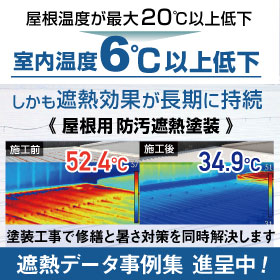
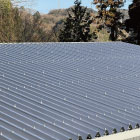
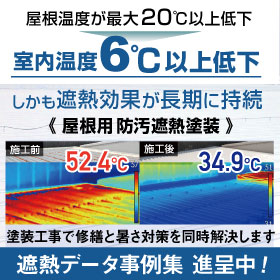
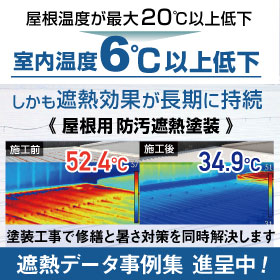
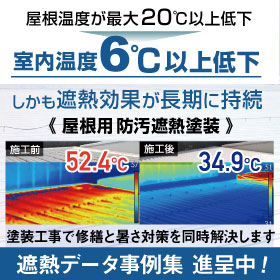
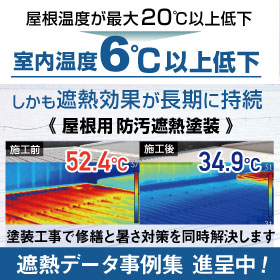
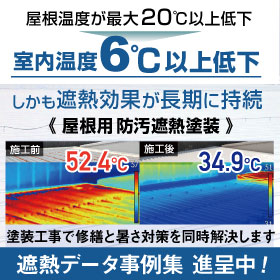
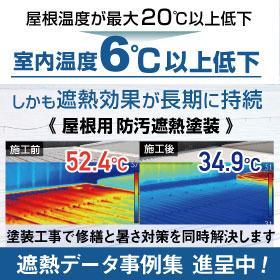
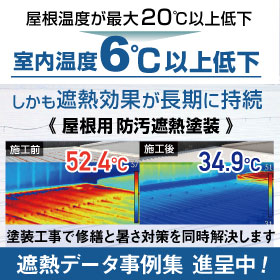
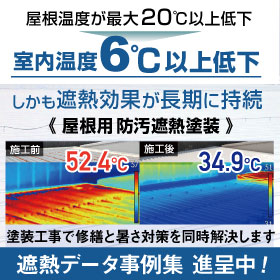
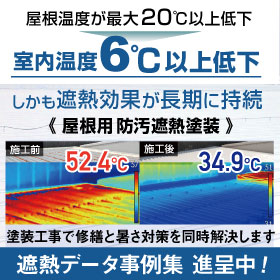
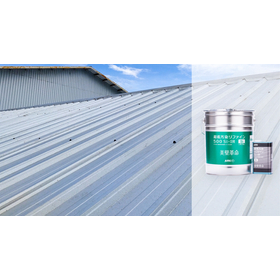
To facility managers struggling with "summer heat," "heatstroke risks," and "electricity cost reduction" in factories and warehouses: By simply painting over the heat that enters through the roof, significant reductions can be achieved. In a demonstration where only half of a corrugated roof was painted, we have proven a reduction in roof surface temperature by 15.6°C and indoor temperature by 6.9°C (data from Company A in Mie Prefecture, with many other successful cases). Common heat-reflective paints have the issue that when dirt adheres to them, the dirt itself absorbs heat, causing a decline in heat-reflective performance year after year. The Ultra Low Pollution Refine Series, due to its "ultra-low pollution properties," is resistant to dirt, and its self-cleaning effect, washed away by rain, allows it to maintain heat-reflective performance over many years. Compared to heat-reflective sheets and double corrugated panels, it offers an overwhelmingly superior balance of cost and effectiveness. Astec Paint collaborates with 120 certified contractors specializing in factories and warehouses nationwide as a paint manufacturer. We promise high-quality paint and painting work as building professionals. In the unlikely event that any issues arise regarding proposals or construction, we will respond swiftly as the manufacturer, providing peace of mind. We also support comparisons with other companies' estimates and the preparation of internal approval documents and estimates.
Added to bookmarks
Bookmarks listBookmark has been removed
Bookmarks listYou can't add any more bookmarks
By registering as a member, you can increase the number of bookmarks you can save and organize them with labels.
Free membership registration
In the wood processing industry, proper management of temperature and humidity is essential to maintain product quality. In particular, preventing wood from drying out is crucial for avoiding warping and cracking, thus preserving quality. Inadequate temperature management can lead to deterioration of the wood and a decrease in processing accuracy. Our "Ultra Low Pollution Refine" contributes to preventing wood drying by suppressing heat intrusion from the roof and controlling temperature rise within the factory. 【Usage Scenarios】 - Roofs of wood processing factories - Temperature management in drying rooms - Maintaining product quality 【Benefits of Implementation】 - Quality maintenance through prevention of wood drying - Stabilization of temperature within the factory - Improvement of the working environment
Added to bookmarks
Bookmarks listBookmark has been removed
Bookmarks listYou can't add any more bookmarks
By registering as a member, you can increase the number of bookmarks you can save and organize them with labels.
Free membership registration
In logistics warehouses, temperature management within the warehouse is crucial for employee health management and maintaining the quality of stored goods. Particularly during the summer heat, the risk of heatstroke and the deterioration or decline in quality of stored items increases, which can potentially lead to significant losses. Effectively suppressing heat intrusion from the roof is essential for stabilizing the temperature inside the warehouse. Our "Ultra Low Pollution Refine" helps reduce heat in the warehouse through roof coating, protecting stored goods. 【Usage Scenarios】 - Prevention of quality deterioration of stored goods due to temperature rise in summer - Reduction of risks of alteration and discoloration of stored items due to heat - Maintenance of a stable warehouse environment 【Benefits of Implementation】 - Reduced risk of loss due to maintenance of the quality of stored goods - Improved working environment due to temperature stabilization in the warehouse - Reduced maintenance burden due to long-term heat insulation effects
Added to bookmarks
Bookmarks listBookmark has been removed
Bookmarks listYou can't add any more bookmarks
By registering as a member, you can increase the number of bookmarks you can save and organize them with labels.
Free membership registration
In agricultural corporations, temperature management of storage facilities is crucial for maintaining the quality of harvested products. High temperatures, especially during the summer, can lead to a decline in freshness and deterioration of quality. Proper temperature management is essential for preserving the value of harvested products and reducing waste loss. Our "Ultra Low Contamination Refine" contributes to maintaining the freshness of harvested products by suppressing the rise in indoor temperatures through roof painting of factories and warehouses. 【Usage Scenarios】 - Storage warehouses for harvested products - Sorting facilities - Roofs of agricultural processing facilities 【Benefits of Implementation】 - Suppression of indoor temperature rise in storage facilities - Extension of freshness maintenance period for harvested products - Reduction of waste loss due to quality deterioration
Added to bookmarks
Bookmarks listBookmark has been removed
Bookmarks listYou can't add any more bookmarks
By registering as a member, you can increase the number of bookmarks you can save and organize them with labels.
Free membership registration
In the food manufacturing industry, temperature management of the manufacturing environment is crucial for maintaining product quality. Particularly, the rise in indoor temperatures during the summer can accelerate product deterioration and affect the operation of production lines. Additionally, reducing the risk of heat-related illnesses and decreasing power consumption are challenges that need to be addressed for sustainable factory operations. The "ultra-low pollution refine," which effectively suppresses heat intrusion from the roof, contributes to solving these issues. 【Usage Scenarios】 - Roofs of food factories and warehouses - Temperature management around production lines - Reduction of quality deterioration risks - Promotion of energy conservation 【Benefits of Implementation】 - Maintenance of quality due to lower indoor temperatures - Improvement of the working environment - Reduction of electricity costs - Sustained long-term heat insulation effects
Added to bookmarks
Bookmarks listBookmark has been removed
Bookmarks listYou can't add any more bookmarks
By registering as a member, you can increase the number of bookmarks you can save and organize them with labels.
Free membership registration
In the automotive manufacturing industry, addressing employee heatstroke prevention during the summer heat and reducing electricity consumption are important challenges. Heat entering through factory and warehouse roofs significantly affects indoor temperature, potentially leading to decreased production efficiency and a worsening work environment. In response to these challenges, roof coating as a heat mitigation measure is an effective method that has minimal impact on building structure and can be implemented relatively quickly. Our "Ultra Low Pollution Refine" contributes to solving these issues. 【Usage Scenarios】 - Decreased operational rates of production lines due to rising indoor temperatures in summer - Ensuring employee safety by reducing heatstroke risks - Reducing electricity costs by alleviating air conditioning loads 【Effects of Implementation】 - Maintaining and improving production efficiency through lowered indoor temperatures - Achieving a comfortable working environment - Cost reduction through energy savings
Added to bookmarks
Bookmarks listBookmark has been removed
Bookmarks listYou can't add any more bookmarks
By registering as a member, you can increase the number of bookmarks you can save and organize them with labels.
Free membership registration
In the printing and binding industry, temperature management of the manufacturing environment is crucial to maintain stable operation of manufacturing equipment. The heat during summer and the resulting rise in indoor temperature can lead to employee fatigue, printing defects, and decreased production efficiency. Additionally, there are concerns about increased heatstroke risk and rising air conditioning costs. By reducing heat intrusion from the roof, we can contribute to solving these issues. A demonstration where only half of a standing seam roof was painted to prove the heat insulation effect resulted in a reduction of roof surface temperature by 15.6°C and indoor temperature by 6.9°C (data from Company A in Mie Prefecture, with many other successful cases). Common heat-reflective paints have the problem of absorbing heat when dirt adheres to them, leading to a decline in heat insulation performance over the years. The Ultra Low Pollution Refine series, due to its "ultra low pollution properties," is resistant to dirt, and its self-cleaning effect, washed away by rain, maintains heat insulation performance for a long time. [Usage Scenarios] - Roofs of printing and binding factories - Maintenance and stabilization of ink quality - Temperature management of the manufacturing environment - Energy conservation [Effects of Implementation] - Reduction of defect rates due to stabilization of ink quality - Increased productivity due to uniform temperature in the manufacturing environment - Reduction in electricity costs due to decreased air conditioning load - Decreased risk of heatstroke due to improved working conditions
Added to bookmarks
Bookmarks listBookmark has been removed
Bookmarks listYou can't add any more bookmarks
By registering as a member, you can increase the number of bookmarks you can save and organize them with labels.
Free membership registration
In the chemical industry, addressing summer heat, reducing the risk of heatstroke, and cutting electricity costs are important challenges. In particular, heat intrusion from the roof can negatively impact the working environment and the stable operation of equipment. In response to these challenges, heat mitigation through roof coating is a method that is less affected by the building's structure and insulation performance, and can provide noticeable effects in a relatively short period. Our product, "Ultra Low Pollution Refine," effectively reduces heat entering through the roof and contributes to maintaining a safe and comfortable working environment. 【Usage Scenarios】 - Roofs of chemical plants and warehouses - Roofs of logistics facilities, food processing facilities, and livestock barns - Improvement of work efficiency due to indoor temperature rise in summer - Reduction of heatstroke risk - Decrease in electricity consumption 【Benefits of Implementation】 - Lower roof surface temperature and indoor temperature - Long-term maintenance of heat shielding performance - Cost-effective heat mitigation - Achievement of a comfortable working environment
Added to bookmarks
Bookmarks listBookmark has been removed
Bookmarks listYou can't add any more bookmarks
By registering as a member, you can increase the number of bookmarks you can save and organize them with labels.
Free membership registration
In energy-related facilities, temperature management in equipment cooling is crucial, and there is a demand for reducing power consumption. Heat intrusion from the roof can lead to an increase in temperature within the facility, which in turn raises the energy consumption required for equipment cooling. Mitigating this heat load is essential for achieving both stable equipment operation and energy conservation. Our "Ultra Low Pollution Refine" effectively reduces heat intrusion through roof coating, contributing to the efficiency of equipment cooling and a reduction in electricity costs. 【Usage Scenarios】 - Heat-insulating coating for roofs of energy-related facility factories and warehouses - Heat-insulating coating for various plants - Reduction of electricity consumption 【Benefits of Implementation】 - Reduction of cooling load on equipment due to lower indoor temperatures - Cost savings from reduced electricity consumption - Continuous benefits from long-term maintenance of heat insulation performance
Added to bookmarks
Bookmarks listBookmark has been removed
Bookmarks listYou can't add any more bookmarks
By registering as a member, you can increase the number of bookmarks you can save and organize them with labels.
Free membership registration
In metal processing factories, maintaining the precision of manufacturing equipment and ensuring a safe working environment are crucial. Especially during the summer, the rise in temperature within the factory can affect machining accuracy due to thermal displacement of machine tools and measuring instruments, as well as increase the risk of heatstroke for workers. Additionally, the increased operation of cooling and air conditioning systems leads to higher electricity consumption, which is also a challenge. To address these issues, reducing heat intrusion from the roof is a fundamental measure that decreases thermal load without incurring additional costs. Our "Ultra-Low Pollution Refine" contributes to solving these challenges by maintaining excellent heat insulation performance over the long term. 【Usage Scenarios】 - Roofs of metal processing factories (such as corrugated roofs, slate roofs, etc.) - Measures against temperature rise in factories during summer - Reduction of heatstroke risk - Decrease in electricity consumption 【Effects of Implementation】 - Maintenance of a comfortable temperature within the factory - Support for stable operation of equipment - Contribution to energy conservation - Sustained long-term heat insulation effects
Added to bookmarks
Bookmarks listBookmark has been removed
Bookmarks listYou can't add any more bookmarks
By registering as a member, you can increase the number of bookmarks you can save and organize them with labels.
Free membership registration
In fiber factories, the high temperature and humidity during the summer increase the risk of heatstroke for employees and lead to a decrease in production efficiency. Additionally, rising temperatures heighten the risk of dyeing unevenness and thermal deformation of synthetic fibers, as well as potentially affecting the stable operation of weaving and spinning machines that require precise tension management. Reducing heat intrusion from the roof is a cost-effective measure to stabilize the factory environment while reducing air conditioning load. Our "Ultra-Low Pollution Refine" maintains excellent heat insulation performance over the long term, contributing to the stabilization of the manufacturing environment and energy conservation. 【Usage Scenarios】 - Roofs of fiber factories with spinning, weaving, and dyeing processes - Reducing the risk of heatstroke for workers - Measures against the impact of temperature rise in summer on dyeing quality and product quality - Supporting stable operation of manufacturing lines 【Effects of Implementation】 - Improvement of the working environment for employees and reduction of heatstroke risk - Reduction of dyeing unevenness and thermal deformation risks - Stable operation of manufacturing equipment such as weaving and spinning machines - Reduction of electricity costs due to decreased air conditioning load
Added to bookmarks
Bookmarks listBookmark has been removed
Bookmarks listYou can't add any more bookmarks
By registering as a member, you can increase the number of bookmarks you can save and organize them with labels.
Free membership registration
In electronic component manufacturing factories, the risk of heatstroke for workers increases due to rising temperatures in summer, and the increased load on air conditioning systems leads to higher electricity costs. Additionally, it may become difficult to maintain stable room temperatures, which can affect environmental management in precision assembly and inspection processes. Reducing heat intrusion from the roof is a fundamental measure that alleviates air conditioning load, achieving both a stable manufacturing environment and cost reduction simultaneously. Our "Ultra Low Pollution Refine" maintains excellent heat insulation performance over the long term, contributing to solving these challenges. 【Usage Scenarios】 - Roofs of electronic component manufacturing factories (such as corrugated roofs and slate roofs) - Reducing the risk of heatstroke for workers - Measures against rising electricity costs due to increased air conditioning load in summer - Supporting environmental stabilization in precision processes 【Effects of Implementation】 - Improvement of the working environment for employees and reduction of heatstroke risk - Reduction of electricity costs due to decreased air conditioning load - Stabilization of process management through temperature stabilization in the manufacturing environment - Continuous effects from long-term maintenance of heat insulation performance
Added to bookmarks
Bookmarks listBookmark has been removed
Bookmarks listYou can't add any more bookmarks
By registering as a member, you can increase the number of bookmarks you can save and organize them with labels.
Free membership registration
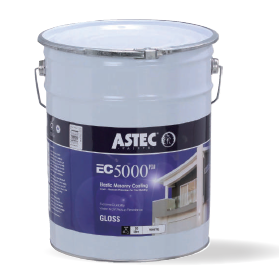
To facility managers troubled by "leaks," "increased indoor temperatures," and "renovation costs" in factories and warehouses: If small deteriorations such as rust holes and cracks in the roof are left unattended, water intrusion into the building will progress, increasing the risk of leaks. EC-100PCM is a waterproof coating for roofs with an elongation rate of approximately 600%, forming a coating that follows the movement of the building while preventing gaps for water intrusion. By simply applying this coating, you can reduce the risk of leaks while simultaneously maintaining high heat insulation and weather resistance. ■ Elongation rate of approximately 600%: Easily reduces the risk of water intrusion by following cracks ■ Heat insulation: Nano-ceramic particles reflect and radiate near-infrared rays, achieving a record temperature reduction of 17.5°C on the roof surface (Astech Paint First Factory, Fukuoka Prefecture) ■ Weather resistance: Expected lifespan of over 15 years ■ Cost reduction per renovation: No waste generated compared to cover methods or re-roofing, and factory operations can continue during construction Astech Paint collaborates with 120 certified contractors specializing in factories and warehouses nationwide. We promise high-quality painting work as building professionals. We also accommodate competitive estimates with other companies and provide support for creating approval documents and estimates. *For more details, please download the materials or contact us.
Added to bookmarks
Bookmarks listBookmark has been removed
Bookmarks listYou can't add any more bookmarks
By registering as a member, you can increase the number of bookmarks you can save and organize them with labels.
Free membership registration
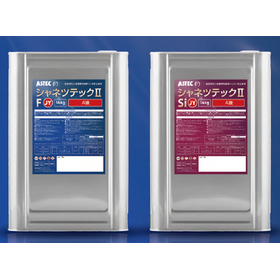
To facility managers struggling with "heat insulation," "rust prevention," and "shortening construction periods" for metal roofs and exterior walls of factories and warehouses. Typical painting work requires three processes: one primer coat and two top coats. The more processes involved, the longer the construction period, which can easily impact factory operations. Shanetsu Top One Si-JY is a topcoat material that also serves as rust prevention, allowing the project to be completed with just two top coats, contributing to a shorter construction period. It is an all-in-one paint that fulfills six roles: heat insulation, weather resistance, rust prevention, adhesion, opacity, and shortening construction time. ■ No primer required (except in cases of severe rust): Reduces processes, making it easier to control construction time and costs. ■ Heat insulation: Effectively reflects near-infrared rays, demonstrating a temperature difference of 17.2°C between coated and uncoated areas (Fukuoka Prefecture, Kasuga City, Real Estate Office). ■ Weather resistance: Expected lifespan equivalent to 13-16 years (confirmed gloss retention rate of over 80% in accelerated weather resistance tests). ■ Rust prevention: No rust or blistering observed even after 60 cycles of cyclic corrosion testing (passed JIS K 5674). Astek Paint collaborates with 120 certified contractors specializing in factories and warehouses nationwide. We also support competitive estimates with other companies and assist in creating approval documents and estimates. *For more details, please download the materials or contact us.
Added to bookmarks
Bookmarks listBookmark has been removed
Bookmarks listYou can't add any more bookmarks
By registering as a member, you can increase the number of bookmarks you can save and organize them with labels.
Free membership registration
To facility managers troubled by "mold and algae growth" and "dirt and aesthetic decline of exterior walls" in food and manufacturing plants. Mold and algae compromise the aesthetic and hygienic environment of buildings, leading to a decline in corporate image and potential health impacts. Common anti-mold agents can only address about 32 types of fungi. The Super BIO Refine series demonstrates anti-mold and anti-algae effects against approximately 2,000 types of mold and algae, including 60 frequently detected species. Its unique "repellent effect" destroys the cell walls of fungi, forming a coating that prevents similar fungi from settling. Additionally, its ultra-low contamination properties make it difficult for dirt to adhere, allowing for easier maintenance of aesthetics over long periods. ■ Addresses approximately 2,000 types of mold and algae (common anti-mold agents address about 32 types) ■ Powerful anti-mold and anti-algae properties due to repellent effect: suppresses mold and algae growth even after one month of cultivation (in-house testing) ■ Ultra-low contamination: forms a dense coating with inorganic components, making it difficult for dirt to adhere ■ High weather resistance: expected lifespan equivalent to 15-18 years Astek Paint collaborates with 120 certified contractors specializing in factories and warehouses nationwide. We also support competitive estimates with other companies and assist in the creation of internal approval documents and estimates. *For more details, please download the materials or contact us.
Added to bookmarks
Bookmarks listBookmark has been removed
Bookmarks listYou can't add any more bookmarks
By registering as a member, you can increase the number of bookmarks you can save and organize them with labels.
Free membership registration
To facility managers struggling with the recurring issues of "mold and algae growth" and the short lifespan of anti-mold effects on interior and exterior walls of factories and warehouses: Common anti-mold and anti-algae agents can only address about 32 types of fungi, and it is not uncommon for reoccurrence to happen shortly after application. Astec Plus SW is a paint additive that can be mixed with water-based paints on-site to provide anti-mold and anti-algae properties. It is effective against approximately 2,000 types of mold and algae, including 60 frequently detected species. The leaching rate of the active ingredients is very slow at 3 ppm compared to general anti-mold agents (3,000 ppm), making it easier for the effects to last for an extended period. ■ Effective against approximately 2,000 types of mold and algae ■ Leaching rate of 3 ppm: Active ingredients are less likely to leach out, allowing for prolonged anti-mold effects ■ On-site addition: Simply mix with existing water-based paints to add anti-mold and anti-algae properties ■ Confirmed safety: LD50 (the amount that causes a lethal rate of over 50%) ≧ 5,000 mg/kg verified by the Japan Food Analysis Center Astec Paint collaborates with 120 certified contractors specializing in factories and warehouses nationwide. We also support competitive estimates and the creation of internal approval documents and quotations. *For more details, please download the materials or contact us.
Added to bookmarks
Bookmarks listBookmark has been removed
Bookmarks listYou can't add any more bookmarks
By registering as a member, you can increase the number of bookmarks you can save and organize them with labels.
Free membership registration
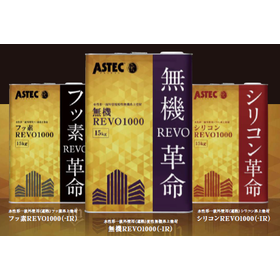
To facility managers troubled by "re-adhesion of dirt," "mold and algae growth," and "decline in aesthetics" on the exterior walls and roofs of factories and warehouses: Common paints tend to accumulate dirt over time, leading to increased cleaning costs and a higher likelihood of mold and algae growth. The Ultra Low Pollution Refine 1000 Series forms a dense and robust paint film through the incorporation of inorganic components. It is designed to resist the adherence of pollutants to the paint film and maintain aesthetics for an extended period through a self-cleaning effect that washes away dirt with rain. ■ Ultra Low Pollution: Almost no dirt observed even after one year of outdoor exposure rain streak tests (compared to other low pollution paints). ■ High Weather Resistance: Si-IR has an expected lifespan of 15-18 years, while MF-IR is equivalent to 20-24 years. ■ Mold and Algae Resistance: Passed JIS Z 2911 mold resistance tests and internal algae resistance tests. ■ Heat Insulation: Reflects near-infrared rays with special heat-insulating inorganic pigments, making it easier to suppress indoor temperature rise. Astek Paint collaborates with 120 certified contractors specializing in factories and warehouses nationwide. We also accommodate competitive estimates with other companies and provide support for creating approval documents and estimates. *For more details, please download the materials or contact us.
Added to bookmarks
Bookmarks listBookmark has been removed
Bookmarks listYou can't add any more bookmarks
By registering as a member, you can increase the number of bookmarks you can save and organize them with labels.
Free membership registration