1~18 item / All 18 items
Displayed results

Added to bookmarks
Bookmarks listBookmark has been removed
Bookmarks listYou can't add any more bookmarks
By registering as a member, you can increase the number of bookmarks you can save and organize them with labels.
Free membership registration
Contact this company
Inquiry Form1~18 item / All 18 items

In land-based aquaculture, the management of DO (dissolved oxygen) and water quality is the top priority that affects productivity. The respiration of cultured organisms, as well as the decomposition of organic matter from waste and residues, and the nitrification of ammonia, continuously consume large amounts of oxygen in the water. 【Points to Note for Pure Oxygen Introduction and the Benefits of "No Bubbles"】 With conventional aeration and water wheels, it is difficult to obtain sufficient DO due to the influence of nitrogen in the air, which is why the introduction of pure oxygen is currently advancing. However, traditional pure oxygen bubbling can excessively stimulate fish and has the disadvantage of causing water vapor and gas loss. The "Oxygen Fighter" dissolves oxygen directly into the water with minimal bubble production. Therefore, it can be installed directly in aquaculture ponds without stressing the fish, allowing for high-density farming and retrofitting without the need for expansion of facilities. Since no bubbles are produced, gas loss is minimized. 【Main Features and Lineup】 Range of Models: A total of 24 models covering both freshwater and seawater Maximum Flow Rate: Covers a wide range from 60L/min to 5000L/min It is possible to select the optimal model according to the scale of the aquaculture pond. Please consider it for recovering from rapid DO declines and creating a healthy underwater environment.
Added to bookmarks
Bookmarks listBookmark has been removed
Bookmarks listYou can't add any more bookmarks
By registering as a member, you can increase the number of bookmarks you can save and organize them with labels.
Free membership registration
During the freshwater rearing period of silver salmon, it is essential to manage water temperature, adjust feeding amounts, and maintain dissolved oxygen (DO) levels and water quality. Among these, ensuring sufficient dissolved oxygen is a crucial point for stabilizing rearing. **Four Benefits of Maintaining High Dissolved Oxygen:** 1. Prevention of Growth Decline: Stops growth halts caused by decreased appetite. 2. Prevention of Water Quality Deterioration: Suppresses the accumulation of ammonia nitrogen from waste and residues. 3. Stabilization of Water Quality: Activates aerobic microbial populations in the water. 4. Reduction of Individual Load: Corresponds to the oxygen consumption requirements of silver salmon. The high-concentration gas dissolution device "Oxygen Fighter" differs from traditional aeration by dissolving oxygen into water with minimal bubble production. Therefore, it can reliably secure high DO levels even in shallow aquaculture ponds. It can be retrofitted to existing equipment, and there are a total of nine freshwater models available (with maximum flow rates ranging from 60L/min to 5000L/min). While there are running costs for pump power (0.4kW to 15kW) and oxygen, it maximizes profits through the prevention of fish mortality, size increase, and reduction of rearing periods. Please feel free to contact us for more information.
Added to bookmarks
Bookmarks listBookmark has been removed
Bookmarks listYou can't add any more bookmarks
By registering as a member, you can increase the number of bookmarks you can save and organize them with labels.
Free membership registration
In "aquaponics," which combines fish farming and hydroponics, the key to stable operation is undoubtedly the concentration of dissolved oxygen (DO) in the water. Conventional aeration has a limit of about 5 to 7 mg/L, but by introducing a high-concentration oxygen dissolution device called "Oxygen Fighter," it becomes possible to supply high-concentration oxygenated water exceeding 20 to 25 mg/L in a single pass, even at room temperature. Aquaponics consumes a lot of oxygen. The situations where oxygen is needed include: Fish: Respiration and countermeasures against DO reduction during feeding In the water: Nitrification of ammonium nitrogen and decomposition of feces and residues (decomposition by aerobic microorganisms) Vegetables: Providing oxygen to the roots improves root growth Under low oxygen conditions, it is difficult to meet the required oxygen levels, and if one aspect collapses, it can easily lead to a chain reaction that disrupts the balance. Therefore, maintaining stable DO is the key to the success of aquaponics. The Oxygen Fighter efficiently dissolves oxygen into the water with almost no bubbles. Additionally, since it does not form bubbles, it remains at the bottom of the water, preventing the sludge formation of feces and residues and creating a healthy environment. If you have any questions, please feel free to reach out. *Please also check the related links.
Added to bookmarks
Bookmarks listBookmark has been removed
Bookmarks listYou can't add any more bookmarks
By registering as a member, you can increase the number of bookmarks you can save and organize them with labels.
Free membership registration
In "aquaponics," which combines fish farming and hydroponics, the concentration of dissolved oxygen (DO) in the water greatly affects productivity. Traditional aeration has a limit of about 5 to 7 ppm, but by introducing a high-concentration oxygen dissolution device called the "Oxygen Fighter," it becomes possible to supply ultra-high concentration oxygen water exceeding 20 to 40 ppm even at room temperature. This difference brings overwhelming advantages to the system. First, because the dissolution efficiency is nearly 100%, there is no gas loss, which helps reduce running costs. Furthermore, it allows for a significant increase in stocking density (overcrowded farming) that was previously limited due to concerns about oxygen deficiency, dramatically improving productivity per unit area. Additionally, the activation of nitrifying bacteria that decompose harmful ammonia greatly reduces the risk of water quality deterioration. The feeding rate and growth speed of seafood are also accelerated, leading to a reduction in the rearing period. The presence or absence of the Oxygen Fighter is the key factor that fundamentally changes the "stability" and "profitability" of aquaponics.
Added to bookmarks
Bookmarks listBookmark has been removed
Bookmarks listYou can't add any more bookmarks
By registering as a member, you can increase the number of bookmarks you can save and organize them with labels.
Free membership registration
In salmon "recirculating aquaculture systems (RAS)," managing "dissolved oxygen (DO)" is key to business profitability. The "Oxygen Fighter" is being introduced in various domestic and international sites as a trump card to solve the risks of oxygen deficiency and growth inconsistencies. Its biggest feature is a unique mechanism that allows water to pass through oxygen gas. Unlike traditional aeration devices, it prevents gas bubbles from escaping and dissolves oxygen with nearly 100% efficiency, thereby reducing unnecessary gas consumption. It creates an astonishingly high concentration of oxygenated water, exceeding the natural limit of approximately 14.6 ppm at 0°C, achieving over 20.0 to 40.0 ppm at room temperature. There are three major benefits to its introduction: 1. Growth promotion and period reduction: Improved feed intake accelerates fish growth speed and eliminates size inconsistencies. 2. Realization of high-density farming: Maximizes capacity and significantly increases production in limited facilities. 3. Cost reduction: Nearly zero bubble loss optimizes oxygen gas costs. For businesses feeling the limitations of current oxygen efficiency and wanting to enhance productivity, why not realize a profitable aquaculture business with the power of high-concentration oxygen chosen both domestically and internationally?
Added to bookmarks
Bookmarks listBookmark has been removed
Bookmarks listYou can't add any more bookmarks
By registering as a member, you can increase the number of bookmarks you can save and organize them with labels.
Free membership registration
The "nanobubble," known for its measures against oxygen deficiency in aquaculture, and the high-concentration oxygen dissolution device "Oxygen Fighter." Both are facilities that supply oxygen, but there are clear differences in their mechanisms and "resilience to crises." The main difference is whether it involves "bubbles" or "dissolution (water)." Nanobubble: A technology that suspends ultra-fine "bubbles" in water, gradually dissolving them over time. Oxygen Fighter: A technology that instantly dissolves oxygen into the water itself without producing bubbles (almost bubble-free). This difference becomes a decisive factor in situations where there is a "sudden drop in DO (dissolved oxygen)" right after feeding or during the summer. Nanobubbles have a time lag before the bubbles dissolve, which can result in the supply not keeping up with rapid oxygen consumption. On the other hand, the Oxygen Fighter generates ultra-high-concentration oxygen water with DO levels of 20-25 mg/L in just one pass through the device. It can be rapidly injected into tanks facing oxygen deficiency, quickly recovering to a safe oxygen level. "Operate the Oxygen Fighter only when DO is needed, while leaving the regular water flow to existing blowers." This division of roles is a reliable defense strategy that reduces gas costs while eliminating the risk of oxygen deficiency.
Added to bookmarks
Bookmarks listBookmark has been removed
Bookmarks listYou can't add any more bookmarks
By registering as a member, you can increase the number of bookmarks you can save and organize them with labels.
Free membership registration
In shrimp farming, organic matter that accumulates on the bottom of the water can become sludge under low-oxygen conditions, leading to foul odors and significant water quality deterioration. For species like the kuruma prawn, which has a tendency to dwell near sandy bottoms or the water's floor, the degradation of the bottom environment poses a serious risk that can directly result in decreased appetite, disease, and mortality. On the other hand, in well-oxygenated environments with sufficient dissolved oxygen (DO), aerobic microorganisms can efficiently decompose organic matter, maintaining a healthy living environment in the water. However, traditional methods using "air," such as water wheels and aeration, cannot supply DO levels exceeding the maximum values under natural conditions at a water temperature of 25 degrees (8.25 mg/L; about 6-7 mg/L for seawater). Dissolved air also escapes as bubbles into the atmosphere, failing to meet the oxygen demand required for the respiration of organisms and the nitrification of waste. The high-concentration gas dissolution device "Oxygen Fighter" efficiently dissolves "pure oxygen" into water with "almost no bubbles." It stabilizes DO levels above the required oxygen demand, supporting the creation of a healthy growth environment for shrimp from the bottom. If you have any concerns regarding the management of dissolved oxygen or growth environments, please feel free to contact us.
Added to bookmarks
Bookmarks listBookmark has been removed
Bookmarks listYou can't add any more bookmarks
By registering as a member, you can increase the number of bookmarks you can save and organize them with labels.
Free membership registration
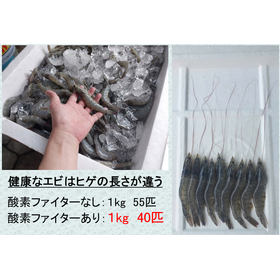
In the land-based farming of vannamei shrimp, maintaining dissolved oxygen (DO) in shallow tanks is a significant challenge. Traditional aeration methods cause bubbles to rise and escape quickly, making it difficult to reach the "bottom" where oxygen is most needed. The high-concentration gas dissolution device "Oxygen Fighter" dissolves oxygen directly into the water with almost no bubbles, ensuring that high concentrations of oxygen are delivered to the bottom. By preventing the organic matter at the bottom from turning into sludge and promoting the activity of aerobic microorganisms, it creates an ideal aquatic environment for the shrimp. This environmental improvement prevents the stunted growth of weak individuals and dramatically suppresses "size variation." Furthermore, due to improved feeding rates and reduced stress, it has been demonstrated that the weight gain effect (increased shipping value) allows for growing individuals from the usual 55 per kilogram to "40 per kilogram." The "Oxygen Fighter" achieves abundant DO even in shallow tanks, maximizing yield and quality. If you are struggling with the profitability of vannamei shrimp farming, please feel free to contact us.
Added to bookmarks
Bookmarks listBookmark has been removed
Bookmarks listYou can't add any more bookmarks
By registering as a member, you can increase the number of bookmarks you can save and organize them with labels.
Free membership registration
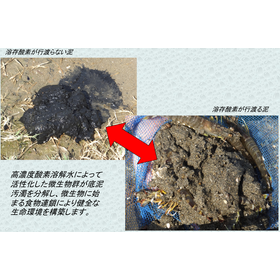
The deterioration of water quality in rivers and lakes is primarily caused by a lack of oxygen at the bottom and an increased oxygen demand due to inflowing pollutants. In response to this issue, our high-concentration gas dissolution device "Oxygen Fighter" has been registered in the Ministry of Land, Infrastructure, Transport and Tourism's new technology information provision system "NETIS" since 2001. This system's main feature is its ability to dissolve oxygen in water with almost no bubbles. Unlike traditional aeration methods, where bubbles rise and escape into the atmosphere, it directly delivers high-concentration oxygen to the bottom of the water, where it is most needed. By increasing the dissolved oxygen (DO) at the bottom, aerobic microorganisms are activated, initiating the food chain and dramatically promoting the self-purification of water quality by organically decomposing and reducing sediment (sludge). We offer a lineup of 12 models capable of handling a maximum flow rate of 5,000 L/min, allowing for optimal selection based on the scale of the site. Our technology has been adopted in purification facilities in Tokyo's Nonogawa and Meguro rivers, and we have a wealth of experience in the aquaculture sector and JICA projects.
Added to bookmarks
Bookmarks listBookmark has been removed
Bookmarks listYou can't add any more bookmarks
By registering as a member, you can increase the number of bookmarks you can save and organize them with labels.
Free membership registration
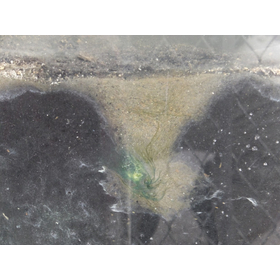
In the purification of rivers and lakes, the biggest challenge is securing the dissolved oxygen (DO) at the bottom of the water. When DO is insufficient at the bottom, anaerobic microorganisms become dominant, leading to the decay of organic matter, which produces sludge and foul odors. If left unchecked, the habitat for aquatic organisms collapses, resulting in a vicious cycle of increased sludge accumulation due to decreased self-purification. The solution to break this vicious cycle is the high-concentration gas dissolution device "Oxygen Fighter." 【Main Features】 Significantly reduces bubble loss: Unlike conventional aeration, it dissolves oxygen at a high concentration with almost no bubbles. (DO during 1 pass: 20–25 mg/L) Direct supply to the bottom: It directly supplies high-concentration oxygenated water to the bottom, where oxygen is most needed. 【Implementation Effects】 Promotes sludge decomposition: It transforms the environment into an aerobic one, activating aerobic microorganisms to decompose sludge organically. Restores the ecosystem: It suppresses foul odors and harmful substances, promotes the growth and photosynthesis of aquatic plants, and creates an environment conducive to the growth of aquatic organisms. The Oxygen Fighter establishes an environment for the food chain that starts with microorganisms, fundamentally resolves sludge accumulation, and realizes the restoration of a healthy water environment.
Added to bookmarks
Bookmarks listBookmark has been removed
Bookmarks listYou can't add any more bookmarks
By registering as a member, you can increase the number of bookmarks you can save and organize them with labels.
Free membership registration
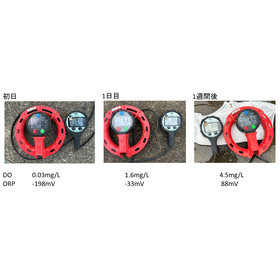
The "Oxygen Fighter" is a high-concentration gas dissolution device that creates high-concentration oxygen water with a reverse idea of "allowing water to pass through gas." Unlike conventional aeration, it dissolves oxygen with almost no bubbles. By using "pure oxygen" instead of "air," it achieves approximately 4.8 times the dissolved oxygen (DO) level found under natural conditions. It minimizes losses as oxygen escapes into the atmosphere like bubbles, providing oxygen in an extremely efficient manner. In actual sites where it has been implemented, dramatic environmental improvements were observed in just one week. Before operation: DO 0.03mg/L / ORP -198mV (a state prone to severe oxygen deficiency and hydrogen sulfide generation) One day later: DO 1.6mg/L / ORP -33mV (improvement trend within 24 hours) One week later: DO 4.5mg/L / ORP +88mV (improvement to aerobic conditions) - Achieved effects - ● Suppression of bad odors and hydrogen sulfide generation (transition from a reducing state to an aerobic state) ● Improved sedimentation of sludge (enabling the recovery of clear supernatant water) The power consumption is also low, ranging from 2.2kW to 3.7kW for medium-sized units, allowing for operation with reduced running costs. Please feel free to contact us if you are experiencing oxygen shortages in wastewater treatment.
Added to bookmarks
Bookmarks listBookmark has been removed
Bookmarks listYou can't add any more bookmarks
By registering as a member, you can increase the number of bookmarks you can save and organize them with labels.
Free membership registration
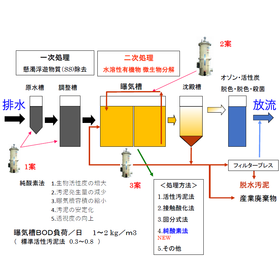
The "Oxygen Fighter," a high-concentration gas dissolution device, is effective in solving issues such as DO (dissolved oxygen) deficiency, oxygen deprivation, and odor problems at wastewater treatment sites. By using pure oxygen, it achieves a high dissolved oxygen level of 20-25 mg/L in a single pass. It can be retrofitted to existing facilities, eliminating the need for extensive renovations to resolve DO shortages. 【Three Installation Locations and Effects】 1. Raw Water Tank / Flow Adjustment Tank: Prevents decay before being sent to the aeration tank, reducing the processing load in subsequent stages. 2. Aeration Tank: Stabilizes DO and activates aerobic microorganisms. Maintains a high MLSS state and preserves processing capacity. 3. Return Sludge Line: Provides oxygen to settled sludge to activate it, circulating it back to the aeration tank, thereby improving the overall processing capacity of the system. 【Main Models Available (Selectable Lineup)】 OD-511 Model: Maximum flow rate 800 L/min, 3.7 kW OD-611 Model: Maximum flow rate 1400 L/min, 5.5 kW OD-911 Model: Maximum flow rate 3000 L/min, 11 kW We will propose the optimal installation location based on the site conditions and available space.
Added to bookmarks
Bookmarks listBookmark has been removed
Bookmarks listYou can't add any more bookmarks
By registering as a member, you can increase the number of bookmarks you can save and organize them with labels.
Free membership registration
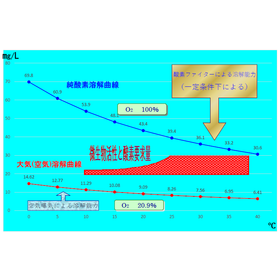
When the water temperature rises, various problems arise in wastewater treatment. This is because as the water temperature increases, the dissolved oxygen (DO) decreases while the oxygen demand of microorganisms increases. Proper water temperature management is important in wastewater treatment, but with the ongoing warming, it may be difficult to address. Reducing water temperature in the face of a large volume of wastewater flowing in daily is not realistic from both equipment and cost perspectives. The Oxygen Fighter achieves up to about 4.8 times the DO under natural conditions. (Our company sets the performance standard for dissolved oxygen at 20.0 mg/L to 25.0 mg/L during one pass (water flow).) When "bubbles" are generated like in fine valves, they pass through the water and are released into the atmosphere. The Oxygen Fighter dissolves oxygen in water with almost no bubbles, resulting in minimal loss. Although the installation of gas cylinders is necessary, the power consumption is also kept low, with 2.2 kW for a maximum water flow of 980 m³/day and 3.7 kW for a maximum water flow of 1152 m³/day. We will propose the appropriate model according to your equipment and wastewater situation, so please feel free to contact us.
Added to bookmarks
Bookmarks listBookmark has been removed
Bookmarks listYou can't add any more bookmarks
By registering as a member, you can increase the number of bookmarks you can save and organize them with labels.
Free membership registration
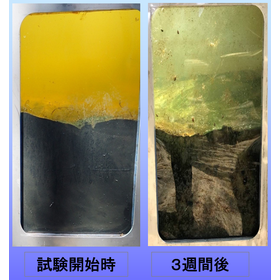
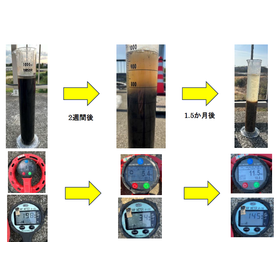
Hydrogen sulfide and ammonia generated within wastewater treatment facilities. These are causes of foul odors and can, in some cases, lead to corrosion of the equipment. The cause of the foul odor is the lack of oxygen in the wastewater. Gases that lack oxygen and have hydrogen attached to them will produce foul odors. The image shows the changes in DO, ORP, and SV30 before and after the installation of an oxygen fighter in a certain wastewater treatment facility. As shown in the image, before the installation of the oxygen fighter, the DO was 0.03 mg/L and the ORP was -198 mV. After two weeks of operation, the DO and ORP improved, and after 1.5 months, the ORP changed from -198 mV to +145 mV. Additionally, the SV30 gradually improved from a state of almost no sedimentation from 800 mL to 500 mL, allowing for clearer supernatant to be obtained. This is a case where foul odors were improved along with successful reduction of sludge volume. Enhancing wastewater treatment facilities requires significant costs and space. The oxygen fighter is a retrofittable device that boasts a flow rate of 1,152 m³ per day in medium-sized units. One of its appealing features is its ability to adapt to changes such as temperature increases due to heat and changes in water quality resulting from modifications to production within the factory since the design of the wastewater treatment facility.
Added to bookmarks
Bookmarks listBookmark has been removed
Bookmarks listYou can't add any more bookmarks
By registering as a member, you can increase the number of bookmarks you can save and organize them with labels.
Free membership registration
Many customers are considering adding blowers to equipment that is experiencing reduced processing capacity due to insufficient dissolved oxygen (DO) in the aeration tank. However, the amount of oxygen that can be dissolved is determined by the volume of the tank, so adding blowers often does not resolve the DO deficiency. On the contrary, adding blowers can lead to problems that were not previously occurring, such as over-aeration, increased pH, unpleasant odors, changes in water quality, and foaming. What is needed is the "ability to dissolve oxygen in water." Even if air is supplied by blowers, the amount of oxygen that dissolves in water is very small. Since 80% of air is nitrogen, adding blowers essentially increases the amount of nitrogen being dissolved. This raises concerns about the impact on the subsequent denitrification process. Additionally, the increased electricity consumption from adding blowers raises running costs, which is also a problem. The high-concentration gas dissolution device "Oxygen Fighter" directly dissolves oxygen into water, achieving a dissolved oxygen concentration of 20.0 to 25.0 mg/L in a single pass. This new technology, which replaces aeration, offers overwhelming dissolving power and helps solve various problems caused by DO deficiency. Please feel free to contact us for more information.
Added to bookmarks
Bookmarks listBookmark has been removed
Bookmarks listYou can't add any more bookmarks
By registering as a member, you can increase the number of bookmarks you can save and organize them with labels.
Free membership registration
The "T・H・A BAN BAN Converter" is a commercial organic waste fermentation machine that allows humans to return "organic resource" known as "food waste" to the Earth in a better form without wasting any of it. It is possible to convert food waste into feed or primary fermentation fertilizer. We have shaped our gratitude towards the Earth, which continues to give us without complaint, even when it is polluted by humans. 【Product Lineup】 ■ BAN BAN 300W model ■ BAN BAN 600W model ■ BAN BAN 900W model *For more details, please refer to the PDF materials or feel free to contact us.
Added to bookmarks
Bookmarks listBookmark has been removed
Bookmarks listYou can't add any more bookmarks
By registering as a member, you can increase the number of bookmarks you can save and organize them with labels.
Free membership registration
The "Oxygen Fighter (R) OD-451 model" is a high-concentration gas dissolution device that eliminates unnecessary gas emissions and has become more affordable. Compared to conventional models, it significantly reduces power consumption and is made of stainless steel, ensuring excellent durability. 【Features】 ■ Achieves high performance, compact size, and reduced price ■ Stable gas concentration maintenance possible with gas concentration sensor ■ Circulation pump power: 3.7kw → 2.2kw *For more details, please download the PDF or feel free to contact us.
Added to bookmarks
Bookmarks listBookmark has been removed
Bookmarks listYou can't add any more bookmarks
By registering as a member, you can increase the number of bookmarks you can save and organize them with labels.
Free membership registration
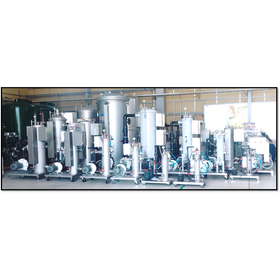
It is a gas dissolution device that replaces the conventional aeration method. It was born from the reverse idea of passing water through gas. The highest amount of dissolved oxygen in water under natural conditions is 14.62 ppm at a water temperature of 0°C. It creates a world that far exceeds this at room temperature, with levels of 20.0 to over 40.0 ppm. In rivers and lakes, it creates a saturated state of dissolved oxygen near the bottom of the water, promoting the activation of aerobic microorganisms. In the purification of industrial wastewater, high concentrations of dissolved oxygen have made it possible to handle high-load, high-density activated sludge (microorganisms). It is also used for the dissolution of gases other than oxygen, such as CO₂ (carbon dioxide), O₃ (ozone), H₂ (hydrogen gas), and N₂ (nitrogen gas).
Added to bookmarks
Bookmarks listBookmark has been removed
Bookmarks listYou can't add any more bookmarks
By registering as a member, you can increase the number of bookmarks you can save and organize them with labels.
Free membership registration