- Publication year : 2026
1~9 item / All 9 items
Displayed results
Added to bookmarks
Bookmarks listBookmark has been removed
Bookmarks listYou can't add any more bookmarks
By registering as a member, you can increase the number of bookmarks you can save and organize them with labels.
Free membership registration
Contact this company
Inquiry FormBefore making an inquiry
Download Profile1~9 item / All 9 items

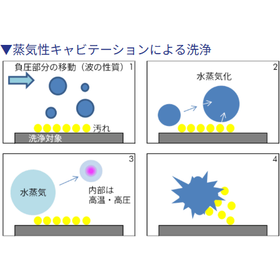
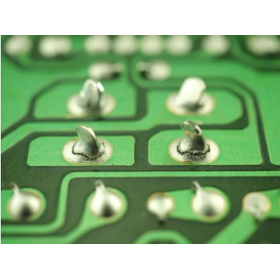
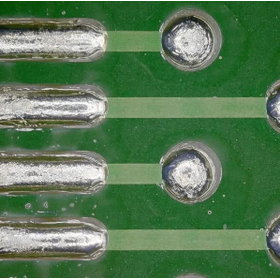
Defects in the substrate are a serious issue that greatly undermines reliability. In this article, we will discuss 10 common defects that can occur in substrates, including those arising from soldering and assembly processes, as well as defects caused by chemical factors. We will explain the technical background, assessment methods, and countermeasures from the perspective of cleaning.
Added to bookmarks
Bookmarks listBookmark has been removed
Bookmarks listYou can't add any more bookmarks
By registering as a member, you can increase the number of bookmarks you can save and organize them with labels.
Free membership registration
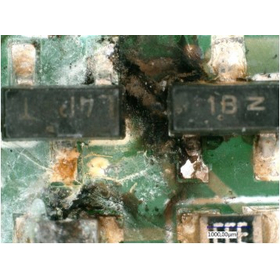
The circuit board, often referred to as the heart of electronic devices, plays a crucial role in determining the overall quality of the product. However, corrosion of the circuit board directly leads to issues such as circuit shorts and disconnections, which can reduce the reliability of electronic devices. In this article, we will explain how corrosion of the circuit board occurs, its mechanisms, preventive measures, and methods for identifying the causes in the event that corrosion does occur.
Added to bookmarks
Bookmarks listBookmark has been removed
Bookmarks listYou can't add any more bookmarks
By registering as a member, you can increase the number of bookmarks you can save and organize them with labels.
Free membership registration
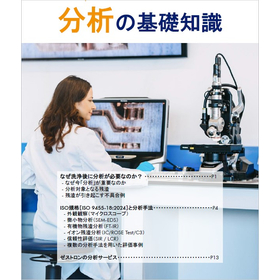
In recent years, electronic devices have been miniaturized, made more densely packed, and designed for higher voltages, especially in the automotive and power device sectors, where long-term use under harsh conditions is assumed. Under such conditions, even trace residues on devices can lead to corrosion, ion migration, and insulation degradation, ultimately resulting in market failures. Furthermore, changes in flux composition and the diversification of materials have made the nature of residues more complex than before. Against this backdrop, the importance of post-cleaning analysis is increasing. Cleaning is the process of removing flux residues and contamination, but to objectively demonstrate whether removal has been successful, verification through analysis is essential. While cleaning is a process of removal, analysis can be seen as a process that substantiates the results.
Added to bookmarks
Bookmarks listBookmark has been removed
Bookmarks listYou can't add any more bookmarks
By registering as a member, you can increase the number of bookmarks you can save and organize them with labels.
Free membership registration
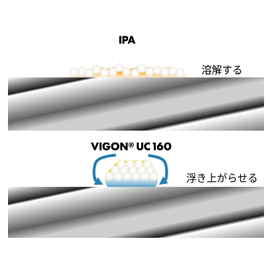
IPA (isopropyl alcohol) is an alcohol-based cleaning agent widely used for cleaning electronic components and equipment. However, in recent years, there has been an increasing demand for alternatives due to limitations in cleaning power, safety concerns, regulatory compliance burdens, and stable procurement. As a substitute for IPA, Zestron offers products that achieve both high cleaning power and safety. We support quality improvement and work environment enhancement across a wide range of applications, from flux cleaning to equipment maintenance. *For more detailed information, please refer to the related links. Feel free to contact us for further inquiries.
Added to bookmarks
Bookmarks listBookmark has been removed
Bookmarks listYou can't add any more bookmarks
By registering as a member, you can increase the number of bookmarks you can save and organize them with labels.
Free membership registration
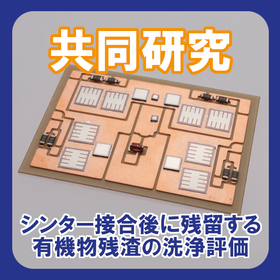
In the field of power semiconductors for automotive and industrial applications, the adoption of "sintering bonding" as a joining technology that achieves high resistance and high reliability against thermal stress is expanding, replacing solder bonding. Similar to no-clean solder bonding technology, sintering bonding is fundamentally designed to be "no-clean." However, the currently mainstream sintering bonding methods are conducted under high temperature and high pressure conditions, which can lead to the generation and adhesion of residues during the bonding process, potentially affecting subsequent processes and long-term reliability. Cleaning is one proposed solution to this issue. Although there is a "no-pressure" method for sintering bonding, its applications tend to be limited from the perspective of strength and reproducibility. Additionally, while it is residue-free, it is not "zero residue," so cleaning can also be a viable solution for achieving reliability. Detailed content of the technical column can be viewed through the related link.
Added to bookmarks
Bookmarks listBookmark has been removed
Bookmarks listYou can't add any more bookmarks
By registering as a member, you can increase the number of bookmarks you can save and organize them with labels.
Free membership registration
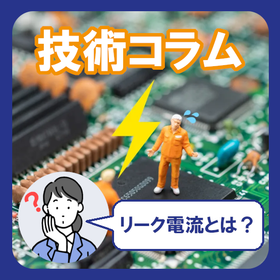
In electronic circuits, the current that flows through unintended paths as envisioned by the designer is called leakage current. This invisible current can significantly impact the reliability, performance, and lifespan of products, making it a critical issue in electronic device development. In today's world, where the miniaturization and high density of semiconductors are accelerating, the sources of leakage current vary widely, ranging from physical limitations within the device to minor issues during the manufacturing process. This article will explain the basics of leakage current, its causes, specific risks at the electronic substrate and assembly levels, countermeasures in the design and manufacturing processes, and methods for addressing it through cleaning and cleanliness evaluation. *For more detailed information, please refer to the related links. Feel free to contact us for further inquiries.*
Added to bookmarks
Bookmarks listBookmark has been removed
Bookmarks listYou can't add any more bookmarks
By registering as a member, you can increase the number of bookmarks you can save and organize them with labels.
Free membership registration
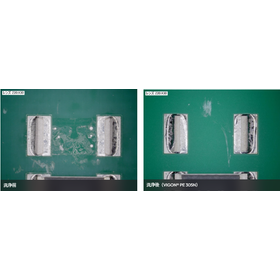
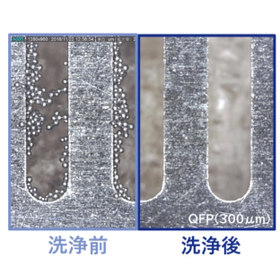
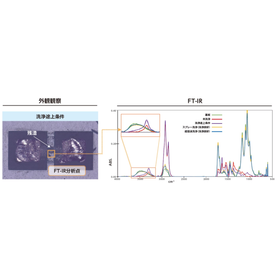
As electronic devices become more advanced and compact, the importance of fine joint solder paste is increasing in high-reliability fields such as power semiconductors, automotive applications, and industrial equipment. From the perspective of ensuring reliability, there is a growing number of situations where a decision must be made on whether or not to perform flux cleaning, making the cleaning of high-performance solder paste and flux a new challenge. In this research, in collaboration with Japan Superior Co., we focused on the "high-reliability solder paste for fine joints" developed by the company, examining the cleaning characteristics in fine joints and verifying the usefulness of evaluation using FT-IR and SEM-EDS based on chemical analysis. Additionally, we introduce our one-stop technical support that covers everything from cleaning to analysis and process optimization. You can view the detailed content of the article through the related link.
Added to bookmarks
Bookmarks listBookmark has been removed
Bookmarks listYou can't add any more bookmarks
By registering as a member, you can increase the number of bookmarks you can save and organize them with labels.
Free membership registration
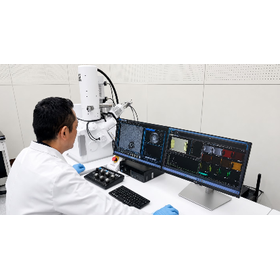
Our company conducts residue analysis to examine contaminants such as flux and sinter. We support the identification of defect causes and the resolution of quality issues in manufacturing sites through our analysis and expertise in flux cleaning. We also conduct defect cause investigations to isolate the causes of issues such as assembly defects, as well as cleanliness evaluations to check the cleanliness and residue levels on circuit board surfaces. 【Features】 ■ Residue analysis to identify the presence and type of substances adhered to surfaces ■ Defect cause investigations analyzing foreign substances and causes using analytical equipment and expertise ■ Cleanliness evaluations for process management through regular analysis ■ Proposals for countermeasures and improvements, in addition to analysis results ■ Cleanliness analysis is also possible for flux cleaning agents and circuit boards from other manufacturers ■ Cleanliness verification methods compliant with ISO 9455-18:2024 *For more detailed information, please refer to the related links.
Added to bookmarks
Bookmarks listBookmark has been removed
Bookmarks listYou can't add any more bookmarks
By registering as a member, you can increase the number of bookmarks you can save and organize them with labels.
Free membership registration
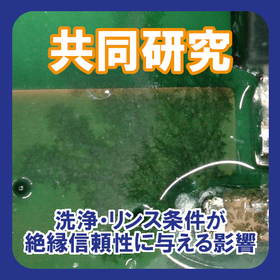
This joint research was conducted as part of ongoing verification based on the research results with Mr. Hiroki in 2025. In this study, we focused on the question of whether similar trends can be observed with rosin-based flux, and evaluated the impact of differences in cleaning and rinsing conditions on insulation reliability and surface condition. Furthermore, through comparisons with water-soluble flux, we also examined the differences in post-cleaning characteristics based on the type of flux. Detailed information about the article can be viewed through the related link.
Added to bookmarks
Bookmarks listBookmark has been removed
Bookmarks listYou can't add any more bookmarks
By registering as a member, you can increase the number of bookmarks you can save and organize them with labels.
Free membership registration