1~45 item / All 286 items
Displayed results
Filter by category

Added to bookmarks
Bookmarks listBookmark has been removed
Bookmarks listYou can't add any more bookmarks
By registering as a member, you can increase the number of bookmarks you can save and organize them with labels.
Free membership registration
Contact this company
Inquiry FormBefore making an inquiry
Download Profile1~45 item / All 286 items
Filter by category
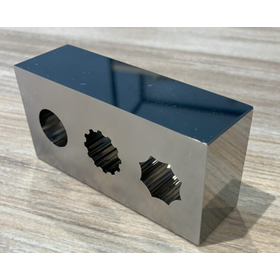
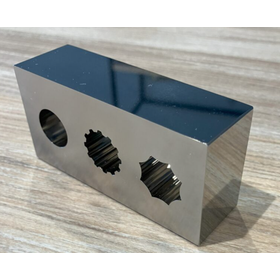
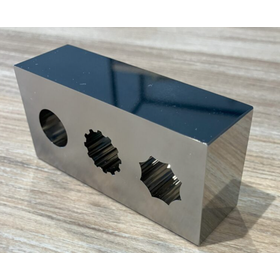
In the robotics industry, particularly in the sensor field, high-precision component processing is required. To maximize the performance of sensors, mirror finishing of components with complex shapes, such as polygons, is essential. Shapes that are difficult to handle with conventional polishing processes can achieve high-precision mirror finishes with our wire cutting technology. This contributes to the improvement of sensor performance. 【Application Scenarios】 - Sensor components for robotic arms - Sensor cases for autonomous robots - Optical sensor components for various robots 【Benefits of Implementation】 - Improved sensor performance - Enhanced component quality - Cost reduction
Added to bookmarks
Bookmarks listBookmark has been removed
Bookmarks listYou can't add any more bookmarks
By registering as a member, you can increase the number of bookmarks you can save and organize them with labels.
Free membership registration
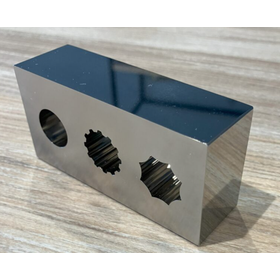
In electronic device enclosures, complex shapes and beautiful surface finishes are required to balance design and functionality. In particular, for polygonal enclosures, achieving a mirror finish can be challenging with polishing processes. In response to this challenge, our wire-cutting technology enables mirror finishing not only on the outer surfaces of polygons but also on the inner surfaces, enhancing the aesthetic quality of the enclosure. [Application Scenarios] - Polygonal enclosures - Enclosures for electronic devices - Products that prioritize design [Benefits of Implementation] - Increased product value through beautiful mirror finishes - Cost advantages from reduced polishing processes - Enhanced design flexibility by accommodating complex shapes
Added to bookmarks
Bookmarks listBookmark has been removed
Bookmarks listYou can't add any more bookmarks
By registering as a member, you can increase the number of bookmarks you can save and organize them with labels.
Free membership registration
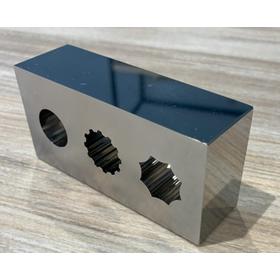
In the aerospace industry, the quality and precision of parts influence safety and performance. In particular, achieving a mirror finish on parts with complex shapes, such as polygons, requires advanced technology. When polishing processes are difficult to implement, it can lead to variations in quality and increased costs. Our wire cutting process not only achieves high-precision mirror finishes on the outer surfaces of polygons but also on the inner surfaces, contributing to the improvement of aerospace component quality. [Application Scenarios] * Aircraft engine parts * Structural components of satellites * Housing parts for precision instruments [Benefits of Implementation] * Cost advantages from reduced polishing processes * Improved component performance due to high-quality mirror finishes * Increased design flexibility by accommodating complex shapes
Added to bookmarks
Bookmarks listBookmark has been removed
Bookmarks listYou can't add any more bookmarks
By registering as a member, you can increase the number of bookmarks you can save and organize them with labels.
Free membership registration
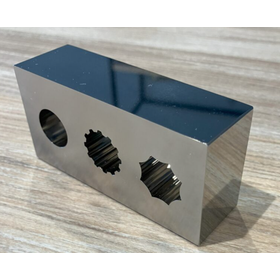
In the optical industry, prisms are important components that control the refraction and reflection of light. In particular, polygonal prisms require high precision and a mirror finish for accurate light control. Our wire-cutting technology achieves a mirror finish on complex shapes that are considered difficult to polish. Wire cutting not only accommodates the outer surfaces of polygons but also the inner surfaces, providing a finish that reflects the surrounding scenery. It reduces the polishing process and contributes to cost advantages. 【Application Scenarios】 - Manufacturing of polygonal prisms - Manufacturing of optical lens components - Precision measuring instruments 【Effects of Implementation】 - Achievement of high-precision mirror finishes - Cost reduction through process simplification - Capability to handle complex shapes
Added to bookmarks
Bookmarks listBookmark has been removed
Bookmarks listYou can't add any more bookmarks
By registering as a member, you can increase the number of bookmarks you can save and organize them with labels.
Free membership registration
In the semiconductor industry, high precision and surface quality are required for mask fine processing. In particular, masks with complex shapes such as polygons may be difficult to handle with polishing processes. Inappropriate processing can lead to reduced yield and performance degradation of the products. Our wire-cut processing not only achieves mirror finishing on the outer surfaces of polygons but also on the inner surfaces, ensuring high precision in processing. With years of experience and know-how, we achieve beautiful processed surfaces without adding a polishing step, leading to process reduction and cost benefits. [Application Scenarios] - Manufacturing of semiconductor masks - Precision machining of complex-shaped components [Effects of Implementation] - Improved product quality through high-precision mirror finishing - Cost benefits from process reduction - Enhanced capability to handle complex shapes
Added to bookmarks
Bookmarks listBookmark has been removed
Bookmarks listYou can't add any more bookmarks
By registering as a member, you can increase the number of bookmarks you can save and organize them with labels.
Free membership registration
In the medical device industry, particularly in the field of endoscopy, precise parts processing is required. Endoscopes are inserted into the patient's body for diagnosis and treatment, making the shape accuracy and surface finish of the parts extremely important. In particular, the mirror finish of parts with complex shapes, such as polygons, can affect light reflection and image clarity, potentially influencing diagnostic accuracy. When polishing processes are difficult to implement, achieving a high-quality mirror finish becomes a challenge. Bandai's wire-cutting processing technology enables mirror finishing not only on the outer surfaces of polygons but also on the inner surfaces, contributing to the quality improvement of endoscope parts. 【Application Scenarios】 - Lens housings for endoscopes - Parts such as forceps - Other parts requiring mirror finishing with complex shapes 【Benefits of Implementation】 - Improved diagnostic accuracy through high-precision parts processing - Cost advantages from reduced polishing processes - Enhanced product reliability due to high-quality surface finishes
Added to bookmarks
Bookmarks listBookmark has been removed
Bookmarks listYou can't add any more bookmarks
By registering as a member, you can increase the number of bookmarks you can save and organize them with labels.
Free membership registration
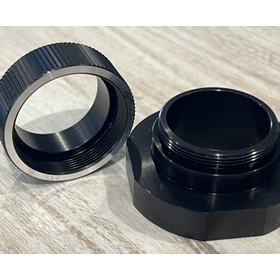
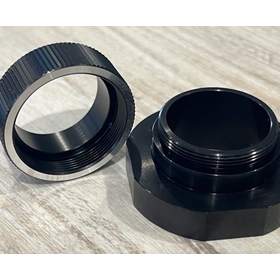
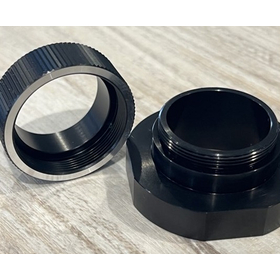
In the robotics industry, particularly in robot vision systems, precise lens mounting is required. C-mount is a lens mounting standard with a 1-inch diameter and 32 threads per inch, and it is a crucial factor that influences the visual performance of robots. Due to the need for dimensional accuracy, processing technology and inspection systems become important. Being able to handle C-mount processing and anodizing in one company also leads to procurement efficiency. [Usage Scenarios] - Robot vision systems - Image processing systems - Inspection equipment [Benefits of Implementation] - High-precision lens mounting - Improved performance of visual systems - Reduction in procurement costs
Added to bookmarks
Bookmarks listBookmark has been removed
Bookmarks listYou can't add any more bookmarks
By registering as a member, you can increase the number of bookmarks you can save and organize them with labels.
Free membership registration
In the medical field, especially in endoscopy, precise parts processing is required. Endoscopes are inserted into the patient's body for diagnosis and treatment, so their components must have high precision and durability. The processing for attaching C-mount standard lenses is one of the critical factors that influence the performance of the endoscope. In the event that the processing precision is low, it could lead to unclear images or equipment failure. Our company contributes to the improvement of the quality of endoscope parts by combining C-mount processing with anodizing. [Application Scenarios] - Lens fixation parts of endoscopes - Lens attachment parts of medical cameras - Parts requiring precise dimensions [Effects of Implementation] - Provision of high-quality endoscope parts - Improvement of product reliability - Assurance of stable image quality
Added to bookmarks
Bookmarks listBookmark has been removed
Bookmarks listYou can't add any more bookmarks
By registering as a member, you can increase the number of bookmarks you can save and organize them with labels.
Free membership registration
In the robotics industry, there is a demand for lightweight and durable moving parts. In particular, wear resistance and corrosion resistance are important for parts that are frequently in motion or exposed to external environments. Inappropriate materials or processing can lead to a decline in robot performance or failure. Our aluminum machining and anodizing processes address these challenges. [Application Scenarios] - Robot arms - Joint parts - Moving frames [Benefits of Implementation] - Improved mobility through weight reduction - Enhanced wear and corrosion resistance - Timely delivery with short lead times
Added to bookmarks
Bookmarks listBookmark has been removed
Bookmarks listYou can't add any more bookmarks
By registering as a member, you can increase the number of bookmarks you can save and organize them with labels.
Free membership registration
In the semiconductor manufacturing industry, heat dissipation measures have become an important issue due to the increasing performance of devices. In particular, efficient heat dissipation is crucial for the reliability and lifespan of semiconductor components that are densely mounted. By combining aluminum machining and anodizing treatment, it is essential to achieve excellent thermal conductivity and heat dissipation to maximize the performance of the devices. Our products provide a seamless solution from aluminum machining to anodizing treatment, enabling short delivery times. [Application Scenarios] - Semiconductor manufacturing equipment - Power semiconductors - LED lighting [Benefits of Implementation] - Improved heat dissipation performance - Extended product lifespan - Cost reduction
Added to bookmarks
Bookmarks listBookmark has been removed
Bookmarks listYou can't add any more bookmarks
By registering as a member, you can increase the number of bookmarks you can save and organize them with labels.
Free membership registration
In the energy industry, corrosion prevention for components used in harsh environments, such as plants and power generation equipment, is crucial. In particular, environments exposed to high temperatures and humidity or chemicals require high corrosion resistance. Components that do not possess appropriate corrosion resistance can lead to early deterioration or failure of equipment, potentially resulting in operational shutdowns and increased costs. Our aluminum machining and anodizing treatment contribute to the stable operation of energy-related equipment by providing products with excellent corrosion resistance. [Application Scenarios] - Plant equipment - Power generation equipment - Other components requiring corrosion resistance [Benefits of Implementation] - Extended equipment lifespan - Reduced maintenance costs - Achieving stable operation
Added to bookmarks
Bookmarks listBookmark has been removed
Bookmarks listYou can't add any more bookmarks
By registering as a member, you can increase the number of bookmarks you can save and organize them with labels.
Free membership registration
In the manufacturing of railway vehicle bodies, high strength and durability are required. Steel pipes and round bars are important materials to meet these demands, but they need to be processed into complex shapes, making the precision of bending operations crucial. In particular, there may be cases where bending radii are small or special shapes are required, which cannot be accommodated by NC pipe benders or press brakes. In such cases, limited options for bending processes can restrict design flexibility and pose challenges in the manufacturing process. Our company addresses these challenges by offering a variety of bending techniques, such as burner bending and pseudo-bending through welding. 【Application Scenes】 - Railway vehicle body frames - Handrails and pipes - Reinforcement materials inside vehicles 【Effects of Implementation】 - Improved design flexibility - Adaptability to diverse shapes - Realization of high-quality body manufacturing
Added to bookmarks
Bookmarks listBookmark has been removed
Bookmarks listYou can't add any more bookmarks
By registering as a member, you can increase the number of bookmarks you can save and organize them with labels.
Free membership registration
In the furniture design industry, diverse shapes of metal parts are required to pursue design freedom. In particular, parts with complex curves and special angles are important for enhancing the uniqueness of the design. However, there are shapes that cannot be accommodated by conventional bending methods, which can become a constraint on design. Our company addresses bending processes that cannot be handled by NC pipe benders or press brakes, expanding design possibilities. 【Application Scenarios】 - Frames for highly designed furniture - Decorative parts with complex shapes - Structural components that balance strength and design 【Benefits of Implementation】 - Increased design freedom - Product differentiation - Response to diverse design needs
Added to bookmarks
Bookmarks listBookmark has been removed
Bookmarks listYou can't add any more bookmarks
By registering as a member, you can increase the number of bookmarks you can save and organize them with labels.
Free membership registration
In the manufacturing of agricultural machinery arms, durability and precise shapes are required. In particular, strength that can withstand use in harsh environments and dimensional accuracy for achieving precise movements are important. Are you struggling with the manufacturing of arms that have a small bending radius or special shapes that cannot be handled by NC pipe benders or press brakes? Bandai's bending processing technology utilizes burner bending and pseudo-bending through welding to solve these challenges. 【Application Scenes】 - Tractor arms - Combine arms - Rice planting machine arms 【Benefits of Implementation】 - Capable of handling shapes that cannot be managed by NC pipe benders - Achieves high durability and strength - Can accommodate a variety of arm shapes
Added to bookmarks
Bookmarks listBookmark has been removed
Bookmarks listYou can't add any more bookmarks
By registering as a member, you can increase the number of bookmarks you can save and organize them with labels.
Free membership registration
In the shipbuilding industry, frames are a crucial element that affects the strength and durability of the hull. In particular, frames used in harsh environments require high precision and strength. The manufacturing of frames necessitates the bending of steel pipes and round bars, but there are many cases where NC pipe benders and press brakes cannot accommodate the requirements. Depending on the bending radius, shape, and material, conventional processing methods may not be sufficient. Our products solve these challenges by combining burner bending and welding techniques. [Application Scenarios] - Hull frames - Deck frames - Equipment frames [Benefits of Implementation] - Achieves bending processes that cannot be handled by NC pipe benders - Increases design flexibility - Enables the production of high-quality frames
Added to bookmarks
Bookmarks listBookmark has been removed
Bookmarks listYou can't add any more bookmarks
By registering as a member, you can increase the number of bookmarks you can save and organize them with labels.
Free membership registration
In the machine tool industry, the design and manufacturing of enclosures require bending of steel pipes and round bars to achieve both strength and durability. Particularly when complex shapes or special bending angles are needed, conventional NC pipe benders or press brakes may not be able to accommodate these requirements. In such cases, challenges arise due to bending radius and segment issues, making it difficult to realize the enclosure as designed. Our company addresses these challenges by combining burner bending and pseudo-bending through welding to meet our customers' needs. [Application Scenarios] - Frames for machine tool enclosures - Stands for control panels - Bases for industrial robots [Benefits of Implementation] - Increased design flexibility - Shortened delivery times - Cost reduction
Added to bookmarks
Bookmarks listBookmark has been removed
Bookmarks listYou can't add any more bookmarks
By registering as a member, you can increase the number of bookmarks you can save and organize them with labels.
Free membership registration
In the plant industry, components that can withstand long-term operation and harsh environments are required. In particular, stainless steel, which is resistant to corrosion and wear, is a crucial factor that affects the durability of plant equipment. Stainless steel checker plates are widely used in plant equipment due to their durability, but the difficulty of processing them poses a challenge. During bending, issues such as distortion of the checkered pattern, scratches, and variations in angles are likely to occur, and the unique springback and work hardening of stainless steel further complicate the stability of quality. Our company, with years of experience and know-how, addresses these challenges and provides high-quality brake bending processing of stainless steel checker plates. [Application Scenarios] - Reinforcement of piping and structures - Production of protective fences and scaffolding - Parts for heat exchangers and tanks [Benefits of Implementation] - Extended equipment lifespan - Reduced maintenance costs - Improved safety
Added to bookmarks
Bookmarks listBookmark has been removed
Bookmarks listYou can't add any more bookmarks
By registering as a member, you can increase the number of bookmarks you can save and organize them with labels.
Free membership registration
In the transportation industry, the strength and quality of components are crucial to ensure the durability and safety of products. In particular, parts exposed to vibrations and shocks require high precision in processing. While stainless steel checker plates excel in strength, they present challenges in bending processes, such as the risk of distortion of the checkers, abrasion marks, angle variations, springback, work hardening, and galling or scratches. These issues can lead to a decline in product quality and durability. Our stainless steel checker plate brake bending processing addresses these challenges and delivers high-quality products. 【Application Scenarios】 - Truck beds - Containers - Parts for various transportation equipment 【Benefits of Implementation】 - High strength and durability - Improved product quality - Cost reduction
Added to bookmarks
Bookmarks listBookmark has been removed
Bookmarks listYou can't add any more bookmarks
By registering as a member, you can increase the number of bookmarks you can save and organize them with labels.
Free membership registration
In the shipbuilding industry, high corrosion resistance capable of withstanding harsh marine environments is required. In particular, areas such as the hull and deck, which come into direct contact with seawater, necessitate materials that are resistant to rust and highly durable. Stainless steel checker plates are widely used in shipbuilding applications due to their excellent corrosion resistance, but bending processing requires advanced technology. Bending checker plates, unlike flat plates, is prone to issues such as distortion of the pattern, abrasion marks, and variations in angle. Additionally, there are risks of springback unique to stainless steel, angle fluctuations due to work hardening, and the potential for chipping or scratches. It is important to address these issues and provide high-quality products. 【Application Scenes】 - Hull structural components - Decks - Stairs - Handrails 【Benefits of Implementation】 - Improved product lifespan due to high corrosion resistance - Increased product value due to beautiful finishes - Enhanced assembly accuracy through improved dimensional precision
Added to bookmarks
Bookmarks listBookmark has been removed
Bookmarks listYou can't add any more bookmarks
By registering as a member, you can increase the number of bookmarks you can save and organize them with labels.
Free membership registration
In the chemical plant industry, components that can withstand corrosive chemicals and substances are essential. In particular, areas where stainless steel plates are used, such as chemical tanks and piping, require high chemical resistance along with precise shapes. Stainless steel checker plates can provide a slip-resistant effect due to their surface texture, but during bending processes, issues like distortion of the pattern, abrasion marks, and angle variations are likely to occur. Additionally, the springback and work hardening unique to stainless steel increase the difficulty of processing. Our technology helps solve these problems and deliver high-quality products. 【Application Scenarios】 - Chemical tanks - Flooring materials for chemical plants - Piping components 【Benefits of Implementation】 - Realization of products with high chemical resistance - Improvement in product quality - Enhanced safety
Added to bookmarks
Bookmarks listBookmark has been removed
Bookmarks listYou can't add any more bookmarks
By registering as a member, you can increase the number of bookmarks you can save and organize them with labels.
Free membership registration
In the energy industry, the safety of plants and equipment is the top priority. In particular, durable materials are required to protect equipment from external shocks and corrosion. Stainless steel checker plates are used as important components to ensure safety due to their high strength and corrosion resistance. However, the bending processing of checker plates is difficult due to their shape, which can lead to variations in quality and a decrease in strength. Our company leverages years of experience and the "Hometown Processing Network" to achieve high precision and stability in the brake bending processing of stainless steel checker plates. This contributes to improving the safety of energy-related equipment. [Usage Scenarios] - Safety fences for plants - Pipe covers - Inspection steps - Other structures that prioritize safety [Benefits of Implementation] - Improved quality through high processing precision - Products that maximize the strength of materials - Assurance of safety - Cost reduction
Added to bookmarks
Bookmarks listBookmark has been removed
Bookmarks listYou can't add any more bookmarks
By registering as a member, you can increase the number of bookmarks you can save and organize them with labels.
Free membership registration
In the agricultural sector, the rusting of metal parts can be a problem due to outdoor use and moisture exposure. In particular, anti-rust measures are important to maintain the durability of agricultural tools and facilities. Stainless steel checker plates suppress the occurrence of rust due to their excellent corrosion resistance, preserving product quality over a long period. Our stainless steel checker plate brake bending processing can provide shapes tailored to customer needs. 【Application Scenarios】 - Parts for agricultural tools - Structural materials for agricultural facilities - Equipment installed outdoors 【Benefits of Implementation】 - Suppression of deterioration due to rust - Extended product lifespan - Reduction in maintenance costs
Added to bookmarks
Bookmarks listBookmark has been removed
Bookmarks listYou can't add any more bookmarks
By registering as a member, you can increase the number of bookmarks you can save and organize them with labels.
Free membership registration
In the playground equipment industry, product safety is of utmost importance. In particular, high-quality materials and precise processing are required for parts that children directly touch and for areas that need structural strength. Stainless steel checker plates excel in corrosion resistance and durability, contributing to the creation of safe playground equipment. However, bending processing of checker plates is prone to issues such as distortion of the checkers, abrasion marks, and variations in angles. Additionally, with stainless steel, there are risks of springback, work hardening, galling, and scratches, which increase the difficulty of processing. Our company, drawing on years of experience and achievements, provides high-quality bending processing of stainless steel checker plates to address these challenges. 【Application Scenes】 - Playground equipment in parks - Playground equipment in schools - Playground equipment in commercial facilities 【Benefits of Implementation】 - Improved safety of playground equipment - Enhanced durability of products - Long-term cost reduction
Added to bookmarks
Bookmarks listBookmark has been removed
Bookmarks listYou can't add any more bookmarks
By registering as a member, you can increase the number of bookmarks you can save and organize them with labels.
Free membership registration
In the construction industry, designs that emphasize aesthetics greatly influence the value of a building. In particular, stainless steel patterned sheets, with their beautiful patterns and durability, are essential materials for high-design buildings. However, the brake bending process for stainless steel patterned sheets is challenging due to the material's characteristics, and the quality of the finished product can be an issue. Problems such as pattern flattening, scratches, angle variations, springback, angle fluctuations due to work hardening, and risks of chipping or scratches can easily arise, necessitating high technical skill. Our stainless steel patterned sheet brake bending process addresses these challenges and delivers high-quality finishes. 【Application Scenarios】 - Exterior design - Interior design - Decorative items 【Benefits of Implementation】 - Enhanced design quality - High-quality finishes - Adaptability to diverse designs
Added to bookmarks
Bookmarks listBookmark has been removed
Bookmarks listYou can't add any more bookmarks
By registering as a member, you can increase the number of bookmarks you can save and organize them with labels.
Free membership registration
In the management of public documents in government offices, accurate identification and long-term preservation of documents are crucial. In particular, it is necessary to prevent deterioration and loss, and to ensure traceability. Traditional labels and stickers are prone to peeling off, posing a risk of information fading away. Our metal plate QR code engraving is resistant to wear and environmental changes, allowing information to be retained semi-permanently. This promotes the digital management of public documents and improves operational efficiency. 【Usage Scenarios】 - Identification of important documents - Asset management - Record management 【Benefits of Implementation】 - Streamlined tracking and management of documents - Long-term information retention - Cost reduction
Added to bookmarks
Bookmarks listBookmark has been removed
Bookmarks listYou can't add any more bookmarks
By registering as a member, you can increase the number of bookmarks you can save and organize them with labels.
Free membership registration
In the financial industry, accurate management and tracking of assets are essential. In particular, for expensive equipment and supplies, it is necessary to minimize the risks of loss and theft while ensuring efficient asset utilization. Engraving QR codes on metal plates contributes to the efficiency of asset management and enhances security. QR codes created through laser engraving are resistant to wear and environmental changes, making them suitable for long-term asset management. 【Use Cases】 - Equipment management for financial institutions - Management of office supplies - Management of important documents 【Benefits of Implementation】 - Real-time tracking of asset locations - Digital management of inspection and maintenance history - Streamlining of asset management operations
Added to bookmarks
Bookmarks listBookmark has been removed
Bookmarks listYou can't add any more bookmarks
By registering as a member, you can increase the number of bookmarks you can save and organize them with labels.
Free membership registration
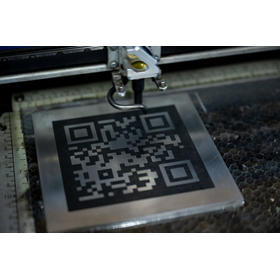
In the aerospace industry, quality control and traceability of parts are extremely important. It is required to withstand use in harsh environments and to retain identification information over the long term. Labels and seals carry the risk of peeling and deterioration, but laser engraving directly etches information onto metal surfaces, boasting high durability. This enables accurate information management from the manufacturing of parts to maintenance. 【Use Cases】 - Manufacturing and management of aircraft parts - Tracking of spacecraft components - Management of maintenance history for parts 【Benefits of Implementation】 - Improved traceability and reliability of parts - Long-term cost reduction - Enhanced efficiency in quality control
Added to bookmarks
Bookmarks listBookmark has been removed
Bookmarks listYou can't add any more bookmarks
By registering as a member, you can increase the number of bookmarks you can save and organize them with labels.
Free membership registration
In the automotive parts industry, traceability and management efficiency of components are crucial. Accurate information management is required for quality control, inventory management, and tracking maintenance history of parts. Labels and stickers can easily peel off, and there is a risk of losing information in harsh environments. QR codes created through laser engraving address these challenges and contribute to improving the efficiency and reliability of parts management. 【Use Cases】 - Engraving identification information on automotive parts - Linking manufacturing history and lot information of parts - Inventory management and tracking of parts 【Benefits of Implementation】 - Increased efficiency in parts management - Improved traceability - Realization of long-term identification management
Added to bookmarks
Bookmarks listBookmark has been removed
Bookmarks listYou can't add any more bookmarks
By registering as a member, you can increase the number of bookmarks you can save and organize them with labels.
Free membership registration
In the real estate industry, accurate information management of properties and the maintenance of long-term asset value are required. In particular, tracking equipment management and maintenance history of properties is important for enhancing customer satisfaction and maintaining the reliability of the properties. Traditional labels and stickers can deteriorate and peel off easily, potentially compromising the accuracy of information management. Our QR code engraving on metal plates is resistant to wear and environmental changes, allowing information to be retained semi-permanently. [Usage Scenarios] - Equipment management of properties (air conditioners, water heaters, etc.) - Recording inspection and maintenance history - Providing information for tenants [Benefits of Implementation] - Improved efficiency in equipment management - Reduction in maintenance costs - Increased customer satisfaction
Added to bookmarks
Bookmarks listBookmark has been removed
Bookmarks listYou can't add any more bookmarks
By registering as a member, you can increase the number of bookmarks you can save and organize them with labels.
Free membership registration
In the food industry, the accuracy and permanence of allergy labeling are required. In particular, food labeling contains important information related to consumer health, and deterioration or disappearance of labels can lead to misinformation, potentially causing serious health issues. Our laser engraving technology achieves a durable display by engraving QR codes on metal plates, making it resistant to wear and environmental changes, thus ensuring a semi-permanent display. This enhances the reliability of allergy labeling and ensures food safety. 【Use Cases】 - Identification of raw materials containing allergens in food manufacturing - Allergy labeling on food packaging - Allergy labeling management in restaurants 【Benefits of Implementation】 - Ensuring long-term visibility of allergy labeling - Preventing communication errors due to label deterioration - Compliance with regulations regarding food labeling
Added to bookmarks
Bookmarks listBookmark has been removed
Bookmarks listYou can't add any more bookmarks
By registering as a member, you can increase the number of bookmarks you can save and organize them with labels.
Free membership registration
In the retail industry, accurate information management is required in various situations, such as inventory management, providing information to customers, and preventing fraud. Especially when there are many types of products and frequent turnover, traditional labels and stickers pose a risk of information loss due to peeling or deterioration. Engraving QR codes on metal plates is resistant to wear and environmental changes, enabling long-term information management. This improves product traceability and enhances customer satisfaction. 【Usage Scenarios】 - Inventory management through QR code engraving on products - Linking manufacturing information and sales history of products - Access to product information for customers 【Benefits of Implementation】 - Increased efficiency in inventory management - Improved traceability of products - Strengthened information provision to customers
Added to bookmarks
Bookmarks listBookmark has been removed
Bookmarks listYou can't add any more bookmarks
By registering as a member, you can increase the number of bookmarks you can save and organize them with labels.
Free membership registration
In the healthcare industry, accurate management and quick access to patient information are essential. In particular, patient identification is crucial for preventing medical errors and ensuring rapid response in emergencies. Traditional labels and stickers are prone to peeling off, posing a risk of information becoming unreadable. Our laser-engraved QR codes are resistant to wear and heat, allowing for permanent retention of information, thereby contributing to the efficiency of patient management. [Usage Scenarios] - Engraving patient IDs - Accessing information such as allergy details and medical history - Integration with test results and treatment history [Benefits of Implementation] - Improved accuracy of patient information - Reduced risk of medical errors - Cost savings through increased operational efficiency
Added to bookmarks
Bookmarks listBookmark has been removed
Bookmarks listYou can't add any more bookmarks
By registering as a member, you can increase the number of bookmarks you can save and organize them with labels.
Free membership registration
In the educational field, efficient management and tracking of teaching materials are required. Particularly when there are many types of materials and a high risk of loss or damage, quick identification and management are crucial. Laser-engraved QR codes provide durable identification information on teaching materials, enabling long-term use. This makes it easier to track the location of materials and allows for a quicker response in case of loss. 【Use Cases】 - Engraving QR codes on experimental equipment - Engraving QR codes on sets of teaching materials - Equipment management 【Benefits of Implementation】 - Streamlining the management of material locations - Quick response in case of loss - Promoting the long-term use of teaching materials
Added to bookmarks
Bookmarks listBookmark has been removed
Bookmarks listYou can't add any more bookmarks
By registering as a member, you can increase the number of bookmarks you can save and organize them with labels.
Free membership registration
In manufacturing traceability, the ability to track products is crucial. It is necessary to accurately manage the manufacturing history and lot information of products to respond quickly to quality control and customer inquiries. Engraving QR codes on metal plates is resistant to wear, oil, and heat, making it permanently identifiable and achieving a level of durability and long-term operability in identification management that cannot be realized with labels or stickers. This contributes to the digital transformation of manufacturing sites and strengthens traceability. 【Use Cases】 - Engraving QR codes on equipment nameplates and product plates - Linking with manufacturing history and lot information - Managing maintenance and service information 【Benefits of Implementation】 - Improved product traceability - Increased efficiency in quality management - Faster response to customer inquiries
Added to bookmarks
Bookmarks listBookmark has been removed
Bookmarks listYou can't add any more bookmarks
By registering as a member, you can increase the number of bookmarks you can save and organize them with labels.
Free membership registration
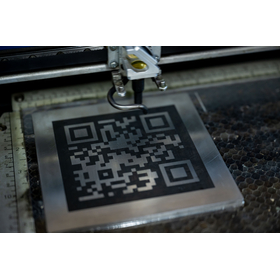
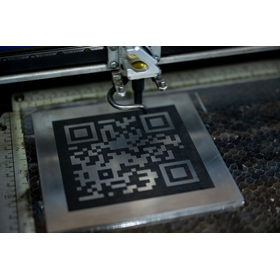
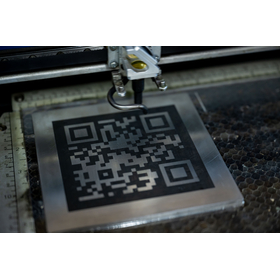
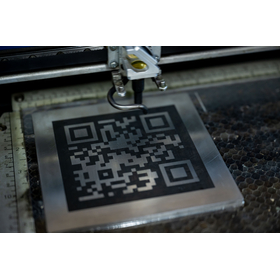
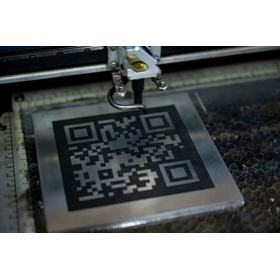
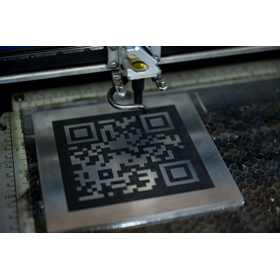
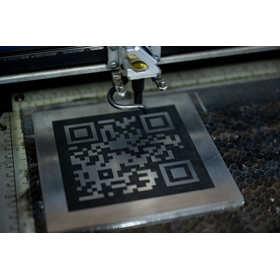
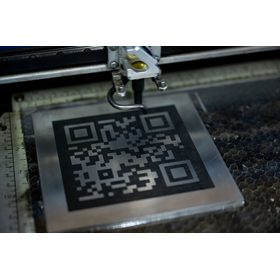
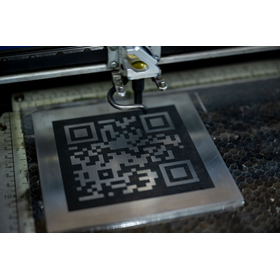
The "Hometown Processing Network," composed of distinctive processing companies from various regions that Bandai proudly represents. One of these companies offers QR code engraving on metal materials such as iron, aluminum, and stainless steel using laser processing machines. Laser engraving is resistant to wear, oil, and heat, making it possible to achieve high durability and long-term operational identification management that cannot be realized with labels or stickers, as it remains identifiable for a semi-permanent duration. If you are considering digital transformation (DX) of manufacturing sites, equipment maintenance, or strengthening traceability, and are facing issues like those listed below, please consider "QR code engraving on metal plates"! 【Equipment Management and Maintenance】 - Check equipment history and inspection records with a smartphone - Digital management of maintenance and repair history - Management of AGV travel routes 【Product Traceability】 - QR code engraving on equipment nameplates and product plates - Linking with manufacturing history and lot information - Management of maintenance and service information 【Tool and Jig Management】 - Identification QR codes on jigs - Management of storage and usage history
Added to bookmarks
Bookmarks listBookmark has been removed
Bookmarks listYou can't add any more bookmarks
By registering as a member, you can increase the number of bookmarks you can save and organize them with labels.
Free membership registration
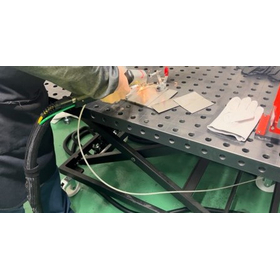
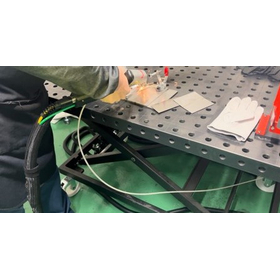
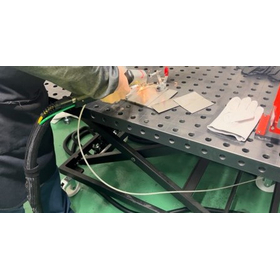
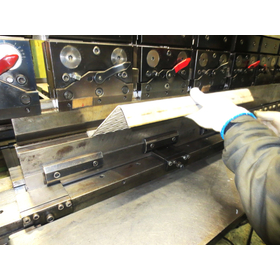
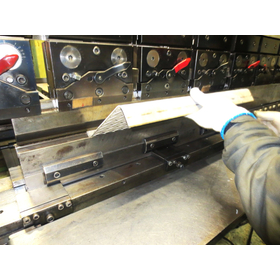
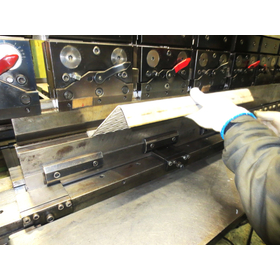
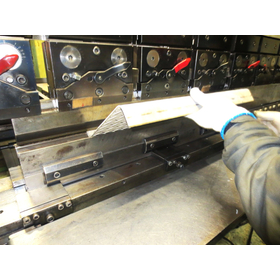
The "Hometown Processing Network," composed of unique processors from various regions that Bandai takes pride in. One of these companies specializes in brake bending processing of stainless steel patterned plates. Bending patterned steel plates is completely different from bending flat plates. The convex parts make localized contact with the mold, concentrating the surface pressure, which can easily lead to: - Flattening of the pattern - Scratches (die marks) - Variation in angles Furthermore, if the material is stainless steel, additional challenges arise, such as: - Significant springback (the phenomenon where the material "slightly returns" after bending) - Angle fluctuations due to work hardening - Risks of galling and scratches This is a process that is often said to be "best avoided..." However, "Hometown Processing Partner 7" is different. With a proven track record of handling a wide variety of press brake processing, we can ensure that "there may not be any flashiness, but we will definitely deliver a reliable finish!" If you are having trouble with stainless steel patterned plates, please feel free to consult with Bandai. We can process thicknesses from 1.6 to 6.0 mm and lengths up to 1,000 mm.
Added to bookmarks
Bookmarks listBookmark has been removed
Bookmarks listYou can't add any more bookmarks
By registering as a member, you can increase the number of bookmarks you can save and organize them with labels.
Free membership registration
At Bandai's proud "Hometown Processing Partner 7," we stock a wide variety of metal sheets on a vast site, enabling same-day shipping for laser and brake processed products. Of course, we can procure large quantities of metal sheets at low costs, allowing us to offer mass-produced laser and brake processed products at attractive prices. If you have concerns about the delivery time or cost of laser and brake processing, please feel free to consult with us. 【Metal Sheet Inventory Lineup】 ● Types Steel Sheets: S45C, SAPH, SECC, SEHC (SGCC), SM490B, SPCC, SPCE, SPFC, SPHC(-P), SS400, ZAM (equivalent to SGMCC) Stainless Steel Sheets: 2B, No.1, #400, HL Aluminum Sheets: A5052, A5083 ● Thickness 0.3mm to 65.0mm ● Sizes 1m x 2m, 3m x 6m, 4 x 8m, 5 x 10m,
Added to bookmarks
Bookmarks listBookmark has been removed
Bookmarks listYou can't add any more bookmarks
By registering as a member, you can increase the number of bookmarks you can save and organize them with labels.
Free membership registration
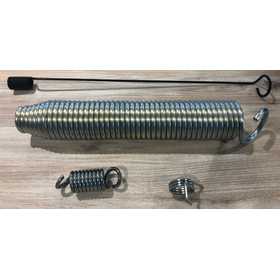
In the musical instrument industry, precise springs are required for fine-tuning sound quality and improving the durability of instruments. Particularly in areas that govern the vibrations and resonance of instruments, the material, shape, and precision of the springs significantly affect sound quality. Hand-wound springs, which can accommodate special specifications that cannot be handled by NC machines and allow for small-scale production during the prototyping stage, play an important role in instrument making. 【Usage Scenarios】 - Adjusting the sound quality of instruments - Producing prototypes - When special-shaped springs are needed 【Benefits of Implementation】 - Optimization of instrument sound quality - Reduction of prototyping costs - Improved durability of instruments through high-quality springs
Added to bookmarks
Bookmarks listBookmark has been removed
Bookmarks listYou can't add any more bookmarks
By registering as a member, you can increase the number of bookmarks you can save and organize them with labels.
Free membership registration
In the robotics industry, precise and flexible components are required to achieve diverse movements. In particular, the durability of movable parts and accurate operation are crucial factors that influence the performance of robots. Hand-bent springs that can accommodate special shapes that NC machines cannot handle, as well as small-scale production during the prototyping phase, are essential in the design and development of robots. The hand-bending spring processing by the skilled craftsmen at Bandai meets these needs. 【Usage Scenarios】 - Joints of robotic arms - Movable parts of sensors and actuators - Spring components inside precision equipment 【Benefits of Implementation】 - Improved range of motion and flexibility of robots - Reduction of costs and time during the prototyping phase - Accommodation of special shapes and specifications
Added to bookmarks
Bookmarks listBookmark has been removed
Bookmarks listYou can't add any more bookmarks
By registering as a member, you can increase the number of bookmarks you can save and organize them with labels.
Free membership registration
In the fishing tackle industry, high sensitivity is required to detect even the slightest bites. This is especially important in fishing methods like lure fishing and carp fishing, where capturing delicate bites can significantly affect the catch. If the sensitivity is low, there is a risk of missing out on fishing opportunities due to the inability to detect subtle movements of the fish. Our hand-bent spring processing can accommodate special specifications that NC machines cannot handle, as well as small-scale production for prototypes. By having skilled artisans create these springs by hand, we provide springs that maximize the sensitivity of fishing tackle. 【Usage Scenarios】 - Reels for lure fishing - Floats for carp fishing - Sensors for detecting bites 【Benefits of Implementation】 - Contributes to increased catch by not missing subtle bites - Enhances the concentration of anglers, improving the enjoyment of fishing - Increases the durability of fishing tackle with high-quality springs
Added to bookmarks
Bookmarks listBookmark has been removed
Bookmarks listYou can't add any more bookmarks
By registering as a member, you can increase the number of bookmarks you can save and organize them with labels.
Free membership registration
In the mold industry, high-precision springs are essential to achieve the precise movements that influence product quality. Especially in the movable parts of molds and in precision mechanisms, the fine adjustments of springs are directly linked to the accuracy of the products. It is important to respond to the needs for special specifications that cannot be handled by NC machines and for small-scale production during the prototyping stage. Hand-bent springs address these challenges with the craftsmanship of skilled artisans. 【Usage Scenarios】 - Molds requiring high precision - Small-scale production during the prototyping stage - Springs with special specifications that cannot be handled by NC machines 【Benefits of Implementation】 - Improvement in mold quality - Reduction of prototyping time - Capability to produce special springs
Added to bookmarks
Bookmarks listBookmark has been removed
Bookmarks listYou can't add any more bookmarks
By registering as a member, you can increase the number of bookmarks you can save and organize them with labels.
Free membership registration
In the precision machinery industry, precise adjustments of springs are required for fine-tuning products. Particularly in precision instruments that demand high accuracy and durability, even slight differences in springs can affect the overall performance of the product. There are cases where time and cost become challenges in special specifications that cannot be handled by NC machines or in small-scale production for prototypes. Our "Hand-Bent Spring Processing" addresses these challenges through the skilled craftsmanship of artisans. 【Usage Scenarios】 - Prototyping of precision instruments - Manufacturing springs that require fine adjustments - Springs with special specifications that cannot be handled by NC machines 【Benefits of Implementation】 - Procurement of springs with short lead times - Response to special specifications - Rapid production of prototypes
Added to bookmarks
Bookmarks listBookmark has been removed
Bookmarks listYou can't add any more bookmarks
By registering as a member, you can increase the number of bookmarks you can save and organize them with labels.
Free membership registration
In the medical device industry, precise components are required to ensure the safety and reliability of products. Particularly in medical devices that control fine movements, the accuracy of springs significantly affects product performance. When special specifications that cannot be handled by NC machines are needed, or when small-scale production for prototypes is required, hand-bent spring processing is effective. Hand-wound springs crafted by skilled artisans support precise movements and contribute to the improvement of medical device quality. 【Usage Scenarios】 - Medical devices requiring precise movements - Small-scale production during the prototyping stage - Springs with special shapes that cannot be handled by NC machines 【Benefits of Implementation】 - Achieving precise operations - Providing high-quality products - Quick response times - Cost reduction during the prototyping stage
Added to bookmarks
Bookmarks listBookmark has been removed
Bookmarks listYou can't add any more bookmarks
By registering as a member, you can increase the number of bookmarks you can save and organize them with labels.
Free membership registration
In the watch industry, the surface finishing of metal components is crucial for creating a sense of luxury. In particular, the glossiness significantly affects the product's value. Tough pitch copper is suitable for watch parts due to its beautiful luster, but the difficulty of processing requires a high-quality finish. Our company specializes in processing tough pitch copper and offers surface finishing that enhances the luxury of watches with technology that achieves a surface roughness of Ra0.1. 【Application Scenarios】 * Watch dials * Watch cases * Decorative components 【Benefits of Implementation】 * Enhanced luxury of products * Improved brand image * Differentiation from competitors
Added to bookmarks
Bookmarks listBookmark has been removed
Bookmarks listYou can't add any more bookmarks
By registering as a member, you can increase the number of bookmarks you can save and organize them with labels.
Free membership registration
In the world of art, it is important to maximize the characteristics of materials to enhance the expressiveness of the works. Particularly in expressions that utilize light reflection, the surface treatment of the material greatly influences the final outcome of the piece. Tough pitch copper is attractive for its beautiful luster, but due to the difficulty of processing, there has been a challenge in the limited methods of expression. Our company aims to broaden the range of artistic expression by providing surface processing technology that achieves a surface roughness of Ra0.1, leveraging the characteristics of tough pitch copper. 【Usage Scenarios】 - Sculptures - Objects - Installations 【Effects of Implementation】 - Enhanced expressiveness through light reflection - Increased added value of the work - Realization of unique methods of expression
Added to bookmarks
Bookmarks listBookmark has been removed
Bookmarks listYou can't add any more bookmarks
By registering as a member, you can increase the number of bookmarks you can save and organize them with labels.
Free membership registration