1~35 item / All 35 items
Displayed results
Filter by category

Added to bookmarks
Bookmarks listBookmark has been removed
Bookmarks listYou can't add any more bookmarks
By registering as a member, you can increase the number of bookmarks you can save and organize them with labels.
Free membership registration
Contact this company
Inquiry FormBefore making an inquiry
Download Profile1~35 item / All 35 items
Filter by category
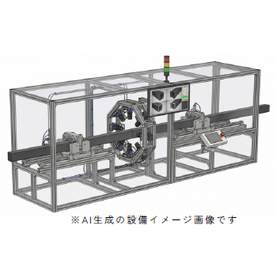
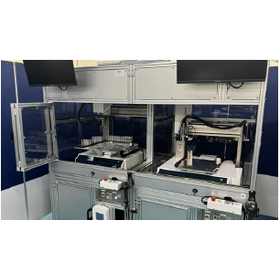
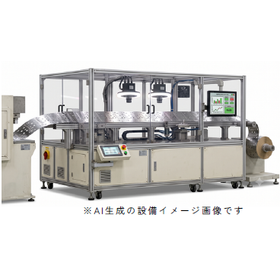
We would like to introduce a case where we manufactured and implemented a prototype machine for evaluation aimed at automation for Company N, a manufacturer of automotive parts. In the all-direction inspection of long workpieces in square pipe shapes, inspections were traditionally conducted by human eyes. However, in order to improve operational efficiency, automation was considered, and there was a request to achieve all-direction inspection in one go without changing setups. After conducting detailed hearings, we proposed a device that performs automatic inspections from four directions—up, down, left, right, and diagonally—totaling eight directions, all without changing setups within a limited space. As a prototype machine, we realized the automation of the inspection process, and a prospect for operational efficiency was established. [Case Overview] ■ Background: All-direction inspection of long workpieces without setup changes ■ Proposal: Zero-start automation ■ Effect: Outlook for operational efficiency *For more details, please download the PDF or feel free to contact us.
Added to bookmarks
Bookmarks listBookmark has been removed
Bookmarks listYou can't add any more bookmarks
By registering as a member, you can increase the number of bookmarks you can save and organize them with labels.
Free membership registration
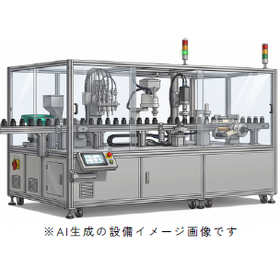
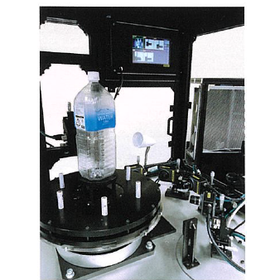
We would like to introduce a case study of the automation line for multi-variety bottle filling that was implemented for Company J, a medical materials manufacturer. In addition to accommodating a very diverse range of work, there were several challenging requirements, including operation in a darkroom environment to prevent any impact on the contents, precise alignment of covers and caps, and achieving a cycle time of 30 units per minute. We proposed an automation line covered with light-shielding covers that consistently handles everything from supply to appearance inspection, accommodating multiple varieties. Continuous production at the required cycle time was achieved, realizing both high production efficiency and stringent quality assurance. [Case Overview] ■ Background: Multiple challenging requirements including multi-variety accommodation ■ Proposal: Various innovations for multi-variety accommodation ■ Effect: Achieving high production efficiency and stringent quality assurance *For more details, please download the PDF or feel free to contact us.
Added to bookmarks
Bookmarks listBookmark has been removed
Bookmarks listYou can't add any more bookmarks
By registering as a member, you can increase the number of bookmarks you can save and organize them with labels.
Free membership registration
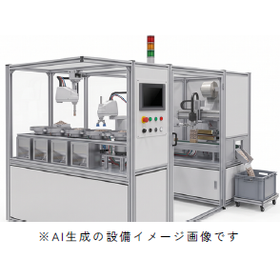
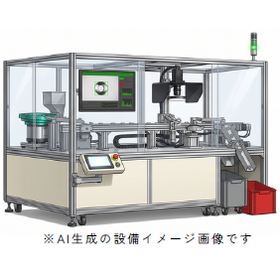
We would like to introduce a case study of the automation equipment implemented for the bagging process of nozzle parts at a medical materials manufacturer. In the process of packing a specified number of nozzle parts into a ziplock bag and sealing it, this was traditionally done manually. However, maintaining strict quality conditions without causing scratches or deformation to the workpieces while improving production efficiency was a challenge. We proposed a system that divides the tasks of picking parts and bagging, intentionally leaving the supply of parts to the hopper and the setting of empty bags as manual operations. Through stable automation that meets quality standards, we achieved a significant improvement in production efficiency. [Case Overview] ■ Background: Balancing strict quality conditions and efficiency ■ Proposal: Intentionally leaving manual operations ■ Effect: Significant improvement in production efficiency *For more details, please download the PDF or feel free to contact us.
Added to bookmarks
Bookmarks listBookmark has been removed
Bookmarks listYou can't add any more bookmarks
By registering as a member, you can increase the number of bookmarks you can save and organize them with labels.
Free membership registration
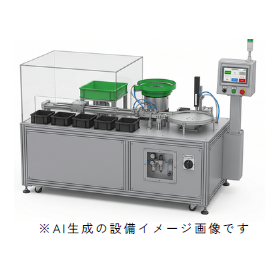
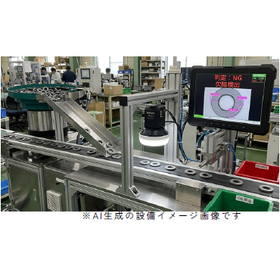
We would like to introduce a case where Company C, a metal processing manufacturer, implemented automation equipment for the measurement of the total length of cap parts and the sorting process. In the measurement and sorting of cap parts, which are lathe-processed products, it was necessary to avoid interference with measurement accuracy caused by the entanglement of cutting chips and to ensure stable measurement accuracy, as well as to reduce the complicated adjustment work on-site. To avoid interference from cutting chips, we proposed a method for high-precision total length measurement by placing contact-type displacement sensors above and below. The entire process from material feeding to automatic sorting has been fully automated, achieving a reduction in the burden on operators and optimizing production efficiency. [Case Overview] ■ Background: The challenge was to ensure stable measurement accuracy and reduce adjustment work on-site. ■ Proposal: Various suggestions to reduce adjustment work. ■ Effect: Achieved a reduction in the burden on operators. *For more details, please download the PDF or feel free to contact us.
Added to bookmarks
Bookmarks listBookmark has been removed
Bookmarks listYou can't add any more bookmarks
By registering as a member, you can increase the number of bookmarks you can save and organize them with labels.
Free membership registration
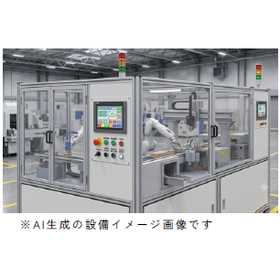
We would like to introduce a case study of Company B, a medical materials manufacturer, which implemented an automated line as the second model, improving upon the first model produced by another company. The first model from another manufacturer faced issues such as chocolate stops, poor contact, adhesive vapor retention, and difficulty in cleaning. With the increase in production volume, there was a need for the second model to address these challenges. We confirmed the problematic areas on-site and proposed various measures, such as the adoption of waterproof connectors and a review of the vibration-proof mechanism. The entire process was fully automated, achieving long hours of stable operation and a highly automated line that is safe and easy to manage. 【Case Overview】 ■ Background: Development of the second model with improvements to the first model from another company ■ Proposal Details: On-site inspection of the actual equipment and proposal of various measures ■ Effect: Achieved a highly reliable, safe, and easy-to-manage automated line *For more details, please download the PDF or feel free to contact us.
Added to bookmarks
Bookmarks listBookmark has been removed
Bookmarks listYou can't add any more bookmarks
By registering as a member, you can increase the number of bookmarks you can save and organize them with labels.
Free membership registration
We would like to introduce a case study of the implementation of an automation system for jig placement in the circuit board cutting process at electronic components manufacturer Company A. In the circuit board cutting process, it is necessary to create dedicated jigs for each board, which incurs costs and lead times for small lot production of various types, making it difficult to respond quickly to design changes. We proposed a magnetic pin automatic placement system that eliminates the need for dedicated jigs entirely. By automating all processes of pin installation, confirmation, and return, we achieved significant cost reductions and dramatically shortened production lead times. [Case Overview] ■ Background: Cost reduction in processes requiring small quantities of various types ■ Proposal: No need for dedicated jigs! New magnetic pin automatic placement system ■ Effect: Achieved significant cost reductions and shortened lead times *For more details, please download the PDF or feel free to contact us.
Added to bookmarks
Bookmarks listBookmark has been removed
Bookmarks listYou can't add any more bookmarks
By registering as a member, you can increase the number of bookmarks you can save and organize them with labels.
Free membership registration
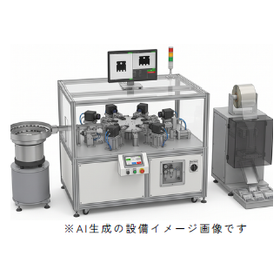
We would like to introduce a case study of the introduction of high-speed automation equipment for the visual inspection process of precision electronic components at Company F, a manufacturer of metal and resin parts. In the manufacturing process of precision electronic components, there was a demand for reducing cycle time to improve productivity, necessitating the establishment of a system for inspecting all units within an extremely short tact time for fine and diverse defects. We proposed a mechanism centered around an index table equipped with eight arms, allowing each inspection process to proceed simultaneously. This enabled comprehensive visual inspection from multiple directions with high precision imaging, significantly contributing to a leap in production efficiency. 【Case Overview】 ■ Background: High-precision image inspection of six surfaces with a cycle time of 1 second ■ Proposal: Imaging process optimized for efficiency ■ Effect: Dramatic improvement in production efficiency through comprehensive visual inspection in 1 second *For more details, please download the PDF or feel free to contact us.
Added to bookmarks
Bookmarks listBookmark has been removed
Bookmarks listYou can't add any more bookmarks
By registering as a member, you can increase the number of bookmarks you can save and organize them with labels.
Free membership registration
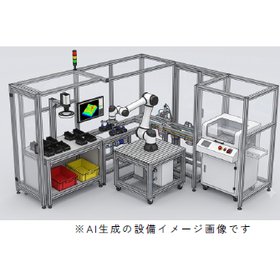
We would like to introduce a case study of the automation line for appearance inspection and packaging of resin molded products implemented at G Company, a manufacturer of metal and resin parts. Due to the aging of existing inspection machines, there were challenges in detecting various defects in complex-shaped workpieces, inspecting the top and sides within a short takt time, and efficiently supplying and retrieving large quantities of heavy workpieces. We proposed a system that combines a vertical multi-joint robot with advanced image inspection equipment to reduce travel time losses. We achieved consistent automation from inspection to packaging, promoting labor savings and simultaneously reducing the burden on the production site. [Case Overview] ■ Background: Inspection process requiring speed, volume, and precision ■ Proposal: Thorough reduction of time losses ■ Effects: Improvement in quality and efficiency, as well as reduction of the burden on the site *For more details, please download the PDF or feel free to contact us.
Added to bookmarks
Bookmarks listBookmark has been removed
Bookmarks listYou can't add any more bookmarks
By registering as a member, you can increase the number of bookmarks you can save and organize them with labels.
Free membership registration
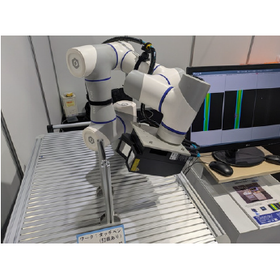
We would like to introduce a case study of an automatic inspection device that performs dent inspection by combining a 3D sensor and AI, designed as a concept for our exhibition. In the conventional full dent inspection of metal workpieces, human eyes were used, but standard cameras faced challenges as the metal reflected light, causing halation and making it difficult to consistently capture dents. By combining a 3D sensor with AI image inspection software and integrating a robot for comprehensive inspection, we created a demo device. This has led to the realization of an automated device for full dent inspection with zero blind spots, unaffected by environmental conditions. [Case Overview] ■ Background: Full dent inspection of glossy workpieces ■ Proposal: Automatic inspection device effectively utilizing a 3D sensor ■ Effect: Achieved a full dent inspection device with zero blind spots *For more details, please download the PDF or feel free to contact us.
Added to bookmarks
Bookmarks listBookmark has been removed
Bookmarks listYou can't add any more bookmarks
By registering as a member, you can increase the number of bookmarks you can save and organize them with labels.
Free membership registration
We would like to introduce a case study of the automation equipment introduced for the lead frame dent image inspection process at metal press manufacturer K. In the production line of lead frames discharged from the existing press machine, it was necessary to add an inspection process to check for dents without dropping the production takt time and while preventing the influence of stray light, all within a limited allowable space. We proposed the addition of a compact image inspection unit that fits within the existing equipment, and implemented measures to prevent stray light by placing a high-resolution camera and lighting. This enabled automatic dent inspection inline without any reduction in production speed. 【Case Overview】 ■ Background: Retrofitted inspection process for existing line ■ Proposal: Compact inspection unit that does not interfere with takt time ■ Effect: Automation of inspection without any reduction in production speed *For more details, please download the PDF or feel free to contact us.
Added to bookmarks
Bookmarks listBookmark has been removed
Bookmarks listYou can't add any more bookmarks
By registering as a member, you can increase the number of bookmarks you can save and organize them with labels.
Free membership registration
We would like to introduce a case study of the automation equipment for the visual inspection of white disc-shaped workpieces implemented at H Company, a manufacturer of resin molded parts. With the start of mass production of white reflectors, there was a need for high-speed inspection of up to 1 million workpieces per month, covering 360 degrees around the top, bottom, and outer side surfaces, as well as the detection of fine foreign objects and black spots as small as 0.3 mm. We proposed a system incorporating an inversion mechanism and a rotating mechanism for side appearance inspection, achieving reliable automated inspection that is not affected by the environment. The efficiency of the packaging process has also improved. [Case Overview] ■ Background: 360-degree inspection with a minimum NG of 0.3 mm ■ Proposal Details: Proposal incorporating an inversion mechanism and a rotating mechanism for side appearance inspection ■ Effect: Realization of reliable automated inspection *For more details, please download the PDF or feel free to contact us.
Added to bookmarks
Bookmarks listBookmark has been removed
Bookmarks listYou can't add any more bookmarks
By registering as a member, you can increase the number of bookmarks you can save and organize them with labels.
Free membership registration
We would like to introduce a case study of the implementation of an automatic inspection device at automotive parts manufacturer M Company. There was a need to automate the visual inspection of ring-shaped workpieces, but the inspection involved determining shallow and thin cracks, which were difficult to see with the human eye. The process relied on the auditory judgment of a single veteran staff member. By conducting thorough preliminary verification and innovating the shooting methods, such as adjusting the angle of the lighting, we proposed an automatic inspection device that could determine the presence of cracks, including both upstream and downstream processes. This has eliminated reliance on individual expertise and has also led to improved production efficiency. [Case Overview] ■ Background: Only one veteran could perform the inspection ■ Proposal: Thorough preliminary verification before the proposal, tailored to the customer's needs ■ Effect: Automatic inspection device including upstream and downstream processes *For more details, please download the PDF or feel free to contact us.
Added to bookmarks
Bookmarks listBookmark has been removed
Bookmarks listYou can't add any more bookmarks
By registering as a member, you can increase the number of bookmarks you can save and organize them with labels.
Free membership registration
We would like to introduce a case study of Company X, a manufacturer of medical-related components, where we responded to the customer's cost and space requirements with innovative ideas. In multiple types of picking processes, other companies proposed the need to line up a large number of parts feeders, which was not practical in terms of space and initial costs. We adopted 2D bulk picking using vision and general-purpose feeders. This not only reduced costs and space but also enhanced versatility, enabling support for a wide variety of products, leading to its adoption. 【Features】 ■ Extensive track record in handling a wide variety of products ■ Capable of accommodating significantly different sizes and weights of workpieces ■ Automation specialists with numerous achievements in automation realize solutions to challenges *For more details, please refer to the related links or feel free to contact us.
Added to bookmarks
Bookmarks listBookmark has been removed
Bookmarks listYou can't add any more bookmarks
By registering as a member, you can increase the number of bookmarks you can save and organize them with labels.
Free membership registration
Our company leverages its position as a trading company to provide design proposals regardless of the equipment manufacturer. Initially, we envisioned automation using Cartesian robots for automotive parts manufacturer Z Company, but we proposed a line configuration using the unused six-axis vertical articulated robot that Z Company owned. As a result, we were able to reduce both costs and the number of processes, and our proposal was adopted. 【Features】 ■ We can accept specifications for equipment manufacturers from customers. ■ We create proposal documents from the estimation stage to minimize discrepancies in understanding. ■ It is also possible to utilize customer-supplied items and existing idle equipment. *For more details, please refer to the related links or feel free to contact us.
Added to bookmarks
Bookmarks listBookmark has been removed
Bookmarks listYou can't add any more bookmarks
By registering as a member, you can increase the number of bookmarks you can save and organize them with labels.
Free membership registration
Our company has been proposing the automation of visual inspection as an "image SIer" based on many years of experience. We select and configure the optimal combinations of cameras, lenses, lighting, and processors from various manufacturers. Because we are engaged in the automation of production processes, we can also propose complete automation that includes upstream and downstream processes. We will also consider utilizing your existing robots and machinery. 【Features】 ■ Selection and configuration of image inspection equipment suitable for the workpiece ■ Design and manufacturing of automatic inspection devices ■ Support for castings, painted surfaces, glossy workpieces, large workpieces, food and agricultural products, etc. ■ Test equipment before inline implementation is provided as simply and affordably as possible ■ Local support, as well as accelerated after-sales follow-up through online support ■ Proposals for automatic inspection devices utilizing robots are also possible *For more details, please refer to the related links or feel free to contact us.
Added to bookmarks
Bookmarks listBookmark has been removed
Bookmarks listYou can't add any more bookmarks
By registering as a member, you can increase the number of bookmarks you can save and organize them with labels.
Free membership registration
Our company, with its extensive network, has launched numerous automated machines across various industries as an automation producer. What we particularly value is the meticulous listening to your requests and detailed observation of the site. This is where we gather important information to visualize the realization of automation. After formulating a plan, selecting and discussing with manufacturers, and thoroughly aligning with our customers, we proceed from order to design and production. 【Major Achievements (Examples)】 ■ Magnet assembly metal press-in machine ■ Wiper assembly machine ■ High-frequency heating press-in machine ■ Shaft assembly machine ■ Cylinder SA assembly machine ■ Motor parts extraction and packaging machine *For more details, please refer to the related links or feel free to contact us.
Added to bookmarks
Bookmarks listBookmark has been removed
Bookmarks listYou can't add any more bookmarks
By registering as a member, you can increase the number of bookmarks you can save and organize them with labels.
Free membership registration
The Automation Division of Tokiwakogyo. This department has been proposing design, manufacturing, and startup solutions for a wide range of projects over many years, from large-scale automation production lines and dedicated machines to smaller items like jig manufacturing. Among the various products handled by Tokiwakogyo, the field of automation, which offers unique solutions tailored to each project, makes it difficult to introduce specific products, and we have not been able to feature it much on this blog until now. Therefore, this time, we interviewed Mr. A, one of the automation experts in the Automation Division, to bring you the reality of automation at Tokiwakogyo. *For more detailed content of the blog, please refer to the related links. Feel free to contact us for more information.
Added to bookmarks
Bookmarks listBookmark has been removed
Bookmarks listYou can't add any more bookmarks
By registering as a member, you can increase the number of bookmarks you can save and organize them with labels.
Free membership registration
The parts of the product are automatically transported, and the machine combines multiple parts to create the finished product. This has become a common sight in some modern factories. Of course, depending on the parts being made and the nature of the work, there are still places where people are performing tasks one by one. However, for large-scale, simple tasks that do not require special skills, we would like to automate them. Tokiwa Industry's Tokiwa Smart FA is capable of designing and manufacturing equipment for the automation of such tasks. *For more details, please refer to the related links. Feel free to contact us for more information.*
Added to bookmarks
Bookmarks listBookmark has been removed
Bookmarks listYou can't add any more bookmarks
By registering as a member, you can increase the number of bookmarks you can save and organize them with labels.
Free membership registration
Recently, robots have become increasingly familiar in our lives. It's no longer unusual for a robot to bring food in restaurants instead of a human, and robots that clean floors in offices and homes have also become common. In 2017, a humanoid robot named Sophia obtained citizenship in Saudi Arabia. Now, these robots are also making significant contributions in production environments. The robots in these settings look completely different from serving robots, cleaning robots, or humanoid robots. There are various types, but today, as part of the "Surprisingly Unknown!? Series," we will introduce two types: vertical multi-joint robots and parallel link robots. *For more detailed information, please refer to the related links. Feel free to contact us for more details.
Added to bookmarks
Bookmarks listBookmark has been removed
Bookmarks listYou can't add any more bookmarks
By registering as a member, you can increase the number of bookmarks you can save and organize them with labels.
Free membership registration
Robots that take on dangerous, difficult, and simple jobs in place of humans. They require maintenance, but they work without complaints and are very reliable. In restaurants, robots bring food, and in offices, robots clean the floors. They have become quite familiar. By the way, in my home, a robot takes care of both sweeping and mopping the floors. These robots are also making great contributions in production sites. The robots in production environments look completely different from serving robots or cleaning robots. There are various types, but today, as part of the "Surprisingly Unknown!? Series," we will introduce the SCARA robot. *For more details about the blog, please refer to the related links. For more information, feel free to contact us.
Added to bookmarks
Bookmarks listBookmark has been removed
Bookmarks listYou can't add any more bookmarks
By registering as a member, you can increase the number of bookmarks you can save and organize them with labels.
Free membership registration
Just as there is a certain limit to the weight that humans can carry, robots also have a defined weight capacity. Just as some people can barely lift a few kilograms while others can lift 500 kilograms, there are different types of robots that can only transport less than 1 kilogram, as well as those that can handle over 1 ton. This weight capacity is referred to as "lifting capacity" or "payload." *For more detailed information, please refer to the related links. Feel free to contact us for more details.*
Added to bookmarks
Bookmarks listBookmark has been removed
Bookmarks listYou can't add any more bookmarks
By registering as a member, you can increase the number of bookmarks you can save and organize them with labels.
Free membership registration
This time, I would like to introduce our automation production services. When we think of "automation," we often picture "robots." Automation refers to machines and equipment performing tasks in place of humans, and as you can imagine, robots often play a significant role in this. Working alongside robots feels like something out of a movie. That near-future era has indeed arrived. Behind this lies the significant issues of "people," "cost," and "quality." What are the major challenges we face? *For more details, you can view the blog through the related links. Please feel free to contact us for more information.*
Added to bookmarks
Bookmarks listBookmark has been removed
Bookmarks listYou can't add any more bookmarks
By registering as a member, you can increase the number of bookmarks you can save and organize them with labels.
Free membership registration
In recent years, the presence of robots has become very familiar. For example, there are robots that deliver food in family restaurants, robots that clean, and robots that work alongside people in warehouses for picking tasks. In the future, it is likely that receiving services from robots or working together with them will become "normal." Collaborative robots that work alongside humans. What benefits can be gained by introducing automation with collaborative robots? *For more details, you can view the related links. Please feel free to contact us for more information.*
Added to bookmarks
Bookmarks listBookmark has been removed
Bookmarks listYou can't add any more bookmarks
By registering as a member, you can increase the number of bookmarks you can save and organize them with labels.
Free membership registration
Image processing technology, such as facial recognition systems on smartphones and barcode payment systems, has permeated our lives. It is no exaggeration to say that it has become commonplace. In fact, this image processing technology is being adopted across various industries and is rapidly expanding. Combining this image processing with automation technology will undoubtedly create a powerful system. At Tokiwa System Technologies, a group company of Tokiwa Industries, we make image × automation possible. What exactly does "image × automation" proposed by Tokiwa System Technologies entail? *For more details, please refer to the related links. Feel free to contact us for more information.*
Added to bookmarks
Bookmarks listBookmark has been removed
Bookmarks listYou can't add any more bookmarks
By registering as a member, you can increase the number of bookmarks you can save and organize them with labels.
Free membership registration
In the manufacturing industry, quality control is one of the important factors that influence a company's competitiveness. In particular, many companies invest significant amounts of money in product defect inspection. If you are struggling to achieve the desired results, why not consider automation through the introduction of image inspection? Automation through image inspection can solve many challenges and potentially lead to cost reduction. *You can view the detailed content of the blog through the related link. For more information, please feel free to contact us.*
Added to bookmarks
Bookmarks listBookmark has been removed
Bookmarks listYou can't add any more bookmarks
By registering as a member, you can increase the number of bookmarks you can save and organize them with labels.
Free membership registration
This time, we will discuss the repair of old automation equipment. "Have you recently felt that the automation equipment you have been using for many years is not functioning well?" "Do you feel that production efficiency has declined?" One common concern we receive from customers is, "I want to replace my old automation equipment with new ones, but the cost is a barrier, and I can't make a decision." However, there are options beyond just "replacement" for aging automation equipment. There is also the option of extending its life through "proper maintenance." It doesn't matter if the equipment is too old to have a circuit diagram or if the manufacturer no longer exists. Our company can provide maintenance. *For more details, please refer to the related links on our blog. Feel free to contact us for more information.
Added to bookmarks
Bookmarks listBookmark has been removed
Bookmarks listYou can't add any more bookmarks
By registering as a member, you can increase the number of bookmarks you can save and organize them with labels.
Free membership registration
"Maintaining quality," "strict adherence to deadlines," and "ensuring safety." Continuing to uphold these "norms" in manufacturing is quite a challenging endeavor. One of the significant factors contributing to this is the issue of "people." "Every time someone resigns, I find myself worrying about how to keep the line running," and "even when new staff come in, they leave quickly. In the first place, we can't even attract people when we post job openings." If you can relate to such situations, it might be time to consider "introducing automation." When people hear "automation," they might imagine "huge unmanned factories" like those seen on TV and think it requires enormous costs. However, automation encompasses a wide range, from large-scale equipment to smaller systems that work alongside people as "reliable partners." This time, we will introduce "key points to determine whether to implement automation." *For more detailed information, please refer to the related links. Feel free to contact us for more details.*
Added to bookmarks
Bookmarks listBookmark has been removed
Bookmarks listYou can't add any more bookmarks
By registering as a member, you can increase the number of bookmarks you can save and organize them with labels.
Free membership registration
Our company is engaged not only in the delivery of equipment but also in providing training services for effective usage. We offer a foundational course aimed at acquiring knowledge about technological trends in the world, what can be done with image processing, and case studies of applications in factories. Additionally, we provide practical training, advice on effectively using image equipment for existing facilities, and can also assist with image inspection POCs. Please feel free to consult us when needed. 【Services】 ■ Foundational Course: General Knowledge Lectures ■ Foundational Course: Classroom Learning + Hands-on Experience ■ Practical Course: Hands-on Training ■ Applied Course: Advice on Effectively Using Image Equipment for Existing Facilities ■ Image Inspection POC Assistance ■ Image Equipment Introduction OJT *For more details, please refer to the related links or feel free to contact us.
Added to bookmarks
Bookmarks listBookmark has been removed
Bookmarks listYou can't add any more bookmarks
By registering as a member, you can increase the number of bookmarks you can save and organize them with labels.
Free membership registration
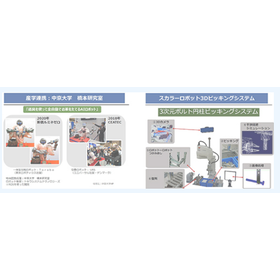
We would like to introduce our company's "Research and Development Cases of Image × Robot Control." We have achievements in collaboration with industry and academia, including the development of a tea-serving robot, 3D robot picking, and automatic assembly tasks through joint research with manufacturers. Additionally, we have proposals for devices such as positioning systems for large parts, crack inspection devices for circular automotive parts, fine scratch inspection devices for washers, and appearance inspection devices for metal balls. 【Examples of Device Proposals (Excerpt)】 ■ Warping and weight inspection device for automotive magnets ■ Screw tightening device for products with built-in car navigation ■ Six-sided inspection of black resin parts ■ Inspection of white resin ring parts ■ Positioning device for large parts *For more details, please refer to the related links or feel free to contact us.
Added to bookmarks
Bookmarks listBookmark has been removed
Bookmarks listYou can't add any more bookmarks
By registering as a member, you can increase the number of bookmarks you can save and organize them with labels.
Free membership registration
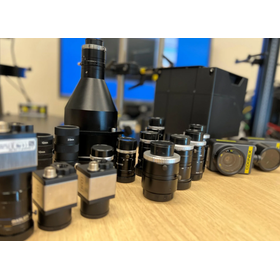
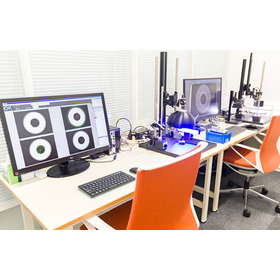
Our company contributes to your challenges in labor reduction, automation, and image processing implementation through consulting on the introduction of imaging equipment and proposals for image × automation. We equip our image lab with products from multiple manufacturers, including Santec, Basler, Toshiba Teli, Raymak, C.C.S, and V.S. Technology. Even for equipment not currently owned, we collaborate with various manufacturers to create optimal proposals. Please feel free to consult us when needed. 【Example of manufacturers of owned equipment】 ■ Omron ■ Keyence ■ MENOU ■ ROXY ■ Santec *For more details, please refer to the related links or feel free to contact us.
Added to bookmarks
Bookmarks listBookmark has been removed
Bookmarks listYou can't add any more bookmarks
By registering as a member, you can increase the number of bookmarks you can save and organize them with labels.
Free membership registration
We would like to introduce our RPA services. We provide support from business investigation and verification before implementation to robot creation and maintenance after implementation. "If we want to automate our operations, can RPA really solve our issues?" "Can our company's operations even be automated with RPA?" For those considering implementation for the first time, our dedicated staff will provide support. 【Implementation Process】 1. Trial and target business hearing 2. Implementation 3. Production and training support 4. Maintenance, management, and operational support *For more details, please refer to the PDF document or feel free to contact us.
Added to bookmarks
Bookmarks listBookmark has been removed
Bookmarks listYou can't add any more bookmarks
By registering as a member, you can increase the number of bookmarks you can save and organize them with labels.
Free membership registration
We would like to introduce our "Automation of Visual Inspection" that we are conducting. We have a wealth of delivery experience with inspection equipment for automotive resin products and industrial camera screw inspection devices. We solve the labor shortage through automation and labor-saving measures. Please feel free to contact us when you need our services. 【Image Processing Inspection System】 ■ Camera & Lighting Selection ■ NG Detection by AI ■ Original Image Processing Software ■ PC-Based Unique Platform ■ Automated Inspection Linked with Robots ■ Comprehensive Support from Concept to Implementation *For more details, please refer to the PDF materials or feel free to contact us.
Added to bookmarks
Bookmarks listBookmark has been removed
Bookmarks listYou can't add any more bookmarks
By registering as a member, you can increase the number of bookmarks you can save and organize them with labels.
Free membership registration
We would like to introduce our "Automation of Production Lines and Manual Operations." We cater to the transportation process, assembly process, parts supply process, and inspection process. With years of achievements and experience, we respond to various needs. Please feel free to contact us when you require our services. 【Features】 ■ Responding to various needs based on years of achievements and experience ■ Capable of automating from transfer lines to standalone processes ■ Proposing automatic machines suitable for various work shapes ■ Able to accommodate various specifications both domestically and internationally *For more details, please refer to the PDF materials or feel free to contact us.
Added to bookmarks
Bookmarks listBookmark has been removed
Bookmarks listYou can't add any more bookmarks
By registering as a member, you can increase the number of bookmarks you can save and organize them with labels.
Free membership registration
"T-LOCK" is an earthquake-resistant bracket that can be installed without drilling holes. It can be installed without moving the equipment and is detachable, making it suitable for frequent line changes in the equipment. The shape can be customized to order. Please feel free to contact us when you need assistance. 【Features】 ■ Can be installed without drilling holes in the floor ■ Can be installed without moving the equipment ■ Compatible with various sizes ■ Detachable *For more details, please refer to the PDF document or feel free to contact us.
Added to bookmarks
Bookmarks listBookmark has been removed
Bookmarks listYou can't add any more bookmarks
By registering as a member, you can increase the number of bookmarks you can save and organize them with labels.
Free membership registration
"T-Mute" is an aluminum sound-absorbing material that reduces machine operating noise within factories, not only eliminating sound leakage outside the factory but also improving the working environment inside the factory. It solves problems such as "there are complaints from nearby residents, but the source of the noise is unknown" and "I don't want to compromise on work efficiency." This product has excellent fire resistance, high-speed airflow resistance, water resistance, corrosion resistance, and vibration resistance, allowing for semi-permanent use. 【Features】 ■ Usable in various indoor and outdoor locations ■ No generation of dust or fibers ■ Lightweight despite being metal ■ Capable of accommodating a wide range of sound frequencies ■ Almost 100% recyclable *For more details, please refer to the PDF document or feel free to contact us.
Added to bookmarks
Bookmarks listBookmark has been removed
Bookmarks listYou can't add any more bookmarks
By registering as a member, you can increase the number of bookmarks you can save and organize them with labels.
Free membership registration