iPROS Manufacturing
  • Search for products by classification category

    • Electronic Components and Modules
      Electronic Components and Modules
      59967items
    • Machinery Parts
      Machinery Parts
      74968items
    • Manufacturing and processing machinery
      Manufacturing and processing machinery
      100620items
    • Scientific and Physics Equipment
      Scientific and Physics Equipment
      35611items
    • Materials
      Materials
      37285items
    • Measurement and Analysis
      Measurement and Analysis
      55196items
    • Image Processing
      Image Processing
      15232items
    • Control and Electrical Equipment
      Control and Electrical Equipment
      53567items
    • Tools, consumables, and supplies
      Tools, consumables, and supplies
      64647items
    • Design and production support
      Design and production support
      12452items
    • IT/Network
      IT/Network
      44213items
    • Office
      Office
      13861items
    • Business support services
      Business support services
      24546items
    • Seminars and Skill Development
      Seminars and Skill Development
      6434items
    • Pharmaceutical and food related
      Pharmaceutical and food related
      31490items
    • others
      74196items
  • Search for companies by industry

    • Manufacturing and processing contract
      7336
    • others
      5005
    • Industrial Machinery
      4410
    • Machine elements and parts
      3284
    • Other manufacturing
      2879
    • IT/Telecommunications
      2555
    • Trading company/Wholesale
      2473
    • Industrial Electrical Equipment
      2301
    • Building materials, supplies and fixtures
      1815
    • software
      1631
    • Electronic Components and Semiconductors
      1562
    • Resin/Plastic
      1493
    • Service Industry
      1452
    • Testing, Analysis and Measurement
      1126
    • Ferrous/Non-ferrous metals
      982
    • environment
      697
    • Chemical
      630
    • Automobiles and Transportation Equipment
      561
    • Printing Industry
      509
    • Information and Communications
      456
    • Consumer Electronics
      416
    • Energy
      329
    • Rubber products
      312
    • Food Machinery
      306
    • Optical Instruments
      276
    • robot
      272
    • fiber
      249
    • Paper and pulp
      229
    • Pharmaceuticals and Biotechnology
      167
    • Electricity, Gas and Water Industry
      167
    • Warehousing and transport related industries
      147
    • Glass and clay products
      140
    • Food and Beverage
      128
    • CAD/CAM
      123
    • retail
      109
    • Medical Devices
      103
    • Educational and Research Institutions
      102
    • Ceramics
      98
    • wood
      88
    • Transportation
      82
    • Medical and Welfare
      63
    • Petroleum and coal products
      62
    • Shipbuilding and heavy machinery
      51
    • Aviation & Aerospace
      47
    • Fisheries, Agriculture and Forestry
      41
    • equipment
      32
    • Public interest/special/independent administrative agency
      31
    • Materials
      25
    • self-employed
      24
    • Research and development equipment and devices
      24
    • Government
      23
    • Mining
      17
    • Finance, securities and insurance
      13
    • cosmetics
      12
    • Individual
      10
    • Restaurants and accommodations
      9
    • Police, Fire Department, Self-Defense Forces
      7
    • Raw materials for reagents and chemicals
      3
    • Laboratory Equipment and Consumables
      3
    • Contracted research
      3
  • Special Features
  • Ranking

    • Overall Products Ranking
    • Overall Company Ranking
Search for Products
  • Search for products by classification category

  • Electronic Components and Modules
  • Machinery Parts
  • Manufacturing and processing machinery
  • Scientific and Physics Equipment
  • Materials
  • Measurement and Analysis
  • Image Processing
  • Control and Electrical Equipment
  • Tools, consumables, and supplies
  • Design and production support
  • IT/Network
  • Office
  • Business support services
  • Seminars and Skill Development
  • Pharmaceutical and food related
  • others
Search for Companies
  • Search for companies by industry

  • Manufacturing and processing contract
  • others
  • Industrial Machinery
  • Machine elements and parts
  • Other manufacturing
  • IT/Telecommunications
  • Trading company/Wholesale
  • Industrial Electrical Equipment
  • Building materials, supplies and fixtures
  • software
  • Electronic Components and Semiconductors
  • Resin/Plastic
  • Service Industry
  • Testing, Analysis and Measurement
  • Ferrous/Non-ferrous metals
  • environment
  • Chemical
  • Automobiles and Transportation Equipment
  • Printing Industry
  • Information and Communications
  • Consumer Electronics
  • Energy
  • Rubber products
  • Food Machinery
  • Optical Instruments
  • robot
  • fiber
  • Paper and pulp
  • Pharmaceuticals and Biotechnology
  • Electricity, Gas and Water Industry
  • Warehousing and transport related industries
  • Glass and clay products
  • Food and Beverage
  • CAD/CAM
  • retail
  • Medical Devices
  • Educational and Research Institutions
  • Ceramics
  • wood
  • Transportation
  • Medical and Welfare
  • Petroleum and coal products
  • Shipbuilding and heavy machinery
  • Aviation & Aerospace
  • Fisheries, Agriculture and Forestry
  • equipment
  • Public interest/special/independent administrative agency
  • Materials
  • self-employed
  • Research and development equipment and devices
  • Government
  • Mining
  • Finance, securities and insurance
  • cosmetics
  • Individual
  • Restaurants and accommodations
  • Police, Fire Department, Self-Defense Forces
  • Raw materials for reagents and chemicals
  • Laboratory Equipment and Consumables
  • Contracted research
Special Features
Ranking
  • Overall Products Ranking
  • Overall Company Ranking
  • privacy policy
  • terms of service
  • About Us
  • Careers
  • Advertising
  1. Home
  2. Industrial Electrical Equipment
  3. アイガ電子工業
  4. Product/Service List
Industrial Electrical Equipment
  • Added to bookmarks

    Bookmarks list

    Bookmark has been removed

    Bookmarks list

    You can't add any more bookmarks

    By registering as a member, you can increase the number of bookmarks you can save and organize them with labels.

    Free membership registration

アイガ電子工業

EstablishmentMarch 3, 1946
capital6000Ten thousand
number of employees160
addressIbaraki/Hitachi-shi/3-17-15 Sengecho
phone0294-36-2211
  • Special site
  • Official site
last updated:Dec 26, 2022
アイガ電子工業logo
  • Contact this company

    Inquiry Form
  • Before making an inquiry

    Download Profile
  • Company information
  • Products/Services(107)
  • catalog(8)
  • news(5)

アイガ電子工業 Product Lineup

  • category

1~30 item / All 30 items

Displayed results

Filter by category

Development and Design Achievements List Development and Design Achievements List
Power Supply Design Proposal Examples Power Supply Design Proposal Examples
Design, Development, Repair Services Design, Development, Repair Services
カスタム電源開発・設計 豆知識 カスタム電源開発・設計 豆知識
カスタム電源開発・設計

カスタム電源開発・設計 豆知識

当社の「カスタム電源開発・設計 豆知識」をご紹介します。
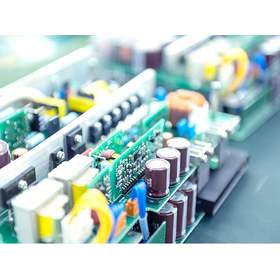
Selection points for "diode and capacitor" in high voltage power supplies.

Examples of component selection for capacitors and diodes, as well as case studies on high-voltage power supply development, will also be introduced!

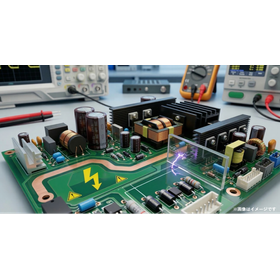
Regarding the selection of components for high-voltage power supplies, many may be facing issues such as "the prototype experienced insulation breakdown due to insufficient voltage rating of the selected components" or "components overheated during operation, leading to failures caused by thermal runaway." Previously, we introduced key points to prevent troubles occurring on high-voltage power supply circuit boards, such as soldering, potting, and flux residue, which should be considered in the design and implementation processes. However, to manufacture a highly reliable high-voltage power supply that operates stably over a long period, it is naturally important to consider "component selection," including capacitors and diodes, in addition to the aforementioned measures. Therefore, in this article, we will introduce how to select components such as capacitors and diodes from various perspectives, using specific calculation examples. *For more detailed content of the column, you can view it through the related link. For more information, please download the PDF or feel free to contact us.*

Added to bookmarks

Bookmarks list

Bookmark has been removed

Bookmarks list

You can't add any more bookmarks

By registering as a member, you can increase the number of bookmarks you can save and organize them with labels.

Free membership registration

Points to prevent troubles that occur on the circuit board of a high-voltage power supply.

To operate a high-voltage power supply safely and stably, it is important to prevent discharge!

As the performance and miniaturization of industrial equipment such as medical devices, semiconductor manufacturing equipment, and various inspection devices continue to advance, the demands for "high-voltage power supplies" are becoming more stringent. Many may be facing concerns such as, "I want to make the high-voltage power supply compact to match the miniaturization of the device, but I'm worried about discharge risks," "Troubles have occurred during the prototype stage, causing delays in the development schedule," or "There shouldn't be any issues in the circuit diagram, but when integrated into the actual device, discharge and noise occur." In fact, many of these troubles can stem from slight differences that wouldn't be problematic with low-voltage power supplies. For example, tiny factors such as a 0.5mm solder spike, slight residues from cleaning, or minute voids mixed in potting resin can directly lead to insulation breakdown or discharge issues under high voltage conditions. Therefore, this time, we will explain the points to prevent troubles that occur on high-voltage power supply circuit boards. *For detailed content of the column, please refer to the related link. For more information, feel free to download the PDF or contact us.*

Added to bookmarks

Bookmarks list

Bookmark has been removed

Bookmarks list

You can't add any more bookmarks

By registering as a member, you can increase the number of bookmarks you can save and organize them with labels.

Free membership registration

Key points for circuit design to enhance the accuracy of "constant current control" in industrial power supplies.

Explaining the key points for improving the accuracy of constant current control while incorporating circuit methods related to constant current control!

The typical industrial power supply mainly uses "constant voltage control" to maintain a stable voltage. However, there are applications where it is essential to keep the "current" constant to ensure the quality of processes handled by machinery, such as plating, laser processing, or inspection equipment for secondary batteries for electric vehicles. In this industrial power supply, "constant current control" is more challenging compared to constant voltage control. So, why is constant current control difficult? It is because, even when the load fluctuates significantly, the voltage must be adjusted instantly to maintain the current value within milliseconds. The component that complicates this voltage adjustment is the capacitor. Normally, capacitors work to stabilize voltage, but in constant current control, they must counteract this property and continuously force the voltage to change according to load fluctuations. *For more detailed information, you can view the related links. For more details, please download the PDF or feel free to contact us.*

Added to bookmarks

Bookmarks list

Bookmark has been removed

Bookmarks list

You can't add any more bookmarks

By registering as a member, you can increase the number of bookmarks you can save and organize them with labels.

Free membership registration

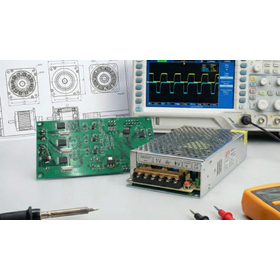
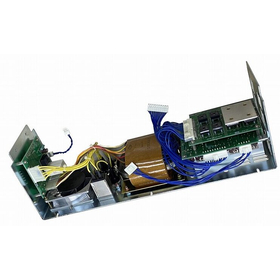
Total solutions related to the design and manufacturing of electronic devices and industrial equipment.

We will explain the comprehensive support system related to the design and manufacturing of electronic devices and industrial equipment!

While advancing the design of electronic devices and industrial equipment, have you ever had the experience where "initially, we were only considering a few elements, but as discussions progressed, other issues also came to light"? It is common to optimize design methods for each specific field, but for example, when considering the entire system, isolating and examining only a part may make it difficult to arrive at the optimal solution. In order to smoothly develop and manufacture high-quality products in electronic devices and industrial equipment, it is necessary to consult with companies that have a system capable of consistently handling power supply, circuit boards, component procurement, machining, and unit assembly. *For detailed content of the column, you can view it through the related links. For more information, please download the PDF or feel free to contact us.*

Added to bookmarks

Bookmarks list

Bookmark has been removed

Bookmarks list

You can't add any more bookmarks

By registering as a member, you can increase the number of bookmarks you can save and organize them with labels.

Free membership registration

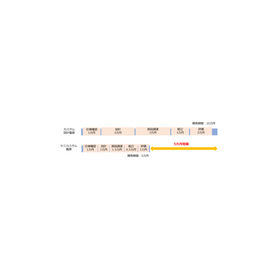
Five Key Points to Achieve Shortened Delivery Times with Custom Power Supplies

We will also introduce examples of achieving reduced development lead times and cost reductions by combining general-purpose products!

Recently, one of the increasing requests we receive at our company is for "faster delivery of products," which pertains to short delivery times. However, the development of custom power supplies typically requires many processes, including design, prototyping, evaluation, and manufacturing, making it difficult to significantly reduce the development period. Nevertheless, there are several key points to keep in mind to shorten the development period as much as possible and achieve "short delivery times." Therefore, this time, we will discuss "Key Points to Achieve 'Delivery Time Reduction' When Requesting Industrial Power Supplies," outlining five specific points to consider in order to realize a shorter delivery time. *For more detailed content of the column, please refer to the related link. For more information, feel free to download the PDF or contact us directly.*

Added to bookmarks

Bookmarks list

Bookmark has been removed

Bookmarks list

You can't add any more bookmarks

By registering as a member, you can increase the number of bookmarks you can save and organize them with labels.

Free membership registration

Criteria for Choosing Between Switching Power Supplies and Linear Regulators

I will summarize the differences between each power supply method and explain how they should be used appropriately!

Linear power supplies excel in noise characteristics, but recently, switching power supplies have also been designed to be low-noise, making switching power supplies the mainstream choice for industrial custom power supplies today. However, switching power supplies are not necessarily optimal for all designs. Depending on the design conditions and applications, it may be better to adopt a linear power supply. Linear power supplies and switching power supplies have fundamentally different operating principles, leading to significant differences in efficiency, power loss, noise resistance, size, and cost. *For more details, you can view the related links. For further information, please download the PDF or feel free to contact us.*

Added to bookmarks

Bookmarks list

Bookmark has been removed

Bookmarks list

You can't add any more bookmarks

By registering as a member, you can increase the number of bookmarks you can save and organize them with labels.

Free membership registration

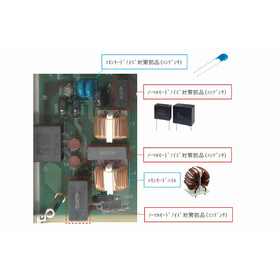
Noise countermeasures for custom power supplies associated with high-speed switching.

A detailed explanation of what kind of noise occurs and how to take measures against it!

If you are involved in power supply design, you may know that by increasing the switching frequency of the power supply, passive components such as transformers and capacitors can be miniaturized, allowing for space-saving and lightweight designs of the entire device. Furthermore, due to benefits such as ripple reduction and improved response speed, higher performance power supplies can be achieved. On the other hand, while there are advantages to high-speed switching, it can also lead to noise generation and an increased risk of malfunction. In particular, when switching at high speeds, issues that would not be problematic at lower speeds can become the cause of noise generation, making noise countermeasures more challenging than with other power supplies. *For more details on the column, you can view it through the related links. For more information, please download the PDF or feel free to contact us.*

Added to bookmarks

Bookmarks list

Bookmark has been removed

Bookmarks list

You can't add any more bookmarks

By registering as a member, you can increase the number of bookmarks you can save and organize them with labels.

Free membership registration

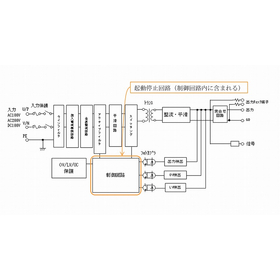
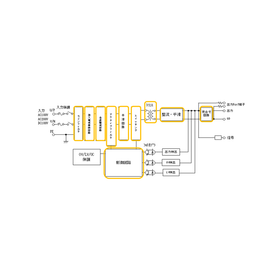
Design points for safely starting up a multi-channel power supply.

Introducing troubles that can occur with multi-channel power supplies and examples of multi-channel power supplies!

By making the power supply for industrial equipment multi-channel, it is possible to supply multiple voltages such as for the CPU, communication circuits, and motor control from a single power supply unit, enabling miniaturization of the entire device and simplification of wiring. The multi-channel power supply can significantly impact the reliability and performance of the device depending on "when" and "in what order" the multiple voltages are turned on. Many may already understand the importance of "when" and "in what order" to turn on the voltages, but in practice, there are not infrequent consultations regarding issues such as "components being damaged" or "system errors occurring" due to incorrect startup sequences or timing. Therefore, this time, we will explain the "design points for safely starting up multi-channel power supplies" for custom power supplies used in industrial equipment. *For detailed content of the column, please refer to the related link. For more information, please download the PDF or feel free to contact us.

Added to bookmarks

Bookmarks list

Bookmark has been removed

Bookmarks list

You can't add any more bookmarks

By registering as a member, you can increase the number of bookmarks you can save and organize them with labels.

Free membership registration

Key points for designing stable power on/off operations.

We will also introduce the reasons why the output voltage becomes unstable during startup and shutdown, as well as methods to reduce costs and delivery times!

In the power supply design for industrial equipment, unstable output during startup and shutdown poses a significant risk of malfunction. "Output voltage fluctuated and caused a malfunction" or "the control of the equipment became impossible." To prevent such troubles, it is essential to design a system that stabilizes the output voltage during startup and shutdown. Therefore, this time we will discuss "Key points for designing stable startup and shutdown of power supplies," highlighting important considerations for creating a stable industrial power supply. *For detailed content of the column, please refer to the related link. For more information, feel free to download the PDF or contact us.*

Added to bookmarks

Bookmarks list

Bookmark has been removed

Bookmarks list

You can't add any more bookmarks

By registering as a member, you can increase the number of bookmarks you can save and organize them with labels.

Free membership registration

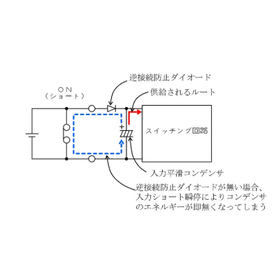
Key points for power supply design to prevent "soft shutdown"

I will also explain what happens if we do not assume a gradual shutdown.

In the design phase of custom power supplies, even if momentary interruptions are taken into account, there are not a few cases where issues arise during momentary interruption tests due to the design not considering the state of the power supply being "slowly cut off." To enhance the reliability of power supply design, it is necessary to implement designs that prevent issues caused by the aforementioned slow cutoff of the power supply. Therefore, this time, we will introduce "Key Points for Power Supply Design to Prevent Slow Cutoff," discussing what measures should be taken to prevent troubles caused by slow cutoff. *For detailed content of the column, you can view it through the related links. For more information, please download the PDF or feel free to contact us.*

Added to bookmarks

Bookmarks list

Bookmark has been removed

Bookmarks list

You can't add any more bookmarks

By registering as a member, you can increase the number of bookmarks you can save and organize them with labels.

Free membership registration

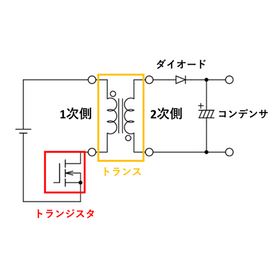
Flyback Transformer Circuit: Fundamentals of High Voltage Power Supply Development and Design

Introducing the principles of flyback transformer circuits and the reasons why they are not commonly used in high-voltage power supplies!

A high-voltage power supply refers to a power supply that generates high voltages of several kV or more. Generally, industrial equipment operates at low voltages, typically 24V or 48V, but in some applications, higher voltages such as 100V or 200V may be required. However, in specialized applications such as mass spectrometry, X-ray inspection devices, and scientific experiments, high voltages of several kV may be necessary. In such cases, the aforementioned high-voltage power supply is required. A representative circuit used in such high-voltage power supplies is the Cockcroft-Walton circuit. However, in high-voltage power supplies, not only the Cockcroft-Walton circuit but also flyback transformer circuits may be used. *For detailed content of the column, you can view it through the related links. For more information, please download the PDF or feel free to contact us.*

Added to bookmarks

Bookmarks list

Bookmark has been removed

Bookmarks list

You can't add any more bookmarks

By registering as a member, you can increase the number of bookmarks you can save and organize them with labels.

Free membership registration

Three points to achieve cost reduction with custom power supplies.

We will focus on the key points of "cost reduction" and also introduce some case studies!

Standard power supplies are specifications determined to match market trends, including aspects such as environment, packaging, and price. While these standard power supplies offer significant cost advantages, there are cases where they cannot meet the desired specifications and functions, as selections can only be made from the predetermined specs. When specifications and functions that cannot be accommodated by the aforementioned standard power supplies are required, "custom power supplies" are utilized. Custom power supplies are made-to-order products designed and manufactured to fit the customer's equipment and specifications, allowing them to meet specifications and various demands that standard power supplies cannot. On the other hand, custom power supplies tend to be more expensive compared to standard power supplies because they involve development. However, even with custom power supplies, it is possible to achieve cost reduction by focusing on certain points during the development and design phases. *For detailed content of the column, please refer to the related links. For more information, you can download the PDF or feel free to contact us.*

Added to bookmarks

Bookmarks list

Bookmark has been removed

Bookmarks list

You can't add any more bookmarks

By registering as a member, you can increase the number of bookmarks you can save and organize them with labels.

Free membership registration

Points to suppress undershoot.

An explanation of the basics of custom power supply development and design, as well as the main causes of undershoot and the differences in factors compared to overshoot!

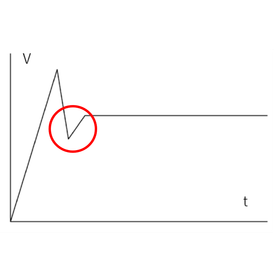
Power supplies for industrial equipment require reliability, and the occurrence of undershoot can lead to critical issues. Therefore, considering measures against undershoot from the early stages of circuit design is essential for ensuring stable operation and reliability of the product. In this article, we will introduce the causes of undershoot in switching power supplies and suppression methods that circuit designers can immediately implement, along with specific examples of countermeasures. *For detailed content of the column, you can view it through the related links. For more information, please download the PDF or feel free to contact us.*

Added to bookmarks

Bookmarks list

Bookmark has been removed

Bookmarks list

You can't add any more bookmarks

By registering as a member, you can increase the number of bookmarks you can save and organize them with labels.

Free membership registration

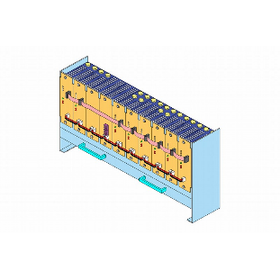
What is a custom power supply? Key points for development and design.

A detailed explanation of the overview of custom power supplies and information related to the development and design of custom power supplies!

A custom power supply is a specially made power supply developed according to specific requirements. Since custom power supplies are made to order, they tend to be produced in small quantities with a wide variety, resulting in higher development costs and prices. However, by utilizing custom power supplies, it is possible to achieve the desired size, shape, lifespan, electrical characteristics, and other specifications. Standard power supplies refer to those manufactured by power supply manufacturers as part of their ready-made product lineup. Customers can choose power supplies that closely match their applications from those with specifications, environments, packaging, and prices determined according to general market trends. *For more detailed information, please refer to the related links. For further inquiries, feel free to download the PDF or contact us.*

Added to bookmarks

Bookmarks list

Bookmark has been removed

Bookmarks list

You can't add any more bookmarks

By registering as a member, you can increase the number of bookmarks you can save and organize them with labels.

Free membership registration

Points to suppress overshoot.

We also introduce the basics of custom power supply development and design, as well as specific examples of countermeasures!

Switching power supplies boast high power conversion efficiency and contribute to miniaturization and weight reduction. On the other hand, due to their high-speed switching operation, they also have the aspect of being prone to overshoot. In particular, for power supplies used in industrial equipment where reliability is critical, even a slight overshoot can lead to catastrophic problems. Therefore, considering measures to suppress overshoot from the early stages of circuit design is essential for ensuring stable operation of the product and maintaining reliability. *For more details, you can view the related links. For further information, please download the PDF or feel free to contact us.*

Added to bookmarks

Bookmarks list

Bookmark has been removed

Bookmarks list

You can't add any more bookmarks

By registering as a member, you can increase the number of bookmarks you can save and organize them with labels.

Free membership registration

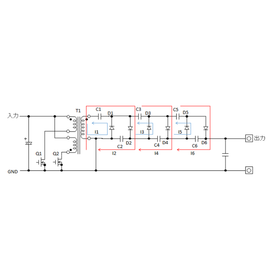
Fundamentals of High Voltage Power Supply Design: Cockcroft-Walton Circuit

Introducing the principles of the Cockcroft-Walton circuit and examples of high-voltage power supply development and design!

A high-voltage power supply refers to a power supply that generates a high voltage of several kV or more. Generally, consumer devices and industrial equipment operate at low voltages, typically 24V or 48V. However, depending on the application, higher voltages such as 100V or 200V may be required. In special applications such as mass spectrometry, X-ray inspection devices, and scientific experiments, voltages exceeding several kV may be necessary. In such cases, a high-voltage power supply is required. *For more detailed information, please refer to the related links. For further details, you can download the PDF or feel free to contact us.*

Added to bookmarks

Bookmarks list

Bookmark has been removed

Bookmarks list

You can't add any more bookmarks

By registering as a member, you can increase the number of bookmarks you can save and organize them with labels.

Free membership registration

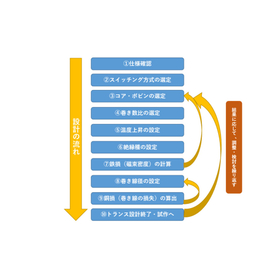
Fundamentals of Transformer Design in Switching Power Supplies

This explains the flow and key points of transformer design, from specification confirmation to prototype production!

In a switching power supply, a transformer plays an important role in providing input-output isolation to prevent electric shock and in output voltage transformation. Generally, when designing this transformer, it is necessary to consider a wide range of points such as the selection of the core and bobbin, the number of turns, and the wire diameter. However, in practice, it is most important to focus only on the truly critical points, proceed with the design, and repeatedly make adjustments and considerations. *For detailed content of the column, you can view it through the related link. For more information, please download the PDF or feel free to contact us.*

Added to bookmarks

Bookmarks list

Bookmark has been removed

Bookmarks list

You can't add any more bookmarks

By registering as a member, you can increase the number of bookmarks you can save and organize them with labels.

Free membership registration

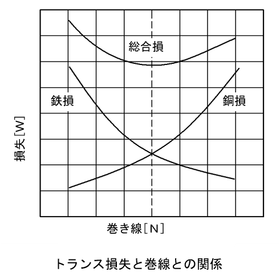
Fundamentals of Transformer Design for Switching Power Supplies: About Losses

I will explain the main losses of transformers, details on iron losses and copper losses, and how to minimize these losses!

In switching power supplies, transformers play an important role in providing input-output isolation to prevent electric shock and in output voltage transformation. High-frequency switching has made it possible to significantly reduce the size of transformers, but it is necessary to fully understand the internal losses of the transformer and connect that understanding to miniaturization. To achieve this, it is important to consider both iron losses and copper losses when designing transformers. *For detailed content of the column, you can view it through the related link. For more information, please download the PDF or feel free to contact us.*

Added to bookmarks

Bookmarks list

Bookmark has been removed

Bookmarks list

You can't add any more bookmarks

By registering as a member, you can increase the number of bookmarks you can save and organize them with labels.

Free membership registration

To develop and design industrial custom power supplies with excellent safety and reliability.

We will introduce points such as selecting parts and arranging them with a focus on long lifespan!

Industrial switching power supplies for applications such as electricity, water, railways, construction equipment, and scientific instruments require not only functionality compared to consumer power supplies but also a high level of safety and reliability. In this article, we will share key points for developing and designing custom power supplies that excel in safety and reliability, leveraging our extensive experience in the development and design of industrial custom power supplies. *For detailed content of the column, please refer to the related links. For more information, feel free to download the PDF or contact us directly.*

Added to bookmarks

Bookmarks list

Bookmark has been removed

Bookmarks list

You can't add any more bookmarks

By registering as a member, you can increase the number of bookmarks you can save and organize them with labels.

Free membership registration

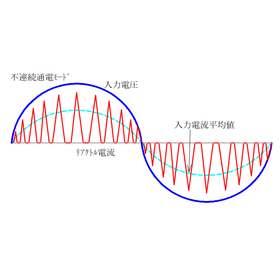
Power factor correction circuit method

It provides a detailed explanation of the principles of power factor improvement and power factor correction circuits (PFC circuits)!

There are various indicators that express the performance and specifications of switching power supplies, including input voltage range, output specifications, efficiency, power factor, number of channels, power supply size, and applicable standards. In this article, we will focus on the power factor among these various indicators and provide a detailed introduction to power factor correction circuits that achieve power factor improvement. *For more detailed content of the column, you can view it through the related links. For more information, please download the PDF or feel free to contact us.*

Added to bookmarks

Bookmarks list

Bookmark has been removed

Bookmarks list

You can't add any more bookmarks

By registering as a member, you can increase the number of bookmarks you can save and organize them with labels.

Free membership registration

The difference between efficiency and power factor in switching power supplies.

Introducing the differences between efficiency and power factor in switching power supplies in a column format!

Indicators that express the performance and specifications of switching power supplies include input voltage range, output specifications, efficiency, power factor, number of channels, power supply size, and applicable standards, among others. Among these items, have you ever thought, "Wait, what exactly is the difference between 'efficiency' and 'power factor'...?" In fact, "efficiency" and "power factor" refer to completely different values. Therefore, in this article, we will introduce the often-confused concepts of "efficiency" and "power factor." *For detailed content of the column, you can view it through the related link. For more information, please download the PDF or feel free to contact us.*

Added to bookmarks

Bookmarks list

Bookmark has been removed

Bookmarks list

You can't add any more bookmarks

By registering as a member, you can increase the number of bookmarks you can save and organize them with labels.

Free membership registration

Achieving cost reduction and shortening of development time through the use of semi-custom power supplies.

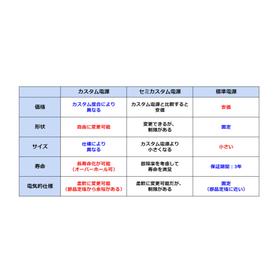
Comparison of custom power supplies, semi-custom power supplies, and standard power supplies, as well as the benefits of utilizing semi-custom power supplies!

Do you all know in detail about semi-custom power supplies? A semi-custom power supply refers to a power supply that has had its specifications or characteristics modified by adding peripheral circuits, among other changes, compared to a standard power supply. In fact, semi-custom power supplies are widely used in cases where "standard power supplies cannot meet the required functions..." or "custom power supplies become too costly..." In this article, we will explain in detail the advantages of using semi-custom power supplies. *For more detailed information, you can view it through the related links. For more details, please download the PDF or feel free to contact us.*

Added to bookmarks

Bookmarks list

Bookmark has been removed

Bookmarks list

You can't add any more bookmarks

By registering as a member, you can increase the number of bookmarks you can save and organize them with labels.

Free membership registration

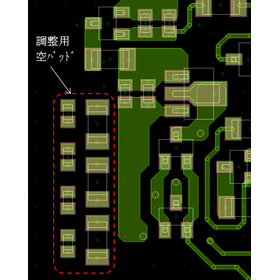
Points for pattern design considering solder rise.

I will explain physical measures and measures to prevent heat loss!

When inserting terminals for discrete components, it is considered a good product condition for more than 70% of the solder to be on the A side (component side). However, when seeking long-lasting and high-performance power supplies, it can be said that a power supply board with complete solder coverage on the A side (component side) is desirable. In this article, we will introduce "design points for patterns considering solder coverage" that you may find useful when seeking high-quality power supply boards as described above. *For detailed content of the column, you can view it through the related links. For more information, please download the PDF or feel free to contact us.

Added to bookmarks

Bookmarks list

Bookmark has been removed

Bookmarks list

You can't add any more bookmarks

By registering as a member, you can increase the number of bookmarks you can save and organize them with labels.

Free membership registration

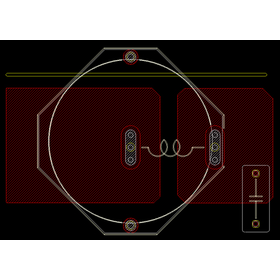
Pattern design to avoid the effects of noise caused by magnetic flux.

Clear explanation of the issues before the measures and the improvements after the measures!

In power supply board design, attention must be paid to various factors such as noise, routing of patterns, selection of optimal components, and the relationship between the arrangement of components and patterns. Although this is basic content, I will explain the often overlooked issue of "noise generation due to the influence of magnetic flux" while considering various points during the design process. Generally, when current flows through coils or transformers, magnetic flux is generated. Since magnetic flux is proportional to the current, the higher the current, the more susceptible nearby signal lines are to its influence. So, what should we pay attention to and what measures should we take? *For detailed content of the column, please refer to the related link. For more information, you can download the PDF or feel free to contact us.*

Added to bookmarks

Bookmarks list

Bookmark has been removed

Bookmarks list

You can't add any more bookmarks

By registering as a member, you can increase the number of bookmarks you can save and organize them with labels.

Free membership registration

Noise countermeasures for high current lines

When designing a switching power supply, noise countermeasures are necessary!

The pattern design of high current lines in switching power supplies tends to become a noise source when turning high currents ON/OFF, requiring special attention. In this article, we will explain the noise countermeasures for high current lines in switching power supply design. If the patterns are routed too broadly, they can act as antennas, increasing the possibility of noise radiation. Therefore, it is necessary to minimize the routing of patterns that become noise sources and to implement measures to minimize noise impact on other circuits. *For detailed content of the column, you can view it through the related link. For more information, please download the PDF or feel free to contact us.

Added to bookmarks

Bookmarks list

Bookmark has been removed

Bookmarks list

You can't add any more bookmarks

By registering as a member, you can increase the number of bookmarks you can save and organize them with labels.

Free membership registration

Heat dissipation measures for power boards with high-density implementation.

By implementing countermeasures, it is possible to address heat generation without changing the distance between both MOSFETs!

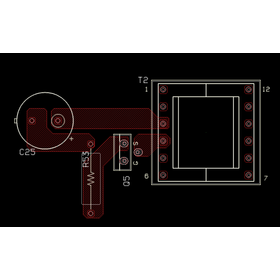
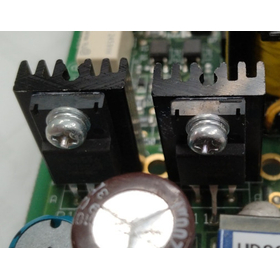
Recently, the implementation of power supply boards has been increasingly densified year by year. As a result, measures to address heat generation on power supply boards have become even more necessary. This time, I would like to focus on heat management in power supply boards with such high-density implementations. For example, let's assume that a low-heat-generating MOSFET for inrush current limiting is placed near a heat-prone MOSFET, such as those on the output side or in the PFC circuit. If one of the MOSFETs generates heat, the heat will also transfer to the other MOSFET. As a result, there is a risk that other devices nearby may experience thermal runaway or short-circuit failures, leading to malfunctions of the power supply board itself. In other words, if other devices are placed around a heat-generating device, excessive heat will be transferred, preventing adequate cooling and resulting in a vicious cycle. *For more detailed information, you can view the related links. For more details, please download the PDF or feel free to contact us.

Added to bookmarks

Bookmarks list

Bookmark has been removed

Bookmarks list

You can't add any more bookmarks

By registering as a member, you can increase the number of bookmarks you can save and organize them with labels.

Free membership registration

The relationship between the power input and the switching line.

Introducing the positional relationship between the power input and switching line in a column format!

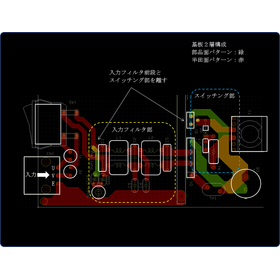
For example, if the power input section and the switching section are placed close together, switching noise may leak into the input interface, potentially affecting external equipment and compliance testing. So, what should be done in such cases? To ensure that the effect of the input filter is not lost, it is important to keep a distance between the power input/filter section and the switching section. To maintain this distance, it is also necessary to consider the positioning of the power input and output, so please be cautious. *You can view the detailed content of the column through the related links. For more information, please download the PDF or feel free to contact us.*

Added to bookmarks

Bookmarks list

Bookmark has been removed

Bookmarks list

You can't add any more bookmarks

By registering as a member, you can increase the number of bookmarks you can save and organize them with labels.

Free membership registration

How to connect the output feedback line

A clear explanation of how to connect the output feedback line using diagrams!

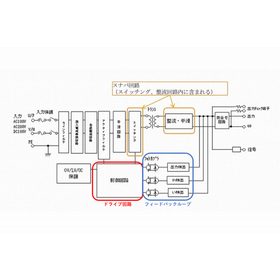
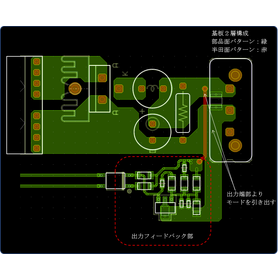
The method of connecting the detection line for output feedback to reduce noise is fundamental to pattern design. However, in practice, this detection line is often connected inappropriately. It is important that the detection line for output feedback is configured to draw the mode from the output terminal where the voltage is to be detected. Even if considered electrically equivalent, it is necessary to take into account the line drop on the circuit board and the influence of noise. Similarly, external interfaces and output check terminals also fall under this consideration. *For more detailed information, you can view it through the related links. For further details, please download the PDF or feel free to contact us.*

Added to bookmarks

Bookmarks list

Bookmark has been removed

Bookmarks list

You can't add any more bookmarks

By registering as a member, you can increase the number of bookmarks you can save and organize them with labels.

Free membership registration

Key points for power board design to shorten development time and eliminate rework.

To minimize the risk of going back to redesign from the planning stage for noise countermeasures, we aim to shorten the development period.

In today's electronic device market, changes in customer needs and market conditions are happening very rapidly, and power supply board design manufacturers are required to "shorten the product development period." When the development lead time becomes long, the timing of product launch to the market inevitably gets delayed, making it impossible to benefit from first-mover advantages. However, recently, the performance of electronic devices has been advancing at an astonishing speed, and in power supply board design, increasingly "advanced design techniques" are being demanded. In other words, in modern power supply board design, it is crucial to achieve "high-quality designs" that require minimal revisions in a "short period of time." *For more details, you can view the related links. For further information, please download the PDF or feel free to contact us.*

Added to bookmarks

Bookmarks list

Bookmark has been removed

Bookmarks list

You can't add any more bookmarks

By registering as a member, you can increase the number of bookmarks you can save and organize them with labels.

Free membership registration

The one and only reason a switching power supply suddenly stops working on-site.

I will explain why switching power supplies stop working on-site!

Until now, in the development and design of industrial custom power supplies, we have provided information on how to develop switching power supplies to achieve higher efficiency and reduce noise, as well as what components to select for that purpose. However, this time I would like to share information from a slightly different perspective. Our company, which has been supplying custom switching power supplies for over 50 years, naturally receives various feedback. One common message we receive, regardless of the era, is "the power supply has stopped working." *For more details on this column, please refer to the related link. For more information, feel free to download the PDF or contact us directly.*

Added to bookmarks

Bookmarks list

Bookmark has been removed

Bookmarks list

You can't add any more bookmarks

By registering as a member, you can increase the number of bookmarks you can save and organize them with labels.

Free membership registration
Prev 1 Next
  • Contact this company

    Inquiry Form
  • Before making an inquiry

    Download Profile

Products

  • Search for Products

Company

  • Search for Companies

Special Features

  • Special Features

Ranking

  • Overall Products Ranking
  • Overall Company Ranking

support

  • site map
IPROS
  • privacy policy Regarding external transmission of information
  • terms of service
  • About Us
  • Careers
  • Advertising
COPYRIGHT © 2001-2026 IPROS CORPORATION ALL RIGHTS RESERVED.
Please note that the English text on this page is automatically translated and may contain inaccuracies.