91~135 item / All 146 items
Displayed results
Filter by category

Added to bookmarks
Bookmarks listBookmark has been removed
Bookmarks listYou can't add any more bookmarks
By registering as a member, you can increase the number of bookmarks you can save and organize them with labels.
Free membership registration
Contact this company
Inquiry Form91~135 item / All 146 items
Filter by category
At power plants, a stable supply of cooling water is essential, and maintaining water quality is crucial. Deterioration of water quality can lead to decreased efficiency and equipment failures. While utilizing groundwater can lead to cost reductions, it is necessary to continuously monitor fluctuations in water quality and water levels and take appropriate actions. Our groundwater constant monitoring system supports stable cooling water supply by monitoring water quality and water levels in real-time and detecting anomalies early. 【Usage Scenarios】 - Cooling water management at power plants - Monitoring groundwater quality and levels - Early detection of water quality anomalies 【Benefits of Implementation】 - Stable operation of cooling water equipment - Increased efficiency in water quality management tasks - Rapid response in case of anomalies
Added to bookmarks
Bookmarks listBookmark has been removed
Bookmarks listYou can't add any more bookmarks
By registering as a member, you can increase the number of bookmarks you can save and organize them with labels.
Free membership registration
In hot spring facilities, it is essential to ensure a stable supply of hot spring water and to manage the hot spring water appropriately. Particularly when utilizing groundwater, fluctuations in water quality and water level directly impact the quality and supply of the hot spring. Inadequate water quality management can not only diminish the value of the hot spring but also adversely affect the operation of the facility. Our groundwater constant monitoring system streamlines the management of hot spring water supply and water quality, supporting a stable supply of hot springs. 【Usage Scenarios】 - Management of hot spring water supply - Monitoring of hot spring water quality - Monitoring in the use of groundwater 【Effects of Implementation】 - Stable supply of hot spring water - Streamlined water quality management - Cost reduction
Added to bookmarks
Bookmarks listBookmark has been removed
Bookmarks listYou can't add any more bookmarks
By registering as a member, you can increase the number of bookmarks you can save and organize them with labels.
Free membership registration
In urban development, flood prevention measures are extremely important for ensuring the safety of the city. In recent years, there have been frequent flooding damages due to sudden heavy rains, and prompt responses are required. By continuously monitoring changes in groundwater levels and water quality, and detecting abnormalities early, it is possible to reduce flood risks and enhance urban safety. Our groundwater monitoring system contributes to this effort. 【Usage Scenarios】 - Management of groundwater in urban areas - Monitoring of rainwater retention facilities - Monitoring of areas with high flood risk 【Effects of Implementation】 - Early detection and response to flooding damage - Increased efficiency in groundwater management - Improved safety of the city
Added to bookmarks
Bookmarks listBookmark has been removed
Bookmarks listYou can't add any more bookmarks
By registering as a member, you can increase the number of bookmarks you can save and organize them with labels.
Free membership registration
In the mining industry, managing the quality of wastewater is crucial to prevent environmental pollution caused by harmful substances contained in the discharge. In particular, groundwater contamination has a significant impact on the surrounding environment, necessitating appropriate monitoring and prompt responses. Implementing monitoring of groundwater quality and levels, along with information disclosure, is also important as part of a company's social responsibility. Our continuous groundwater monitoring system balances the efficiency of water quality management operations with contributions to environmental conservation. 【Usage Scenarios】 - Wastewater treatment facilities at mines - Groundwater monitoring in surrounding areas - Compliance with environmental regulations 【Benefits of Implementation】 - Early detection of water quality anomalies and rapid response - Increased efficiency in water quality management operations - Reduction of environmental risks
Added to bookmarks
Bookmarks listBookmark has been removed
Bookmarks listYou can't add any more bookmarks
By registering as a member, you can increase the number of bookmarks you can save and organize them with labels.
Free membership registration
In the construction industry, the stability of the ground is extremely important for ensuring the safety and quality of construction work. Fluctuations in groundwater can affect the ground and increase the risk of differential settlement and landslides. Therefore, it is necessary to continuously monitor the state of groundwater and detect abnormalities early. Our groundwater monitoring system continuously monitors water quality and water levels in real-time, reducing risks related to ground stability. 【Usage Scenarios】 - Ground surveys at construction sites - Groundwater management in civil engineering projects - Safety management of embankments and reclaimed land 【Benefits of Implementation】 - Reduces the risk of ground subsidence and landslides - Improves the safety of construction work - Early detection of water quality contamination risks - Cost reduction
Added to bookmarks
Bookmarks listBookmark has been removed
Bookmarks listYou can't add any more bookmarks
By registering as a member, you can increase the number of bookmarks you can save and organize them with labels.
Free membership registration
In the environmental survey industry, it is essential to accurately understand the contamination status of groundwater and respond swiftly. In particular, groundwater contamination from factory wastewater and soil pollution can have serious impacts on the surrounding environment and people's health. Constant monitoring of groundwater quality and levels, along with early detection of anomalies, is crucial to prevent the spread of contamination and implement appropriate measures. Our groundwater continuous monitoring system automates water quality management tasks and supports efficient contamination tracking. 【Usage Scenarios】 - Groundwater monitoring around factories - Groundwater monitoring in soil contamination surveys - Data collection for environmental impact assessments 【Benefits of Implementation】 - Prevention of contamination spread through early detection of water quality anomalies - Increased operational efficiency through automated data collection - Rapid decision-making based on real-time data
Added to bookmarks
Bookmarks listBookmark has been removed
Bookmarks listYou can't add any more bookmarks
By registering as a member, you can increase the number of bookmarks you can save and organize them with labels.
Free membership registration
In the frozen and refrigerated food industry, temperature management is extremely important, and condensation inside the storage area poses a significant risk of food quality deterioration and equipment failure. Particularly in environments with drastic temperature changes, it is essential to detect the occurrence of condensation early and take appropriate measures. Our condensation risk monitoring system calculates the dew point temperature from temperature and humidity, visualizing the risk of condensation occurrence, thereby contributing to the maintenance of food quality. 【Usage Scenarios】 - Inside frozen and refrigerated warehouses - Food storage warehouses - Logistics centers requiring temperature management 【Benefits of Implementation】 - Early detection of condensation risks - Preservation of food quality - Prolonged equipment lifespan - Reduction of unnecessary costs

Added to bookmarks
Bookmarks listBookmark has been removed
Bookmarks listYou can't add any more bookmarks
By registering as a member, you can increase the number of bookmarks you can save and organize them with labels.
Free membership registration
In a data center, proper temperature and humidity management is essential to ensure the stable operation of information equipment such as servers. In particular, the efficient operation of cooling systems is important for reducing the risk of equipment failure and keeping operational costs down. Condensation can lead to corrosion and failure of equipment, potentially resulting in data loss and system downtime. Our condensation risk monitoring system monitors temperature and humidity, allowing for early detection of condensation risks to prevent these issues before they occur. 【Usage Scenarios】 - Server rooms - Around air conditioning equipment - Cooling water piping 【Benefits of Implementation】 - Reduces the risk of equipment failure - Reduces the risk of data loss - Lowers operational costs
Added to bookmarks
Bookmarks listBookmark has been removed
Bookmarks listYou can't add any more bookmarks
By registering as a member, you can increase the number of bookmarks you can save and organize them with labels.
Free membership registration
In the automotive industry, maintaining the quality of parts is crucial. In particular, metal and electronic components are constantly exposed to the risk of deterioration due to rust and corrosion from condensation, as well as electrical system malfunctions. Condensation can lead to a decline in product performance and safety issues. Our condensation risk monitoring system calculates the dew point temperature from the ambient temperature and humidity, and determines the risk of condensation by monitoring the difference from the surface temperature of the monitored object. By notifying based on the risk level through email, patrol lamps, and automated voice calls, we encourage prompt responses and reduce the risk of component deterioration. 【Usage Scenarios】 - Storage locations for metal parts - Manufacturing processes for electronic components - Storage locations for finished vehicles - During the transportation of parts 【Benefits of Implementation】 - Maintenance of part quality - Reduction of defective products - Gaining customer trust - Cost reduction
Added to bookmarks
Bookmarks listBookmark has been removed
Bookmarks listYou can't add any more bookmarks
By registering as a member, you can increase the number of bookmarks you can save and organize them with labels.
Free membership registration
In the precision machinery industry, maintaining product quality and ensuring long-term operation are essential. Particularly for precision instruments that are susceptible to temperature changes and humidity, the occurrence of condensation poses a significant risk of failure and performance degradation. Our condensation risk monitoring system calculates the dew point temperature from the surrounding environmental temperature and humidity, and assesses the condensation risk by monitoring the difference between this and the surface temperature of the monitored object. This enables prompt responses such as ventilation or changes in storage locations, thereby reducing the risk of failure for precision instruments. 【Usage Scenarios】 - Precision machinery manufacturing factories - Precision machinery storage warehouses - Research and development facilities - Quality control departments 【Benefits of Implementation】 - Reduction of failure risk due to condensation - Maintenance of product quality - Improvement of operational efficiency - Cost reduction
Added to bookmarks
Bookmarks listBookmark has been removed
Bookmarks listYou can't add any more bookmarks
By registering as a member, you can increase the number of bookmarks you can save and organize them with labels.
Free membership registration
In the food manufacturing industry, it is important to suppress the occurrence of mold in order to maintain product quality. Particularly in environments with high temperature and humidity, condensation is likely to occur, which can become a breeding ground for mold. Condensation can lead to product deterioration and unpleasant odors, potentially damaging a company's reputation. Our condensation risk monitoring system calculates the dew point temperature from the ambient temperature and humidity, and assesses the risk of condensation by monitoring the difference between the surface temperature of the monitored object and the dew point. By notifying via email, patrol lamps, or automated voice calls according to the risk level, we encourage prompt responses and suppress the occurrence of mold. 【Usage Scenarios】 - Food storage warehouses - Manufacturing lines - Refrigeration and freezing equipment - Product quality control 【Benefits of Implementation】 - Reduction of mold occurrence risk - Maintenance of product quality - Reduction of food waste - Gaining customer trust
Added to bookmarks
Bookmarks listBookmark has been removed
Bookmarks listYou can't add any more bookmarks
By registering as a member, you can increase the number of bookmarks you can save and organize them with labels.
Free membership registration
In the pharmaceutical industry, thorough management of storage environments is required to maintain product quality. In particular, condensation caused by changes in temperature and humidity poses a significant risk of degradation and quality deterioration of pharmaceuticals. Condensation can promote the decomposition of active ingredients and the deterioration of containers, potentially adversely affecting the safety and efficacy of the products. Our condensation risk monitoring system contributes to the preservation of pharmaceutical quality. 【Usage Scenarios】 - Pharmaceutical storage warehouses - Quality control in manufacturing processes - Areas where temperature and humidity management is critical 【Benefits of Implementation】 - Early detection and countermeasures for condensation risks - Preservation of pharmaceutical quality - Assurance of product safety - Optimization of storage environments
Added to bookmarks
Bookmarks listBookmark has been removed
Bookmarks listYou can't add any more bookmarks
By registering as a member, you can increase the number of bookmarks you can save and organize them with labels.
Free membership registration
In the electronic components industry, it is essential to minimize the impact of condensation as an electrostatic countermeasure. Condensation can lead to insulation failures and corrosion of electronic components, potentially compromising product reliability. Our condensation risk monitoring system calculates the dew point temperature from the ambient temperature and humidity, and assesses the risk of condensation by monitoring the difference between the surface temperature of the monitored object and the dew point. Notifications are sent via email, patrol lamps, and automated voice calls according to the risk level, prompting swift action. 【Usage Scenarios】 - Storage warehouses for electronic components - Manufacturing lines - Environments requiring electrostatic countermeasures 【Benefits of Implementation】 - Early detection of condensation risk - Maintenance of product quality - Strengthening of electrostatic countermeasures
Added to bookmarks
Bookmarks listBookmark has been removed
Bookmarks listYou can't add any more bookmarks
By registering as a member, you can increase the number of bookmarks you can save and organize them with labels.
Free membership registration
In the chemical plant industry, equipment corrosion is a significant issue that can lead to operational shutdowns and decreased safety. Particularly in environments where temperature and humidity can fluctuate, the occurrence of condensation is a major factor that accelerates corrosion. Our condensation risk monitoring system calculates the dew point temperature from the ambient temperature and humidity, and assesses the risk of condensation by monitoring the difference between the surface temperature of the monitored object and the dew point. By notifying through email, patrol lamps, and automated voice calls according to the risk level, we encourage prompt responses and prevent equipment troubles caused by corrosion. 【Usage Scenarios】 * Piping within chemical plants * Tanks * Reaction towers * Other equipment with high corrosion risk 【Benefits of Implementation】 * Suppression of equipment corrosion * Reduction of maintenance costs * Stabilization of operations * Improvement of safety
Added to bookmarks
Bookmarks listBookmark has been removed
Bookmarks listYou can't add any more bookmarks
By registering as a member, you can increase the number of bookmarks you can save and organize them with labels.
Free membership registration
In the warehouse industry, maintaining the quality of stored goods is crucial. Condensation can cause rust on steel, corrosion on aluminum, and uneven paint, potentially diminishing the value of the cargo. Our condensation risk monitoring system calculates the dew point temperature from the ambient temperature and humidity, and assesses the risk of condensation by monitoring the difference between the surface temperature of the monitored objects. Notifications are sent via email, patrol lamps, and automated voice calls according to the risk level, prompting quick responses such as ventilation or relocation of stored items, thereby protecting the quality of the cargo. 【Usage Scenarios】 - Temperature and humidity management within the warehouse - Measures against condensation on stored goods - Streamlining quality management 【Benefits of Implementation】 - Maintenance of cargo quality - Reduction of complaint occurrence risk - Cost savings
Added to bookmarks
Bookmarks listBookmark has been removed
Bookmarks listYou can't add any more bookmarks
By registering as a member, you can increase the number of bookmarks you can save and organize them with labels.
Free membership registration
In the electronic components industry, water quality management and data analysis in wastewater treatment are essential for compliance with environmental regulations and improving production efficiency. In particular, managing the discharge of chemicals used in the manufacturing process is crucial for compliance. Inadequate water quality management can lead to environmental pollution and legal risks. Our industrial wastewater treatment monitoring system automates the measurement of water quality, water level, and flow rate, providing real-time data to support data analysis. 【Use Cases】 - Wastewater treatment facilities in electronic component manufacturing plants - Visualization and analysis of water quality data - Automated control of valve operations and chemical dosing 【Benefits of Implementation】 - Optimization of the wastewater treatment process through the collection and analysis of water quality data - Reduction of risks through early detection and response to anomalies - Labor-saving and efficiency improvements through remote monitoring and control
Added to bookmarks
Bookmarks listBookmark has been removed
Bookmarks listYou can't add any more bookmarks
By registering as a member, you can increase the number of bookmarks you can save and organize them with labels.
Free membership registration
In the textile industry, compliance with wastewater standards and effective use of water resources are required. In particular, wastewater discharged from processes such as dyeing is prone to cause water quality pollution, making proper treatment essential. Inadequate wastewater treatment not only increases the burden on the environment but can also lead to violations of legal regulations. Our industrial wastewater treatment monitoring system monitors water quality and flow rate, autonomously controls valve operations and chemical dosing, achieving a reduction in wastewater volume and optimization of water quality management. 【Usage Scenarios】 - Dyeing factories - Textile processing factories - Wastewater treatment facilities 【Benefits of Implementation】 - Reduction in wastewater volume - Optimization of water quality management - Compliance with legal regulations
Added to bookmarks
Bookmarks listBookmark has been removed
Bookmarks listYou can't add any more bookmarks
By registering as a member, you can increase the number of bookmarks you can save and organize them with labels.
Free membership registration
In the semiconductor manufacturing industry, there is a demand for the efficient use of water resources in the manufacturing process and the optimization of wastewater treatment processes. In particular, advanced water quality management is essential in the semiconductor manufacturing process, and delays or deficiencies in wastewater treatment can lead to decreased production efficiency and environmental risks. Our industrial wastewater treatment monitoring system automates the measurement of water quality, water level, and flow rate, and achieves autonomous control such as valve adjustment and chemical dosing, contributing to the efficiency of the wastewater treatment process. 【Usage Scenarios】 - Wastewater treatment facilities in semiconductor manufacturing plants - Business efficiency improvement through automation of water quality management - Rapid response to abnormalities through remote monitoring 【Benefits of Implementation】 - Reduction of wastewater treatment costs through optimization of water quality management - Risk mitigation through rapid response to abnormal occurrences - Continuous improvement based on data
Added to bookmarks
Bookmarks listBookmark has been removed
Bookmarks listYou can't add any more bookmarks
By registering as a member, you can increase the number of bookmarks you can save and organize them with labels.
Free membership registration
In the food industry, water quality management during the manufacturing process is extremely important for ensuring product quality and safety. In particular, thorough water quality management in wastewater treatment is essential to prevent contamination by foreign substances and harmful materials. Inadequate water quality management can increase the risk of product quality deterioration and food poisoning. Our industrial wastewater treatment monitoring system supports food quality management by automating the measurement of water quality, water level, and flow rate, achieving autonomous control. 【Usage Scenarios】 - Food manufacturing plants - Seafood processing plants - Beverage manufacturers - Food waste treatment facilities 【Benefits of Implementation】 - Early detection of water quality abnormalities - Optimization of the wastewater treatment process - Reduction of quality management costs
Added to bookmarks
Bookmarks listBookmark has been removed
Bookmarks listYou can't add any more bookmarks
By registering as a member, you can increase the number of bookmarks you can save and organize them with labels.
Free membership registration
In the chemical plant industry, there is a demand for compliance with environmental regulations and improvement of operational efficiency. Particularly in wastewater treatment processes, thorough water quality management and maintenance of stable treatment capacity are crucial. Abnormal water quality or reduced treatment capacity can increase the risk of environmental pollution and operational shutdowns. Our industrial wastewater treatment monitoring system automates the measurement of water quality, water level, and flow rate, achieving optimal wastewater treatment through autonomous control. 【Usage Scenarios】 - Wastewater treatment tanks in chemical plants - Automation of water quality management - Optimization of valve operation and chemical dosing 【Benefits of Implementation】 - Early detection of anomalies through visualization of water quality data - Optimization of treatment capacity through autonomous control - Labor-saving through remote monitoring and operation
Added to bookmarks
Bookmarks listBookmark has been removed
Bookmarks listYou can't add any more bookmarks
By registering as a member, you can increase the number of bookmarks you can save and organize them with labels.
Free membership registration
In the steel industry, cost reduction in wastewater treatment is an important issue. Inadequate water quality management can lead to decreased treatment efficiency and violations of regulations, potentially incurring additional costs. Our industrial wastewater treatment monitoring system automatically measures water quality, water level, and flow rate, and autonomously controls optimal valve opening and chemical dosing, contributing to the efficiency and cost reduction of wastewater treatment. [Usage Scenarios] - Wastewater treatment tanks in steel manufacturing plants - Reduction of labor costs through automation of water quality management - Reduction of chemical costs through optimization of dosing amounts [Effects of Implementation] - Optimization of the wastewater treatment process - Stabilization of water quality management - Reduction of running costs
Added to bookmarks
Bookmarks listBookmark has been removed
Bookmarks listYou can't add any more bookmarks
By registering as a member, you can increase the number of bookmarks you can save and organize them with labels.
Free membership registration
In mining, water quality management of drainage is extremely important for environmental conservation. In particular, it is essential to prevent the leakage of harmful substances and minimize the impact on the surrounding environment. Abnormalities in water quality and water levels can lead to serious environmental pollution. Our drainage monitoring system allows for real-time monitoring of water quality and water levels, enabling quick responses by detecting anomalies early. 【Usage Scenarios】 - Locations where drainage occurs, such as mines, concentration plants, and smelters - Monitoring of wastewater treatment facilities - Compliance with environmental regulations 【Benefits of Implementation】 - Reduces the risk of water quality pollution - Contributes to environmental conservation - Ensures compliance with legal regulations
Added to bookmarks
Bookmarks listBookmark has been removed
Bookmarks listYou can't add any more bookmarks
By registering as a member, you can increase the number of bookmarks you can save and organize them with labels.
Free membership registration
In the food processing industry, foreign matter contamination during the manufacturing process is a serious issue that not only compromises product quality but also undermines corporate trust. Wastewater management is crucial for understanding the sanitary conditions of the manufacturing environment and reducing the risk of foreign matter contamination. By monitoring the quality and level of wastewater, abnormalities can be detected early, allowing for prompt responses. Our wastewater monitoring system contributes to the efficiency of wastewater management in food processing. 【Usage Scenarios】 - Food manufacturing plants - Wastewater treatment facilities - Processes with a high risk of foreign matter contamination 【Benefits of Implementation】 - Early detection of wastewater quality abnormalities - Reduction of foreign matter contamination risks - Strengthening of sanitary management in the manufacturing environment - Compliance with regulations
Added to bookmarks
Bookmarks listBookmark has been removed
Bookmarks listYou can't add any more bookmarks
By registering as a member, you can increase the number of bookmarks you can save and organize them with labels.
Free membership registration
In the management of cooling water at power plants, proper management of water quality and water levels is essential for balancing stable equipment operation and environmental considerations. Abnormalities in cooling water can lead to decreased power generation efficiency and equipment failures. Additionally, exceeding discharge standards carries the risk of legal liability. Our wastewater monitoring system addresses these challenges by monitoring water quality and water levels in real-time and detecting abnormalities early. 【Usage Scenarios】 - Management of wastewater from cooling towers - Monitoring of wastewater treatment facilities - Management of cooling water for emergency generators 【Benefits of Implementation】 - Early detection of abnormalities in water quality and water levels to prevent equipment troubles - Reduction of risks associated with exceeding discharge standards - Labor-saving and reduction of management costs through remote monitoring
Added to bookmarks
Bookmarks listBookmark has been removed
Bookmarks listYou can't add any more bookmarks
By registering as a member, you can increase the number of bookmarks you can save and organize them with labels.
Free membership registration
In manufacturing process management, wastewater management is an important element. In particular, fluctuations in water quality and water levels at factories and construction sites can impact the production process. For example, exceeding wastewater standards can lead to operational shutdowns or fines. Additionally, abnormalities in wastewater facilities may result in decreased production efficiency or environmental pollution. Our wastewater (water quality and water level) monitoring system has been developed to address these challenges. [Usage Scenarios] - Monitoring water quality and water levels of factory wastewater - Wastewater management in manufacturing processes - Wastewater management at construction sites [Benefits of Implementation] - Risk management through visualization of wastewater conditions - Rapid response in case of abnormalities - Cost reduction through optimization of wastewater facilities
Added to bookmarks
Bookmarks listBookmark has been removed
Bookmarks listYou can't add any more bookmarks
By registering as a member, you can increase the number of bookmarks you can save and organize them with labels.
Free membership registration
In the chemical industry, there is a demand for compliance with environmental regulations and sustainable business operations. In particular, managing wastewater from factories is crucial for preventing water pollution and contributing to environmental conservation. It is necessary to accurately monitor the quality and level of wastewater and to detect abnormalities early in order to minimize environmental risks. Our wastewater (quality and level) monitoring system addresses these challenges. 【Use Cases】 - Wastewater tanks and drainage channels in chemical plants - Continuous monitoring of water quality and level - Automatic notification and response in case of abnormalities 【Benefits of Implementation】 - Increased efficiency in wastewater management - Reduced environmental risks - Compliance with regulations
Added to bookmarks
Bookmarks listBookmark has been removed
Bookmarks listYou can't add any more bookmarks
By registering as a member, you can increase the number of bookmarks you can save and organize them with labels.
Free membership registration
● Automate the measurement of water quality, water level, and flow rate in industrial wastewater treatment tanks, and display the current values on a web screen. ● Notifications will be sent via email, indicator lights, and automated voice calls if thresholds are exceeded. ● Valves will be automatically opened and closed when thresholds are exceeded. ● Valves can be opened and closed by clicking the remote control button on the web screen. ● Valves can be opened and closed by manually operating the local control button. ▶ For quotation requests, please [ contact us via the web ] ◀ ▶ For more details, please [ download the catalog ] ◀
Added to bookmarks
Bookmarks listBookmark has been removed
Bookmarks listYou can't add any more bookmarks
By registering as a member, you can increase the number of bookmarks you can save and organize them with labels.
Free membership registration
This is a platform for industrial machinery that realizes visualization of the site and smart maintenance. It automatically monitors the key performance parameter of vibration in real-time and detects anomalies, thereby reducing unplanned downtime. 【Main Features】 1. Real-time Remote Monitoring Vibration data from the machinery is collected using dedicated sensors and sent to the cloud. Administrators can check the status anytime and anywhere using smart devices or PCs. 2. Anomaly Detection and Alert Notification Automatically detects abnormal vibrations that exceed set thresholds. In the event of a problem, immediate notifications are sent to support rapid response. 3. Historical Data Accumulation and Analysis Vibration data is safely stored as historical records. Long-term analysis allows for understanding degradation trends and planning optimal maintenance strategies. 【Benefits】 ● Prevention of sudden machinery failures and production stoppages ● Cost reduction through planned maintenance activities ● Efficient equipment management based on degradation predictions ● 24-hour monitoring system for peace of mind, even at remote locations or during nighttime ● Improved production line operating rates and stabilized quality ▶ For more details, please download the PDF ◀
Added to bookmarks
Bookmarks listBookmark has been removed
Bookmarks listYou can't add any more bookmarks
By registering as a member, you can increase the number of bookmarks you can save and organize them with labels.
Free membership registration
● The electromagnetic valve can be manually operated ON/OFF using the operation button on-site. ● The electromagnetic valve can be remotely operated ON/OFF from a PC or smartphone via the cloud server. ● By combining with sensors such as water level, water quality, water temperature, and oil film detection, the ON/OFF of the electromagnetic valve can be automatically controlled. ● The ON/OFF of the electromagnetic valve can be automatically controlled through the scheduling function on the cloud. ● By combining with sensors such as flow rate, alerts for abnormal occurrences of the electromagnetic valve, early response, and preventive maintenance can be achieved. ▶ For quotation requests, please contact us [ through the web ] ◀ ▶ For more details, please [ download the catalog ] ◀
Added to bookmarks
Bookmarks listBookmark has been removed
Bookmarks listYou can't add any more bookmarks
By registering as a member, you can increase the number of bookmarks you can save and organize them with labels.
Free membership registration
● The axial fan can be manually operated ON/OFF using the operation button on-site. ● The axial fan can be remotely operated ON/OFF from a PC or smartphone via the cloud server. ● By combining with sensors such as temperature and humidity, the ON/OFF of the axial fan can be automatically controlled. ● The ON/OFF of the axial fan can be automatically controlled through the scheduling function on the cloud. ● By combining with sensors such as vibration, alerts for abnormal occurrences of the axial fan, early response, and preventive maintenance can be achieved. ▶ For quotation requests, please [ contact us via the web ] ◀ ▶ For more details, please [ download the catalog ] ◀
Added to bookmarks
Bookmarks listBookmark has been removed
Bookmarks listYou can't add any more bookmarks
By registering as a member, you can increase the number of bookmarks you can save and organize them with labels.
Free membership registration
● Automate the measurement of water quality and water level in drainage ditches and channels, and display the current values on a web screen. ● Notifications will be sent via email and flashing lights if thresholds are exceeded. ● The solenoid valve will automatically open and close when thresholds are exceeded. ● The solenoid valve can be opened and closed by clicking the operation button on the web screen at any desired timing. ● The solenoid valve can be opened and closed by manually operating the local operation button at any desired timing. ▶ For quotation requests, please [Contact us via the web] ◀ ▶ For more details, please [Download the catalog] ◀
Added to bookmarks
Bookmarks listBookmark has been removed
Bookmarks listYou can't add any more bookmarks
By registering as a member, you can increase the number of bookmarks you can save and organize them with labels.
Free membership registration
pH (hydrogen ion concentration) indicates the degree of acidity or alkalinity of water. It is expressed on a scale of 1 to 14, with 7 being neutral, values above 7 indicating alkalinity, and values below 7 indicating acidity. SS (suspended solids) refers to the insoluble substances that are suspended in water. It is one of the indicators used to measure the degree of water pollution and includes organic matter derived from phytoplankton, their remains, domestic wastewater, and industrial effluents. The amount of SS significantly affects the appearance of water, such as its turbidity and transparency. In factories where wastewater is generated, it is necessary to establish a monitoring system to comply with the water quality standards set by the Ministry of the Environment and the Ministry of Land, Infrastructure, Transport and Tourism for environmental conservation, in order to avoid administrative guidance. By automating the measurement of pH and SS, which is time-consuming and labor-intensive, and implementing remote monitoring, it is possible to reduce manpower and prevent human errors. ▶ For quotation requests, please contact us via [Web Inquiry] ◀ ▶ For more details, please download the [Catalog] ◀
Added to bookmarks
Bookmarks listBookmark has been removed
Bookmarks listYou can't add any more bookmarks
By registering as a member, you can increase the number of bookmarks you can save and organize them with labels.
Free membership registration
Continuous operation of the drainage treatment blower leads to an over-aeration state, causing the pH level in the purification tank to drop, which creates a harsh environment for microbial growth, resulting in decreased purification capacity. To maintain the oxygen levels in the purification tank at an appropriate state, intermittent operation of the blower is desirable. In this regard, when controlling based on dissolved oxygen measurements (DO values), the oxygen consumption of microorganisms is observed to indirectly confirm nitrification, which further leads to over-aeration and excessive electricity consumption. Therefore, by monitoring the nitrification cycle in real-time using ammonia/nitrite/nitrate sensors, we can quickly detect the completion of nitrification and prevent over-aeration. Optimizing the intermittent operation of the blower makes it possible to achieve energy savings. ▶▶▶ For more details, please download the PDF ◀◀◀
Added to bookmarks
Bookmarks listBookmark has been removed
Bookmarks listYou can't add any more bookmarks
By registering as a member, you can increase the number of bookmarks you can save and organize them with labels.
Free membership registration
Coolant (cutting fluid) refers to the cooling agent used when processing metals, particularly in high-speed machining centers where cooling is emphasized. It absorbs the heat generated during processing and controls the temperature rise of tools and workpieces. This helps reduce material degradation and tool wear, improving processing accuracy. To fully realize its effects, it is necessary to regularly manage the recommended usage values of the coolant (pH value, BRIX concentration) and replenish the coolant concentrate or water as needed. This system continuously monitors the coolant's "pH," "concentration," and "liquid temperature" in real-time, providing an advanced preventive maintenance solution to maintain an optimal processing environment. In addition to reducing raw material costs, disposal costs, and maintenance costs, it brings comprehensive economic benefits through improved productivity and quality, allowing for a quick return on system investment and significantly contributing to long-term profit growth. ▶ For quotation requests, please contact us via [Web Inquiry] ◀ ▶ For more details, please download the [Catalog] ◀
Added to bookmarks
Bookmarks listBookmark has been removed
Bookmarks listYou can't add any more bookmarks
By registering as a member, you can increase the number of bookmarks you can save and organize them with labels.
Free membership registration
● The water quality total amount regulation is a system that monitors the total amount of organic pollutants flowing into closed coastal areas (Tokyo Bay, Ise Bay, Osaka Bay, Seto Inland Sea). ● Facilities that discharge into rivers flowing into the aforementioned areas are required to monitor COD, nitrogen, and phosphorus in their effluent. ● These measurements and load calculations are conducted using testing methods based on JIS standards, and the results must be recorded. ● The water quality total amount regulation applies to facilities with a discharge volume of 50 m³ or more within closed coastal areas. Measurement data can be viewed and managed in real-time on client devices (computers, smartphones, tablets), which can help improve the efficiency of water quality management operations. ▶ For quotation requests, please contact us via [Web Inquiry] ◀ ▶ For more details, please download [Catalog] ◀
Added to bookmarks
Bookmarks listBookmark has been removed
Bookmarks listYou can't add any more bookmarks
By registering as a member, you can increase the number of bookmarks you can save and organize them with labels.
Free membership registration
Water (drain) discharged from air compressors and air dryers contains oils such as compressor oil. Discharging oil-containing drain as is can cause environmental destruction and violate related laws (Water Pollution Prevention Act, Sewerage Act). Additionally, it can lead to problems such as uneven painting due to drain during air blowing, corrosion of piping, and failures of air equipment such as cylinders and solenoid valves. ■ Discharge regulation value according to the Water Pollution Prevention Act: Oil concentration (n-hexane extractable substances) below 5ppm Measurement data can be viewed and managed in real-time on client devices (PCs, smartphones, tablets), contributing to the efficiency of water quality management operations. ▶ For quotation requests, please contact us via [Web Inquiry] ◀ ▶ For more details, please download the [Catalog] ◀
Added to bookmarks
Bookmarks listBookmark has been removed
Bookmarks listYou can't add any more bookmarks
By registering as a member, you can increase the number of bookmarks you can save and organize them with labels.
Free membership registration
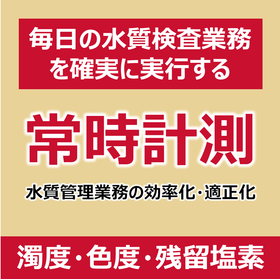
In terms of water supply, "turbidity" refers to the degree of cloudiness observed in water when mixed with impurities, seen as white. "Color" refers to the degree of color observed in water when dissolved substances, such as yellow tones, are present. These are items that are inspected to determine whether the requirement for water supply to be "almost colorless and transparent" is met. ■ Turbidity - A necessary water quality inspection item to confirm whether coagulation and sedimentation treatment, etc., are being carried out appropriately. - Inspected daily - Cannot be omitted - Generally, self-inspection ■ Color - A necessary water quality inspection item to confirm whether the removal of substances like manganese is being carried out appropriately. - Inspected daily - Cannot be omitted - Generally, self-inspection ■ Residual Chlorine - A necessary water quality inspection item to confirm that disinfection against bacteria, etc., has been performed and that chlorine is being retained. - Inspected daily - Cannot be omitted - Generally, self-inspection Measurement data can be viewed and managed in real-time on client devices (computers, smartphones, tablets), contributing to the efficiency of water quality management operations. ▶ For more details, please download the PDF ◀
Added to bookmarks
Bookmarks listBookmark has been removed
Bookmarks listYou can't add any more bookmarks
By registering as a member, you can increase the number of bookmarks you can save and organize them with labels.
Free membership registration
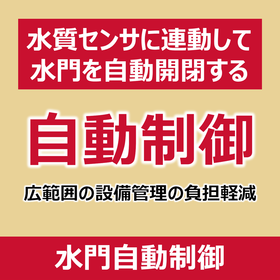
Automatically measures water quality (turbidity, SS, pH, EC, etc.) and water level, and automatically opens and closes the sluice gate (simple slide gate) according to the reference values (thresholds). Additionally, it allows remote operation of the sluice gate via a network. ● This is an application that can be used through a web browser. It can be accessed from anywhere using a computer or smartphone. ● Clicking on the location name will take you to the detailed information page. ● If the water quality exceeds the standard values (thresholds), the background color will change and an email notification will be sent. ● If data has not been received for a certain period, an email notification will be sent. ● It displays the opening and closing status of the sluice gate. ● By clicking the manual operation button, you can execute the opening and closing operation of the sluice gate. ▶ For quotation requests, please contact us via [ Contact Us from the Web ] ◀ ▶ For more details, please download the [ Catalog ] ◀
Added to bookmarks
Bookmarks listBookmark has been removed
Bookmarks listYou can't add any more bookmarks
By registering as a member, you can increase the number of bookmarks you can save and organize them with labels.
Free membership registration
Water is an important resource for corporate activities. Companies in the steel, semiconductor, paper and pulp, and food and beverage sectors use large amounts of water. The Taskforce on Nature-related Financial Disclosures (TNFD) disclosure framework calls for an explanation of dialogue with local communities under "Governance." It has become a significant management challenge to conserve water resources while engaging in dialogue with local communities and conducting business activities. Regarding flow measurement, the challenge is to implement it without stopping the operations of plants or factories. This requires clamp-on flow meters. ■Clamp-on Flow Meters■ When using electromagnetic flow meters, it is necessary to cut the pipe for installation or replacement, which can affect the operations of the plant or factory. Clamp-on flow meters use ultrasound to measure flow velocity and can be easily installed without stopping the operations or equipment of the facility, allowing for high-precision measurements even in harsh environments. ▶For more details, please download the PDF◀
Added to bookmarks
Bookmarks listBookmark has been removed
Bookmarks listYou can't add any more bookmarks
By registering as a member, you can increase the number of bookmarks you can save and organize them with labels.
Free membership registration
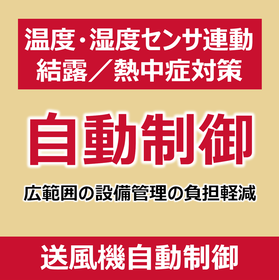
In large spaces such as factories and logistics warehouses, numerous blowers are introduced and managed to achieve the following effects: ■ Suppression of condensation By blowing air in low-temperature, high-humidity areas where condensation is likely to occur, we can suppress the generation of moisture, wetness, and condensation. ■ Prevention of heatstroke By lowering body temperature through air blowing, the risk of heatstroke for workers is reduced. To maximize these effects, it is necessary to operate a large number of blowers properly, and in large spaces, remote control and automatic control functions are required. By linking with our "Condensation Risk Monitoring System" (https://www.ipros.jp/product/detail/2000618805/), it becomes possible to achieve energy savings while demonstrating the effectiveness of condensation countermeasures. ▶ For quotation requests, please contact us [ via the web ] ◀ ▶ For more details, please [ download the catalog ] ◀
Added to bookmarks
Bookmarks listBookmark has been removed
Bookmarks listYou can't add any more bookmarks
By registering as a member, you can increase the number of bookmarks you can save and organize them with labels.
Free membership registration
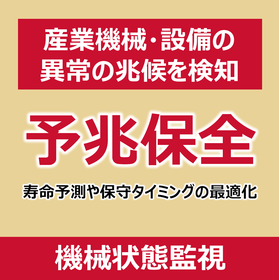
This is a SaaS platform for industrial machinery that realizes the visualization of the site and the smart maintenance. It automatically monitors key performance parameters in real-time and detects anomalies to reduce unplanned downtime. It supports predictive maintenance by detecting signs of equipment abnormalities and performing maintenance as needed. 【Main Features】 1. Real-time remote monitoring Important operational data and anomalies for each machine are monitored on the cloud 24/7. 2. Alert notifications and anomaly detection Anomalous signs are automatically assessed and immediately notified to the responsible personnel, supporting rapid initial response. 3. Predictive maintenance and trend analysis Based on accumulated data, it enables lifespan predictions and optimization of maintenance timing. 4. Workflow optimization Past trouble histories and work details are database-managed, allowing for efficient maintenance planning and progress management. 【Benefits】 ● Reduction in maintenance costs ● Improvement in machine operating rates ● Increased productivity through failure prevention ● Streamlining of maintenance work and standardization of work quality ● Advancing the maintenance and operation of industrial machinery to the next stage ▶ For more details, please download the PDF ◀
Added to bookmarks
Bookmarks listBookmark has been removed
Bookmarks listYou can't add any more bookmarks
By registering as a member, you can increase the number of bookmarks you can save and organize them with labels.
Free membership registration
This is a cloud service that notifies you via an automated voice call (emergency call) when you receive an equipment anomaly notification email. When IoT sensors (such as vibration sensors, current sensors, temperature sensors, etc.) installed on equipment like compressors and motors detect an anomaly and send an alert email, the service can notify the responsible person via an automated voice call, preventing delays in initial response. You can set multiple call recipients, and in addition to simultaneous calls, there are various options such as setting up a round-robin call to another responsible person if the primary person cannot answer, or registering different phone number lists depending on the day of the week, allowing you to combine functions that suit your company. *This service is provided in collaboration with the IoT system 'M2MSTREAM' and Wide Tech Co., Ltd.'s 'Emergency Call.' ▶▶▶ For more details, please download the PDF ◀◀◀
Added to bookmarks
Bookmarks listBookmark has been removed
Bookmarks listYou can't add any more bookmarks
By registering as a member, you can increase the number of bookmarks you can save and organize them with labels.
Free membership registration
This is a cloud service that notifies you via automated voice calls when you receive specific emails. For example, when sensors detect abnormalities in equipment, unauthorized access to restricted areas, or the occurrence of natural disasters, they send alert emails. By ensuring that the responsible person is notified by phone, it helps prevent delays in initial response. You can set multiple call recipients, and in addition to simultaneous calls, there are various options such as setting up a rotation for calls to different responsible persons if one cannot answer, or registering different phone number lists based on the day of the week, allowing you to combine functions that suit your company. * This service is provided in collaboration with the IoT system 'M2MSTREAM' and Wide Tech Co., Ltd.'s 'Emergency Call'. ▶ For quote requests, please contact us via [Web Inquiry] ◀ ▶ For more details, please download the [Catalog] ◀
Added to bookmarks
Bookmarks listBookmark has been removed
Bookmarks listYou can't add any more bookmarks
By registering as a member, you can increase the number of bookmarks you can save and organize them with labels.
Free membership registration
This is a remote monitoring type hot spring monitoring system that combines various sensors and IoT systems. In accordance with the "Guidelines for Business Plan Formulation (Geothermal Power Generation) Revised in April 2021" (Agency for Natural Resources and Energy), it continuously observes the flow rate, water level, spring temperature, pH (hydrogen ion concentration index), EC (electrical conductivity), and wellhead pressure of the hot spring source. As part of the environmental impact assessment related to geothermal power development, there is a need to monitor the long-term effects on surrounding hot spring resources, and this system can be operated at a low cost. By collecting data on the impact of geothermal power generation on hot springs and promoting coexistence with hot spring areas, it contributes to the expansion of geothermal power generation. ▶▶▶ For more details, please download the PDF ◀◀◀
Added to bookmarks
Bookmarks listBookmark has been removed
Bookmarks listYou can't add any more bookmarks
By registering as a member, you can increase the number of bookmarks you can save and organize them with labels.
Free membership registration
This is a measurement system that allows you to view and manage noise levels remotely using client devices (PCs, smartphones, tablets). In addition to noise data such as maximum value (LAmax), minimum value (LAmin), and equivalent noise level (LAeq), it automatically calculates evaluation metrics used in noise regulation laws, such as time-weighted noise levels (LA95, LA50, LA05). The calculated results are presented in graphs and can also be downloaded as CSV files. You can receive notifications via email or alarm devices (flashing lights) if the specified threshold is exceeded in advance. ▶ For quotation requests, please contact us [ via the web ] ◀ ▶ For more details, please [ download the catalog ] ◀
Added to bookmarks
Bookmarks listBookmark has been removed
Bookmarks listYou can't add any more bookmarks
By registering as a member, you can increase the number of bookmarks you can save and organize them with labels.
Free membership registration