1~45 item / All 146 items
Displayed results
Filter by category

Added to bookmarks
Bookmarks listBookmark has been removed
Bookmarks listYou can't add any more bookmarks
By registering as a member, you can increase the number of bookmarks you can save and organize them with labels.
Free membership registration
Contact this company
Inquiry Form1~45 item / All 146 items
Filter by category
In the pharmaceutical industry, maintaining the quality of pharmaceuticals is the top priority. Even slight moisture in the manufacturing and storage environments can lead to the deterioration or degradation of drugs, potentially compromising product safety and efficacy. Particularly in environments where temperature and humidity management are critical, the risk of condensation and leaks increases. This system enables the early detection of moisture that could compromise the quality of pharmaceuticals, allowing for prompt action. 【Usage Scenarios】 - Pharmaceutical manufacturing plants - Pharmaceutical storage warehouses - Raw material storage areas - Quality control departments 【Benefits of Implementation】 - Preservation of pharmaceutical quality - Reduction of defective product occurrences - Decrease in complaint risks - Cost reduction - Improvement of corporate reliability
Added to bookmarks
Bookmarks listBookmark has been removed
Bookmarks listYou can't add any more bookmarks
By registering as a member, you can increase the number of bookmarks you can save and organize them with labels.
Free membership registration
In the maintenance of power plant equipment, water exposure can lead to corrosion of electrical systems and insulation failures, potentially resulting in equipment shutdowns or accidents. Particularly for equipment installed outdoors or in areas prone to rainwater intrusion, measures against water exposure are crucial. This system was developed to reduce the risk of water exposure in the maintenance of power plant equipment. 【Usage Scenarios】 - Substation equipment - Turbine buildings - Control panels installed outdoors - Cable racks 【Benefits of Implementation】 - Early detection of equipment abnormalities - Prolonged equipment lifespan - Reduction in maintenance costs - Achievement of stable power supply
Added to bookmarks
Bookmarks listBookmark has been removed
Bookmarks listYou can't add any more bookmarks
By registering as a member, you can increase the number of bookmarks you can save and organize them with labels.
Free membership registration
In office buildings, water leaks caused by rainwater infiltration or failures in water supply and drainage systems can lead to significant issues such as damage to interiors and equipment, as well as compensation claims from tenants. Particularly, leaks that occur during unoccupied hours at night or on holidays tend to go unnoticed for longer periods, leading to an escalation of damage. This system utilizes highly sensitive sensors installed in various locations within the building to detect even minute amounts of moisture and notify in real-time of any abnormalities, thereby preventing the expansion of damage before it occurs. 【Usage Scenarios】 - Office floors - Break rooms, restrooms - Areas around air conditioning equipment - Rooftops, balconies 【Benefits of Implementation】 - Minimizing damage caused by leaks - Maintaining the asset value of the building - Gaining trust from tenants - Reducing repair costs and insurance premiums
Added to bookmarks
Bookmarks listBookmark has been removed
Bookmarks listYou can't add any more bookmarks
By registering as a member, you can increase the number of bookmarks you can save and organize them with labels.
Free membership registration
In the automotive manufacturing industry, the quality control of steel materials affects the efficiency of the entire process and the quality of the products. In particular, water exposure during the storage of steel coils and bars can lead to the occurrence of red rust and white rust, deterioration of surface quality, increased costs for re-polishing and reprocessing, shipment delays, complaints, and loss of credibility, resulting in significant damage. It is crucial to minimize these risks in process management. This system uses highly sensitive sensors installed in storage areas to instantly detect moisture and notify of abnormalities in real-time, preventing the escalation of damage. 【Usage Scenarios】 - Steel storage warehouses - Primary storage locations for steel in the manufacturing process - Quality control departments 【Benefits of Implementation】 - Reduction of quality deterioration risks due to water exposure - Mitigation of process delays and cost increases - Assurance provided by a 24/7 monitoring system
Added to bookmarks
Bookmarks listBookmark has been removed
Bookmarks listYou can't add any more bookmarks
By registering as a member, you can increase the number of bookmarks you can save and organize them with labels.
Free membership registration
In a data center, if servers and network equipment fail due to water exposure, it can lead to significant damage and system downtime. Compared to other factors like power outages or fires, water exposure is difficult to pinpoint and challenging to detect early. Downtime caused by water leaks can erode customer trust and greatly impact business continuity. This system employs highly sensitive sensors installed in various locations within the data center to detect even slight water exposure and notify of abnormalities in real-time. This helps prevent the escalation of damage and supports stable system operation. 【Usage Scenarios】 - Server rooms - Areas around air conditioning equipment - Areas around power supply equipment - Rooftops - Underground cables 【Benefits of Implementation】 - Reduced risk of downtime - Minimization of damage through early abnormal detection - 24/7 monitoring system - Rapid response through remote monitoring - Enhanced reliability of the data center
Added to bookmarks
Bookmarks listBookmark has been removed
Bookmarks listYou can't add any more bookmarks
By registering as a member, you can increase the number of bookmarks you can save and organize them with labels.
Free membership registration
In chemical plants, it is important to maintain a safe condition at all times to prevent accidents caused by equipment corrosion and leaks. Water exposure can accelerate the deterioration of equipment and potentially lead to serious accidents. In particular, water exposure that occurs during nighttime or unmanned hours carries the risk of delayed detection and expanded damage. This system monitors water exposure within the plant 24/7, detecting abnormalities early to reduce the risk of accidents. 【Usage Scenarios】 - Around pipes and tanks - Control panels and electrical systems - Chemical storage areas 【Benefits of Implementation】 - Prevents corrosion and failure of equipment due to water exposure - Reduces the risk of leakage accidents - Enhances the safety of the plant - Avoids losses due to operational shutdowns
Added to bookmarks
Bookmarks listBookmark has been removed
Bookmarks listYou can't add any more bookmarks
By registering as a member, you can increase the number of bookmarks you can save and organize them with labels.
Free membership registration
In logistics warehouses, a significant challenge is that products stored can suffer quality degradation due to water exposure. Particularly, products like steel can rust and deteriorate in quality when wet, leading to increased reprocessing costs, shipping delays, and potential complaints. It is crucial to detect water exposure, which is likely to occur during nighttime or unmanned hours, early to minimize damage. 【Usage Scenarios】 - Warehouses for storing steel and metal products - Sites where maintaining product quality is of utmost importance - Warehouses requiring 24-hour quality management 【Benefits of Implementation】 - Prevention of quality degradation due to water exposure - Minimization of damage through early detection - Reduction of risks related to complaints and increased costs
Added to bookmarks
Bookmarks listBookmark has been removed
Bookmarks listYou can't add any more bookmarks
By registering as a member, you can increase the number of bookmarks you can save and organize them with labels.
Free membership registration
In semiconductor manufacturing environments, the intrusion of moisture into manufacturing equipment and clean rooms significantly reduces product yield. In particular, precise electronic components and substrates can suffer from corrosion and insulation failures due to even slight moisture adhesion, potentially compromising product quality. This issue affects the entire manufacturing process, leading to reduced final yield, increased costs, and delays in delivery. This system contributes to yield improvement by early detection of moisture risk in semiconductor manufacturing environments and minimizing damage. 【Usage Scenarios】 - Inside clean rooms - Around manufacturing equipment - Storage warehouses 【Benefits of Implementation】 - Improved yield - Stabilization of product quality - Cost reduction - Adherence to delivery deadlines
Added to bookmarks
Bookmarks listBookmark has been removed
Bookmarks listYou can't add any more bookmarks
By registering as a member, you can increase the number of bookmarks you can save and organize them with labels.
Free membership registration
In quality control within the manufacturing industry, noise and vibration in the work environment can potentially affect product quality. Particularly in settings that handle precision instruments and electronic components, even minor vibrations can lead to product defects. Our cloud-based noise and vibration level measurement system was developed to address these issues. 【Usage Scenarios】 - Continuous monitoring of noise and vibration on the production line - Data analysis in the quality control department - Data collection for improving the work environment 【Benefits of Implementation】 - Improvement in product quality - Enhancement of the work environment - Compliance with regulations
Added to bookmarks
Bookmarks listBookmark has been removed
Bookmarks listYou can't add any more bookmarks
By registering as a member, you can increase the number of bookmarks you can save and organize them with labels.
Free membership registration
In quality control within the manufacturing industry, accurate monitoring of vibration levels during the manufacturing process is essential to ensure product reliability. In particular, abnormal vibrations in machinery can lead to product quality deterioration and potential stoppages on the production line. Our cloud-based vibration level measurement system remotely monitors vibration levels across multiple sites, contributing to the efficiency of quality management by enabling early detection of abnormalities. 【Use Cases】 - Vibration monitoring of equipment on the production line - Assessment of vibration impact during product quality inspections - Monitoring of vibration levels across the entire factory 【Benefits of Implementation】 - Early detection of equipment anomalies, reducing downtime - Prevention of product quality defects, improving yield - Promotion of improvement activities through the visualization of vibration data
Added to bookmarks
Bookmarks listBookmark has been removed
Bookmarks listYou can't add any more bookmarks
By registering as a member, you can increase the number of bookmarks you can save and organize them with labels.
Free membership registration
In the infrastructure industry, it is essential to understand the environmental impact of noise and vibration and to implement appropriate measures. Particularly at construction sites and roadworks, accurate monitoring of noise and vibration levels is crucial to minimize the impact on surrounding residents. This system enables remote monitoring of noise and vibration levels, allowing for the early detection of anomalies and facilitating prompt responses. 【Use Cases】 - Noise and vibration monitoring at construction sites - Noise and vibration monitoring at roadwork sites - Noise and vibration monitoring at plant facilities 【Benefits of Implementation】 - Situation awareness through visualization of noise and vibration levels - Rapid response in case of anomalies - Reduction of impact on surrounding residents
Added to bookmarks
Bookmarks listBookmark has been removed
Bookmarks listYou can't add any more bookmarks
By registering as a member, you can increase the number of bookmarks you can save and organize them with labels.
Free membership registration
In quality control within the manufacturing industry, understanding the noise and vibration levels of the work environment is crucial. These factors not only affect product quality but also relate to the health and safety of workers. Particularly in the manufacturing and inspection processes of precision instruments, even slight vibrations can compromise product accuracy. Our cloud-based noise and vibration level measurement system monitors noise and vibration levels remotely, supporting quality control. 【Use Cases】 - Early detection of abnormal noise and vibrations on the production line - Recording environmental data during product quality inspections - Measuring noise levels for worker health management 【Benefits of Implementation】 - Early detection and countermeasures for quality issues - Increased productivity through improved work environment - Compliance with regulations
Added to bookmarks
Bookmarks listBookmark has been removed
Bookmarks listYou can't add any more bookmarks
By registering as a member, you can increase the number of bookmarks you can save and organize them with labels.
Free membership registration
In the construction industry, accurate monitoring of noise and vibration levels is required to comply with regulations. Especially to minimize the impact on neighboring residents, real-time monitoring and appropriate measures are essential. Inadequate management can lead to legal issues and project interruptions. Our cloud-based noise and vibration level measurement system allows for remote monitoring of noise and vibration levels, supporting regulatory compliance through CSV data output and notification functions for threshold exceedances. 【Usage Scenarios】 - Construction sites - Demolition sites - Locations where the impact on surrounding residents needs to be considered 【Benefits of Implementation】 - Compliance with regulations - Remote monitoring - Prompt measures based on data - Strengthening of compliance
Added to bookmarks
Bookmarks listBookmark has been removed
Bookmarks listYou can't add any more bookmarks
By registering as a member, you can increase the number of bookmarks you can save and organize them with labels.
Free membership registration
In the plant industry, it is important to detect equipment anomalies early and prevent accidents before they occur. Abnormal vibration levels are a significant indicator of equipment failure or deterioration. By monitoring vibration levels remotely and discovering anomalies early, we can ensure the safety of the equipment and reduce maintenance costs. Our cloud-based vibration level measurement system monitors vibration levels across multiple sites simultaneously and sends alerts when anomalies are detected. 【Usage Scenarios】 - Vibration monitoring of plant equipment - Detection of equipment anomalies - Remote monitoring 【Benefits of Implementation】 - Early detection of equipment anomalies - Prevention of accidents - Reduction of maintenance costs
Added to bookmarks
Bookmarks listBookmark has been removed
Bookmarks listYou can't add any more bookmarks
By registering as a member, you can increase the number of bookmarks you can save and organize them with labels.
Free membership registration
In the infrastructure industry, noise and vibration associated with construction work and equipment operation can potentially impact the surrounding environment and the health of workers. To minimize these effects, it is important to accurately understand noise and vibration levels and implement appropriate measures. Our cloud-based noise and vibration level measurement system provides a solution for monitoring noise and vibration levels remotely and responding quickly when issues arise. 【Use Cases】 - Noise and vibration monitoring at construction sites - Monitoring the operational status of plant equipment - Impact surveys for surrounding residents 【Benefits of Implementation】 - Early detection of issues through visualization of noise and vibration levels - Efficient site management through remote monitoring - Implementation of appropriate measures based on data
Added to bookmarks
Bookmarks listBookmark has been removed
Bookmarks listYou can't add any more bookmarks
By registering as a member, you can increase the number of bookmarks you can save and organize them with labels.
Free membership registration
In the aviation industry, the noise issues around airports are taken seriously. To respond to noise regulations and minimize the impact on nearby residents, accurately understanding noise levels is essential. This system monitors noise and vibration levels in real-time during various scenarios, such as aircraft takeoffs and landings, as well as ground operations, and allows for remote confirmation. This enables quick situational awareness and appropriate measures to be taken. 【Usage Scenarios】 - Noise monitoring around airports - Noise measurement during aircraft operations - Noise and vibration management at work sites 【Benefits of Implementation】 - Early detection of issues through visualization of noise levels - Implementation of effective noise control measures based on data - Strengthening compliance with environmental regulations
Added to bookmarks
Bookmarks listBookmark has been removed
Bookmarks listYou can't add any more bookmarks
By registering as a member, you can increase the number of bookmarks you can save and organize them with labels.
Free membership registration
In the port industry, there is a demand for consideration of the environmental impact of noise and vibration, as well as the health of workers. Particularly in ports where heavy machinery and vessels are frequently operated, accurately understanding and managing noise and vibration levels is crucial. If proper management is not implemented, it could lead to complaints from nearby residents and health issues for workers. Our cloud-based noise and vibration level measurement system monitors noise and vibration levels remotely, contributing to the improvement of the working environment. 【Usage Scenarios】 - Heavy machinery work sites in ports - Noise monitoring during vessel arrivals and departures - Noise impact surveys for nearby residents 【Benefits of Implementation】 - Improvement of the working environment through visualization of noise and vibration levels - Efficient management through remote monitoring - Implementation of improvement measures based on data
Added to bookmarks
Bookmarks listBookmark has been removed
Bookmarks listYou can't add any more bookmarks
By registering as a member, you can increase the number of bookmarks you can save and organize them with labels.
Free membership registration
In an office environment, noise control measures that affect employees' concentration and health are important. In particular, noise from nearby construction and equipment vibrations can lead to decreased work efficiency and increased stress. Our cloud-based vibration level measurement system helps monitor the vibration levels of multiple offices in real-time from a remote location, allowing for the early detection of noise issues and the implementation of countermeasures. 【Usage Scenarios】 * Office buildings * Factories * Nearby construction sites * Locations experiencing noise problems 【Benefits of Implementation】 * Visualization of noise levels * Early detection of noise issues * Rapid implementation of noise control measures * Creation of a comfortable working environment for employees
Added to bookmarks
Bookmarks listBookmark has been removed
Bookmarks listYou can't add any more bookmarks
By registering as a member, you can increase the number of bookmarks you can save and organize them with labels.
Free membership registration
In quality control within the manufacturing industry, accurate measurement and management of vibration levels during the manufacturing process are essential to maintain product quality. In particular, abnormal vibrations in machinery can lead to product defects and equipment failures. Our cloud-based vibration level measurement system contributes to the efficiency of quality management by remotely monitoring vibration levels at multiple sites and enabling early detection of anomalies. 【Usage Scenarios】 - Vibration monitoring of equipment on the production line - Evaluation of the impact of vibrations on product quality inspection - Monitoring of vibration levels across the entire factory 【Benefits of Implementation】 - Early detection of equipment abnormalities, reducing downtime - Reduction of product quality defects - Development of improvement measures based on vibration level data
Added to bookmarks
Bookmarks listBookmark has been removed
Bookmarks listYou can't add any more bookmarks
By registering as a member, you can increase the number of bookmarks you can save and organize them with labels.
Free membership registration
In the construction industry, ensuring the safety of workers and considering the surrounding environment are essential. Excessive increases in vibration levels can lead to health issues for workers and noise problems for nearby residents. Therefore, it is important to accurately monitor vibration levels and implement appropriate measures. Our cloud-based vibration level measurement system allows for real-time remote monitoring of vibration levels at multiple sites, streamlining safety management. 【Usage Scenarios】 - Monitoring vibration levels at construction sites - Measuring vibrations during heavy machinery operation - Noise control for nearby residents 【Benefits of Implementation】 - Quick response through real-time monitoring from remote locations - Recording and analysis through CSV data output - Early response via email notifications when thresholds are exceeded
Added to bookmarks
Bookmarks listBookmark has been removed
Bookmarks listYou can't add any more bookmarks
By registering as a member, you can increase the number of bookmarks you can save and organize them with labels.
Free membership registration
In quality control within the manufacturing industry, accurate monitoring of vibration levels during the manufacturing process is essential to ensure product reliability. In particular, vibrations during the operation of machinery and the transportation of products can directly affect product quality. Abnormal vibration levels can lead to product defects or performance degradation, making early detection and countermeasures indispensable. Our cloud-based vibration level measurement system contributes to the efficiency of quality control by remotely monitoring vibration levels across multiple sites and detecting anomalies early. 【Use Cases】 - Vibration monitoring of equipment on the production line - Vibration monitoring during product transportation - Data analysis in the quality control department 【Benefits of Implementation】 - Early detection of abnormal vibration levels, improving product quality - Reduction of on-site travel costs through remote monitoring - Detailed data analysis enabled by CSV data output
Added to bookmarks
Bookmarks listBookmark has been removed
Bookmarks listYou can't add any more bookmarks
By registering as a member, you can increase the number of bookmarks you can save and organize them with labels.
Free membership registration
In the construction industry, noise issues can lead to conflicts with neighboring residents and health problems for workers. In particular, vibrations from construction sites can significantly impact the surrounding environment, necessitating appropriate measures. Our cloud-based vibration level measurement system allows for remote monitoring of vibration levels at multiple sites and enables quick detection of anomalies, facilitating prompt responses. 【Usage Scenarios】 - Monitoring noise and vibration levels at construction sites - Preparing explanatory materials for neighboring residents - Safety management for workers 【Benefits of Implementation】 - Early detection and response to noise issues - Improvement of the working environment - Smooth communication with neighboring residents
Added to bookmarks
Bookmarks listBookmark has been removed
Bookmarks listYou can't add any more bookmarks
By registering as a member, you can increase the number of bookmarks you can save and organize them with labels.
Free membership registration
pH (hydrogen ion concentration) indicates the degree of acidity or alkalinity of water. It is expressed on a scale of 1 to 14, with 7 being neutral, values above 7 indicating alkalinity, and values below 7 indicating acidity. SS (suspended solids) refers to insoluble substances that are suspended in water. It is one of the indicators used to measure the degree of water pollution and includes organic matter derived from phytoplankton, their remains, domestic wastewater, and industrial effluents. The amount of SS significantly affects the appearance of water, such as its turbidity and transparency. In factories where wastewater is generated, it is necessary to establish a monitoring system to comply with the water quality standards set by the Ministry of the Environment and the Ministry of Land, Infrastructure, Transport and Tourism for environmental conservation, in order to avoid administrative guidance. By automating the measurement of pH and SS, which is time-consuming and labor-intensive, and implementing remote monitoring, labor can be reduced, and human errors can be prevented. ▶ For quotation requests, please contact us via [Web Inquiry] ◀ ▶ For more details, please download [Catalog] ◀
Added to bookmarks
Bookmarks listBookmark has been removed
Bookmarks listYou can't add any more bookmarks
By registering as a member, you can increase the number of bookmarks you can save and organize them with labels.
Free membership registration
In data centers, many facilities such as air conditioning systems, cooling units, and emergency generators operate 24 hours a day. The noise generated by these facilities can affect not only the operational environment within the facility but also the surrounding environment. To balance stable facility operations with consideration for the local environment, it is important to continuously monitor and appropriately manage noise levels. Additionally, changes in noise levels can indicate abnormalities or deterioration in equipment, and utilizing this as part of operational monitoring can help in the early detection of equipment issues and preventive maintenance. The cloud-based noise monitoring system measures noise levels in real-time using sound level meters installed both inside and outside the data center, managing the data centrally in the cloud. It allows for remote monitoring and historical data review, enabling operators to immediately grasp the overall noise situation of the facility. Furthermore, it automatically sends alert notifications when set thresholds are exceeded, supporting prompt responses. By analyzing the accumulated data, it also contributes to the optimization of equipment operations and the enhancement of environmental management. As a monitoring foundation that supports the stable operation of data centers and environmental considerations, it aids in improving the reliability of facility operations.
Added to bookmarks
Bookmarks listBookmark has been removed
Bookmarks listYou can't add any more bookmarks
By registering as a member, you can increase the number of bookmarks you can save and organize them with labels.
Free membership registration
At power plants, equipment failures and shutdowns can lead to instability in power supply, resulting in significant social impacts. In particular, water damage from leaks or condensation can cause corrosion and short circuits in electrical systems, potentially leading to serious accidents. To ensure stable power supply 24/7, it is crucial to detect water damage risks early and take preventive measures. This system protects power plant equipment from water damage and contributes to stable operation. 【Usage Scenarios】 - Substation equipment - Control panels - Turbine buildings - Outdoor electrical equipment 【Benefits of Implementation】 - Minimization of damage through early detection of equipment abnormalities - Reduction of maintenance costs - Achievement of stable power supply
Added to bookmarks
Bookmarks listBookmark has been removed
Bookmarks listYou can't add any more bookmarks
By registering as a member, you can increase the number of bookmarks you can save and organize them with labels.
Free membership registration
In the automotive industry, maintaining the quality of parts is crucial, as deterioration of parts during storage can lead to significant losses. In particular, steel parts are prone to rust due to moisture, which can severely degrade quality. This can lead to issues such as decreased performance of parts, increased replacement costs, delivery delays, and complaints from customers. This system uses highly sensitive sensors installed in storage areas to detect trace amounts of moisture and notify of abnormalities in real-time. This helps prevent the escalation of damage and enables prompt responses. 【Usage Scenarios】 - Storage warehouses for steel parts - Quality control departments for parts - Inventory management of parts 【Benefits of Implementation】 - Maintenance of part quality - Cost reduction due to rust prevention - Reduction of complaint risks
Added to bookmarks
Bookmarks listBookmark has been removed
Bookmarks listYou can't add any more bookmarks
By registering as a member, you can increase the number of bookmarks you can save and organize them with labels.
Free membership registration
In semiconductor manufacturing, subtle environmental changes during the production process significantly affect product yield. In particular, exposure to moisture during the storage of components poses a serious risk of product quality deterioration and yield reduction. Condensation and leaks can often go unnoticed through visual inspections, and by the time they are detected, extensive damage may have already occurred. This system employs highly sensitive sensors installed in storage areas to instantly detect trace amounts of moisture and notify in real-time of any anomalies, thereby preventing the escalation of damage. 【Usage Scenarios】 - Semiconductor manufacturing plants - Clean rooms - Component storage warehouses - Quality control departments 【Benefits of Implementation】 - Improved yield - Reduced quality control costs - Enhanced product reliability - Decreased risk of complaints
Added to bookmarks
Bookmarks listBookmark has been removed
Bookmarks listYou can't add any more bookmarks
By registering as a member, you can increase the number of bookmarks you can save and organize them with labels.
Free membership registration
In a data center, if servers and network equipment fail due to water exposure, it can lead to significant damage and system downtime. Especially for data centers operating 24/7, downtime caused by water exposure not only erodes customer trust but also incurs substantial time and costs for recovery. This system utilizes highly sensitive sensors installed in various locations within the data center to instantly detect even minor water exposure and notify of abnormalities in real-time, thereby preventing the escalation of damage. 【Usage Scenarios】 - Server rooms - Around air conditioning equipment - Around power supply equipment - Rooftops 【Benefits of Implementation】 - Reduced risk of downtime - Minimization of damage through early abnormal detection - 24/7 monitoring system - Reduction of recovery costs
Added to bookmarks
Bookmarks listBookmark has been removed
Bookmarks listYou can't add any more bookmarks
By registering as a member, you can increase the number of bookmarks you can save and organize them with labels.
Free membership registration
In warehouse inventory management, maintaining the quality of steel materials is extremely important. Water exposure due to condensation or leaks can lead to significant damage, including the occurrence of red rust and white rust on steel, deterioration of surface quality, increased reprocessing costs, shipping delays, and complaints. In particular, water exposure that occurs during nighttime or unmanned hours tends to go unnoticed. This system uses highly sensitive sensors installed in the storage area to instantly detect even minute amounts of moisture and notify in real-time, preventing the expansion of damage before it occurs. 【Usage Scenarios】 - Warehouses for storing steel and metal products - Wanting to ensure thorough quality control of products - Aiming to establish a 24/7 monitoring system 【Benefits of Implementation】 - Suppression of quality deterioration due to water exposure - Minimization of damage through early detection - Reduction of inventory management costs
Added to bookmarks
Bookmarks listBookmark has been removed
Bookmarks listYou can't add any more bookmarks
By registering as a member, you can increase the number of bookmarks you can save and organize them with labels.
Free membership registration
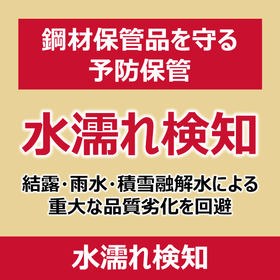
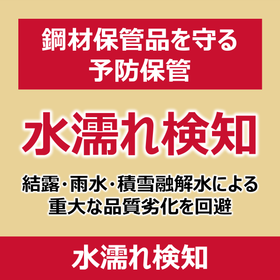
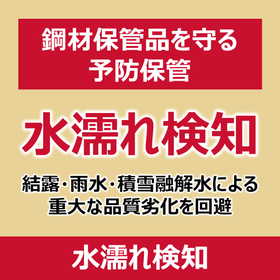
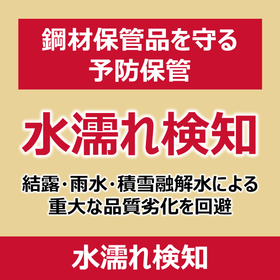
In factories and warehouses storing steel plates, coils, and bars, water exposure from condensation, rain leaks from the ceiling, and melting snow can lead to significant quality deterioration. Once moisture adheres, it can result in: ● The occurrence of red rust and white rust ● Decreased surface quality ● Increased costs for re-polishing and reprocessing ● Shipping delays ● Claims and loss of credibility, leading to substantial damages. However, water exposure often occurs quietly from areas that are difficult to monitor, such as near the ceiling during nighttime or unmanned hours. Do not overlook that "initial drop." This system uses highly sensitive sensors installed in the storage area to instantly detect moisture. It notifies of abnormalities in real-time, enabling prompt action before damage escalates. ■ Main Features ✅ Immediate detection of trace amounts of moisture ✅ Responds to condensation, leaks, and melting snow ✅ Continuous monitoring even during unmanned hours ✅ Alarm, email, and remote notification capabilities ✅ Can be retrofitted to existing warehouses From visual inspections to "constant monitoring" In traditional patrol inspections, there is a time lag between occurrence and discovery. This system monitors 24/7, minimizing damage. It prevents situations where "by the time you notice, a wide area has already rusted."
Added to bookmarks
Bookmarks listBookmark has been removed
Bookmarks listYou can't add any more bookmarks
By registering as a member, you can increase the number of bookmarks you can save and organize them with labels.
Free membership registration
In the shipbuilding industry's painting process, improving the drying of paint and ventilation efficiency is crucial. In particular, the painting booth faces various challenges, such as paint overspray, deterioration of the working environment due to volatile organic compounds (VOCs), and the risk of ignition. The axial fan remote control system addresses these challenges by providing functions such as ventilation, drying, removal of dust, heat, and humidity, and prevention of condensation, contributing to the efficiency and safety of painting operations. 【Usage Scenarios】 - Ventilation within the painting booth - Promotion of drying after painting - Improvement of the working environment - Remote operation of fans 【Effects of Implementation】 - Increased efficiency of painting operations - Ensured safety for workers - Improved painting quality - Reduced running costs
Added to bookmarks
Bookmarks listBookmark has been removed
Bookmarks listYou can't add any more bookmarks
By registering as a member, you can increase the number of bookmarks you can save and organize them with labels.
Free membership registration
In the warehouse industry, proper humidity management is essential for maintaining the quality of stored items. In particular, the occurrence of condensation and mold poses a significant risk to the value of products. The axial fan remote control system works in conjunction with temperature and humidity sensors to automatically monitor and control humidity levels within the warehouse, addressing these issues. This enables both the maintenance of the quality of stored items and the efficiency of management operations. 【Use Cases】 - Humidity adjustment through ventilation in the warehouse - Measures to prevent condensation - Promotion of drying for stored items 【Benefits of Implementation】 - Maintenance of the quality of stored items - Reduction of damage risk due to mold and condensation - Cost savings through labor reduction
Added to bookmarks
Bookmarks listBookmark has been removed
Bookmarks listYou can't add any more bookmarks
By registering as a member, you can increase the number of bookmarks you can save and organize them with labels.
Free membership registration
Ventilation in factories is extremely important for maintaining the working environment, preserving product quality, and managing employee health. In particular, in environments where dust, heat, humidity, and harmful substances are generated, an appropriate ventilation system is essential. However, traditional ventilation systems may require manual operation and complicated management. In response to this challenge, our axial fan remote control system provides functions such as remote operation, automatic control, and anomaly detection, streamlining factory ventilation management. 【Usage Scenarios】 - Ventilation and air supply within the factory - Ventilation in the drying process - Exhausting dust, heat, and humidity - Preventing condensation 【Benefits of Implementation】 - Labor savings through remote operation - Automatic control in conjunction with temperature and humidity sensors - Early response and preventive maintenance during anomalies - Increased productivity through improved working environment
Added to bookmarks
Bookmarks listBookmark has been removed
Bookmarks listYou can't add any more bookmarks
By registering as a member, you can increase the number of bookmarks you can save and organize them with labels.
Free membership registration
In a data center, proper temperature management is essential for the stable operation of servers. Temperature increases can lead to equipment failure and performance degradation, necessitating 24/7 monitoring and prompt responses. Our axial fan remote control system streamlines temperature management in data centers through remote fan control and automation, supporting stable operations. 【Use Cases】 - Control of cooling fans in data centers - Automated operation linked to temperature and humidity monitoring - Remote ON/OFF operation of fans 【Benefits of Implementation】 - Energy savings through efficient temperature management - Reduced downtime due to early response to anomalies - Lower operational costs through remote control
Added to bookmarks
Bookmarks listBookmark has been removed
Bookmarks listYou can't add any more bookmarks
By registering as a member, you can increase the number of bookmarks you can save and organize them with labels.
Free membership registration
In the plant industry, the safe operation of equipment is the most important issue. To prevent accidents, proper ventilation and temperature management are essential, and the appropriate operation of axial fans is required. Our axial fan remote control system supports the safe operation of plants. 【Usage Scenarios】 - Ensuring the safety of workers in hazardous locations - Rapid response in case of abnormalities - Management of temperature and humidity within the plant 【Benefits of Implementation】 - Improved safety through remote operation - Early detection and response to abnormalities - Increased productivity due to stable equipment operation
Added to bookmarks
Bookmarks listBookmark has been removed
Bookmarks listYou can't add any more bookmarks
By registering as a member, you can increase the number of bookmarks you can save and organize them with labels.
Free membership registration
In the seafood processing industry, thorough hygiene management in wastewater treatment is required to ensure food safety. In particular, wastewater generated during the manufacturing process can cause environmental pollution and adversely affect products if not properly treated. Our IoT/AI-driven digital transformation of wastewater treatment automates water quality monitoring, scum collection, sludge settling agent application, aeration tank management, raw water tank and mixing tank management, and chemical inventory management, contributing to enhanced hygiene management. 【Usage Scenarios】 - Wastewater treatment facilities in seafood processing plants - Wastewater treatment facilities in food manufacturing plants 【Benefits of Implementation】 - Increased efficiency in wastewater treatment - Optimization of water quality management - Optimization of chemical usage - Reduction of on-site workload
Added to bookmarks
Bookmarks listBookmark has been removed
Bookmarks listYou can't add any more bookmarks
By registering as a member, you can increase the number of bookmarks you can save and organize them with labels.
Free membership registration
At power plants, proper management of wastewater treatment facilities is required to comply with environmental regulations and ensure stable plant operations. In particular, monitoring water quality pollutants and detecting equipment anomalies are essential for legal compliance and safe plant operation. Manual monitoring and analog measurement methods carry risks of human error and oversight, making rapid response difficult. Our IoT/AI-based wastewater treatment digital transformation solution addresses these challenges. 【Usage Scenarios】 - Remote monitoring of wastewater treatment facilities - Automatic collection and analysis of water quality data - Anomaly detection and alert notifications - Automated chemical dosing management 【Benefits of Implementation】 - Establishment of a 24/7 water quality monitoring system - Reduction in labor costs - Rapid response to anomalies - Strengthened compliance with environmental regulations
Added to bookmarks
Bookmarks listBookmark has been removed
Bookmarks listYou can't add any more bookmarks
By registering as a member, you can increase the number of bookmarks you can save and organize them with labels.
Free membership registration
In the oil refining industry, ensuring safety in wastewater treatment is the top priority. The wastewater generated during the handling of crude oil and chemicals poses a risk of environmental pollution, making proper treatment essential. Manual water quality management carries the risk of accidents due to human error and oversight, and continuous monitoring around the clock is challenging. Our IoT/AI-driven digital transformation of wastewater treatment automates water quality monitoring, detects anomalies, and optimizes chemical dosing, supporting safe operations. 【Use Cases】 - Wastewater treatment plants - Automation of water quality management - Early response through anomaly detection 【Benefits of Implementation】 - Reduction of water quality pollution risks - Decrease in human errors - 24/7 monitoring - Cost reduction
Added to bookmarks
Bookmarks listBookmark has been removed
Bookmarks listYou can't add any more bookmarks
By registering as a member, you can increase the number of bookmarks you can save and organize them with labels.
Free membership registration
In the textile industry, reducing costs and minimizing environmental impact in wastewater treatment are important challenges. Optimizing the wastewater treatment process contributes to solving these issues. Manual water quality management and chemical dosing lead to increased labor costs and higher chemical usage, which drive up expenses. Our IoT/AI-based wastewater treatment digital transformation solution addresses these challenges. 【Usage Scenarios】 - Reducing labor costs through automation of the wastewater treatment process - Optimizing chemical usage through automation of water quality measurement - Improving the efficiency of site patrols through remote monitoring 【Benefits of Implementation】 - Reduction in costs associated with wastewater treatment - Improved accuracy in water quality management - Decreased environmental impact
Added to bookmarks
Bookmarks listBookmark has been removed
Bookmarks listYou can't add any more bookmarks
By registering as a member, you can increase the number of bookmarks you can save and organize them with labels.
Free membership registration
In the semiconductor industry, the use of ultra-pure water in the manufacturing process and the advanced management of wastewater treatment associated with it are required. In particular, the contamination of fine particles and impurities directly affects product quality, making the precision of wastewater treatment crucial. Manual water quality management can be challenging to maintain in optimal condition due to human error and delays in measurement. Our IoT/AI-powered wastewater treatment digital transformation solution automates water quality monitoring, scum recovery, automatic dosing of sludge settling agents, aeration tank management, raw water tank and mixing tank management, and chemical inventory management, achieving high-precision water quality management. 【Usage Scenarios】 - Wastewater treatment facilities in semiconductor manufacturing plants - Locations requiring high-precision water quality management - Places where strict management of water pollutants is necessary 【Benefits of Implementation】 - Reduction of human errors through automation of water quality management - Rapid response through real-time collection and analysis of water quality data - Cost reduction through optimization of chemical usage - Improvement of product quality through stable water quality management
Added to bookmarks
Bookmarks listBookmark has been removed
Bookmarks listYou can't add any more bookmarks
By registering as a member, you can increase the number of bookmarks you can save and organize them with labels.
Free membership registration
In the pulp and paper industry, there is a demand for improved energy efficiency in wastewater treatment. In particular, electricity consumption in the wastewater treatment process contributes to increased costs. Manual water quality management and chemical dosing can lead to human errors and delays in optimization, potentially reducing energy efficiency. Our IoT/AI-driven digital transformation of wastewater treatment contributes to energy savings and operational efficiency through the automation of water quality measurement, optimization of scum recovery, and automation of chemical dosing. 【Use Cases】 - Optimization of the wastewater treatment process - Automation of water quality management - Optimization of chemical usage 【Benefits of Implementation】 - Reduction in energy consumption - Cost savings through optimized chemical usage - Improvement in operational efficiency
Added to bookmarks
Bookmarks listBookmark has been removed
Bookmarks listYou can't add any more bookmarks
By registering as a member, you can increase the number of bookmarks you can save and organize them with labels.
Free membership registration
In the pharmaceutical industry, strict management of water quality in the manufacturing process is required. The quality of wastewater treatment directly affects the quality of the products, so it is important to maintain a consistently stable water quality. Manual water quality management carries risks due to human error and delays in measurement. Our IoT/AI-based wastewater treatment digital transformation system automates water quality monitoring, scum recovery, automatic dosing of sludge settling agents, and streamlines chemical inventory management, contributing to improved quality control. 【Usage Scenarios】 - Wastewater treatment facilities in pharmaceutical factories - Streamlining water quality management - Strengthening quality control 【Benefits of Implementation】 - Real-time monitoring of water quality data - Optimization of chemical usage - Reduction of on-site workload
Added to bookmarks
Bookmarks listBookmark has been removed
Bookmarks listYou can't add any more bookmarks
By registering as a member, you can increase the number of bookmarks you can save and organize them with labels.
Free membership registration
In the chemical plant industry, water quality management and efficiency in wastewater treatment are important challenges. In particular, there is a need to respond to water quality fluctuations due to the discharge of diverse waste liquids, comply with regulations, and reduce operating costs. Manual water quality monitoring and chemical dosing carry risks of human error and delays, which may result in suboptimal treatment. Our IoT/AI-driven digital transformation of wastewater treatment addresses these challenges. 【Use Cases】 - Wastewater treatment facilities in chemical plants - Automation of water quality management - Optimization of chemical usage - Labor reduction through remote monitoring 【Benefits of Implementation】 - Real-time monitoring of water quality data - Cost reduction through optimization of chemical usage - Early detection and response to abnormalities - Reduction of operating costs through labor savings
Added to bookmarks
Bookmarks listBookmark has been removed
Bookmarks listYou can't add any more bookmarks
By registering as a member, you can increase the number of bookmarks you can save and organize them with labels.
Free membership registration
In the food manufacturing industry, there is a demand for the efficiency of wastewater treatment. In particular, thorough water quality management and the resolution of labor shortages are important challenges. Manual wastewater treatment not only requires time and effort but also has limitations in the accuracy of water quality management. Our IoT/AI-driven digital transformation of wastewater treatment addresses these challenges. 【Usage Scenarios】 - Wastewater treatment facilities in food manufacturing plants - Automation of water quality management - Resolution of labor shortages 【Benefits of Implementation】 - Improved accuracy of water quality management - Cost reduction through labor savings - Significant improvement in operational efficiency
Added to bookmarks
Bookmarks listBookmark has been removed
Bookmarks listYou can't add any more bookmarks
By registering as a member, you can increase the number of bookmarks you can save and organize them with labels.
Free membership registration
In the real estate industry's facility management, rapid detection and response to abnormalities are required. In particular, emergencies such as water leaks and power outages not only diminish the asset value of the building but also significantly impact the lives of the tenants. Early detection and swift response are essential to prevent the escalation of damage and maintain tenant satisfaction. Our IoT sensor-linked automated voice calling service notifies the responsible personnel via automated voice calls when a facility abnormality is detected. This helps prevent delays in initial response and contributes to minimizing damage. 【Use Cases】 - Water leak detection - Power outage occurrence - Abnormalities in air conditioning systems - Abnormalities in security systems 【Benefits of Implementation】 - Rapid response during abnormalities - Minimization of damage - Improvement in tenant satisfaction - Reduction in facility management costs
Added to bookmarks
Bookmarks listBookmark has been removed
Bookmarks listYou can't add any more bookmarks
By registering as a member, you can increase the number of bookmarks you can save and organize them with labels.
Free membership registration