1~9 item / All 9 items
Displayed results
Filter by category

Added to bookmarks
Bookmarks listBookmark has been removed
Bookmarks listYou can't add any more bookmarks
By registering as a member, you can increase the number of bookmarks you can save and organize them with labels.
Free membership registration
Contact this company
Inquiry Form1~9 item / All 9 items
Filter by category

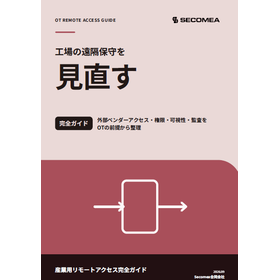
This document is a white paper on the intrusion routes and external connections of factory OT, as demonstrated by four domestic ransomware incidents. It organizes points that organizations looking to strengthen their defenses can learn from the published facts and recurrence prevention measures. Where are the weaknesses in the management structure of your OT? The control of external access for OT is divided into four perspectives: entry, visibility and traceability, identity verification and authority, and scope and time, illustrated in accordance with Secomea's architecture. [Contents (partial)] ■ Introduction: Common intrusion routes leading to business shutdowns ■ Chapter 1: Incidents originating from permanently connected devices ■ Chapter 2: Incidents where logs were lost and routes could not be determined ■ Chapter 3: Incidents where exceptions for accounts became a breakthrough ■ Chapter 4: Incidents where constant connections allowed lateral movement *For more details, please download the PDF or feel free to contact us.
Added to bookmarks
Bookmarks listBookmark has been removed
Bookmarks listYou can't add any more bookmarks
By registering as a member, you can increase the number of bookmarks you can save and organize them with labels.
Free membership registration
This document is a practical guide to systematically organize complex requirements by connecting them with a common language called IEC 62443, aiming to achieve effective OT security. By establishing IEC 62443 as the "common language (backbone) for implementation," it consolidates responses to NIS2, CRA, and NIST CSF into a single implementation framework, providing a practical roadmap to reduce the exhaustion of having to redo audits each time. It shifts from the exhaustion of pursuing multiple regulations separately to a design that consolidates them under one backbone. We hope this guide can support you in taking that first step. 【Contents】 ■ Introduction ■ Part 1: Why Consolidate ■ Part 2: IEC 62443 as a Common Language ■ Part 3: To the Field—Failures, Responsibilities, Implementation ■ Appendix (Glossary, List of Sources) *For more details, please download the PDF or feel free to contact us.
Added to bookmarks
Bookmarks listBookmark has been removed
Bookmarks listYou can't add any more bookmarks
By registering as a member, you can increase the number of bookmarks you can save and organize them with labels.
Free membership registration
This document is a research report aimed at clarifying the current state of industrial remote access. It organizes findings from a survey of 400 participants regarding operational models that support maintenance, recovery, and vendor access. It reveals how companies are currently managing remote access based on data, and explains which elements of architecture, governance, and operations significantly impact maturity. [Contents (partial)] ■ Executive Summary ■ Strategic Outlook ■ Objectives and Research Methods ■ Current State of Industrial Remote Access Worldwide ■ Tools, Visibility, Remote Access Management ■ Governance, Collaboration, Operational Friction *For more details, please download the PDF or feel free to contact us.
Added to bookmarks
Bookmarks listBookmark has been removed
Bookmarks listYou can't add any more bookmarks
By registering as a member, you can increase the number of bookmarks you can save and organize them with labels.
Free membership registration
This document is a comprehensive guide to full compliance with NIS2 in the manufacturing industry. To support the realization of complete compliance, it provides a thorough explanation of the new cybersecurity regulations that you need to know. You will be able to understand what the NIS2 directive is and why it became necessary, as well as learn how to achieve full NIS2 compliance in 10 steps. [Contents] ■ From NIS to NIS2 ■ Whether or not you fall under NIS2: Assessing your company's applicability ■ Organizing the key points for NIS2 compliance ■ Practical guide to NIS2 compliance ■ NIS2 compliance audit measures ■ Secomea: A trusted partner supporting NIS2 compliance *For more details, please download the PDF or feel free to contact us.
Added to bookmarks
Bookmarks listBookmark has been removed
Bookmarks listYou can't add any more bookmarks
By registering as a member, you can increase the number of bookmarks you can save and organize them with labels.
Free membership registration
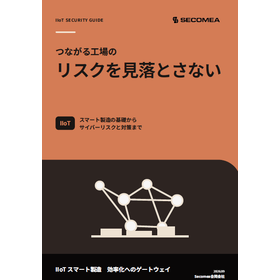
This document is a security guide that summarizes everything from the basics of smart manufacturing to IIoT cyber risks and countermeasures. It comprehensively explains the key pillars of IIoT in manufacturing, as well as the cybersecurity concerns and best practices that you should be aware of. You can identify the specific elements of the IIoT ecosystem that can be implemented in production sites and promote improvements across the entire business. [Contents] ■ IIoT, Industry 4.0, Smart Manufacturing ■ The transformative power of IIoT ■ Cyber risks inherent in IIoT ■ Best practices for IIoT cybersecurity ■ Secomea supports the first steps in IIoT implementation *For more details, please download the PDF or feel free to contact us.
Added to bookmarks
Bookmarks listBookmark has been removed
Bookmarks listYou can't add any more bookmarks
By registering as a member, you can increase the number of bookmarks you can save and organize them with labels.
Free membership registration
This document is a comprehensive guide on industrial remote access. It delves into the challenges faced by manufacturing companies, contrasting the limitations of traditional tools with the benefits gained from implementing remote access solutions specifically designed for operational technology (OT). What manufacturing companies need are tools that address OT priorities and can accurately manage their complex environments. [Contents] ■ Rethinking traditional access models for enhanced OT security ■ Challenges of external access in OT environments ■ New OT cyber threats arising from the convergence of IT and OT ■ Limitations faced by IT tools in OT environments ■ The necessity of secure remote access specialized for OT ■ Secomea's solution: SRA specialized for OT *For more details, please download the PDF or feel free to contact us.
Added to bookmarks
Bookmarks listBookmark has been removed
Bookmarks listYou can't add any more bookmarks
By registering as a member, you can increase the number of bookmarks you can save and organize them with labels.
Free membership registration
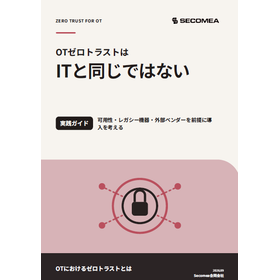
This document is intended to help consider how to implement Zero Trust in an OT environment. It explains the basic concepts of Zero Trust, how to apply it to OT environments, and specific steps to connect theory to practice. Please read it to the end, and if you have any questions or consultations regarding the implementation of Zero Trust in OT environments, feel free to contact us. [Contents] ■ Issues with perimeter-based security ■ What is Zero Trust—and why is it necessary for OT now? ■ The mechanism of Zero Trust in OT—differences from IT models ■ Practical guide for implementing Zero Trust in OT environments ■ How Secomea realizes Zero Trust in OT infrastructure *For more details, please download the PDF or feel free to contact us.
Added to bookmarks
Bookmarks listBookmark has been removed
Bookmarks listYou can't add any more bookmarks
By registering as a member, you can increase the number of bookmarks you can save and organize them with labels.
Free membership registration
Secomea's remote access service is designed for the remote maintenance and monitoring of production equipment. At its core is the principle of zero trust, allowing approved individuals to connect to approved devices only for approved periods of time. It meets the specific control requirements of operational technology (OT) that traditional IT VPNs and jump servers cannot address. The configuration consists of three components: the IIoT gateway SiteManager placed on the device side, the Access Management server in the cloud that centrally manages permissions and records, and the LinkManager, a connection client used by operators from their PCs or browsers. Since connections are always initiated from the factory side outward, there is no need to open incoming ports on the firewall, allowing for implementation without disrupting existing network configurations or the layers of the Purdue model.
Added to bookmarks
Bookmarks listBookmark has been removed
Bookmarks listYou can't add any more bookmarks
By registering as a member, you can increase the number of bookmarks you can save and organize them with labels.
Free membership registration
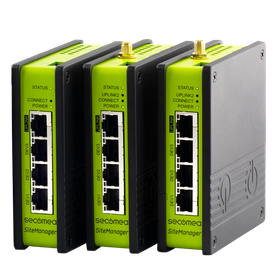
SiteManager is an industrial IoT gateway installed near factory equipment to create a remote access route. Communication is established only in the outbound direction from the factory side, and there is no need for open receiving ports or global IP addresses. It only allows access to what the administrator has published at the unit of devices and services, meaning it cannot reach unpublished devices even on the same segment. Unlike a VPN that connects the entire network, it does not add routes to the routing table or expand the broadcast domain. It can be implemented without changing the network design of the factory or the existing firewall settings. In addition to the hardware version, a software version called SiteManager Embedded is also available for integration into industrial PCs.
Added to bookmarks
Bookmarks listBookmark has been removed
Bookmarks listYou can't add any more bookmarks
By registering as a member, you can increase the number of bookmarks you can save and organize them with labels.
Free membership registration