- Publication year : 2026
1~8 item / All 8 items
Displayed results

Added to bookmarks
Bookmarks listBookmark has been removed
Bookmarks listYou can't add any more bookmarks
By registering as a member, you can increase the number of bookmarks you can save and organize them with labels.
Free membership registration
Contact this company
Inquiry Form1~8 item / All 8 items
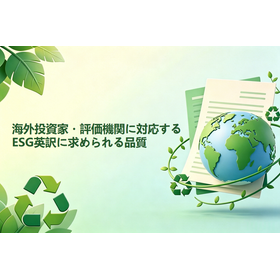
In recent years, many Japanese companies have been strengthening their information disclosure with an awareness of overseas ESG evaluation agencies and foreign investors. However, in practice, when producing English versions, several issues are often observed: - Terminology varies from document to document - While it may be coherent in Japanese, it becomes ambiguous in English - There is a lack of numerical explanations - Expressions unique to ESG become unnatural Key points to pay particular attention to are: 1. Avoid "we are making efforts" 2. Clarify the subject 3. Be cautious with "under consideration" 4. Standardize ESG terminology What is important in ESG English adaptation is not just "translation" but "consistency of expression": - Whether ESG-related terms align with international expression and disclosure standards - Whether quantitative information and numerical explanations are sufficient - Whether consistency of expression is maintained throughout the document - Whether the tone and structure are appropriate for investor and evaluation agency disclosures What our company emphasizes: We focus on ensuring that the English is easy to understand for overseas readers and sounds natural as ESG disclosure. To achieve this, we utilize YIYO to: - Standardize ESG terminology - Maintain continuity with past expressions - Ensure consistency between numbers and text - Manage translation quality.
Added to bookmarks
Bookmarks listBookmark has been removed
Bookmarks listYou can't add any more bookmarks
By registering as a member, you can increase the number of bookmarks you can save and organize them with labels.
Free membership registration
Change 2: Scope 3 emissions have become an important theme in ESG disclosures. The challenges of English translation that Japanese companies often face For example, the following issues are likely to arise: - Misalignment of definitions (Upstream/Downstream) - Misunderstanding of the scope of inclusion - Confusion with "Value Chain" - Ambiguity in category classification - Divergence from reporting standards (GHG Protocol) Key points for English translation In the translation of Scope 3, the following points are crucial: - Prioritize the use of "Value Chain Emissions" - Clearly state when aggregating with Scope 1 and 2 - Include "Upstream / Downstream" with an awareness of upstream and downstream - Use the "15 categories" from the GHG Protocol as guidelines - Limit the use of the term "Supply Chain" to "upstream" only Our company utilizes the YIYO translation management system for integrated management to standardize the management of Scope 3 terms and categories, addressing the specific issues related to Scope 3 disclosures.
Added to bookmarks
Bookmarks listBookmark has been removed
Bookmarks listYou can't add any more bookmarks
By registering as a member, you can increase the number of bookmarks you can save and organize them with labels.
Free membership registration
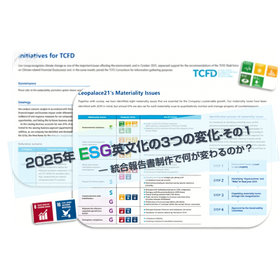
Change 1: From voluntary disclosure to an era of substantial "enforcement and standardization" How should companies respond to this change? The following points are important: - Ensuring that the content in Japanese and English is always consistent - Maintaining continuity in terminology and definitions - Being able to track revision history Our approach: Integrated management with YIYO We utilize our unique translation management system, YIYO, to address this challenge and achieve the following operations: - Standardization and enforced application of terminology - Pre-defining ESG terms (such as IFRS / TCFD / Scope) - Automatically applying them during translation - Maintaining consistency throughout the document - Visualization of revision history and differences - Clarifying what has been changed - Tracking differences between versions - Consistency checks for numbers and KPIs - Cross-checking numbers in the main text, tables, and notes - Unifying KPI expressions - Coordinated management with DTP - Linking layout changes with translations - Preventing omissions in updating tables and figures
Added to bookmarks
Bookmarks listBookmark has been removed
Bookmarks listYou can't add any more bookmarks
By registering as a member, you can increase the number of bookmarks you can save and organize them with labels.
Free membership registration
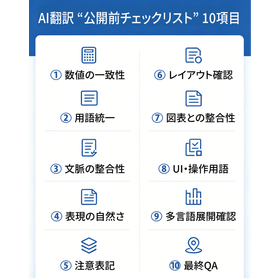
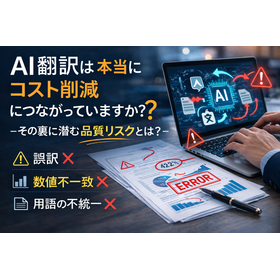
1. Why this check is necessary In recent years, the introduction of AI translation has certainly improved translation speed and reduced costs. However, the reality is that AI translation is not "complete," but merely a "draft." 2. AI Translation "Pre-Publication Checklist" 10 Items 1. Consistency of Numbers Are the numbers in the text and tables consistent? 2. Terminology Uniformity Are the same terms translated uniformly? 3. Contextual Consistency Is the meaning consistent throughout the surrounding text? 4. Naturalness of Expression Does it contain any ambiguous expressions? 5. Warning / Caution Notations Are there any errors in safety level indications? 6. Layout Confirmation Is the table layout intact? 7. Consistency with Charts and Tables Do the numbers in the graphs and tables match the text? 8. UI and Operational Terminology Does it match the actual UI? 9. Confirmation of Multilingual Deployment Prerequisites Is it structured for potential expansion into other languages? 10. Final QA (Overall Check) Is there any sense of discomfort overall? At our company: Through the YIYO AI Translation Management System: - Automatic terminology management - Detection of risk areas - Management of revision history
Added to bookmarks
Bookmarks listBookmark has been removed
Bookmarks listYou can't add any more bookmarks
By registering as a member, you can increase the number of bookmarks you can save and organize them with labels.
Free membership registration
1. Common Issues on Site The same terms are translated differently in each document. While the original text uses the same terms, the translations vary. This may seem like a small issue, but it actually incurs significant costs. 2. Five Costs Arising from Terminology Inconsistency - Verification Costs - Correction Costs - Multilingual Deployment Costs - User Understanding Costs - Multiple Names for the Same Function - Decreased Brand Image 3. Why Does It Happen? - There is no terminology glossary. - There are no unifying rules. - Terminology maintenance is not performed. 4. Our Response We manage and maintain terms by categorizing them into non-translated terms, fixed terms, proper nouns, and technical terms. When translating, we apply a "system" to ensure consistency. With the YIYO AI Translation Management System: - Terminology glossary is automatically applied. - It is automatically updated every time corrections are made. 5. Results - Reduced man-hours - Stable quality - Improved speed The quality and expertise of technical documents greatly affect a company's brand image. We provide practical and specialized solutions to the challenges of terminology management in technical documents. If you are interested, please feel free to contact us.
Added to bookmarks
Bookmarks listBookmark has been removed
Bookmarks listYou can't add any more bookmarks
By registering as a member, you can increase the number of bookmarks you can save and organize them with labels.
Free membership registration
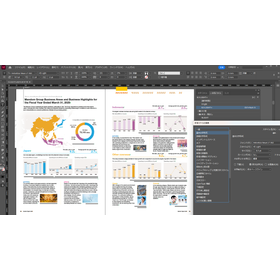
1. What is happening on-site Through AI translation, - Speed improvement - Cost reduction has been achieved. However, a problem arises in the final stage where "it cannot be used as is." 2. Points that cannot be addressed by AI translation - Tag and style issues - Text overflow (Overset) - Table and numerical layout 3. Our response AI translation combined with human DTP Control during the translation phase with YIYO - Pre-processing of tags > Reducing interference from tags during the translation phase - Maximizing layout retention > Reducing DTP workload 4. Our strengths Support for diverse software We can handle all processes of audio and video localization, including subtitle production, subtitle input, and narration recording. Expertise in multilingual typesetting We accurately respond to optimization by dedicated production teams well-versed in each language. High-quality production and proofreading system We maintain strict quality control at each stage. Compliance and accessibility support Unified typesetting design down to the details, automation, and output optimization support.
Added to bookmarks
Bookmarks listBookmark has been removed
Bookmarks listYou can't add any more bookmarks
By registering as a member, you can increase the number of bookmarks you can save and organize them with labels.
Free membership registration
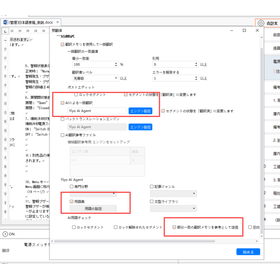
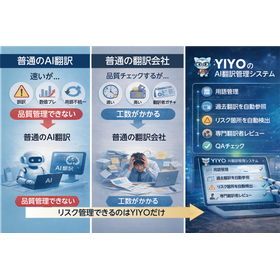
Recently, many manufacturers have been implementing AI translation for product manuals. However, in actual practice, there are many issues occurring. Particularly in product instruction manuals, mistakes in AI translation can lead to significant risks. Five common dangerous mistakes in AI translation: 1. Incorrect translation of Warning / Caution 2. Unit errors 3. Mistakes in the order of operational procedures 4. Inconsistency in UI button labels 5. Incorrect translation of technical terms To use AI translation safely, the key is not just to use AI, but to manage it. Our company uses an AI translation management system called YIYO. YIYO is not just a translation tool; it is a system for managing the quality of AI translations. - Terminology management - Automatic reference to past translations - Automatic detection of risk areas - Translator reviews - QA checks We support the safe and practical creation of multilingual manuals with various tools. If you are currently facing issues with the English adaptation or multilingualization of product manuals or catalogs, please feel free to contact us.
Added to bookmarks
Bookmarks listBookmark has been removed
Bookmarks listYou can't add any more bookmarks
By registering as a member, you can increase the number of bookmarks you can save and organize them with labels.
Free membership registration
Recently, we have received feedback from many companies and production firms stating: "We implemented AI, but ultimately, most of it needed revisions." The issue lies not with the AI itself, but with the lack of a well-established quality control system. Common risks observed in the translation production of integrated reports and technical documents include: - Discrepancies in numbers between the main text and charts, inconsistencies between old versions and published materials - Inconsistencies in terminology - Layout issues during the DTP stage - Variability in ESG indicators and KPI expressions - Unnatural English expressions for investors AI increases speed, but it cannot guarantee: - Numerical consistency - Contextual continuity - Industry-standard expressions We adopt a quality integration management model that combines AI and human expertise. This includes the development of glossaries and style guides, referencing existing translations, and repurposing content. We utilize AI for initial drafts, followed by reviews from specialized translators. Discrepancies in numbers are eliminated using tools, and our in-house developed system maximizes layout retention, significantly reducing DTP work. Finally, we conduct a thorough consistency check and proofreading. AI is not a replacement; optimal utilization is crucial. If you are interested, we can provide a free preliminary assessment.
Added to bookmarks
Bookmarks listBookmark has been removed
Bookmarks listYou can't add any more bookmarks
By registering as a member, you can increase the number of bookmarks you can save and organize them with labels.
Free membership registration