- Publication year : 2026
1~15 item / All 15 items
Displayed results

Added to bookmarks
Bookmarks listBookmark has been removed
Bookmarks listYou can't add any more bookmarks
By registering as a member, you can increase the number of bookmarks you can save and organize them with labels.
Free membership registration
Contact this company
Inquiry Form1~15 item / All 15 items
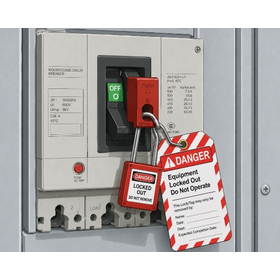
"There is already a manual compliant with CE standards. For the North American market, it should be fine to use the English version as it is." This way of thinking has a significant pitfall. In the North American market, the safety information in manuals is governed by ANSI Z535.6, and electrical safety is covered by NFPA 79, which are different regulatory frameworks from those in the EU. Additionally, a unique aspect of the United States is that deficiencies in manuals manifest not as administrative guidance but as product liability (PL) lawsuits. "Failure to Warn" is a typical point of contention in U.S. PL lawsuits. In this issue, we will explain why simply translating the EU manual into English does not comply with North American standards from three perspectives: the safety message format of ANSI Z535.6, the electrical safety requirements of NFPA 79, and the alignment with OSHA's lockout/tagout (LOTO) regulations.
Added to bookmarks
Bookmarks listBookmark has been removed
Bookmarks listYou can't add any more bookmarks
By registering as a member, you can increase the number of bookmarks you can save and organize them with labels.
Free membership registration
To those responsible for exporting machines equipped with PLCs, touch panels, and network connections to the EU, which may also include CE-marked products: "We are already compliant with CE marking and are progressing towards compliance with the Machinery Directive." — However, after December 2027, there may be another regulatory compliance requirement. The EU Cyber Resilience Act (CRA: Regulation (EU) 2024/2847) is the EU's first horizontal cybersecurity regulation that applies to all products capable of processing and exchanging digital data. The CRA is a regulation that applies separately from the Machinery Directive and Machinery Regulations. In this issue, we will organize the requirements for documentation that the CRA mandates, based on the text of the regulation, and inform you of the differences from existing documentation and the preparations that should be undertaken now.
Added to bookmarks
Bookmarks listBookmark has been removed
Bookmarks listYou can't add any more bookmarks
By registering as a member, you can increase the number of bookmarks you can save and organize them with labels.
Free membership registration
When companies start considering overseas expansion, many feel, "I don't know where to begin." Not only do they need to develop sales channels and conduct market research, but they also have to obtain certifications and comply with regulations, which can be a significant burden if they try to proceed on their own. However, by utilizing the programs offered by public institutions and local governments that support overseas expansion, they may be able to reduce the burden of information gathering and costs.
Added to bookmarks
Bookmarks listBookmark has been removed
Bookmarks listYou can't add any more bookmarks
By registering as a member, you can increase the number of bookmarks you can save and organize them with labels.
Free membership registration
On August 12, 2026, the full application of the EU's new packaging regulation, the PPWR (Packaging and Packaging Waste Regulation), began. As a result, inquiries regarding PPWR and EPR have increased at overseas certification PROs. "Are our products subject to this?" "Is EPR registration necessary?" "What should we confirm with our packaging material suppliers?" "We are CE compliant, but are there additional requirements?" Many companies seeking advice on these matters are unsure about the extent of the impact on their business and the necessary actions, causing them to hesitate in the information-gathering stage. The PPWR is not just an environmental regulation; it is a system that also relates to the packaging design and document management of companies supplying products to the EU market. This article will outline the overview of the system and the points that companies should verify.
Added to bookmarks
Bookmarks listBookmark has been removed
Bookmarks listYou can't add any more bookmarks
By registering as a member, you can increase the number of bookmarks you can save and organize them with labels.
Free membership registration
In the previous issue (Vol. 3), we organized the impact of the transition to machine regulations on the practical aspects of instruction manual creation. This time, we will take a further step and focus on the practical aspects of the design process regarding "when, who, and how should instruction manuals be created." In response to the question of "when should we start writing the instruction manual," the standard provides a clear answer. ISO 12100 requires that the results of risk assessment be reflected in three stages: design, protective measures, and information provision, positioning the instruction manual as the final output of the design process under "information provision." Practically speaking, it is ideal to start creating the instruction manual simultaneously from the stage of defining requirements and initiating the initial risk assessment. In this issue, we will clarify the relationship between the ISO 12100 three-step method and instruction manuals, outline specific instruction manual tasks and internal role distribution for each design phase, and present four checkpoints that should be incorporated into the design review.
Added to bookmarks
Bookmarks listBookmark has been removed
Bookmarks listYou can't add any more bookmarks
By registering as a member, you can increase the number of bookmarks you can save and organize them with labels.
Free membership registration
In the previous issue (Vol. 2), we organized the common deficiencies pointed out in the instruction manuals. In this article, as a continuation, we will specifically explain the changes in the instruction manuals resulting from the transition from the Machinery Directive to the Machinery Regulation. As of January 20, 2027, the regulations applicable to machinery exports to the EU market will switch from "Machinery Directive 2006/42/EC" to "Machinery Regulation EU 2023/1230." The change from "Directive" to "Regulation" is not just a matter of terminology. There are several changes that require direct attention from those responsible for technical documentation and instruction manuals. In this issue, we will outline the impact of the transition to the Machinery Regulation on practical instruction manual work and highlight the points that should be addressed starting now.
Added to bookmarks
Bookmarks listBookmark has been removed
Bookmarks listYou can't add any more bookmarks
By registering as a member, you can increase the number of bookmarks you can save and organize them with labels.
Free membership registration
CRA: The reporting obligations under the European Cyber Resilience Act will begin in September 2026. In preparation for Article 14, which mandates the reporting of vulnerabilities and significant incidents, companies such as industrial machinery manufacturers and electronics manufacturers are working to establish internal systems. Did you know that "Our products do not connect to the internet" and "We have previously declared CE marking for products, but we are not currently selling them" could also fall under the scope of the CRA? In this "free assessment," you can clarify what you should do first under the CRA by simply answering five questions.
Added to bookmarks
Bookmarks listBookmark has been removed
Bookmarks listYou can't add any more bookmarks
By registering as a member, you can increase the number of bookmarks you can save and organize them with labels.
Free membership registration
Tender Loving Care Service Co., Ltd. will hold a free online seminar titled "What You Should Know by Your Fifth Year of Employment! Understanding Overseas Export and CE Marking" To launch industrial machinery in Europe, it is essential to understand CE marking, machine safety, and EMC. The basics of overseas export, including CE marking, that you should know by your fifth year of employment. This seminar will help you understand the overall picture of CE marking and assist you in smoothly progressing with CE marking at your company.
Added to bookmarks
Bookmarks listBookmark has been removed
Bookmarks listYou can't add any more bookmarks
By registering as a member, you can increase the number of bookmarks you can save and organize them with labels.
Free membership registration
We will hold a free WEB seminar titled "Key Points Explanation for Compliance with the EU Cyber Resilience Act (CRA) | Overseas Certification PRO × BVJ." This seminar will clearly explain the new regulations directly related to CE marking. The newly established "Cyber Resilience Act (CRA)" is an essential regulation that companies wishing to market products in Europe cannot afford to overlook. In this seminar, we will invite engineers from BVJ (Bureau Veritas Japan) to explain the basics of the CRA and practical response points, including its relationship with CE marking, in an easy-to-understand manner. We hope this will be useful for understanding the initial steps towards CRA compliance and for internal discussions.
Added to bookmarks
Bookmarks listBookmark has been removed
Bookmarks listYou can't add any more bookmarks
By registering as a member, you can increase the number of bookmarks you can save and organize them with labels.
Free membership registration
In the previous issue (Vol. 1), we organized the reasons why the instruction manual is pointed out during the review process. In this article, as a continuation, we will specifically explain the common "deficiency patterns." To those in charge of companies aiming for CE certification or who have just completed it: "We have arranged the design and safety measures. Yet, we were pointed out for deficiencies in the instruction manual during the review." Such voices are repeatedly heard in the field of CE compliance. Annex I §1.7.4 of the Machinery Directive/Machinery Regulations establishes the content requirements for the instruction manual as an independent chapter, and the certification body clearly checks that section. Deficiencies in the instruction manual are returned not as design issues but as "document issues." This time, we will organize five recurring deficiency patterns that arise in the review process, along with the relevant standard clauses. Please check this to prevent rework in CE compliance.
Added to bookmarks
Bookmarks listBookmark has been removed
Bookmarks listYou can't add any more bookmarks
By registering as a member, you can increase the number of bookmarks you can save and organize them with labels.
Free membership registration
Tender Loving Care Service Co., Ltd. will hold a free WEB seminar titled "What You Should Know by Your 5th Year of Employment! Understanding Overseas Exports and CE Marking for the First Time." To launch industrial machinery in Europe, it is essential to understand CE marking, machine safety, and EMC. This seminar covers the basics of overseas exports, including the CE mark, that employees should know in their first to fifth years. In this seminar, you will gain a comprehensive understanding of CE marking, which will help you smoothly advance CE marking within your company.
Added to bookmarks
Bookmarks listBookmark has been removed
Bookmarks listYou can't add any more bookmarks
By registering as a member, you can increase the number of bookmarks you can save and organize them with labels.
Free membership registration
We will hold a free WEB seminar titled "Practical Response to the EU Machinery Regulation." Starting January 2027, the legal regulations for machinery aimed at the EU will completely transition from the "Machinery Directive (2006/42/EC)" to the "Machinery Regulation (EU 2023/1230)." In this seminar, we will invite an external lecturer with extensive practical experience regarding the EU Machinery Regulation to clearly explain the new trends and practical considerations that Japanese companies should be aware of. This content is recommended not only for companies that will be designing, manufacturing, and exporting machinery and equipment for the EU, but also for those considering a review of existing products.
Added to bookmarks
Bookmarks listBookmark has been removed
Bookmarks listYou can't add any more bookmarks
By registering as a member, you can increase the number of bookmarks you can save and organize them with labels.
Free membership registration
This column is a special series consisting of 12 installments themed around user manuals. In the first installment, we will focus on the often-overlooked "risks of postponing the user manual" in relation to CE marking compliance. In the process of obtaining CE marking, attention is often concentrated on design and safety measures, leading to cases where the preparation of the user manual is delayed. However, in practice, deficiencies in the user manual can lead to the following issues: - Rejection just before the review - Increased costs due to design revisions - Schedule delays - Product liability (PL liability) risks after shipment Even if CE marking is obtained, it is important to be aware that insufficient information provision can leave risks associated with the product.
Added to bookmarks
Bookmarks listBookmark has been removed
Bookmarks listYou can't add any more bookmarks
By registering as a member, you can increase the number of bookmarks you can save and organize them with labels.
Free membership registration
We will be holding a free webinar titled "Essential Before Entering the European Business: Understanding and Addressing EU Regulations Related to Products, Packaging, and Labels." For companies exporting and selling products to Europe, compliance with EU regulations is unavoidable. However, the regulations concerning products, packaging, and labels are diverse, and many companies feel uncertain, wondering, "Where should we start checking?" and "Are we really compliant?" In this seminar, we will clearly explain the overall picture of the key EU regulations that should be organized before starting European business, as well as introduce practical points for regulatory checks that companies should implement first. This content is recommended not only for companies considering expansion into Europe but also for those already exporting to Europe who feel anxious or face challenges regarding regulatory compliance. We sincerely look forward to your participation.
Added to bookmarks
Bookmarks listBookmark has been removed
Bookmarks listYou can't add any more bookmarks
By registering as a member, you can increase the number of bookmarks you can save and organize them with labels.
Free membership registration
We plan to hold various free seminars from April to September 2026. Focusing on themes directly related to practical work, we will clearly explain advanced trends and specific response points. We encourage all stakeholders to utilize this opportunity as a valuable source of information. Details of each seminar (dates, methods, participation requirements, application procedures, etc.) will be announced on our company website as soon as they are finalized.
Added to bookmarks
Bookmarks listBookmark has been removed
Bookmarks listYou can't add any more bookmarks
By registering as a member, you can increase the number of bookmarks you can save and organize them with labels.
Free membership registration