46~80 item / All 80 items
Displayed results

Filter by category
Added to bookmarks
Bookmarks listBookmark has been removed
Bookmarks listYou can't add any more bookmarks
By registering as a member, you can increase the number of bookmarks you can save and organize them with labels.
Free membership registration
Contact this company
Inquiry Form46~80 item / All 80 items

Filter by category

This is a case study of utilizing "necfru MAM/DAM" in a robot SIer, where wiring diagrams, program documents, and trial operation videos were separated for long-term storage by project on Google Drive/OneDrive. After project completion, videos and documents remained, putting pressure on storage capacity, and it was difficult to organize materials for partner companies. It was also challenging to search across projects and the reusability was low, along with the synchronization load of large files. Tags were organized by project/customer/process/version, and completed projects were gradually transitioned to MAM/DAM. Related materials were grouped to ensure referenceability, and sharing with partner companies was limited by URL. 【Case Overview】 ■Industry: Robot SIer (Robots) ■Challenges: Videos and documents remained after project completion, putting pressure on storage capacity, making it difficult to search across projects and low reusability. ■Solution: Gradually transitioned completed projects to MAM/DAM and grouped related materials to ensure referenceability. ■Effects: - Made it easier to search for past materials across projects. - Reduced confirmation time during reuse. *For more details, please download the PDF or feel free to contact us.
Added to bookmarks
Bookmarks listBookmark has been removed
Bookmarks listYou can't add any more bookmarks
By registering as a member, you can increase the number of bookmarks you can save and organize them with labels.
Free membership registration
We would like to introduce a case where our "necfru MAM/DAM" was implemented at Company M, which is engaged in CAD/CAM contract work. At this company, there was a mix of drawings/NC data versions, leading to processing errors. The data from completed projects was increasing, putting pressure on the server. Therefore, tags were standardized using project ID/model/material/version number, allowing the site to have view-only access while restricting modifications to administrators. This reduced the risk of processing errors and decreased quality loss, while also shortening data retrieval time and improving setup. [Case Overview (Partial)] ■ Challenges - Sharing with partner factories was primarily managed via USB, which was inefficient. - It took a long time for the site to find the necessary data. ■ Solutions - Final versions were stored in an official repository to prevent misuse. - Completed projects were moved to COLD storage and retrieved only when necessary. *For more details, please download the PDF or feel free to contact us.
Added to bookmarks
Bookmarks listBookmark has been removed
Bookmarks listYou can't add any more bookmarks
By registering as a member, you can increase the number of bookmarks you can save and organize them with labels.
Free membership registration
We would like to introduce a case where Company A, a manufacturer of automotive parts, implemented our "necfru MAM/DAM." The company was facing increasing volumes of past project drawings, leading to capacity constraints. To address this, they loaded the finalized versions into the MAM system and clarified version management. After implementation, the search for drawings transitioned from being "dependent on the person in charge" to being self-resolved in a matter of minutes. This helped reduce the storage costs for past projects. [Case Overview (Partial)] ■ Challenges - Proliferation of NAS/file servers at each location - Concerns about sharing drawings with suppliers via email/USB ■ Solutions - Cross-search using part numbers, processes, and equipment tags - External sharing through URLs with permissions to publish only the necessary scope *For more details, please download the PDF or feel free to contact us.
Added to bookmarks
Bookmarks listBookmark has been removed
Bookmarks listYou can't add any more bookmarks
By registering as a member, you can increase the number of bookmarks you can save and organize them with labels.
Free membership registration
We would like to introduce a case where our "necfru MAM/DAM" was implemented at an electronics manufacturer. The company faced challenges such as inspection data being scattered across departments and not being reusable. To address this, they developed a tag dictionary based on model number, lot number, process, and type of inspection. As a result, the time required for re-searching and comparing inspection data was significantly reduced, and the transfer to overseas or outsourced parties could now be completed online. 【Case Overview (Partial)】 ■Challenges - There was no means to send large volumes of data to outsourcing partners. - Control over viewing/downloading confidential data was weak. ■Solution - Outsourcing partners can only view data through shared URLs, with control over download permissions. - Operation logs visualize "who viewed what." *For more details, please download the PDF or feel free to contact us.
Added to bookmarks
Bookmarks listBookmark has been removed
Bookmarks listYou can't add any more bookmarks
By registering as a member, you can increase the number of bookmarks you can save and organize them with labels.
Free membership registration
We would like to introduce a case where a long-term storage solution for drawings, manuals, and photos/videos remaining in Google Drive/OneDrive was established using "necfru MAM/DAM" at an industrial machinery manufacturer. The documents from completed projects continued to occupy storage space, making it difficult for the site to find necessary materials. There were also concerns about managing email attachments for materials to be delivered to customers and the possibility of maintenance support being halted during incidents. By organizing the materials with tags for equipment type, model number, delivery destination, and year, completed projects were separated and archived in MAM/DAM. Related materials were bundled together, and customer sharing was limited to URL sharing for operational efficiency. 【Case Overview】 - Industry: Industrial Machinery Manufacturer (Industrial Equipment) - Challenges: Documents from completed projects continued to occupy storage space, concerns about maintenance support being halted during incidents - Solution: Completed projects were archived in MAM/DAM and separated from current projects, related materials were bundled for one-click reference - Effects: - Reduced time spent searching for materials on-site, leading to quicker initial responses - Easier access to necessary materials even during incidents/disasters *For more details, please download the PDF or feel free to contact us.
Added to bookmarks
Bookmarks listBookmark has been removed
Bookmarks listYou can't add any more bookmarks
By registering as a member, you can increase the number of bookmarks you can save and organize them with labels.
Free membership registration
We would like to introduce a case where Company E, engaged in the printing and packaging industry, implemented our "necfru MAM/DAM." The company faced challenges such as an increase in versions and the risk of mistakenly printing with outdated data. To address this, they standardized tags by project/brand/item number/version number and fixed approved data in an official repository. This significantly reduced the risk of printing errors and allowed the exchange of proofing data to be completed online. 【Case Overview (Partial)】 ■ Challenges - Unable to send large data via email, leading to complicated exchanges - Difficulty managing sharing with external designers/customers ■ Solution - External parties can view via URL sharing, with download permissions granted only when necessary - Operation logs maintain a history of approvals and views *For more details, please download the PDF or feel free to contact us.
Added to bookmarks
Bookmarks listBookmark has been removed
Bookmarks listYou can't add any more bookmarks
By registering as a member, you can increase the number of bookmarks you can save and organize them with labels.
Free membership registration
We would like to introduce a case where Company D, a food machinery manufacturer, has implemented our "necfru MAM/DAM." The company faced challenges such as having paper/old PDFs remaining on-site, leading to incorrect procedures, and being unable to keep up with updates to materials sent to customers. To address this, they ensured searchability by tagging with model, process, and revision date. This reduced the risk of incorrect procedures/mix-ups, improved the organization of educational materials, and shortened the startup period. [Case Overview (Partial)] ■ Challenges - Educational photos/videos scattered across individual PCs - Inability to track history due to email attachments ■ Solution - On-site personnel strictly limited to "view only" access - Shared the latest version with customers via URL *For more details, please download the PDF or feel free to contact us.
Added to bookmarks
Bookmarks listBookmark has been removed
Bookmarks listYou can't add any more bookmarks
By registering as a member, you can increase the number of bookmarks you can save and organize them with labels.
Free membership registration
We would like to introduce a case where our "necfru MAM/DAM" was implemented at construction material manufacturer Company B. At this company, documents were dispersed across branches, making it unclear which ones were correct. Therefore, product codes, specifications, years, and revision histories were tagged. This shortened the lead time for responding to inquiries and allowed for the operation of providing only the "latest version" to the field. 【Case Overview (Partial)】 ■Challenges - Slow search for past documents during audits/inquiries - Concerns about capacity limits and mis-sending with email attachments ■Solutions - Only the finalized versions are registered in the official repository (version management) - Clients can view only the necessary scope through URL sharing *For more details, please download the PDF or feel free to contact us.
Added to bookmarks
Bookmarks listBookmark has been removed
Bookmarks listYou can't add any more bookmarks
By registering as a member, you can increase the number of bookmarks you can save and organize them with labels.
Free membership registration
We would like to introduce a case where Company C, a manufacturer of industrial machinery, has implemented our "necfru MAM/DAM." The company faced challenges such as the inability of the field to find necessary documents. To address this, they organized materials by equipment type/model number/delivery destination/year tags. As a result, the time spent searching for documents in the field was reduced, leading to quicker initial responses, and the provision to customers became safe and left a traceable history. [Case Overview (Partial)] ■Challenges - Documents provided to customers could not be managed as email attachments. - The field referred to outdated versions, leading to rework. ■Solutions - Related documents were bundled for one-click access. - Customers primarily viewed documents through shared URLs, with limited access. *For more details, please download the PDF or feel free to contact us.
Added to bookmarks
Bookmarks listBookmark has been removed
Bookmarks listYou can't add any more bookmarks
By registering as a member, you can increase the number of bookmarks you can save and organize them with labels.
Free membership registration
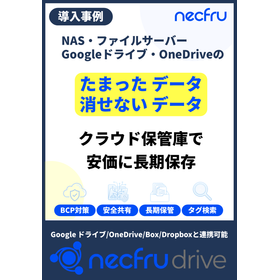
We would like to introduce a case where our "necfru drive" was implemented by a medical device manufacturer. In this company, managing document versions and audit trails was crucial for regulatory compliance, but there were many related departments, making access rights management challenging. Therefore, they standardized document types/products/versions/approval statuses with tags and finely configured viewing and download permissions by department and role. This reduced the man-hours required for audit preparation (data collection), organized authority management, and improved information control. [Case Overview (Partial)] ■Challenges - Difficult to search for necessary documents across departments during audits - Recovery procedures for accidental deletions/overwrites were dependent on individuals ■Solutions - Retained viewing/download history through operation logs - Standardized recovery flow with a 90-day recycle bin and versioning *For more details, please download the PDF or feel free to contact us.
Added to bookmarks
Bookmarks listBookmark has been removed
Bookmarks listYou can't add any more bookmarks
By registering as a member, you can increase the number of bookmarks you can save and organize them with labels.
Free membership registration
We would like to introduce a case where our "necfru MAM/DAM" was implemented at an aircraft parts manufacturer. The company faced challenges due to a large volume of data per project, leading to storage constraints. Additionally, there were demands for the presentation of versions/audit trails during audits. To address this, they organized tags by project/part number/process/type of inspection, stored the finalized versions in an official repository, and fixed the versions. As a result, the submission of materials during audits became faster, and the mixing of versions decreased, which helped reduce reference errors. [Case Overview (Partial)] ■ Challenges - Sharing with partner companies raises concerns about information leakage. - Business stoppage during on-premises failures poses a significant risk. ■ Solution - External sharing is limited in scope and can be tracked via logs. - Initially, small-scale verification was conducted with representative projects, gradually expanding from there. *For more details, please download the PDF or feel free to contact us.
Added to bookmarks
Bookmarks listBookmark has been removed
Bookmarks listYou can't add any more bookmarks
By registering as a member, you can increase the number of bookmarks you can save and organize them with labels.
Free membership registration
We would like to introduce a case where our "necfru MAM/DAM" was implemented at Company G, which engages in testing and analysis outsourcing services. At this company, testing data was dispersed across different projects, making it difficult to re-search. Therefore, we standardized tags by project ID, testing conditions, equipment, and date. We proposed a method for managing deliverables as sets and sharing them in a limited manner via URL. Customer responses (resending/additional requests) became faster, and the delivery procedures were standardized, resulting in a reduction of errors. 【Case Overview (Partial)】 ■ Issues - The means of delivering large volumes of data to customers were inconsistent. - It was impossible to track replacement history after delivery. ■ Solutions - The final version is compiled, and replacements are managed as versions. - Completed projects are moved to COLD to optimize storage costs. *For more details, please download the PDF or feel free to contact us.
Added to bookmarks
Bookmarks listBookmark has been removed
Bookmarks listYou can't add any more bookmarks
By registering as a member, you can increase the number of bookmarks you can save and organize them with labels.
Free membership registration
We would like to introduce a case where our "necfru MAM/DAM" was implemented at Company F, a robot SIer. The company faced challenges such as difficulty in searching for project materials that relied heavily on folder structures. To address this, they organized a tag dictionary for project/equipment names, processes, and versions, and created permission templates for each partner company to share URLs. This shortened the preparation time for on-site startup materials and reduced the risk of information leakage due to mismanagement of sharing ranges. [Case Overview (Partial)] ■Challenges - Many partner companies made management of sharing ranges complicated - Uncertainty about the latest version during startup led to rework ■Solution - Uploaded the finalized version to MAM/DAM, with the site focusing on viewing - Archived completed projects to COLD for cost optimization *For more details, please download the PDF or feel free to contact us.
Added to bookmarks
Bookmarks listBookmark has been removed
Bookmarks listYou can't add any more bookmarks
By registering as a member, you can increase the number of bookmarks you can save and organize them with labels.
Free membership registration
We would like to introduce a case where our "necfru MAM/DAM" was implemented at a chemical manufacturer. The company had a large number of documents subject to retention obligations, and the amount of non-deletable data was increasing. Therefore, they designed tags based on document type, product, lot, and retention period. This allowed them to immediately search for necessary materials during audits and inquiries, and they were able to establish a "separate storage" from the perspective of BCP. [Case Overview (Partial)] ■ Challenges - Storage locations were scattered across manufacturing, quality, and legal departments - The risk of data loss during incidents was a management issue ■ Solutions - Controlled departmental viewing ranges in detail based on permissions - Secured audit trails (viewing/download) through operation logs *For more details, please download the PDF or feel free to contact us.
Added to bookmarks
Bookmarks listBookmark has been removed
Bookmarks listYou can't add any more bookmarks
By registering as a member, you can increase the number of bookmarks you can save and organize them with labels.
Free membership registration
We would like to introduce a case where Company J, a manufacturer of resin parts, implemented our "necfru MAM/DAM." The company faced challenges such as the time required to collect related documents when defects occurred. To address this, they standardized tags using part numbers, molds, lots, and revision dates. They organized related documents into sets for bulk reference and sharing. As a result, the initial response to complaints (document submission) was expedited, leading to an improvement in trust. [Case Overview (Partial)] ■Challenges - Difficulty in tracking the history of part number revisions, hindering recurrence prevention - Evidence submitted to clients was dependent on the responsible person ■Solutions - Only necessary documents were presented to clients through URL sharing - Past cases were managed as COLD, while current cases were handled as HOT *For more details, please download the PDF or feel free to contact us.
Added to bookmarks
Bookmarks listBookmark has been removed
Bookmarks listYou can't add any more bookmarks
By registering as a member, you can increase the number of bookmarks you can save and organize them with labels.
Free membership registration
We would like to introduce a case where our "necfru MAM/DAM" was implemented at Company I, a shipbuilding and heavy machinery manufacturer. The company faced challenges such as long project durations, an overwhelming amount of documents across generations/versions, and difficulties in managing the sharing scope due to many partner companies. To address these issues, they designed tags for projects/blocks/processes/item numbers, allowing partner companies to have limited access based on their roles and shared URLs. This resulted in a reduction in the time spent searching for documents on-site and lowered the risk of sharing scope errors. [Case Overview (Partial)] ■ Challenges - Inability to find necessary documents on-site leading to rework - Limitations on expanding on-premises capacity and maintenance load ■ Solutions - Completed blocks are archived to COLD to control capacity - Gradual migration starting from important folders *For more details, please download the PDF or feel free to contact us.
Added to bookmarks
Bookmarks listBookmark has been removed
Bookmarks listYou can't add any more bookmarks
By registering as a member, you can increase the number of bookmarks you can save and organize them with labels.
Free membership registration
We would like to introduce a case where Company L, a trading company, implemented our "necfru MAM/DAM." At this company, the formats and storage locations of documents varied by supplier, leading to delays in responding to customer requests and resulting in missed opportunities. To address this, they designed tags based on manufacturer, product, document type, and expiration date, and separated shared folders (URLs) for each customer with appropriate permission settings. This streamlined their inquiry responses and improved their proposal success rate, while also reducing the risk of sharing errors. [Case Overview (Partial)] ■ Challenges - Anxiety about accidentally sending confidential documents - Inability to locate documents during personnel changes ■ Solutions - Registering only the latest versions in the official repository and managing updates - Monitoring shared/viewing history through operation logs *For more details, please download the PDF or feel free to contact us.
Added to bookmarks
Bookmarks listBookmark has been removed
Bookmarks listYou can't add any more bookmarks
By registering as a member, you can increase the number of bookmarks you can save and organize them with labels.
Free membership registration
We would like to introduce a case where our "necfru MAM/DAM" was implemented at K Company, an environmental plant. The company faced challenges such as inspection records being fragmented between the field and headquarters, making them difficult to reference, and the inability to retrieve documents during disasters when personnel could not access the site. To address this, they tagged records by equipment ID, location, year, and inspection type, allowing field personnel to view the information while restricting downloads to administrators only. As a result, the search time for inspection and construction documents was reduced, leading to faster reporting, and the business continuity plan (BCP) was strengthened (remote access became possible). [Case Overview (Partial)] ■Challenges - Photo sharing with partner companies was cumbersome via email. - There were risks of accidental deletion or device loss. ■Solution - Partner companies could view only the necessary scope through URL sharing. - 90-day retention and logs made incident response easier. *For more details, please download the PDF or feel free to contact us.
Added to bookmarks
Bookmarks listBookmark has been removed
Bookmarks listYou can't add any more bookmarks
By registering as a member, you can increase the number of bookmarks you can save and organize them with labels.
Free membership registration
"necfru" offers a wide range of features related to video editing, archiving, and security through various distribution methods. Our engineers will listen to your needs and propose better implementation methods that fit your budget. Whether you want to easily obtain an original video distribution system right away, or you are looking for a partner who can provide one-stop consultations on planning and features, please feel free to contact us. 【Features】 ■ From a single video to large-scale distribution, available for both short-term and long-term needs ■ Combine only the necessary features to save time and budget ■ Propose implementation methods even if there are no past production examples ■ A video distribution platform tailored just for you *For more details, please download the PDF or feel free to contact us.
Added to bookmarks
Bookmarks listBookmark has been removed
Bookmarks listYou can't add any more bookmarks
By registering as a member, you can increase the number of bookmarks you can save and organize them with labels.
Free membership registration
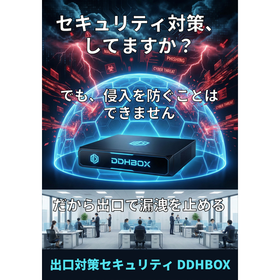
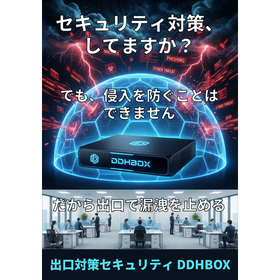
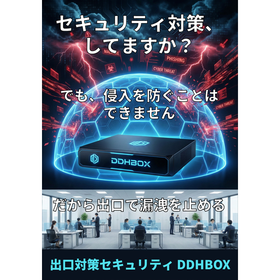
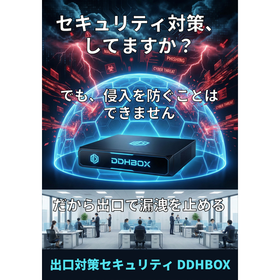
We would like to introduce a case study where the precision parts manufacturer implemented the exit strategy security "DDHBOX." During a security check by a business partner, they were required to have "external communication blocking," "logs," and "reporting systems," and they faced the challenge of being uneasy about data exfiltration after an intrusion, as the entry point (UTM) alone was insufficient. By adding our product inside the UTM (at the exit) to block C2 communication, they have established an operational system that can continue even with dual roles by repurposing monthly reports for internal and partner presentations. [Case Overview] ■ Challenge: No dedicated IT personnel, lacking resources for monitoring/analysis ■ Solution: Automatic notification to the administrator's email upon detection ■ Effects: - Able to provide concrete answers to key items on the checklist (monitoring/communication control/logs/reporting/emergency response/insurance) - Operations centered around notification confirmation and monthly checks, allowing for continuity even with dual roles *For more details, please download the PDF or feel free to contact us.
Added to bookmarks
Bookmarks listBookmark has been removed
Bookmarks listYou can't add any more bookmarks
By registering as a member, you can increase the number of bookmarks you can save and organize them with labels.
Free membership registration
We would like to introduce a case study of a company engaged in metal processing outsourcing that implemented the exit security measure "DDHBOX." They were requested by a major manufacturer to submit a security checklist and were pointed out the concern of being "used as a stepping stone" as a subcontractor/supplier. There was no dedicated information systems department, and the situation was being handled by someone with multiple responsibilities. With the introduction of our product, external unauthorized communication (C2) after an intrusion was blocked at the exit. When detected, the source IP was identified through email notifications, and procedures for isolating the terminal were established. A monthly report was created to explain the status of countermeasures both internally and externally. [Case Overview] ■ Challenge: No dedicated information systems department, handled by someone with multiple responsibilities ■ Solution: Created a format to explain the status of countermeasures both internally and externally through monthly reports ■ Effects: - The responses to the checklist became more specific, meeting the conditions for continuing the business relationship - The operational burden was low, allowing for continuity even with multiple responsibilities *For more details, please download the PDF or feel free to contact us.
Added to bookmarks
Bookmarks listBookmark has been removed
Bookmarks listYou can't add any more bookmarks
By registering as a member, you can increase the number of bookmarks you can save and organize them with labels.
Free membership registration
We would like to introduce a case where the security solution "DDHBOX" for exit measures was implemented by an industrial machinery manufacturer. In light of reports of ransomware attacks in the same industry, concerns about external communications after an infection were increasing. There was also the challenge of understanding what constituted normal communication, given the high volume of interactions with overseas locations and partner companies. The product was installed at the network exit of the main site, with notifications set to go to "General Affairs and Information Systems + Executives." Monthly reports were regularly presented at management meetings, establishing a framework for the PDCA cycle. [Case Overview] ■ Challenge: Considered implementing EDR, but operational burden was a bottleneck ■ Solution: Clarified the role distribution between existing UTM/EDR (entry/internal/exit) ■ Effects: - Initial response procedures, such as device isolation, were triggered by notifications - A system was established to regularly explain the status of countermeasures through reports *For more details, please download the PDF or feel free to contact us.
Added to bookmarks
Bookmarks listBookmark has been removed
Bookmarks listYou can't add any more bookmarks
By registering as a member, you can increase the number of bookmarks you can save and organize them with labels.
Free membership registration
We would like to introduce a case where the electronic component manufacturer implemented our exit security solution, "DDHBOX." There was a large amount of development data (drawings/specifications), and the responsibility for the risk of data leakage was significant. The situation was further complicated by the introduction of partner company terminals and the use of VPNs, which increased potential entry points. By installing our product at the exit (inside the FW/UTM), C2 communications are automatically blocked. The source IP is identified through notification emails, allowing for the rapid isolation of the affected terminal. Monthly reports are utilized as documentation for client audits. [Case Overview] ■ Challenge: Lack of budget/personnel to contract a SOC ■ Solution: Share monthly reports with management and use them as documentation for client audits ■ Effects: - An additional layer has been added to stop "external communications after intrusion," increasing peace of mind. - Even when detection occurs, the combination of blocking and notifications has improved initial response times. *For more details, please download the PDF or feel free to contact us.
Added to bookmarks
Bookmarks listBookmark has been removed
Bookmarks listYou can't add any more bookmarks
By registering as a member, you can increase the number of bookmarks you can save and organize them with labels.
Free membership registration
We would like to introduce a case where the security solution "DDHBOX" for exit measures was implemented by a resin molding manufacturer. In a situation where many factory PCs were outdated and management was lagging, a client pointed out concerns about "pivoting attacks," necessitating countermeasures. Additionally, the inability to conduct daily monitoring due to outsourced IT management was also a challenge. Our product was implemented at the factory network exit to block C2 communications. Notifications were forwarded to the outsourced IT management, clarifying initial response coordination. Monthly reports are used to understand the blocking status and organize areas for improvement. [Case Overview] ■ Challenge: Inability to conduct daily monitoring due to outsourced IT management ■ Solution: Forward notifications to the outsourced IT management to clarify initial response coordination ■ Effects: - Provided countermeasures against pivoting risks, reducing client anxiety - Daily operations were streamlined to "notification confirmation + isolation when necessary" *For more details, please download the PDF or feel free to contact us.
Added to bookmarks
Bookmarks listBookmark has been removed
Bookmarks listYou can't add any more bookmarks
By registering as a member, you can increase the number of bookmarks you can save and organize them with labels.
Free membership registration
We would like to introduce a case where the construction materials manufacturer implemented the exit security solution "DDHBOX." With many locations/sites, security operations tended to be left to each site, and there was a requirement to submit security measures due to procurement requirements from major general contractors. Although a UTM was implemented, there were concerns about data exfiltration after an intrusion. We installed this product at the exits of key locations and centralized notifications to the headquarters management department. We established an operational system to monitor the situation by location through monthly reports and utilized this information for procurement requirement documentation. 【Case Overview】 ■ Challenge: Many locations/sites, with security operations left to each site ■ Solution: Designed with a structure that can be rolled out sequentially and unified the response flow ■ Effects: - Responses to procurement checks were standardized, meeting the requirements for project continuation - Operations that were previously left to each site are now managed centrally by headquarters *For more details, please download the PDF or feel free to contact us.
Added to bookmarks
Bookmarks listBookmark has been removed
Bookmarks listYou can't add any more bookmarks
By registering as a member, you can increase the number of bookmarks you can save and organize them with labels.
Free membership registration
We would like to introduce a case where the security solution "DDHBOX" was implemented for a food machinery manufacturer. When ransomware attacks occur during busy periods, the impact of production and shipping halts is significant. While multi-layered defense is necessary, it was challenging to secure specialized personnel or SOC contracts. Additionally, security checks from business partners have become increasingly stringent over the years. By installing our product at the exit, we automatically block C2 communications. Based on notification emails, we established a procedure for "isolating the affected device" and set up a system for regular reporting to management through monthly reports. [Case Overview] ■ Challenge: Difficulty in securing specialized personnel and SOC contracts ■ Solution: Established a procedure for "isolating the affected device" based on notification emails ■ Effects: - Operations could continue even with a dual-role system, making it harder for countermeasures to become mere formalities - Monthly reports were utilized for explanations during business partner checks *For more details, please download the PDF or feel free to contact us.
Added to bookmarks
Bookmarks listBookmark has been removed
Bookmarks listYou can't add any more bookmarks
By registering as a member, you can increase the number of bookmarks you can save and organize them with labels.
Free membership registration
We would like to introduce a case where a company engaged in testing and analysis services implemented our exit strategy security solution, "DDHBOX." The client experienced an increase in requests for confirmation regarding "information leakage measures" and "log management," and there were many data media brought in from external sources, making it impossible to eliminate infection risks completely. Additionally, there was a concern about a lack of confidence in investigations and explanations in the event of an accident. By installing our product at the exit and blocking C2 communication, we reduced the risk of data being taken out. We created procedures for device isolation and determining the need for investigation, starting from notification emails, and clarified the insurance-backed investigation/recovery/consulting support as a "last resort." 【Case Overview】 ■ Challenge: Lack of confidence in investigations/explanations in the event of an accident ■ Solution: Clarified insurance-backed investigation/recovery/consulting support as a "last resort" ■ Effects: - Prepared explanatory materials (reports, systems) for clients, making audit responses easier - Clarified initial actions during an incident, reducing the psychological burden on responsible personnel - Evaluated as "preparation including emergency response" *For more details, please download the PDF or feel free to contact us.
Added to bookmarks
Bookmarks listBookmark has been removed
Bookmarks listYou can't add any more bookmarks
By registering as a member, you can increase the number of bookmarks you can save and organize them with labels.
Free membership registration
We would like to introduce a case where the security exit strategy "DDHBOX" was implemented for a robot SIer. In an environment with high security demands due to frequent connections to customer networks, the client required "control of external communications" and "incident response capabilities." It was also a challenge that operating a SOC with a small team was not realistic. The product was implemented at the headquarters exit, and automatic blocking of C2 communications was established. Notification emails were consolidated to the CSIRT contact point (also serving other roles), and a primary response flow was developed. Monthly reports are utilized as explanatory materials for the client. [Case Overview] ■ Challenge: It is not realistic for the company to operate a SOC with a small team. ■ Solution: Consolidated notification emails to the CSIRT contact point (also serving other roles) and developed a primary response flow. ■ Effects: - We were able to propose the implementation of exit measures in response to the client's security demands. - An additional layer was added to stop communications with attackers, allowing for continued maintenance with peace of mind. - Operations became less prone to becoming mere formalities, even with a small team. *For more details, please download the PDF or feel free to contact us.
Added to bookmarks
Bookmarks listBookmark has been removed
Bookmarks listYou can't add any more bookmarks
By registering as a member, you can increase the number of bookmarks you can save and organize them with labels.
Free membership registration
We would like to introduce a case where a medical device manufacturer implemented our exit strategy security solution, "DDHBOX." The impact of leaks of quality documents and design data is significant, and regulatory compliance and client audits required the presentation of logs and systems. Additionally, it was challenging to monitor and analyze daily due to a dual-role structure. Our product was installed at the network exit to automatically block C2 communications. Notification emails were shared with the quality and information systems dual-role team to determine initial response procedures. Monthly reports were incorporated into regular audit materials to establish ongoing operations. [Case Overview] ■ Challenge: Logs and systems were required for regulatory compliance and client audits. ■ Solution: Monthly reports were incorporated into regular audit materials to establish ongoing operations. ■ Effects: - It became easier to explain the "detection, blocking, logging, and reporting" required for audits. - Additional measures were put in place to mitigate damage after an intrusion, increasing peace of mind. - The operational burden was minimal, allowing for continuity. *For more details, please download the PDF or feel free to contact us.
Added to bookmarks
Bookmarks listBookmark has been removed
Bookmarks listYou can't add any more bookmarks
By registering as a member, you can increase the number of bookmarks you can save and organize them with labels.
Free membership registration
We would like to introduce a case where a company engaged in warehousing and transportation-related industries implemented our exit security solution, "DDHBOX." In an environment highly dependent on IT, such as WMS and shipping labels, where any downtime can lead to immediate losses, the challenge was that the locations were scattered, making it difficult to uniformly manage on-site PCs. Additionally, there was an increase in security checks from business partners (shippers). By installing our product at the exit, we were able to block external unauthorized communications after an intrusion. Notifications were centralized to the headquarters management department, allowing the on-site team to focus solely on terminal isolation. Monthly reports are also utilized for explanations to shippers. 【Case Overview】 ■ Challenge: Scattered locations made uniform management of on-site PCs difficult ■ Solution: Centralized notifications to the headquarters management department, allowing the on-site team to focus only on terminal isolation ■ Effects: - Enabled responses to exit security inquiries from shippers - Clarified the division of initial response duties, allowing for measures to be taken without increasing the burden on the on-site team *For more details, please download the PDF or feel free to contact us.
Added to bookmarks
Bookmarks listBookmark has been removed
Bookmarks listYou can't add any more bookmarks
By registering as a member, you can increase the number of bookmarks you can save and organize them with labels.
Free membership registration
We would like to introduce a case where the exit strategy security "DDHBOX" was implemented by an IT vendor. While customers demanded security checks (monitoring/blocking/logging/emergency response), EDR/NDR was considered but posed challenges due to high operational difficulty. Additionally, there were situations where small-scale SOC operations were not feasible. With the introduction of our product, we implemented blocking of C2 communications at the exit. We prepared notification emails and monthly reports as materials for customer reporting, and established a system where investigation/recovery support with insurance can be utilized in emergencies. 【Case Overview】 ■ Challenge: EDR/NDR is a candidate, but operational difficulty is high ■ Solution: Prepared notification emails and monthly reports as materials for customer reporting ■ Effects - Responses to customer checks became more concrete, making contract renewals and new proposals easier - We were able to continuously submit operational results (reports) for measures - We were able to streamline operations to be manageable even with a small team *For more details, please download the PDF or feel free to contact us.
Added to bookmarks
Bookmarks listBookmark has been removed
Bookmarks listYou can't add any more bookmarks
By registering as a member, you can increase the number of bookmarks you can save and organize them with labels.
Free membership registration
We would like to introduce a case where a chemical manufacturer implemented our exit security solution, "DDHBOX." In a situation where there is highly confidential information related to formulations and prototypes, and the impact of leaks is significant, it was challenging to manage updates completely due to the presence of factory equipment networks. We felt the need for "damage mitigation after intrusion" rather than just "preventing intrusion." By installing our product at the exit, we automatically block C2 communications. We established procedures to identify and isolate the terminal of the source IP through notifications. We built an operation to report monthly to management and connect it to improvements. 【Case Overview】 ■ Challenge: Difficult to manage updates completely due to factory equipment networks ■ Solution: Established procedures to identify and isolate the terminal of the source IP ■ Effects: - Preparedness for information exfiltration after intrusion was enhanced, leading to risk reduction - Initial responses were determined based on notifications, making it less likely for responses to become dependent on individuals - Reports provided an understanding of the current situation, highlighting areas that should be prioritized for strengthening *For more details, please download the PDF or feel free to contact us.
Added to bookmarks
Bookmarks listBookmark has been removed
Bookmarks listYou can't add any more bookmarks
By registering as a member, you can increase the number of bookmarks you can save and organize them with labels.
Free membership registration
We would like to introduce a case where the export security solution "DDHBOX" was implemented for a trading company. As the verification of supply chain measures increased for business partners and contractors, the environment became complex with multiple locations, remote work, and VPNs. It was also a challenge for the IT department to monitor 24/7 with a small team. Our product was implemented at the headquarters' exit to block unauthorized communications to the outside. We established an operation that consolidates notifications to a primary contact point and issues isolation instructions to locations when necessary. Monthly reports are generated to provide materials for external explanations. 【Case Overview】 ■ Challenge: Complex communication routes with multiple locations, remote work, and VPNs ■ Solution: Consolidating notifications to a primary contact point and issuing isolation instructions to locations when necessary ■ Effects - We were able to demonstrate "blocking external communications" during checks from business partners. - We were able to streamline operations to be manageable with a small team. - Including support/insurance in case of emergencies made it easier to get approvals. *For more details, please download the PDF or feel free to contact us.
Added to bookmarks
Bookmarks listBookmark has been removed
Bookmarks listYou can't add any more bookmarks
By registering as a member, you can increase the number of bookmarks you can save and organize them with labels.
Free membership registration
We would like to introduce a case study of a company engaged in CAD/CAM outsourcing that implemented the exit strategy security solution "DDHBOX." Handling customer design data makes information leakage critical, and submitting a checklist from mid-sized manufacturers has become mandatory. While there was a desire to invest in security, the lack of personnel available for operations was also a challenge. Our product was installed at the network exit to automatically block C2 communications. Upon receiving a notification, we defined the procedure of "isolation of the terminal → investigation support if necessary," and established a system to utilize monthly reports for customer explanations and internal management. 【Case Overview】 ■ Challenge: Desire to invest in security but lack of personnel for operations ■ Solution: Utilize monthly reports for customer explanations and internal management ■ Effects: - The basis for checklist responses was organized, leading to continued outsourcing - The operations became lighter, allowing for continued measures even with shared duties - The initial response and support system in case of an incident became clear *For more details, please download the PDF or feel free to contact us.
Added to bookmarks
Bookmarks listBookmark has been removed
Bookmarks listYou can't add any more bookmarks
By registering as a member, you can increase the number of bookmarks you can save and organize them with labels.
Free membership registration
We would like to introduce a case where the exit strategy security "DDHBOX" was implemented at an automotive parts manufacturer. As security requirements from complete vehicle manufacturers have become increasingly stringent year by year, although UTM/antivirus measures were already in place, the "external communication blockage after intrusion" was weak, and the environment had many entry points such as factories, offices, and partner companies. By implementing our product at the exit, C2 communication is automatically blocked. Notifications trigger the isolation of target devices and standardize initial responses, ensuring ongoing operations with regular monthly reports on the status of countermeasures. [Case Overview] ■ Challenge: Although UTM/antivirus measures are in place, "external communication blockage after intrusion" is weak. ■ Solution: Standardization of target device isolation and initial response triggered by notifications. ■ Effects: - Ability to present "exit strategies" during client checks, facilitating smooth audit responses. - Increased materials for explaining the risk of being used as a stepping stone, providing reassurance for continued transactions. - Operations centered around automatic blocking, reducing the burden on the field. *For more details, please download the PDF or feel free to contact us.
Added to bookmarks
Bookmarks listBookmark has been removed
Bookmarks listYou can't add any more bookmarks
By registering as a member, you can increase the number of bookmarks you can save and organize them with labels.
Free membership registration