1~45 item / All 80 items
Displayed results

Filter by category
Added to bookmarks
Bookmarks listBookmark has been removed
Bookmarks listYou can't add any more bookmarks
By registering as a member, you can increase the number of bookmarks you can save and organize them with labels.
Free membership registration
Contact this company
Inquiry Form1~45 item / All 80 items
Filter by category

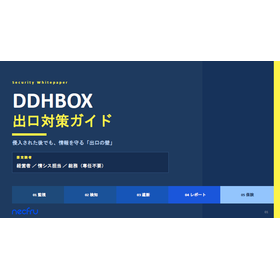
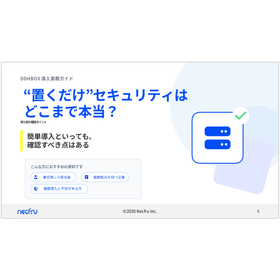
This document is a practical guide for companies considering the introduction of "DDHBOX." It includes four key points to check before implementation, installation images, and information that should be prepared in advance. It also introduces common failure patterns and approaches that are less likely to lead to failure, making it useful for smooth implementation preparation. 【Contents (partial)】 ■ Why do people feel anxious about "just placing it" for implementation? ■ Four key points to check before implementation ■ Where should DDHBOX be placed? ■ Information to prepare before implementation ■ Things to check first after implementation ■ Common failure patterns *For more details, please download the PDF or feel free to contact us.
Added to bookmarks
Bookmarks listBookmark has been removed
Bookmarks listYou can't add any more bookmarks
By registering as a member, you can increase the number of bookmarks you can save and organize them with labels.
Free membership registration
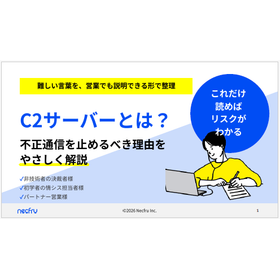
This document is an explanatory material that clearly organizes the mechanisms of C2 servers and the reasons why we should stop unauthorized communications, making it easy to understand for non-technical individuals. It explains what happens after an intrusion in four stages and specifically details why C2 communications are dangerous. It also includes a collection of phrases that can be used directly in business negotiations and internal explanations, making it useful for explanations to management and on-site personnel. 【Contents (partial)】 ■ What is a C2 server? ■ What happens after an intrusion (4 stages) ■ Why C2 communications are dangerous ■ Reasons why entrance measures alone are insufficient ■ DDHBOX and C2 countermeasures ■ Common misconceptions *For more details, please download the PDF or feel free to contact us.
Added to bookmarks
Bookmarks listBookmark has been removed
Bookmarks listYou can't add any more bookmarks
By registering as a member, you can increase the number of bookmarks you can save and organize them with labels.
Free membership registration
This document is a security white paper summarizing the necessity of exit strategies by "DDHBOX" and what changes it will bring. It includes common issues faced on-site and the costs that arise if left unaddressed, organizing "invisible losses" and "management risks." It also introduces an operational framework using a three-point set of automatic shutdown, monthly reports, and cyber insurance, providing useful information for consideration of implementation. [Contents (partial)] ■ What you can learn from this document ■ Common issues faced on-site ■ Costs that arise if left unaddressed (damages + liabilities) ■ Overview: The mechanism of DDHBOX (five functions) ■ Specific measure 1 (Implementation: Starts just by placing it) ■ Specific measure 2 (Operation: A three-point set that operates automatically) *For more details, please download the PDF or feel free to contact us.
Added to bookmarks
Bookmarks listBookmark has been removed
Bookmarks listYou can't add any more bookmarks
By registering as a member, you can increase the number of bookmarks you can save and organize them with labels.
Free membership registration
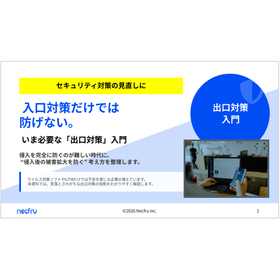
This document is an introductory material that clearly explains the often-overlooked role of exit strategies in security measures. It organizes the differences between entrance measures, internal measures, and exit measures, and discusses the spread of damage after an intrusion, while introducing "DDHBOX," which specializes in the role of "exit." It also includes examples of companies that are well-suited for exit strategies, making it a useful resource when considering a review of measures. 【Contents (partial)】 ■ Why does the feeling of "anxiety despite having measures in place" persist? ■ Damage spreads not at the moment of "intrusion" but after "connecting to the outside." ■ Differences between entrance measures, internal measures, and exit measures. ■ What is truly frightening is not the "intrusion" itself but the "spread of damage." ■ Exit strategies act as the "last line of defense" to contain the spread of damage. ■ DDHBOX specializes in the role of "exit." *For more details, please download the PDF or feel free to contact us.
Added to bookmarks
Bookmarks listBookmark has been removed
Bookmarks listYou can't add any more bookmarks
By registering as a member, you can increase the number of bookmarks you can save and organize them with labels.
Free membership registration
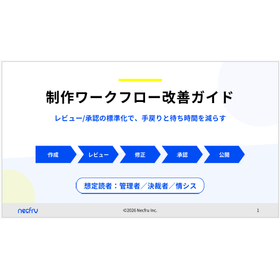
This document organizes the causes of increased rework in production environments and summarizes the concept of standardizing reviews/approvals. It also includes specific measures such as defining roles and approval criteria for each process, as well as standardizing review comments and version management. Common failure patterns and ten operational checks are included, making it practical for implementation starting tomorrow. 【Contents (Partial)】 ■ What you can learn from this document ■ Common issues ■ Costs incurred if left unaddressed ■ Overview: Establishing a standard workflow ■ Specific Measure 1: Defining roles and approval criteria ■ Specific Measure 2: Standardizing review comments and version management *For more details, please download the PDF or feel free to contact us.
Added to bookmarks
Bookmarks listBookmark has been removed
Bookmarks listYou can't add any more bookmarks
By registering as a member, you can increase the number of bookmarks you can save and organize them with labels.
Free membership registration
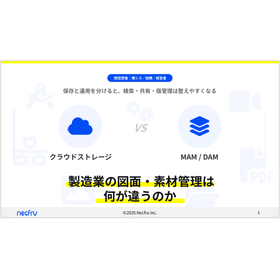
This document organizes the management challenges related to drawings and materials that are common in the manufacturing industry and summarizes the differences between cloud storage and MAM/DAM. It includes information on what cloud storage excels at and where it falls short, as well as situations where MAM/DAM is necessary. It also features common failure patterns and a pre-implementation checklist, making it useful when considering how to differentiate their use. 【Contents (partial)】 ■ What you can learn from this document ■ Common data management issues in the manufacturing industry ■ If left unaddressed, costs related to time, quality, and control will increase ■ Cloud storage is strong in "storage and synchronization" ■ MAM/DAM is strong in "management for use" ■ Conclusion: Think in terms of role division rather than replacement *For more details, please download the PDF or feel free to contact us.
Added to bookmarks
Bookmarks listBookmark has been removed
Bookmarks listYou can't add any more bookmarks
By registering as a member, you can increase the number of bookmarks you can save and organize them with labels.
Free membership registration
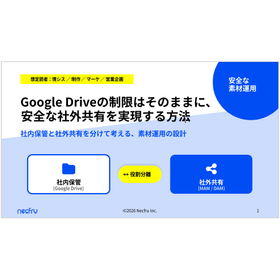
This document summarizes methods for achieving secure external sharing without changing Google Drive's restrictions. It explains the reasons why external sharing is difficult with internal storage and why simply loosening restrictions is not advisable. It also includes specific strategies for using MAM/DAM as a point of contact for external sharing and a checklist for implementation, which will be helpful in designing sharing rules. 【Contents (partial)】 ■ What you can learn from this document ■ Common issues ■ Why simply "loosening restrictions" is not advisable ■ Overview: separating internal storage and external sharing ■ Specific strategy 1: using MAM/DAM as a "point of contact for external sharing" ■ Specific strategy 2: minimum requirements for safe sharing *For more details, please download the PDF or feel free to contact us.
Added to bookmarks
Bookmarks listBookmark has been removed
Bookmarks listYou can't add any more bookmarks
By registering as a member, you can increase the number of bookmarks you can save and organize them with labels.
Free membership registration
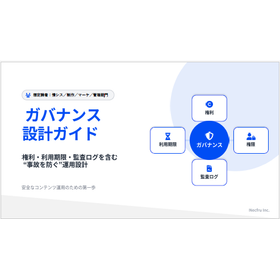
This document is a guide that summarizes the items that should be determined in governance design and the concepts of operational rules. It organizes common issues such as the availability of materials and deadline management, as well as the risks that arise if these issues are neglected. It also includes specific measures such as the design of rights and permissions, and the design of usage deadlines and audit logs, making it a recommended read for those in information systems, production, marketing, and administrative departments. [Contents (partial)] ■ What you can understand from this document ■ Common issues ■ Risks that arise if neglected ■ Overview: Governance should be considered as a set of four points ■ Specific measure 1: Design of rights and permissions ■ Specific measure 2: Design of usage deadlines and audit logs *For more details, please download the PDF or feel free to contact us.

Added to bookmarks
Bookmarks listBookmark has been removed
Bookmarks listYou can't add any more bookmarks
By registering as a member, you can increase the number of bookmarks you can save and organize them with labels.
Free membership registration
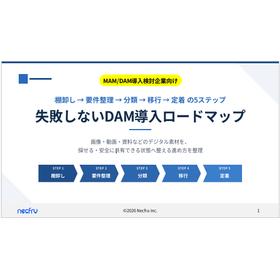
This document is a roadmap that organizes the approach to implementing Digital Asset Management (DAM) for managing digital materials such as images, videos, and documents. It includes common challenges faced on-site and the risks of neglecting these issues, as well as an overview of the entire implementation roadmap. It also contains specific methods for each step and tips for establishing the system, which can be used as a reference for considering implementation. [Contents (partial)] ■ What is DAM? ■ Common on-site challenges ■ Neglecting leads to increased time and incidents ■ Overview of the DAM implementation roadmap ■ Step 1: Start with inventory ■ Step 2: Decide on operations before functions *For more details, please download the PDF or feel free to contact us.
Added to bookmarks
Bookmarks listBookmark has been removed
Bookmarks listYou can't add any more bookmarks
By registering as a member, you can increase the number of bookmarks you can save and organize them with labels.
Free membership registration
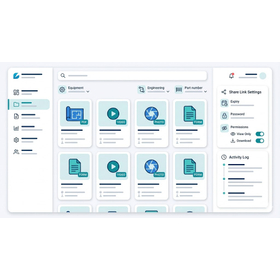
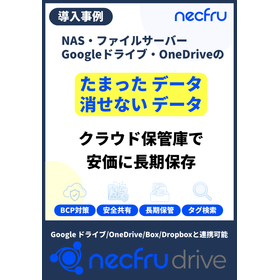
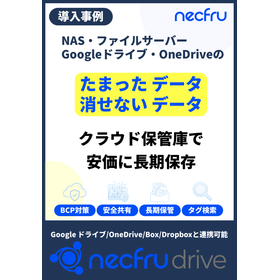
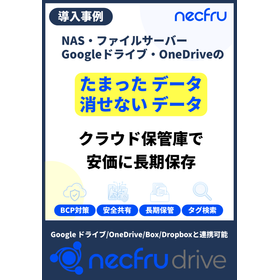
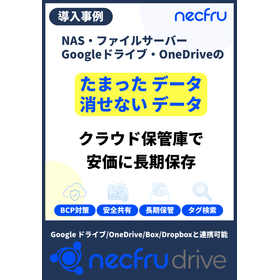
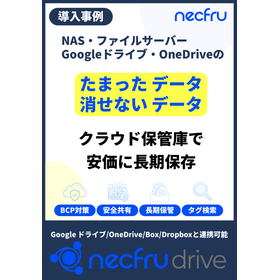
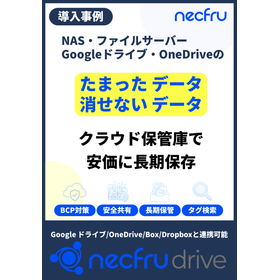
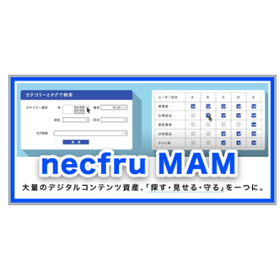
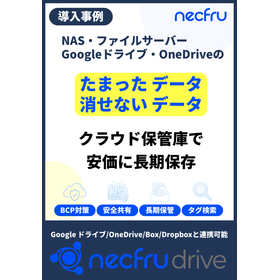
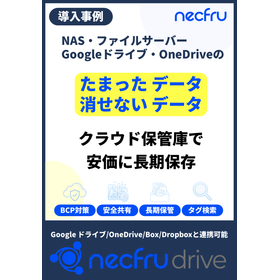
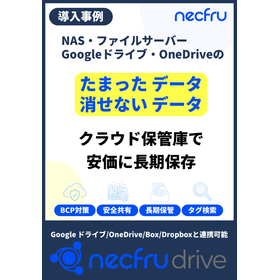
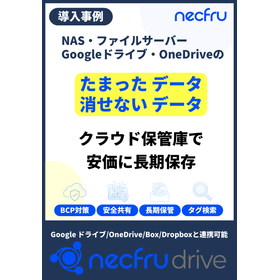
In the manufacturing industry, documents such as drawings, specifications, inspection videos, photos, reports, and logs are often scattered across NAS and personal PCs, leading to challenges such as "unable to find necessary materials," "handoffs getting stalled," "fear of data leakage through email attachments/USB," "inability to retrieve data due to disasters or site shutdowns," and "increasing capacity and costs due to undeletable data." necfru MAM consolidates digital assets into an "official repository," providing an integrated solution for searching (tag search + set management), sharing (secure URL sharing), and protecting (permissions + operation logs). Daily operations can continue using synchronized storage like OneDrive as a "workspace," with only finalized deliverables being incorporated into MAM. Additionally, by differentiating between HOT and COLD storage based on usage frequency, it helps to reduce the storage costs of "undeletable data" without slowing down business operations, while enhancing BCP (distributed storage) and information governance.
Added to bookmarks
Bookmarks listBookmark has been removed
Bookmarks listYou can't add any more bookmarks
By registering as a member, you can increase the number of bookmarks you can save and organize them with labels.
Free membership registration
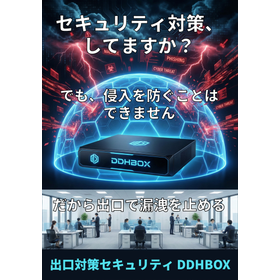
Modern cyber attacks have become sophisticated, making it impossible to prevent 100% of intrusions with just entry measures. Once infected, confidential data can be exfiltrated to the attacker's server (C2 server), leading to significant business losses and a loss of social credibility. DDHBOX is a dedicated appliance that fills the gaps in traditional "entry measures" with "exit measures." Utilizing the top-tier threat intelligence list from JSOC (LAC Co., Ltd.), it automatically detects and blocks unauthorized communications to attackers 24/7, preventing information leaks at the source. Its greatest feature is the easy installation that requires simply placing it on the network. There is no need for software installation or configuration changes on individual PCs. Additionally, to prepare for unforeseen circumstances, a cyber insurance policy of up to 3 million yen is included as standard. This covers investigation and recovery costs, with experts providing one-stop support. DDHBOX addresses the challenges faced by small and medium-sized enterprises, such as "lack of expertise" and "limited budgets," offering maximum defense and peace of mind with minimal operational burden. It achieves a "multi-layered defense" encompassing entry, internal, and exit measures, ensuring the protection of your company's digital assets.
Added to bookmarks
Bookmarks listBookmark has been removed
Bookmarks listYou can't add any more bookmarks
By registering as a member, you can increase the number of bookmarks you can save and organize them with labels.
Free membership registration
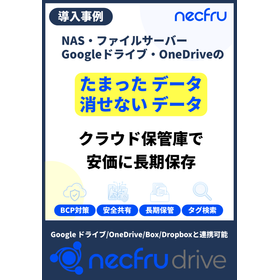
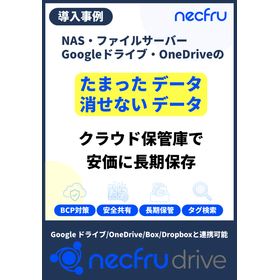
This is a case study of reviewing the external sharing of drawings, inspection reports, and specifications at an automotive parts manufacturer using "necfru drive." Previously, the main method of sharing was through password-protected ZIP emails, which posed challenges such as the hassle of sending passwords, the occurrence of version discrepancies, mis-sent emails, and requests for resending. After implementation, tagging was designed based on part numbers, customers, document types, and versions, and sharing was switched to a URL-based method. An operation that visualizes viewing and sharing history through operation logs has been realized. 【Case Overview】 ■ Industry: Automotive parts manufacturer (automobiles and transportation equipment) ■ Challenge: A situation where version discrepancies, mis-sent emails, and requests for resending are likely to occur due to operations centered around password-protected ZIP emails ■ Solution: Tagging based on part numbers, customers, document types, and versions, allowing clients to view only the necessary scope through URL sharing ■ Effects: - Reduced the hassle of sending/resending - Made it easier to track previously sent materials \Helpful materials are currently available/ *For more details, please download the PDF or feel free to contact us.
Added to bookmarks
Bookmarks listBookmark has been removed
Bookmarks listYou can't add any more bookmarks
By registering as a member, you can increase the number of bookmarks you can save and organize them with labels.
Free membership registration
We would like to introduce a case where the external sharing of approval drawings, specifications, and inspection images was reviewed using "necfru MAM/DAM" at an electronic components manufacturer. It had become common practice to send ZIP attachments via separate emails to subcontractors and customers, leading to concerns about sending different model numbers and versions, difficulties in sending large files, and challenges in retaining a history after sharing. After implementation, we organized a tag dictionary by model number, customer, lot, and version, and controlled download permissions while focusing on viewing through URL sharing for external parties. We established an operation that visualizes who viewed what through operation logs. 【Case Overview】 ■ Industry: Electronic components manufacturer (electronic components, semiconductors) ■ Challenges: Concerns about sending different model numbers/versions, difficulties in emailing large files ■ Solution: Fixed sharing to only finalized versions and controlled download permissions through URL sharing for external parties ■ Effects: - Handovers with subcontractors and overseas bases are completed online - It has become easier to provide evidence during inquiries *For more details, please download the PDF or feel free to contact us.
Added to bookmarks
Bookmarks listBookmark has been removed
Bookmarks listYou can't add any more bookmarks
By registering as a member, you can increase the number of bookmarks you can save and organize them with labels.
Free membership registration
This is an example of integrating the distribution of construction guidelines, test reports, and specifications at a building materials manufacturer using "necfru drive." Previously, materials were provided to agents and construction companies as email attachments, which led to issues such as split sending and resending due to size limitations, and difficulties in identifying the latest versions. To address this, information was organized based on product codes, projects, years, and revision histories, and the sharing target was limited to final versions only. By implementing access management via URLs, a system was established that allows viewing only the necessary range. Additionally, old and current versions were clearly distinguished, and operational rules were established. As a result, it has become possible to smoothly provide the latest materials at all times, leading to improved response speed for inquiries. [Case Overview] ■Industry: Building materials manufacturer (building materials, supplies, fixtures) ■Challenges: Split sending and resending due to size limitations, difficulty in determining the latest version ■Solution: URL sharing allows viewing only the necessary range, separating old and current versions for storage ■Effects: - It has become easier to provide only the latest version to recipients. - The initial response to inquiries has become faster. *For more details, please download the PDF or feel free to contact us.
Added to bookmarks
Bookmarks listBookmark has been removed
Bookmarks listYou can't add any more bookmarks
By registering as a member, you can increase the number of bookmarks you can save and organize them with labels.
Free membership registration
This is an example of redesigning the external submission process for SDS, analysis results, and quality certificates at a chemical manufacturer using "necfru drive." Previously, the process mainly relied on sending emails with ZIP files, which was complicated and varied by individual staff members, leading to a reliance on specific personnel. Additionally, it took time to verify previously submitted documents, and the storage and sharing were fragmented. To address this, we defined organizational rules based on information such as product, lot, document type, and deadlines, and transitioned to sharing via URLs. We established a system that allows for setting public deadlines and viewing ranges, as well as tracking viewing and download history through operation logs. As a result, we have reduced the labor involved in resending and reconfirming documents and achieved an efficient operation that integrates storage and sharing. [Case Overview] ■ Industry: Chemical Manufacturer (Chemicals) ■ Challenge: Submission procedures were dependent on personnel, and long-term storage and sharing management were fragmented. ■ Solution: Implemented time-limited public sharing and restricted access through URL sharing, ensuring traceability with operation logs. ■ Effects: - Reduced effort for resending/reconfirming - Consolidated storage and sharing operations *For more details, please download the PDF or feel free to contact us.
Added to bookmarks
Bookmarks listBookmark has been removed
Bookmarks listYou can't add any more bookmarks
By registering as a member, you can increase the number of bookmarks you can save and organize them with labels.
Free membership registration
We would like to introduce a case study of the implementation of our "necfru drive" at Company M, which provides CAD/CAM contract services. The company faced challenges such as the mixing of drawings and NC data leading to processing errors, as well as server capacity being strained due to the increase in completed project data. To address this, they standardized tags by project ID, model, material, and version number, and switched to an operation where the site could only view data, with updates limited to administrators. As a result, the risk of processing errors was reduced, leading to a decrease in quality loss. Additionally, the time required for data searches was shortened, contributing to improved efficiency in setup. 【Case Overview (Partial)】 ■Challenges - Data sharing with partner factories was primarily managed via USB, making it difficult to manage. - It took time to find the necessary data on-site. ■Response - Consolidated finalized versions in an official repository to prevent misuse. - Moved completed projects to a COLD area, retrieving them only when necessary. \Free helpful materials available/ *For more details, please download the PDF or feel free to contact us.
Added to bookmarks
Bookmarks listBookmark has been removed
Bookmarks listYou can't add any more bookmarks
By registering as a member, you can increase the number of bookmarks you can save and organize them with labels.
Free membership registration
We would like to introduce a case study of our "necfru drive" implementation at food machinery manufacturer D Company. The company faced challenges such as the presence of paper documents and outdated PDFs on-site, leading to work being performed with incorrect procedures, as well as insufficient dissemination of updated materials sent to customers. To address this, we established an environment where tags were assigned by model, process, and revision date, allowing for smooth access to necessary information. As a result, the risks of procedural errors and mix-ups were reduced, and the organization of training materials progressed, contributing to a shortened period for new launches. 【Case Overview (Partial)】 ■Challenges - Educational photos and videos are scattered across personal PCs - Communication primarily occurs via email attachments, making history management difficult ■Response - By setting permissions for view-only access, on-site staff are strictly limited to "viewing only" - Materials shared with customers are done via URL, ensuring they always have access to the latest version \Helpful materials are currently available/ *For more details, please download the PDF or feel free to contact us.
Added to bookmarks
Bookmarks listBookmark has been removed
Bookmarks listYou can't add any more bookmarks
By registering as a member, you can increase the number of bookmarks you can save and organize them with labels.
Free membership registration
We would like to introduce a case study of our "necfru drive" implementation at Company E, which operates in the printing and packaging industry. The company faced the challenge of an increased risk of mistakenly printing with outdated data due to the rise in the number of versions. To address this, they standardized tags for each project, brand, product number, and version number, and consolidated approved data into an official storage area. As a result, the risk of printing errors due to mix-ups has been significantly reduced, and the exchange of proofing data has also been completed online. 【Case Overview (Partial)】 ■ Challenges - Unable to send large data via email, leading to complicated exchanges - Insufficient shared management with external designers and clients ■ Response - External parties can view data primarily through URL sharing, with downloads permitted only when necessary - Approval and viewing history are recorded through operation logs \Helpful materials are currently available/ *For more details, please download the PDF or feel free to contact us.
Added to bookmarks
Bookmarks listBookmark has been removed
Bookmarks listYou can't add any more bookmarks
By registering as a member, you can increase the number of bookmarks you can save and organize them with labels.
Free membership registration
We would like to introduce a case study of our "necfru drive" implementation at Company F, a robot SIer. At this company, the management of project documents relied on a folder structure, making it difficult to find necessary information. To address this issue, they established tagging rules based on project name, equipment name, process, and version, and set up permission templates for each partner company before implementing URL sharing. As a result, the preparation of startup documents on-site has become more efficient, and the risk of information leakage due to mismanagement of sharing scopes has been reduced. [Case Overview (Partial)] ■ Challenges - Many partner companies, making management of sharing scopes complicated - Uncertainty about the latest version during startup, leading to rework ■ Response - Consolidated the finalized versions in the drive, shifting on-site operations to a viewing-centric approach - Moved completed projects to the COLD area to optimize storage costs \ Free helpful materials available / * For more details, please download the PDF or feel free to contact us.
Added to bookmarks
Bookmarks listBookmark has been removed
Bookmarks listYou can't add any more bookmarks
By registering as a member, you can increase the number of bookmarks you can save and organize them with labels.
Free membership registration
We would like to introduce a case study of our "necfru drive" implementation at J Company, a resin parts manufacturer. The company faced challenges with the time it took to collect related documents when issues occurred. To address this, they standardized tags by part number, mold, lot, and revision date, allowing related documents to be bundled for easy reference and sharing. As a result, the initial response time during complaint handling (document submission) has been expedited, leading to increased trust from clients. 【Case Overview (Partial)】 ■Challenges - Difficulties in tracking the history of part number revisions, hindering recurrence prevention. - Dependence on specific personnel for submitting evidence to clients. ■Response Measures - Only necessary documents are provided to clients through URL sharing. - Past projects are managed as COLD, while current projects are handled as HOT for organization. \Free Helpful Materials Available/ *For more details, please download the PDF or feel free to contact us.
Added to bookmarks
Bookmarks listBookmark has been removed
Bookmarks listYou can't add any more bookmarks
By registering as a member, you can increase the number of bookmarks you can save and organize them with labels.
Free membership registration
We would like to introduce a case study of our "necfru drive" implementation at Shipbuilding and Heavy Machinery Manufacturer Company I. The company faced challenges due to the vast amount of documentation generated over long-term large projects, as well as difficulties in managing the sharing scope due to the involvement of many partner companies. To address this, they designed tags for projects, blocks, processes, and part numbers, and implemented limited public sharing via URL with role-based permission settings for partner companies. As a result, the time spent searching for documents on-site has been reduced, and the risks associated with misconfigurations in the sharing scope have also been minimized. [Case Overview (Partial)] ■ Challenges - Inability to find necessary documents on-site leading to rework - Limitations on expanding on-premises capacity and maintenance burden ■ Response - Completed blocks were moved to a COLD area to optimize capacity - Gradual migration from important folders to stabilize operations \Helpful materials are currently available/ *For more details, please download the PDF or feel free to contact us.
Added to bookmarks
Bookmarks listBookmark has been removed
Bookmarks listYou can't add any more bookmarks
By registering as a member, you can increase the number of bookmarks you can save and organize them with labels.
Free membership registration
We would like to introduce a case study of our "necfru drive" implementation at K Company in the environmental plant sector. The company faced challenges with inspection records being dispersed between the field and headquarters, making them difficult to reference, and the inability to access materials during disasters when on-site visits were not possible. To address this, tagging was implemented based on equipment ID, location, year, and type of inspection, allowing the field to focus on viewing while restricting downloads to administrators only. As a result, the time taken to search for inspection and construction materials was reduced, and reporting speed improved. Additionally, remote access became possible, contributing to the strengthening of business continuity planning (BCP) during disasters. 【Case Overview (Partial)】 ■Challenges - Photo sharing with partner companies was cumbersome and primarily done via email. - Risks of accidental deletion and device loss were present. ■Response - Partner companies can view only the necessary scope through URL sharing. - A 90-day retention policy and log management simplify responses during troubles. \Helpful materials are currently available/ *For more details, please download the PDF or feel free to contact us.
Added to bookmarks
Bookmarks listBookmark has been removed
Bookmarks listYou can't add any more bookmarks
By registering as a member, you can increase the number of bookmarks you can save and organize them with labels.
Free membership registration
We would like to introduce a case where our "necfru MAM/DAM" was implemented by a medical device manufacturer. In this company, managing document versions and audit trails was crucial for regulatory compliance, yet there were many related departments, making access rights management challenging. To address this, they standardized document types/products/versions/approval statuses with tags and finely configured viewing and download permissions by department and role. This reduced the man-hours required for audit preparation (data collection) and organized authority management, improving information control. [Case Summary (Partial)] ■Challenges - Difficult to cross-search necessary documents during audits - Recovery procedures for accidental deletion/overwriting were dependent on individuals ■Solution - Retained viewing/download history through operation logs - Standardized recovery flow with a 90-day recycle bin and versioning *For more details, please download the PDF or feel free to contact us.
Added to bookmarks
Bookmarks listBookmark has been removed
Bookmarks listYou can't add any more bookmarks
By registering as a member, you can increase the number of bookmarks you can save and organize them with labels.
Free membership registration
We would like to introduce a case study of our "necfru drive" implementation at an aircraft parts manufacturer. The company faced challenges due to large data volumes for each project, which were putting pressure on storage areas, as well as the requirement to present versions and audit trails during audits. To address this, they organized tags by project, part number, process, and inspection type, consolidating the finalized versions into an official repository to fix the versions. As a result, the submission of documents for audit responses became smoother, and the mixing of versions decreased, leading to a reduction in reference errors. [Case Overview (Partial)] ■ Challenges - Concerns about the risk of information leakage when sharing with partner companies - High risk of business interruption during on-premises failures ■ Response Measures - Limited the scope of external sharing and made it traceable through logs - Started small with representative projects and gradually expanded \Helpful materials are available/ *For more details, please download the PDF or feel free to contact us.
Added to bookmarks
Bookmarks listBookmark has been removed
Bookmarks listYou can't add any more bookmarks
By registering as a member, you can increase the number of bookmarks you can save and organize them with labels.
Free membership registration
We would like to introduce a case study of the implementation of our "necfru drive" at Company G, which conducts testing and analysis outsourcing services. The company faced the challenge of having testing data dispersed by project, making it time-consuming to re-search for necessary information. To address this, they standardized tags based on axes such as project ID, testing conditions, equipment used, and date, and organized the data. Additionally, they managed deliverables on a set basis and established a system for limited sharing via URL. As a result, the speed of response to customer resends and additional requests improved, and the standardization of the delivery flow led to a reduction in errors. 【Case Overview (Partial)】 ■Challenges - The means of delivering large-volume data were not standardized. - It was difficult to track replacement history after delivery. ■Response Actions - Stored based on the finalized version, with replacements managed through version control. - Completed projects were moved to a COLD area to reduce storage costs. \Free helpful materials available/ *For more details, please download the PDF or feel free to contact us.
Added to bookmarks
Bookmarks listBookmark has been removed
Bookmarks listYou can't add any more bookmarks
By registering as a member, you can increase the number of bookmarks you can save and organize them with labels.
Free membership registration
We would like to introduce a case study of the implementation of our "necfru drive" at Company L, a trading company. At the company, the formats and storage locations of documents were not standardized for each supplier, leading to delays in responding to customer inquiries and resulting in lost opportunities. To address this, we designed tags based on manufacturer, product, document type, and expiration date, and set up separate shared folders (URLs) with permissions for each customer. As a result, the speed of responding to inquiries improved, and the rate of acquiring proposal opportunities increased. Additionally, this has contributed to a reduction in risks associated with sharing errors. [Case Overview (Partial)] ■Challenges - Concerns about the risk of mistakenly sending confidential documents - Difficulty in tracking the location of documents during personnel changes ■Response Measures - Only the latest versions are registered in the official repository for centralized update management - Sharing and viewing history are visualized through operation logs \Free helpful materials available/ *For more details, please download the PDF or feel free to contact us.
Added to bookmarks
Bookmarks listBookmark has been removed
Bookmarks listYou can't add any more bookmarks
By registering as a member, you can increase the number of bookmarks you can save and organize them with labels.
Free membership registration
We would like to introduce a case study of our "necfru drive" implementation at Company C, a manufacturer of industrial machinery. The company faced the challenge of field personnel being unable to quickly find the necessary documents. To address this, we organized the information by tagging it according to equipment type, model number, delivery destination, and year. As a result, the time spent searching for documents on-site was reduced, leading to quicker initial responses. Additionally, the provision of documents to customers has been improved to ensure safety and maintain a record of history. [Case Overview (Partial)] ■Challenges - Customer-facing documents were primarily shared as email attachments, making management cumbersome. - On-site personnel referred to outdated versions, resulting in rework. ■Response - Related documents were bundled together for easy one-click access. - Customers were provided with URL links for viewing, allowing control over the scope of access. \Free helpful materials available/ *For more details, please download the PDF or feel free to contact us.
Added to bookmarks
Bookmarks listBookmark has been removed
Bookmarks listYou can't add any more bookmarks
By registering as a member, you can increase the number of bookmarks you can save and organize them with labels.
Free membership registration
We would like to introduce a case where the external sharing of drawings, inspection reports, and specifications was reviewed using "necfru MAM/DAM" at an automotive parts manufacturer. Previously, the main method of document delivery was through password-protected ZIP emails, which posed challenges such as the hassle of sending passwords, the occurrence of version discrepancies, misdeliveries, and requests for resending. After implementation, we designed tags based on part numbers, customers, document types, and versions, and switched to URL sharing for sharing with business partners. We have achieved an operation that allows us to retain viewing and sharing history through operation logs. [Case Overview] - Industry: Automotive parts manufacturer (automobiles and transportation equipment) - Challenge: Operations centered around password-protected ZIP emails led to frequent occurrences of version discrepancies, misdeliveries, and requests for resending. - Solution: Designed tags based on part numbers, customers, document types, and versions, allowing business partners to view only the necessary scope through URL sharing. - Effects: - Reduced the hassle of sending and resending documents. - Made it easier to track previously sent materials. *For more details, please download the PDF or feel free to contact us.
Added to bookmarks
Bookmarks listBookmark has been removed
Bookmarks listYou can't add any more bookmarks
By registering as a member, you can increase the number of bookmarks you can save and organize them with labels.
Free membership registration
This is an example of centralized management of distribution of construction method manuals, test reports, and specifications to clients by a building materials manufacturer using "necfru MAM/DAM." Distribution to agents and construction companies was primarily done via email attachments, leading to issues such as split sending and resending due to capacity limits, and difficulty in identifying the latest version. By tagging product codes, projects, years, and revision histories, only the finalized versions are registered for sharing. Access is limited to necessary areas through URL sharing, and a system has been established to separate and store old and current versions. [Case Overview] - Industry: Building materials manufacturer (building materials, supplies, fixtures) - Issues: Split sending and resending due to capacity limits, difficulty in determining the latest version - Solution: Limited access to necessary areas through URL sharing, separating and storing old and current versions - Effects: - It has become easier to provide only the latest version to clients - The initial response time for inquiries has improved *For more details, please download the PDF or feel free to contact us.*
Added to bookmarks
Bookmarks listBookmark has been removed
Bookmarks listYou can't add any more bookmarks
By registering as a member, you can increase the number of bookmarks you can save and organize them with labels.
Free membership registration
We would like to introduce a case where the sharing of design data, proof PDFs, and image materials within and outside a printing and packaging company was reviewed using "necfru MAM/DAM." Previously, proof data was exchanged multiple times as ZIP attachments, leading to a situation where older data could easily be referenced by mistake due to the increase in versions. Additionally, the inability to send large materials via email and the difficulty in maintaining a sharing history were challenges. We standardized tags by project/brand/item number/version number and fixed the sharing target to only approved data. For external parties, we established an operation focused on viewing through URL sharing, while maintaining a log of viewing/sharing history. 【Case Overview】 ■ Industry: Printing and Packaging Company (Printing Industry) ■ Challenge: Increased versions made it easy to mistakenly reference old data, and sending large materials via email was difficult. ■ Solution: Fixed the sharing target to only approved data and operated with a focus on viewing through URL sharing for external parties. ■ Effects: - Reduced the risk of printing errors due to mix-ups. - Clarified the location of materials during handovers. *For more details, please download the PDF or feel free to contact us.
Added to bookmarks
Bookmarks listBookmark has been removed
Bookmarks listYou can't add any more bookmarks
By registering as a member, you can increase the number of bookmarks you can save and organize them with labels.
Free membership registration
We would like to introduce a case study on the review of external sharing of approval drawings, specifications, and inspection images at an electronic component manufacturer using "necfru drive." It had become common practice to send ZIP attachments via email to subcontractors and customers, leading to concerns about sending different model numbers and versions, difficulties in sending large files, and challenges in retaining a history after sharing. After implementation, we organized a tag dictionary based on model numbers, customers, lots, and versions, and controlled download permissions primarily through URL sharing for external parties. We established an operation that visualizes who viewed what through operation logs. 【Case Overview】 ■ Industry: Electronic Component Manufacturer (Electronic Components, Semiconductors) ■ Issues: Concerns about sending different model numbers/versions, difficulties in emailing large files ■ Solution: Fixed sharing targets to only finalized versions and controlled download permissions through URL sharing for external parties ■ Effects: - Handovers with subcontractors and overseas locations are completed online - It has become easier to provide evidence during inquiries *For more details, please download the PDF or feel free to contact us.
Added to bookmarks
Bookmarks listBookmark has been removed
Bookmarks listYou can't add any more bookmarks
By registering as a member, you can increase the number of bookmarks you can save and organize them with labels.
Free membership registration
In a chemical manufacturing company, we would like to introduce a case where the external submission of SDS, analysis results, and quality certificates was reviewed using "necfru MAM/DAM." The external sending of SDS and quality certificates was done through ZIP attachments, making the submission process complicated and dependent on the person in charge. It took a long time to recheck past submission documents, and there was a disconnection between long-term storage and shared management. We designed tags based on product/lot/document type/expiration date and implemented time-limited publication and restricted access through URL sharing. We established an operation that ensures traceability of viewing/downloading through operation logs. 【Case Overview】 ■ Industry: Chemical Manufacturer (Chemicals) ■ Challenge: Submission procedures were dependent on the person in charge, leading to a disconnection between long-term storage and shared management. ■ Solution: Implemented time-limited publication and restricted access through URL sharing, ensuring traceability with operation logs. ■ Effects: - Reduced the effort for resending/rechecking. - Consolidated the operations for storage and sharing. *For more details, please download the PDF or feel free to contact us.
Added to bookmarks
Bookmarks listBookmark has been removed
Bookmarks listYou can't add any more bookmarks
By registering as a member, you can increase the number of bookmarks you can save and organize them with labels.
Free membership registration
This is an example of standardizing the sharing of delivery documents, user manuals, and maintenance materials with customers using "necfru MAM/DAM" in an industrial machinery manufacturer. The delivery of materials to customers was done via ZIP attachment with a separate password, making it difficult to send large files via email. Resending requests and version confirmations were dependent on the person in charge, and it was challenging to keep a record of the delivery history. Tags were designed based on equipment type, project, delivery destination, and version, with only the final version fixed in the MAM/DAM. Related materials were grouped for easier searching, and customers were limited to viewing by sharing URLs. [Case Overview] - Industry: Industrial Machinery Manufacturer (Industrial Equipment) - Challenge: Difficulty in sending large files via email, dependency on the person in charge for resending requests and version confirmations - Solution: Fixed only the final version in the MAM/DAM and organized related materials into sets for easier searching - Effects: - Standardized the procedure for customer sharing - Made it easier to explain with a record of sharing history *For more details, please download the PDF or feel free to contact us.
Added to bookmarks
Bookmarks listBookmark has been removed
Bookmarks listYou can't add any more bookmarks
By registering as a member, you can increase the number of bookmarks you can save and organize them with labels.
Free membership registration
In the field of robot system integration, we would like to introduce a case where the sharing of layout diagrams, wiring diagrams, program materials, and trial operation videos with partner companies was reviewed using "necfru MAM/DAM." We were sending project materials to partner companies as ZIP attachments, which resulted in a large number of documents and frequent requests for resending. Sending large videos via email and managing the sharing scope was complicated, and there were concerns about misdelivery. We organized tags by project/customer/process/version and set the sharing targets by project. Partner companies were able to limit the scope through URL sharing, enabling a system where it was possible to track who was shown what through logs. [Case Overview] - Industry: Robot SIer (Robots) - Challenge: A large number of documents led to frequent resending requests, and managing the sharing scope was complicated, raising concerns about misdelivery. - Solution: Set sharing targets by project, and partner companies limited the scope through URL sharing. - Effects: - It became easier to share large videos. - Reduced resending/verification costs on a project basis. *For more details, please download the PDF or feel free to contact us.*
Added to bookmarks
Bookmarks listBookmark has been removed
Bookmarks listYou can't add any more bookmarks
By registering as a member, you can increase the number of bookmarks you can save and organize them with labels.
Free membership registration
We would like to introduce a case study in which an electronic component manufacturer reviewed the storage infrastructure for inspection images, specifications, and measurement logs accumulated in Google Drive using "necfru MAM/DAM." As the number of inspection images and logs continued to increase, the Drive's capacity became strained, making it difficult to find current data among older projects. The control over external sharing was weak, and managing downloads was also a challenge. We organized a tag dictionary based on model number, lot, process, and inspection type, and gradually migrated long-term storage data to MAM/DAM. For external partners, we established an operation focused on viewing while controlling download permissions. 【Case Overview】 ■ Industry: Electronic component manufacturer (electronic components, semiconductors) ■ Challenge: The increasing number of inspection images and logs strained Drive capacity, and weak control over external sharing made download management difficult. ■ Solution: Gradually migrate long-term storage data to MAM/DAM, with external partners focused on viewing and controlled download permissions. ■ Effects: - Reduced time for re-searching and comparison - Standardized recovery procedures in case of incidents *For more details, please download the PDF or feel free to contact us.
Added to bookmarks
Bookmarks listBookmark has been removed
Bookmarks listYou can't add any more bookmarks
By registering as a member, you can increase the number of bookmarks you can save and organize them with labels.
Free membership registration
This is an example of reviewing the external sharing of design documents, procedures, and change histories at a medical device manufacturer using "necfru MAM/DAM." The sending of design documents and procedures was dependent on the person in charge, and the use of ZIP attachments made it difficult to see sending records and reference histories. Weak version control also made it easy for outdated materials to circulate. We implemented tag management by product/document type/version/department, limiting the shared items to finalized versions only. We control the viewing range through URL sharing and permissions, and ensure traceability of sharing/viewing through operation logs. [Case Overview] - Industry: Medical device manufacturer (medical devices) - Issues: Sending records and reference histories are opaque with ZIP attachments, weak version control leads to easy circulation of outdated materials - Solution: Limited shared items to finalized versions only, controlled viewing range through URL sharing and permissions - Effects: - Made it easier to gather materials for explanations during audits - Established a state where cross-departmental searches are possible *For more details, please download the PDF or feel free to contact us.


Added to bookmarks
Bookmarks listBookmark has been removed
Bookmarks listYou can't add any more bookmarks
By registering as a member, you can increase the number of bookmarks you can save and organize them with labels.
Free membership registration
In a trading company, we would like to introduce an example of reviewing the sharing of suppliers' specifications, drawings, and certificates both internally and externally using "necfru MAM/DAM." The sharing of supplier materials was primarily done through ZIP attachments, and the documents sent varied by recipient, making management complicated. There were concerns about mis-sending and version discrepancies, as well as the time taken to resend past submissions. We implemented tag management based on supplier/product/document type/version and registered only the finalized versions in a repository for sharing. We established an operation that limits the scope by sharing URLs for each recipient, making it visible when and what was shared. [Case Overview] ■ Industry: Trading Company (Trading and Wholesale) ■ Challenge: Different documents sent to each recipient made management complicated, with concerns about mis-sending and version discrepancies. ■ Solution: Registered only finalized versions in the repository and limited the scope by sharing URLs for each recipient. ■ Effects: - Management of submission scope became easier. - Reduced discrepancies in recognition both internally and externally. *For more details, please download the PDF or feel free to contact us.
Added to bookmarks
Bookmarks listBookmark has been removed
Bookmarks listYou can't add any more bookmarks
By registering as a member, you can increase the number of bookmarks you can save and organize them with labels.
Free membership registration
We would like to introduce a case where a food machinery manufacturer managed the distribution of user manuals, cleaning procedures, and parts lists for customers through "necfru MAM/DAM." The main method of distribution was via password-protected email attachments, which posed challenges such as the tendency for old PDFs to remain with the client even after revisions, and difficulties in sending large documents with photos/videos. By tagging documents with model, process, and revision date, we ensured searchability. For customers, we provided only the latest version through URL sharing, implementing a system that strictly enforced "view-only" permissions. 【Case Overview】 ■ Industry: Food Machinery Manufacturer (Food Machinery) ■ Challenge: Old PDFs tend to remain with clients after revisions, and there was no shared history, leading to a reliance on individual knowledge. ■ Solution: Provided only the latest version through URL sharing and enforced "view-only" permissions. ■ Effects: - Made it easier to deliver only the latest versions to customers. - Enabled responses to inquiries while viewing the same documents. *For more details, please download the PDF or feel free to contact us.
Added to bookmarks
Bookmarks listBookmark has been removed
Bookmarks listYou can't add any more bookmarks
By registering as a member, you can increase the number of bookmarks you can save and organize them with labels.
Free membership registration
We would like to introduce a case where an automotive parts manufacturer established a long-term storage foundation for drawings, process charts, and submission materials accumulated in OneDrive using "necfru MAM/DAM." As past projects continued to increase in OneDrive, storage capacity became strained, and it became difficult to search due to the mixing of ongoing and completed projects. There was no ability to make deletion judgments, resulting in the continued presence of old materials, and there was also a lack of control over external sharing and BCP. The operation was set up so that ongoing projects remained on the work side, while completed projects were transferred to MAM/DAM, organized to allow tag searches by part number, process, year, and version. Long-term storage targets were redirected to COLD, and cost aspects were also reviewed. 【Case Overview】 ■ Industry: Automotive parts manufacturer (automobiles and transportation equipment) ■ Challenge: Increasing past projects in OneDrive leading to capacity strain, making it difficult to search due to the mixing of ongoing and completed projects ■ Solution: Transferred completed projects to MAM/DAM and redirected long-term storage targets to COLD while reviewing costs ■ Effects: - Improved searchability of ongoing projects - Reduced sharing incidents and BCP concerns *For more details, please download the PDF or feel free to contact us.
Added to bookmarks
Bookmarks listBookmark has been removed
Bookmarks listYou can't add any more bookmarks
By registering as a member, you can increase the number of bookmarks you can save and organize them with labels.
Free membership registration
We would like to introduce a case study on the use of "necfru MAM/DAM," which has separated the user manuals, photos, and educational videos from Google Drive/OneDrive to a long-term storage side at a food machinery manufacturer. As the number of educational videos and photos increased, the synchronized storage became heavy, and outdated materials remained, creating a situation where the field could easily become confused. Customer-facing materials and internal documents were mixed, and the criteria for deletion were unclear, which posed challenges. By managing tags based on model, process, and revision date, current usage was separated for operational purposes, while older versions were moved to MAM/DAM. Photos and videos are stored in a way that allows for previewing, and a system was established to route long-term storage items to COLD. [Case Overview] - Industry: Food Machinery Manufacturer (Food Machinery) - Challenge: Synchronized storage was strained due to educational videos and photos, and the criteria for deletion were unclear, leading to continuous capacity increase. - Solution: Older versions were separated to MAM/DAM, and a system was established to route long-term storage items to COLD. - Effects: - It became easier to guide the field to only the latest versions. - Management of customer sharing and internal use could be separated. *For more details, please download the PDF or feel free to contact us.*


Added to bookmarks

Bookmarks listBookmark has been removed
Bookmarks listYou can't add any more bookmarks
By registering as a member, you can increase the number of bookmarks you can save and organize them with labels.
Free membership registration
We would like to introduce a case where a chemical manufacturer established a long-term storage foundation for SDS, analysis results, and quality records accumulated in OneDrive using "necfru MAM/DAM." As the number of quality records and SDS continued to increase, storage capacity became strained, and there were many documents that could not be deleted, making it impossible to adjust by deletion. The storage locations were divided by department, making reuse difficult, and the risk of data loss was a management issue. We designed tags based on product, lot, document type, and expiration date, and gradually migrated long-term storage targets to MAM/DAM. We finely controlled the viewing range by department through permissions and visualized costs and storage locations using HOT/COLD categorization. 【Case Overview】 - Industry: Chemical Manufacturer (Chemicals) - Challenge: Many documents could not be deleted, making it impossible to adjust by deletion, and the risk of data loss during incidents was a management issue. - Solution: Gradually migrated long-term storage targets to MAM/DAM and visualized costs and storage locations using HOT/COLD categorization. - Effects: - Search times during audits and inquiries have decreased. - Predictability of long-term storage has increased, making budgeting easier. *For more details, please download the PDF or feel free to contact us.*
Added to bookmarks
Bookmarks listBookmark has been removed
Bookmarks listYou can't add any more bookmarks
By registering as a member, you can increase the number of bookmarks you can save and organize them with labels.
Free membership registration
This is a case study of utilizing "necfru MAM/DAM" in a printing and packaging company, where design data, proof PDFs, and image materials were separated from synchronized storage to a long-term storage destination. With the increase in capacity billing due to large volumes of image/video materials, it became difficult to find current projects as old version data remained. Materials were scattered across staff PCs and shared drives, making it challenging to confirm their whereabouts for reuse. Tags were organized by project/brand/item number/version number, and completed projects and approved data were migrated to MAM/DAM. This made it easier to check materials with the assumption of previews and separated current use from long-term storage. [Case Overview] - Industry: Printing and Packaging Company (Printing Industry) - Challenge: Increased capacity billing due to large materials, materials scattered across staff PCs and shared drives - Solution: Migrated completed projects and approved data to MAM/DAM, separating current use from long-term storage - Effects: - Reusing past materials became easier - The location of materials became clear, facilitating handovers *For more details, please download the PDF or feel free to contact us.
Added to bookmarks
Bookmarks listBookmark has been removed
Bookmarks listYou can't add any more bookmarks
By registering as a member, you can increase the number of bookmarks you can save and organize them with labels.
Free membership registration
In a trading company, we would like to introduce a case study of utilizing "necfru MAM/DAM," which separates supplier specifications, drawings, and certificates from Google Drive/OneDrive to a long-term storage side. The accumulation of supplier documents continued to increase storage costs, and it became difficult to find current documents among those already submitted. Each department was storing copies, leading to a lot of duplication and making it cumbersome to distinguish versions during resubmissions. We manage tags by supplier/product/document type/version, and we transfer completed projects and old versions to MAM/DAM. We share submission destinations only with the necessary URLs, establishing a system that separates current documents from long-term storage. [Case Overview] - Industry: Trading Company (Trading and Wholesale) - Challenge: Accumulation of supplier documents leading to increased storage costs and duplication due to departmental copy storage - Solution: Transfer completed projects and old versions to MAM/DAM, separating current documents from long-term storage - Effects: - Improved searchability of current documents - Reduced time for resubmission requests and submission history checks *For more details, please download the PDF or feel free to contact us.
Added to bookmarks
Bookmarks listBookmark has been removed
Bookmarks listYou can't add any more bookmarks
By registering as a member, you can increase the number of bookmarks you can save and organize them with labels.
Free membership registration
We would like to introduce a case where a building materials manufacturer organized the long-term storage of drawings, construction documents, and test reports on Google Drive/OneDrive using "necfru MAM/DAM." Each branch had old documents remaining, leading to increased storage capacity, and it became difficult to determine the latest versions as current and past projects were mixed. There were concerns about capacity limits and mis-sending with email attachments, and the criteria for retaining documents were ambiguous. By tagging with product codes, projects, years, and revision history, current documents were kept on the work side, while completed projects were archived to MAM/DAM. Sharing with clients was limited to necessary areas via URL, and old and current versions were stored separately. 【Case Overview】 ■ Industry: Building materials manufacturer (building materials, supplies, fixtures) ■ Challenge: Old documents remaining at each branch increased storage capacity, and the criteria for retaining documents were unclear ■ Solution: Archived completed projects to MAM/DAM and limited client sharing to necessary areas via URL ■ Effects - It became easier to provide only the latest versions to the field - Reduced the risk of sharing accidents *For more details, please download the PDF or feel free to contact us.
Added to bookmarks
Bookmarks listBookmark has been removed
Bookmarks listYou can't add any more bookmarks
By registering as a member, you can increase the number of bookmarks you can save and organize them with labels.
Free membership registration
This is a case study of utilizing "necfru MAM/DAM" in a medical device manufacturer, where design documents, procedure manuals, and change histories were separated from synchronous storage to long-term storage. As the number of design documents and historical materials increased, storage capacity became strained, and it became difficult to search due to the mixing of current and old versions. Additionally, the separation of storage locations by department made it challenging to gather supporting documents during audits. Tags were designed based on product/document type/version/department, and confirmed versions and old versions were gradually transitioned to MAM/DAM. Access ranges were controlled by departmental authority, and long-term storage destinations were clarified to organize operational rules. [Case Summary] - Industry: Medical device manufacturer (medical devices) - Challenge: Difficulty in searching due to the mixing of current and old versions, making it hard to gather supporting documents for audits and inquiries. - Solution: Gradual transition of confirmed versions and old versions to MAM/DAM, with access ranges controlled by departmental authority. - Effects: - Faster search for necessary documents. - Reduced initial response time for audit preparation. *For more details, please download the PDF or feel free to contact us.*
Added to bookmarks
Bookmarks listBookmark has been removed
Bookmarks listYou can't add any more bookmarks
By registering as a member, you can increase the number of bookmarks you can save and organize them with labels.
Free membership registration