iPROS Manufacturing
  • Search for products by classification category

    • Electronic Components and Modules
      Electronic Components and Modules
      63019items
    • Machinery Parts
      Machinery Parts
      76249items
    • Manufacturing and processing machinery
      Manufacturing and processing machinery
      103115items
    • Scientific and Physics Equipment
      Scientific and Physics Equipment
      36987items
    • Materials
      Materials
      38214items
    • Measurement and Analysis
      Measurement and Analysis
      55122items
    • Image Processing
      Image Processing
      15526items
    • Control and Electrical Equipment
      Control and Electrical Equipment
      55211items
    • Tools, consumables, and supplies
      Tools, consumables, and supplies
      66169items
    • Design and production support
      Design and production support
      12763items
    • IT/Network
      IT/Network
      46678items
    • Office
      Office
      14237items
    • Business support services
      Business support services
      28466items
    • Seminars and Skill Development
      Seminars and Skill Development
      6647items
    • Pharmaceutical and food related
      Pharmaceutical and food related
      35565items
    • others
      68347items
  • Search for companies by industry

    • Manufacturing and processing contract
      7367
    • others
      5046
    • Industrial Machinery
      4502
    • Machine elements and parts
      3402
    • Other manufacturing
      2909
    • Trading company/Wholesale
      2809
    • IT/Telecommunications
      2582
    • Industrial Electrical Equipment
      2338
    • Building materials, supplies and fixtures
      1816
    • software
      1703
    • Electronic Components and Semiconductors
      1618
    • Resin/Plastic
      1505
    • Service Industry
      1501
    • Testing, Analysis and Measurement
      1141
    • Ferrous/Non-ferrous metals
      1006
    • environment
      697
    • Chemical
      654
    • Automobiles and Transportation Equipment
      622
    • Printing Industry
      517
    • Information and Communications
      485
    • Consumer Electronics
      414
    • Energy
      341
    • Rubber products
      322
    • Food Machinery
      309
    • Optical Instruments
      285
    • robot
      284
    • fiber
      264
    • Paper and pulp
      233
    • Pharmaceuticals and Biotechnology
      178
    • Electricity, Gas and Water Industry
      169
    • Warehousing and transport related industries
      151
    • Food and Beverage
      140
    • Glass and clay products
      140
    • CAD/CAM
      126
    • Educational and Research Institutions
      119
    • Medical Devices
      116
    • retail
      111
    • Ceramics
      98
    • wood
      86
    • Transportation
      84
    • Petroleum and coal products
      67
    • Medical and Welfare
      62
    • Shipbuilding and heavy machinery
      52
    • Aviation & Aerospace
      50
    • equipment
      46
    • Fisheries, Agriculture and Forestry
      43
    • Materials
      41
    • Research and development equipment and devices
      37
    • Public interest/special/independent administrative agency
      32
    • Government
      23
    • self-employed
      23
    • Finance, securities and insurance
      17
    • Mining
      17
    • cosmetics
      16
    • Restaurants and accommodations
      10
    • Individual
      10
    • Police, Fire Department, Self-Defense Forces
      7
    • Raw materials for reagents and chemicals
      5
    • Laboratory Equipment and Consumables
      5
    • Contracted research
      5
  • Special Features
  • Ranking

    • Overall Products Ranking
    • Overall Company Ranking
Search for Products
  • Search for products by classification category

  • Electronic Components and Modules
  • Machinery Parts
  • Manufacturing and processing machinery
  • Scientific and Physics Equipment
  • Materials
  • Measurement and Analysis
  • Image Processing
  • Control and Electrical Equipment
  • Tools, consumables, and supplies
  • Design and production support
  • IT/Network
  • Office
  • Business support services
  • Seminars and Skill Development
  • Pharmaceutical and food related
  • others
Search for Companies
  • Search for companies by industry

  • Manufacturing and processing contract
  • others
  • Industrial Machinery
  • Machine elements and parts
  • Other manufacturing
  • Trading company/Wholesale
  • IT/Telecommunications
  • Industrial Electrical Equipment
  • Building materials, supplies and fixtures
  • software
  • Electronic Components and Semiconductors
  • Resin/Plastic
  • Service Industry
  • Testing, Analysis and Measurement
  • Ferrous/Non-ferrous metals
  • environment
  • Chemical
  • Automobiles and Transportation Equipment
  • Printing Industry
  • Information and Communications
  • Consumer Electronics
  • Energy
  • Rubber products
  • Food Machinery
  • Optical Instruments
  • robot
  • fiber
  • Paper and pulp
  • Pharmaceuticals and Biotechnology
  • Electricity, Gas and Water Industry
  • Warehousing and transport related industries
  • Food and Beverage
  • Glass and clay products
  • CAD/CAM
  • Educational and Research Institutions
  • Medical Devices
  • retail
  • Ceramics
  • wood
  • Transportation
  • Petroleum and coal products
  • Medical and Welfare
  • Shipbuilding and heavy machinery
  • Aviation & Aerospace
  • equipment
  • Fisheries, Agriculture and Forestry
  • Materials
  • Research and development equipment and devices
  • Public interest/special/independent administrative agency
  • Government
  • self-employed
  • Finance, securities and insurance
  • Mining
  • cosmetics
  • Restaurants and accommodations
  • Individual
  • Police, Fire Department, Self-Defense Forces
  • Raw materials for reagents and chemicals
  • Laboratory Equipment and Consumables
  • Contracted research
Special Features
Ranking
  • Overall Products Ranking
  • Overall Company Ranking
  • privacy policy
  • terms of service
  • About Us
  • Careers
  • Advertising
  1. Home
  2. IT/Telecommunications
  3. NTP
  4. Product/Service List
IT/Telecommunications
  • Added to bookmarks

    Bookmarks list

    Bookmark has been removed

    Bookmarks list

    You can't add any more bookmarks

    By registering as a member, you can increase the number of bookmarks you can save and organize them with labels.

    Free membership registration

NTP

addressWakayama/Kainan-shi/Stern 378-72
phone-
  • Special site
  • Official site
last updated:Jun 21, 2026
  • Contact this company

    Inquiry Form
  • Company information
  • Products/Services(114)
  • catalog(14)
  • news(4)

NTP Product Lineup

  • category

1~22 item / All 22 items

Displayed results

Filter by category

GTM Strategy Design GTM Strategy Design
DX Strategy Formulation DX Strategy Formulation
AI-Native Organizational Design AI-Native Organizational Design
Business Process Reengineering (BPR) Business Process Reengineering (BPR)
GTM Stack Construction & Integration GTM Stack Construction & Integration
Sales Engineering Support Sales Engineering Support
Revenue Operations (RevOps) Revenue Operations (RevOps)
System Development for Manufacturing System Development for Manufacturing
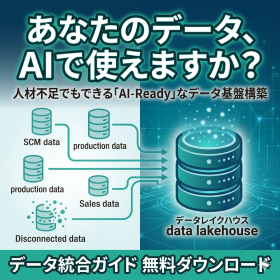
Data Infrastructure Construction Data Infrastructure Construction
Maintenance & Operations Maintenance & Operations
Generative AI Implementation Support Generative AI Implementation Support
Custom LLM Development Custom LLM Development
Predictive Analytics & Anomaly Detection Predictive Analytics & Anomaly Detection
Data

Data Infrastructure Construction

We leverage platforms like Databricks and Snowflake to build robust data infrastructure that enables data-driven decision-making.


Limits of Manual Operations: Complexity of Data Structures and Maintenance Burden

[Free Provision of Explanatory Materials] Transition to automatic updates using external tools in response to the vast amount of data.

With the diversification of business operations, the data structure has become more complex, and manual management has already reached its limits. Manual maintenance and operation not only lead to human errors but also pose significant barriers to sustainable utilization. To eliminate human errors and management burdens, automation and labor-saving through external tools are essential. We will explain the benefits of automating batch processing and updating report data, transitioning to a stable operational foundation. We propose a system of automation that reduces operational costs and achieves stable operations in our documentation.

Added to bookmarks

Bookmarks list

Bookmark has been removed

Bookmarks list

You can't add any more bookmarks

By registering as a member, you can increase the number of bookmarks you can save and organize them with labels.

Free membership registration

Resolution of User vs. Administrator Conflict: A Management System that Meets Both Parties' Needs

Bridging the gap between the field that wants to analyze freely and the information system that wants centralized management.

Data users want to "analyze easily with their favorite tools," while administrators prioritize "control and stable operations." This gap in needs leads to a common issue of data stagnation and underutilization. It is important to build an analytical environment that can be easily used by non-engineers while complying with compliance regulations. To promote data utilization across the organization, we propose breaking the "utilization stagnation" through inventorying data and restructuring management systems. We will explain in the materials how to remove organizational barriers and accelerate data utilization governance.

Added to bookmarks

Bookmarks list

Bookmark has been removed

Bookmarks list

You can't add any more bookmarks

By registering as a member, you can increase the number of bookmarks you can save and organize them with labels.

Free membership registration

Rapid evolution of data infrastructure through agile development.

[Free Presentation of Explanatory Materials] Repeated improvements in a short cycle, responding promptly to changes in needs.

In today's rapidly changing market and needs, the introduction of agile methods is required for building data infrastructure. By not deciding everything in the initial stages and repeatedly implementing and improving in short cycles, we can sequentially provide high-priority features. This method, which immediately reflects feedback, maximizes development speed and enables a direct connection to business value. We will provide a detailed introduction to the process of building a foundation that continues to evolve flexibly and quickly. You can learn agile development techniques for building a resilient data infrastructure through our materials.

Added to bookmarks

Bookmarks list

Bookmark has been removed

Bookmarks list

You can't add any more bookmarks

By registering as a member, you can increase the number of bookmarks you can save and organize them with labels.

Free membership registration

The Importance of Data Modeling: Guidelines to Prevent Inconsistencies in Advance

Not just ending with mere "accumulation." Building a foundation for advanced utilization directly linked to business.

To enable accurate and efficient data analysis, it is essential to design the relationships between data through "data modeling." By organizing business information and defining its structure, we can proactively eliminate data duplication and inconsistencies. When this is visualized, it serves as a clear guideline for foundational design and becomes the basis for advanced data utilization. We will explain how to create high-quality data that directly contributes to business outcomes. Please check the materials for the blueprint to build a consistent data infrastructure.

Added to bookmarks

Bookmarks list

Bookmark has been removed

Bookmarks list

You can't add any more bookmarks

By registering as a member, you can increase the number of bookmarks you can save and organize them with labels.

Free membership registration

Benefits of using ETL tools: Data integration and reduction of operational burden.

Free presentation of explanatory materials: Integrating data from multiple systems with different formats consistently.

The use of an ETL tool that can flexibly respond from a small scale is the first step in building an advanced data infrastructure. It enables rapid implementation and operation by a small team without requiring specialized skills, eliminating the reliance on manual processes. By automating the processes of data extraction, transformation, and loading, it can prevent human errors and reduce operational burdens. We will discuss the benefits of storing data in a DWH, maintaining consistency, and enhancing the reliability of the analytical infrastructure. The advantages of utilizing ETL for efficient data collection and processing are condensed in the materials.

Added to bookmarks

Bookmarks list

Bookmark has been removed

Bookmarks list

You can't add any more bookmarks

By registering as a member, you can increase the number of bookmarks you can save and organize them with labels.

Free membership registration

Metadata Management: The Core of Information that Unleashes the True Value of Data Utilization

Organize 'data about data' to ensure reliability and correctness of interpretation.

The creation of business value is influenced by the organization of "metadata," which defines the meaning and context of data. When metadata is properly managed, the reliability of the data and the accuracy of its interpretation are ensured, facilitating smooth decision-making across the organization. Going beyond traditional static management, "Active Metadata Management," which dynamically updates information during the analysis process, is essential. We will explain the three classifications of metadata management that serve as the shortest path to becoming an AI-ready organization. We will publish materials on how to organize "metadata" so that AI and BI can truly function in practice.

Added to bookmarks

Bookmarks list

Bookmark has been removed

Bookmarks list

You can't add any more bookmarks

By registering as a member, you can increase the number of bookmarks you can save and organize them with labels.

Free membership registration

Differentiating between business metadata and technical metadata.

[Free Presentation of Explanatory Materials] Clearly define the purpose and structure. Support the consistency between systems with technology.

Metadata is classified into three categories based on its purpose: "Business," "Technical," and "Operational." Business metadata defines the meaning in a business context and maximizes practicality, while technical metadata defines types and relationships, supporting integration. Furthermore, operational metadata records update frequency and history, maintaining the freshness of the foundation. By centering on these axes, a reliable foundation is established where discovery, understanding, and control are optimized. The document details the classification and management methods of metadata that enable advanced data governance.

Added to bookmarks

Bookmarks list

Bookmark has been removed

Bookmarks list

You can't add any more bookmarks

By registering as a member, you can increase the number of bookmarks you can save and organize them with labels.

Free membership registration

Selection of Metadata Management Tools: From Databricks to AWS

[Free explanatory materials] Prevent the obsolescence of manual management and automatically eliminate information silos.

The in-house design and manual operation of metadata come with risks such as the hollowing out of governance and the obsolescence of information. To resolve this, it is essential to select tools that automate collection and updates, creating a foundation that AI can access instantly. We will explain the features and necessity of major metadata management tools such as Databricks Unity Catalog and AWS Glue. We will present best practices to prevent information silos and ensure that data assets are not left unused. We have compiled comparison points in a document to help you choose the most suitable management tool for your organization.

Added to bookmarks

Bookmarks list

Bookmark has been removed

Bookmarks list

You can't add any more bookmarks

By registering as a member, you can increase the number of bookmarks you can save and organize them with labels.

Free membership registration

Semantic Layer: Preventing discrepancies in data definitions between departments.

No need for specialized SQL. Building an environment where you can directly access data using business terminology.

The "Semantic Layer" prevents discrepancies in different metrics between departments and supports cross-company decision-making. It interposes a common understanding between complex data structures and users, ensuring the consistency of outputs from BI tools and AI. Without the need for specialized queries, each department can directly access data using familiar "business terminology." We will also introduce major services such as dbt Semantic Layer and Looker. The document explains the mechanism that accelerates data democratization and enhances the accuracy of decision-making.

Added to bookmarks

Bookmarks list

Bookmark has been removed

Bookmarks list

You can't add any more bookmarks

By registering as a member, you can increase the number of bookmarks you can save and organize them with labels.

Free membership registration

Establishment of Data Governance Basic Policy: The Foundation for Safe AI Implementation

From access control to log management. Design guidelines to minimize information leakage risks.

In the implementation of generative AI in business, robust data governance and security are essential. If the management of supply data is inadequate, it can lead to incorrect judgments and the risk of information leaks, making comprehensive design necessary. We will explain specific security items that support safe integration, such as access control, authentication and authorization, encryption, and log monitoring. We will present an organizational structure to ensure governance across the organization and promote projects in a healthy manner. We will publish materials outlining the procedures for formulating governance to safely integrate AI and data infrastructure.

Added to bookmarks

Bookmarks list

Bookmark has been removed

Bookmarks list

You can't add any more bookmarks

By registering as a member, you can increase the number of bookmarks you can save and organize them with labels.

Free membership registration

Conditions for the next-generation data infrastructure: real-time capability and semantic connectivity.

[Free Presentation of Explanatory Materials] Enables interactive collaboration with AI, achieving high-accuracy output.

To fully utilize AI in practical applications, it is necessary to update the traditional data infrastructure and meet specific conditions. The four essential points are real-time capability, flexibility, reusability, and "meaningful connectivity." A foundation equipped with these features enables advanced interactive collaboration with AI and facilitates rapid business reflection. We will present the conditions to create an environment where all employees can freely handle this infrastructure and accelerate the cultivation of a data-driven culture. The requirements for next-generation data architecture to survive in the AI era will be detailed in the document.

Added to bookmarks

Bookmarks list

Bookmark has been removed

Bookmarks list

You can't add any more bookmarks

By registering as a member, you can increase the number of bookmarks you can save and organize them with labels.

Free membership registration

The first step of AI transformation: Inventory of existing data infrastructure and understanding the current situation.

[Free explanatory materials] The source of competitiveness lies not in the number of AI implementations, but in the "quality of data."

The rapid evolution of AI has expanded the possibilities for data utilization, but the premise lies in a consistent data foundation. A company's true competitive advantage depends not on how many AIs it has implemented, but on how sustainably it can maintain data that responds to practical needs. First, you should start by taking inventory of the existing data foundation and visualizing metadata to accurately understand your company's current position. Sharing "meaningful data" that is guaranteed to be trustworthy across the entire organization will be a sure first step toward business transformation. Please use this document as a "current situation assessment checklist" to accelerate transformation.

Added to bookmarks

Bookmarks list

Bookmark has been removed

Bookmarks list

You can't add any more bookmarks

By registering as a member, you can increase the number of bookmarks you can save and organize them with labels.

Free membership registration

Data infrastructure construction: Databricks × Fivetran partnership

[Free Presentation of Explanatory Materials] Professionals Support the Latest Data Lakehouse Design and Implementation

We provide the design and implementation of a modern data stack (such as Datalakehouse) that is essential for the effective use of AI and data. As an official consulting/SI partner of Databricks and Fivetran, we support the adoption of the latest technologies. We design and compare optimal architecture patterns that meet requirements, from ETL and DWH to AI model integration. We achieve sustainable foundational operations, including the establishment of operational rules and a Center of Excellence (CoE). We are currently publishing materials on proposals for building highly efficient data infrastructure using world-standard tools.

Added to bookmarks

Bookmarks list

Bookmark has been removed

Bookmarks list

You can't add any more bookmarks

By registering as a member, you can increase the number of bookmarks you can save and organize them with labels.

Free membership registration

Example: Introduction of Azure Databricks in the manufacturing industry

[Free Distribution of Explanatory Materials] Automating Failure Prediction and Condition-Based Maintenance Using IoT Data

This is a project that achieved the visualization of equipment status and failure prediction using IoT data in the manufacturing industry. We implemented Azure Databricks (Datalakehouse) and built a foundation for processing and analyzing vast amounts of sensor data in real time. As a result, it has generated direct business impacts such as diversification of after-sales services and improvement of customer service. This is an example that supports advanced data utilization with a multi-layered structure from raw data to the Gold layer. We have published a document detailing the entire construction of a data lakehouse that transforms manufacturing site data into profit.

Added to bookmarks

Bookmarks list

Bookmark has been removed

Bookmarks list

You can't add any more bookmarks

By registering as a member, you can increase the number of bookmarks you can save and organize them with labels.

Free membership registration

Data utilization consultation desk: Leading to solutions for challenges in manufacturing industry DX.

[Free explanatory materials] From inventorying existing data to AI implementation, feel free to consult with us first.

If you have concerns about data utilization or infrastructure development, please feel free to consult with NTP, which specializes in manufacturing and IT. This document presents the concept of an AI-ready data infrastructure, but flexible designs tailored to each company's situation are possible. We offer support at various phases, from the conceptual stage of the project to the implementation and operation of specific systems. We also accept more detailed case studies and individual consultations that go beyond just excerpts from the document. Take your company's data utilization to the next stage. Before making an inquiry, please first refer to the comprehensive document.

Added to bookmarks

Bookmarks list

Bookmark has been removed

Bookmarks list

You can't add any more bookmarks

By registering as a member, you can increase the number of bookmarks you can save and organize them with labels.

Free membership registration

Example: IT strategy that reduced data preparation time by 80% (free materials provided)

Eliminating data silos with Databricks implementation, achieving self-service utilization for over 300 people.

This is an example of a refresh of IT infrastructure that significantly reduced the burden of "data preparation," a major factor hindering the utilization of data. By implementing Databricks, we eliminated data silos that were scattered across various departments and established an integrated data platform. As a result, data scientists and analysts can now utilize data through self-service, successfully reducing preparation time by 80%. Currently, a culture where over 300 employees regularly use data has been established. We have published a roadmap for building an efficient data infrastructure in our materials.

Added to bookmarks

Bookmarks list

Bookmark has been removed

Bookmarks list

You can't add any more bookmarks

By registering as a member, you can increase the number of bookmarks you can save and organize them with labels.

Free membership registration

[Case Study] Avoiding tens of millions of yen in losses from unexpected shutdowns | Chemical Plant

"Although there are sensors, they cannot be used" and "Neither PoC nor approval can be obtained." To those in charge of plant maintenance: We are revealing all the procedures that have avoided losses of tens of millions of yen annually due to unexpected shutdowns.

"Although we have sensor data, it cannot be used on-site," and "We tried a PoC but couldn't achieve accuracy, and management approval has not been granted" — equipment maintenance often comes to a standstill at this "one step away." This case study reveals the steps taken to overcome three challenges hindering equipment maintenance in aging plants: 1. The risk of unexpected shutdowns due to aging, 2. The retirement of skilled maintenance personnel and the loss of tacit knowledge, and 3. The barrier of lacking a data infrastructure that halts PoC efforts. We will outline a four-step process centered around the Databricks Data Lakehouse (digitizing records → data integration → assetizing "intuition" → automating maintenance planning). [Recommended for those who:] - Want to implement equipment maintenance but are struggling with data infrastructure development - Have not achieved accuracy in their PoC and have not received management approval - Face challenges in inheriting tacit knowledge due to the retirement of skilled maintenance personnel - Have sensor data but are not fully utilizing it.

Added to bookmarks

Bookmarks list

Bookmark has been removed

Bookmarks list

You can't add any more bookmarks

By registering as a member, you can increase the number of bookmarks you can save and organize them with labels.

Free membership registration

Modern AI Data Utilizing Databricks and Fivetran

Don't just accumulate data! A data stack that enables real-time processing. Free explanatory materials available.

We will clarify the challenge faced by companies that say, "Although we have accumulated vast amounts of internal data, we are not able to utilize it at all for actual operations or AI applications." We will build an environment that smoothly integrates core systems (ERP/CRM), IoT sensors, and unstructured data such as images and audio. NTP is an official consulting and SI partner of Databricks, which provides cutting-edge "Data Lakehouse," and Fivetran. From the implementation of predictive dashboards (BI) to marketing AI support, we will create a robust foundation that can process data in real-time. *The configuration diagram of the modern data infrastructure proposed by Databricks/Fivetran official partners can be found in the materials.

Added to bookmarks

Bookmarks list

Bookmark has been removed

Bookmarks list

You can't add any more bookmarks

By registering as a member, you can increase the number of bookmarks you can save and organize them with labels.

Free membership registration

[Real Estate Industry Case] Building an AI Data Platform for Extracting High-Quality Properties Using GCP

Reduced procurement man-hours by 80%! Successfully standardized a previously individualized process. Free explanatory materials available.

This is a development case in the real estate industry that established a system for the automatic extraction of high-quality properties and the rapid display of promising property candidates on the web. We adopted Google Cloud Platform (GCP) as the cloud infrastructure and implemented a scalable AI data platform by combining Vertex AI and BigQuery. As a result, we have successfully standardized the procurement process, which previously relied on the expertise of the personnel. Consequently, we achieved an overwhelming result by reducing the enormous labor involved in property extraction by 80%. *Specific system configurations and secrets to success during the implementation and development phases are available in the presentation materials.

Added to bookmarks

Bookmarks list

Bookmark has been removed

Bookmarks list

You can't add any more bookmarks

By registering as a member, you can increase the number of bookmarks you can save and organize them with labels.

Free membership registration

Checking for Data Silos through NTP's Support for DX in Manufacturing

We visualize data and processes divided by department and organize your company's information structure. Free explanatory materials are currently available.

Do you feel that the data within your company is fragmented and not interconnected? NTP's manufacturing industry DX support service visualizes the reality of siloing. In many manufacturing sites, different systems and management methods are used by each department, leading to data fragmentation known as "siloing." This hinders overall optimization and is a significant factor delaying the progress of DX. Our company will thoroughly check how your internal data and business processes are fragmented and visualize it in a tangible way. We will propose an appropriate integration plan, incorporating successful case studies from other companies and BPR (Business Process Reengineering) know-how. Let's start by organizing the information structure. Download the introduction materials for our manufacturing industry DX support service now.

Added to bookmarks

Bookmarks list

Bookmark has been removed

Bookmarks list

You can't add any more bookmarks

By registering as a member, you can increase the number of bookmarks you can save and organize them with labels.

Free membership registration

Achieving labor reduction and productivity improvement! Basic knowledge of AMR introduction.

A thorough comparison table explaining the differences between AGVs and AMRs! We are currently offering a free resource on the basic knowledge of introducing AMRs to solve challenges in manufacturing and logistics.

In manufacturing and logistics, the issues of labor shortages, rising labor costs, and compliance with labor hour regulations have become increasingly urgent challenges. Amidst this situation, autonomous mobile robots (AMRs) are gaining attention as a means to break free from the current reality where a significant amount of time and cost is consumed by tasks that merely involve "moving goods." This document provides companies considering the automation of their transportation operations with insights on how to select the most suitable robots for their needs, as well as methods for starting small with low-risk pilot experiments (PoCs) to maximize ROI (return on investment) from consideration to operational establishment. We encourage you to read this when considering the introduction of AMRs. [Contents (excerpt)] - Differences between AMRs (autonomous mobile robots) and traditional AGVs (automated guided vehicles) (with comparison table) - Expected benefits of implementation in the field - 7 successful case studies of implementation - Methods for selecting the right model without failure *For information on selecting AMRs without failure and understanding the differences between AMRs and AGVs, please check the 'Basic Knowledge Document for AMR Implementation' available via the download button.

Added to bookmarks

Bookmarks list

Bookmark has been removed

Bookmarks list

You can't add any more bookmarks

By registering as a member, you can increase the number of bookmarks you can save and organize them with labels.

Free membership registration

Free distribution of explanatory materials on manufacturing industry DX using physical AI.

From "thinking AI" to "acting AI." A paradigm shift that revolutionizes the manufacturing site.

Conventional AI has primarily focused on data analysis and decision-making support, but we have now entered an era where AI directly interacts with the physical space. Physical AI (Acting AI) is a set of technologies that enables AI to understand physical environments and autonomously control and optimize equipment and robots. Unlike traditional AI that only produces digital outputs, by combining LLM, physical simulations, and robotics, it achieves flexible actions without programming and the ability to adapt to unknown environments. Please check this document to see the full picture of this "acting AI," which will shape the future of manufacturing. Download the white paper that condenses the fundamental knowledge of AI and make use of it right away.

Added to bookmarks

Bookmarks list

Bookmark has been removed

Bookmarks list

You can't add any more bookmarks

By registering as a member, you can increase the number of bookmarks you can save and organize them with labels.

Free membership registration
Prev 1 Next
  • 製造業・工事業の現場改善 重くてつらいコンクリート作業… 東栄産業のマンホール蓋なら、軽量・楽々 軽い 強い 錆びない GRP コンポジットマンホールカバー
  • CADを持っていない他部門や取引先に! 専用アプリ不要! いつでもどこでも3Dデータをサクサク閲覧! iCAD 3D Browser
    • Contact this company

      Inquiry Form

    Products

    • Search for Products

    Company

    • Search for Companies

    Special Features

    • Special Features

    Ranking

    • Overall Products Ranking
    • Overall Company Ranking

    support

    • site map
    IPROS
    • privacy policy Regarding external transmission of information
    • terms of service
    • About Us
    • Careers
    • Advertising
    IPROS Services
    • >IPROS GMS | Search site for the manufacturing industry
    • >IPROS | Search site for the B2B industry
    COPYRIGHT © 2001-2026 IPROS CORPORATION ALL RIGHTS RESERVED.
    Please note that the English text on this page is automatically translated and may contain inaccuracies.