1~17 item / All 17 items
Displayed results

Added to bookmarks
Bookmarks listBookmark has been removed
Bookmarks listYou can't add any more bookmarks
By registering as a member, you can increase the number of bookmarks you can save and organize them with labels.
Free membership registrationContact this company
Inquiry FormBefore making an inquiry
Download Profile1~17 item / All 17 items


"What is the difference between grinding and cutting processes?" "I don't know which grinding method to choose." Many designers and purchasing personnel may have such questions. In this article, we will comprehensively explain the basic principles of grinding, the differences among the four types, comparisons with cutting processes, and the actual processing flow. Based on our expertise in precision grinding since our establishment in 1978, we will present this information clearly, using charts and comparison tables. *For detailed content of the article, please refer to the related links. For more information, feel free to download the PDF or contact us.
Added to bookmarks
Bookmarks listBookmark has been removed
Bookmarks listYou can't add any more bookmarks
By registering as a member, you can increase the number of bookmarks you can save and organize them with labels.
Free membership registration
"Is this part sufficient with cutting? Or is grinding necessary?" Choosing the processing method is a challenge that designers and purchasing personnel frequently face. Making the wrong judgment can lead to increased costs due to over-specification or the occurrence of defective products due to insufficient precision. In this article, we will compare the differences between grinding and cutting processes from seven perspectives, including precision, surface roughness, and cost, and explain the criteria for their use based on applications. As a precision grinding manufacturer established in 1978, we will provide practical judgment criteria based on our deep understanding of the characteristics of both methods. *For more details, you can view the article through the related links. For further information, please feel free to download the PDF or contact us.*
Added to bookmarks
Bookmarks listBookmark has been removed
Bookmarks listYou can't add any more bookmarks
By registering as a member, you can increase the number of bookmarks you can save and organize them with labels.
Free membership registration
"What level of precision can be achieved with cylindrical grinding?" "How do you differentiate between traverse and plunge grinding?" — Cylindrical grinding is essential for the precision finishing of cylindrical shapes such as shafts and pins, but opportunities to systematically understand the differences in principles and methods are surprisingly limited. In this article, we will explain practical knowledge directly related to operations, from the basic principles of cylindrical grinding to the differentiation of three grinding methods, achievable precision, compatible materials, and workholding methods. We will share insights based on our experience of producing 70,000 units per month with 17 cylindrical grinding machines. *For detailed content of the article, please refer to the related links. For more information, feel free to download the PDF or contact us directly.*
Added to bookmarks
Bookmarks listBookmark has been removed
Bookmarks listYou can't add any more bookmarks
By registering as a member, you can increase the number of bookmarks you can save and organize them with labels.
Free membership registration
"The roundness of the inner diameter is difficult to achieve," and "I can't find a processing company that can handle deep hole internal grinding." Internal grinding is technically challenging among grinding processes, and many designers and purchasing agents face such concerns. This article explains practical knowledge directly related to work, from the basic principles of internal grinding to processing methods for through holes, blind holes, and tapered holes, as well as the selection of grinding wheels and achievable precision. Based on our experience with precision machining from φ1.5 to φ220 using six internal grinding machines, we will share our insights. *For more detailed information, please refer to the related links. For further details, feel free to download the PDF or contact us directly.*
Added to bookmarks
Bookmarks listBookmark has been removed
Bookmarks listYou can't add any more bookmarks
By registering as a member, you can increase the number of bookmarks you can save and organize them with labels.
Free membership registration
To achieve the high precision of ±1μm in internal grinding consistently, one cannot rely solely on the performance of the grinding machine. It is necessary to comprehensively manage the selection of grinding wheels, coolant management, the rigidity of the machine tool, optimization of processing conditions, and the accuracy of measurements. This article will organize and explain the main factors that influence the precision of internal grinding, specific conditions for achieving a tolerance of ±1μm, and practical tips for achieving precision with difficult-to-machine materials, all from a practical perspective. *For detailed content of the article, please refer to the related links. For more information, feel free to download the PDF or contact us.*
Added to bookmarks
Bookmarks listBookmark has been removed
Bookmarks listYou can't add any more bookmarks
By registering as a member, you can increase the number of bookmarks you can save and organize them with labels.
Free membership registration
Nickel-based corrosion-resistant alloys such as Hastelloy and Inconel are essential materials in fields like chemical plants, aerospace, and semiconductors, but they are known for their extremely low machinability and are considered representative of "difficult-to-machine materials." In particular, achieving high precision with a tolerance of ±1μm in internal grinding requires a different strategy compared to stainless steel and hardened steel. This article organizes and explains the selection of grinding wheels, processing conditions, coolant management, and practical tips for finishing nickel-based alloys like Hastelloy and Inconel through internal grinding from a practical perspective. For basic information on grinding processes in general, please also refer to the grinding processing services page. *For detailed content of the article, you can view it through the related links. For more information, please download the PDF or feel free to contact us.
Added to bookmarks
Bookmarks listBookmark has been removed
Bookmarks listYou can't add any more bookmarks
By registering as a member, you can increase the number of bookmarks you can save and organize them with labels.
Free membership registration
Centerless grinding is one of the grinding methods used to finish the outer diameter of cylindrical workpieces with high precision. Choosing a processing method without knowing the differences from cylindrical grinding can lead to losses in cost, precision, or delivery time. This article organizes the principles of centerless grinding, its differences from cylindrical grinding, suitable and unsuitable applications, and guidelines for precision. For basic information on grinding processes in general, please refer to our grinding processing services, and for precision processing on the inner surface, please also check our internal grinding. *For detailed content of the article, you can view it through the related links. For more information, please download the PDF or feel free to contact us.
Added to bookmarks
Bookmarks listBookmark has been removed
Bookmarks listYou can't add any more bookmarks
By registering as a member, you can increase the number of bookmarks you can save and organize them with labels.
Free membership registration
Grinding burn" that occurs during grinding processes causes discoloration of the work surface and fine cracks, and in the worst case, it can lead to a decrease in durability and fatigue failure, which is a significant problem. Especially in the grinding of hardened materials, stainless steel, and nickel-based alloys, it can easily occur with just one mistake in the processing conditions. This article organizes the mechanism of grinding burn, four main causes, processing conditions to prevent it, how to identify it on-site, and how to respond when it occurs from a practical perspective. *For detailed content of the article, you can view it through the related links. For more information, please download the PDF or feel free to contact us.
Added to bookmarks
Bookmarks listBookmark has been removed
Bookmarks listYou can't add any more bookmarks
By registering as a member, you can increase the number of bookmarks you can save and organize them with labels.
Free membership registration
We would like to introduce a case of profile grinding and surface grinding of a measuring probe used for the shape measurement of gears. The tip shape of the measuring probe is a crucial factor that affects measurement accuracy, requiring high dimensional precision and surface roughness. After profile grinding, the tip was finished flat with surface grinding, and a micro-chamfer was applied to shape the tip into a diamond form. This optimizes the contact surface with the gear and contributes to improved measurement accuracy. 【Case Overview】 ■ Material: S45C (Steel) ■ Product Size: φ6×φ8×60mm ■ Processing Conditions: Composite processing of profile grinding and surface grinding, C0.05 chamfering at the tip ■ Equipment/Model Used: Profile grinding machine, surface grinding machine ■ Others: Continuous repeat orders are possible as it is a consumable item. *For more details, please download the PDF or feel free to contact us.
Added to bookmarks
Bookmarks listBookmark has been removed
Bookmarks listYou can't add any more bookmarks
By registering as a member, you can increase the number of bookmarks you can save and organize them with labels.
Free membership registration
We would like to introduce a case of precision grinding two components used in an eccentricity inspection device. The center and sleeve have a structure where they fit together at the tapered part, requiring high coaxiality and fitting accuracy. The center was processed with cylindrical grinding to create the outer diameter taper, while the sleeve was finished with cylindrical grinding for the outer diameter and then processed with internal grinding for the inner diameter taper. 【Case Overview】 ■ Material: SUJ-2 (high carbon chromium bearing steel) ■ Product Size - Center: 60° tip, φ18×90mm - Sleeve: φ28×123mm, inner diameter φ17.78 ■ Processing Conditions - Center: cylindrical grinding (outer diameter taper, 60° tip) - Sleeve: cylindrical grinding (outer diameter) + internal grinding (inner diameter taper) *For more details, please download the PDF or feel free to contact us.
Added to bookmarks
Bookmarks listBookmark has been removed
Bookmarks listYou can't add any more bookmarks
By registering as a member, you can increase the number of bookmarks you can save and organize them with labels.
Free membership registration
We would like to introduce a case of finishing the inner diameter of SCM material sleeves used in construction machinery. Through regular truing and dressing with a rotary dresser, we maintained the shape and sharpness of the grinding wheel. We ensured uniform dimensional accuracy from the first product to the final product, achieving stable production with all items falling within specifications. 【Case Overview】 ■ Material: SCM (Chromium Molybdenum Steel) ■ Product Size: Inner Diameter φ30 × Outer Diameter φ45 × Total Length 40mm ■ Processing Conditions: Inner surface grinding (finishing of hole inner diameter) / Dimensional Tolerance ±0.01mm / Truing and dressing of the grinding wheel using a rotary dresser ■ Equipment and Model Used: Internal grinding machine ■ Others: Supports 200 lot production / Construction machinery parts *For more details, please download the PDF or feel free to contact us.
Added to bookmarks
Bookmarks listBookmark has been removed
Bookmarks listYou can't add any more bookmarks
By registering as a member, you can increase the number of bookmarks you can save and organize them with labels.
Free membership registration
We would like to introduce a case of inner surface grinding of a circular blade made of cermet (TN3) used in cutting machines. Cermet has a hardness comparable to that of carbide, and sufficient grinding performance cannot be achieved with standard grinding wheels, making the selection process challenging until the specifications were met. We selected a grinding wheel suitable for the unique balance of hardness and brittleness of cermet, achieving stable processing while minimizing chipping. 【Case Overview】 ■ Material: Cermet (TN3) ■ Product Size: Inner diameter φ14 ■ Processing Conditions: Inner surface grinding / Dimensional accuracy 5μm (±0.005mm) / Diamond grinding wheel used / Processing time 2.5 minutes per piece ■ Equipment and Model Used: Inner surface grinding machine ■ Others: Lot of 4 pieces / Cutting machine parts *For more details, please download the PDF or feel free to contact us.
Added to bookmarks
Bookmarks listBookmark has been removed
Bookmarks listYou can't add any more bookmarks
By registering as a member, you can increase the number of bookmarks you can save and organize them with labels.
Free membership registration
We would like to introduce the "main equipment" that we possess. We have established a robust equipment system that enables high-precision grinding processing. As our main equipment, we have the Technowashino profile grinding machine "MEISTAR" and the JTEKT surface grinding machine "GE4P." In addition, we have a variety of equipment, including internal grinding machines, CNC profile grinding machines, and roundness measuring instruments, allowing us to propose processing methods tailored to our customers' needs. [Equipment Owned] ■ Profile Grinding Machine: MEISTAR (Technowashino) ■ Surface Grinding Machine: GE4P (JTEKT) ■ Contour Measuring Machine: 1700DX3-13 (Tokyo Seimitsu) *For more details, please download the PDF or feel free to contact us.
Added to bookmarks
Bookmarks listBookmark has been removed
Bookmarks listYou can't add any more bookmarks
By registering as a member, you can increase the number of bookmarks you can save and organize them with labels.
Free membership registration
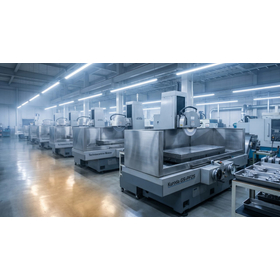
Amida Co., Ltd.'s surface grinding is centered around three CNC surface grinding machines made by Techno Washino and Kuroda Seiko, along with one general-purpose machine, capable of handling flat, stepped, R, and groove shapes up to a maximum size of 700×400×350mm. We achieve flatness of 0.005mm, parallelism of 0.001mm, and Ra 0.2 (with a maximum of Ra 0.1) using standard samples of SCM material. For difficult-to-cut materials, non-magnetic materials, and thin items down to t0.7mm, we provide stable high precision through our self-designed jigs and appropriate selection of grinding wheels. 【Processing Menu】 ■ Standard Surface Grinding: Flatness 0.005mm ■ Forming and R Grinding: Achieved R0.6 ■ Creep Feed Grinding: Deep cutting with low-speed feed ■ Thin and Difficult-to-Cut Material Grinding: Thinnest t0.7mm *For more details, please download the PDF or feel free to contact us.
Added to bookmarks
Bookmarks listBookmark has been removed
Bookmarks listYou can't add any more bookmarks
By registering as a member, you can increase the number of bookmarks you can save and organize them with labels.
Free membership registration
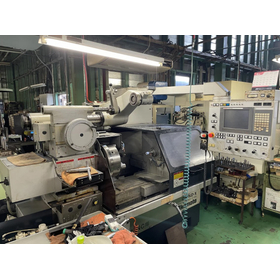
Amida Co., Ltd. has a total of six NC internal grinding machines manufactured by Okamoto Machine Tool and Izumi Metal Industry, allowing us to cover a wide range from small diameter holes of φ1.5 to large diameter holes of φ220. Utilizing a variety of chuck work and the unique dressing technology of sintered grinding wheels, we can accommodate complex internal shapes such as tapered holes, multi-step holes, and blind holes. By in-house manufacturing of grinding wheel quills and our design capabilities for dedicated jigs, we achieve stable dimensional accuracy even in mass production. 【Processing Menu】 ■ Straight internal grinding: φ1.5 to φ220 ■ Tapered hole grinding: up to 97° ■ Multi-step hole and step grinding: cylindricity 0.002 ■ Blind hole grinding: depth 170mm *For more details, please download the PDF or feel free to contact us.
Added to bookmarks
Bookmarks listBookmark has been removed
Bookmarks listYou can't add any more bookmarks
By registering as a member, you can increase the number of bookmarks you can save and organize them with labels.
Free membership registration
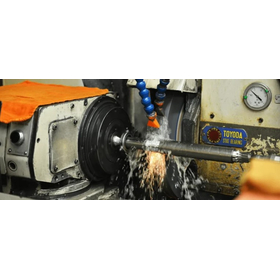
Amida Corporation's cylindrical grinding utilizes 17 grinding machines to cover a wide range from small precision parts with a diameter of φ1.5 to large shafts with a diameter of φ300. We have extensive experience not only with steel materials but also with difficult-to-machine materials such as Inconel, carbide, and ceramics. Leveraging the quality control capabilities developed in mass production lines for automotive parts, we provide stable high-precision finishing with roundness below 0.5μm and surface roughness of Ra0.03. Additionally, we apply a management system trained by the strict quality standards of the automotive industry to all projects, ensuring that we "do not create," "do not overlook," and "do not allow the outflow of" non-conforming products. 【Processing Menu】 ■ Plunge Grinding ■ Traverse Grinding ■ Step and Eccentric Grinding ■ Taper and R Grinding *For more details, please download the PDF or feel free to contact us.
Added to bookmarks
Bookmarks listBookmark has been removed
Bookmarks listYou can't add any more bookmarks
By registering as a member, you can increase the number of bookmarks you can save and organize them with labels.
Free membership registration
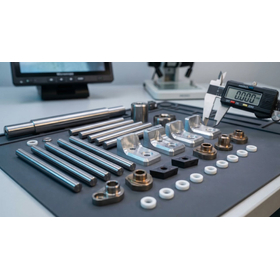
Amida Co., Ltd. specializes in providing metal parts with micron precision, focusing on cylindrical, internal, flat, and profile grinding. By combining CNC equipment with skilled technicians, we offer consistent support from small-batch production to mass production, contributing to solving the challenges of customers nationwide. From prototypes of one piece to thousands of lots, our equipment and jigs are strong in setup changes, allowing us to respond flexibly to sudden additional requests. With an inspection system based on ISO 9001 and a nationwide shipping network, we support over 250 customers. [Reasons to Choose Amida] ■ Precision of ±1μm supported by CNC lines ■ Balancing a variety of small quantities with mass production ■ Quality assurance and nationwide support *For more details, please download the PDF or feel free to contact us.
Added to bookmarks
Bookmarks listBookmark has been removed
Bookmarks listYou can't add any more bookmarks
By registering as a member, you can increase the number of bookmarks you can save and organize them with labels.
Free membership registration