Designer’s Thinking: Chapter 7 - To the Dimension Beyond 3D: The Freedom Brought by "Project Renaissance" that Accelerates Designer's Thinking
T3Japan
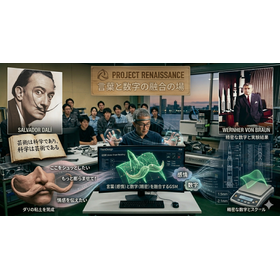
The transition from 2D to 3D in the early 1990s brought about reliable information transfer and efficiency in later processes. However, in today's world where 3D has become the norm, design environments are facing new challenges such as error handling in history corrections, the "communication divide" caused by discrepancies between designers' "sensibilities" and engineers' "numbers," and the inability to reproduce analysis results in CAD models.
This article will explain approaches to overcome these challenges and lead design into the next dimension. Global Shape Modeling (GSM), which allows intuitive shape changes without being constrained by history, incorporates a fourth dimension of "time (Speed)" into the design process. Furthermore, ThinkDesign's "Open Architecture" collaborates with optimization tools, enabling CAD to automatically deform based on analysis results, thereby achieving a fifth dimension of "optimal solutions (Optimization)."
We will unravel the full picture of a high-dimensional design environment that graduates from command operations and directly manipulates the "intent of the product" to simulate the future.
Inquiry about this news
Contact Us OnlineMore Details & Registration
Details & Registration
Related Links
Nice to meet you, I'm Takachan, working in sales (which is more like a pre-sales role) at ThinkDesign. Usually, I listen to clients' thoughts on "the kind of service they want to create" and bridge the gap to turn those ideas into a "concrete blueprint" that engineers and designers can follow without hesitation.
Distributors