Black dyeing, electroless nickel, or anodizing? A thorough explanation of the environmental adaptability of shaft holders [5 major materials and surface treatments].
 HEADWAY 本社
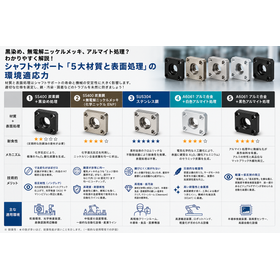
The shaft holder is a component that supports stable linear motion and axial loads. If the selection of materials and surface treatments is incorrect, it can lead to rust, contamination, and seizure. The characteristics of the five main standards are as follows:
SS400 + Black Dye (Rust Prevention: Moderate): Forms an extremely thin chemical oxidation film. Maintains H7 tolerance without thickness variation. The matte black color is less reflective, making it ideal for AOI optical inspection.
SS400 + ENP (Rust Prevention: Good): Nickel-phosphorus alloy layer is deposited through chemical reduction. Provides uniform coverage even in deep holes, with excellent hardness and wear resistance, making it ideal for humid environments.
SUS304 Stainless Steel (Rust Prevention: Excellent): Coating is unnecessary due to a unique passive film. No peeling due to friction, making it an essential standard for clean rooms, medical applications, and food machinery.
A6061 + Anodized (Rust Prevention: Good): Generates a hard ceramic layer. One-third the weight of steel, reducing motor load and increasing acceleration, making it ideal for EOAT.
A6061 + Black Anodized (Rust Prevention: Good): Adsorbs black dye into fine pores for a matte finish. Balances lightweight design with low reflectivity, making it ideal for semiconductor inspection equipment.
Inquiry about this news
Contact Us OnlineMore Details & Registration
Details & Registration
Related Links
Distributors