- Publication year : 2026
1~6 item / All 6 items
Displayed results
Added to bookmarks
Bookmarks listBookmark has been removed
Bookmarks listYou can't add any more bookmarks
By registering as a member, you can increase the number of bookmarks you can save and organize them with labels.
Free membership registration
Contact this company
Inquiry Form1~6 item / All 6 items

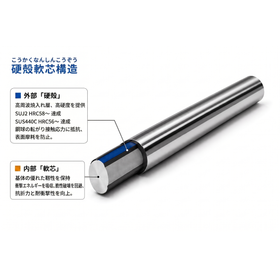
In automated equipment, the stability of linear mechanisms affects the lifespan of the machinery. However, there are many cases where only the dimensions are prioritized when selecting linear shafts, overlooking the "depth of high-frequency hardening." Linear shafts are subjected to high-frequency rolling loads from steel balls, making it crucial to balance wear resistance and breakage resistance. The key to this is the "hard shell soft core" structure. The outer hardened layer prevents wear due to its high hardness (SUJ2: HRC58 and above, SUS440C: HRC56 and above), while the inner soft core absorbs shocks and prevents brittle fracture. The hardening depth is optimized to about 0.5 to 1.0 mm depending on the outer diameter. If it is too shallow, flaking can occur; if too deep, the risk of fracture due to reduced toughness increases. Additionally, selection must be based on dynamic loads and vibration environments, and secondary processing after heat treatment is not recommended as it can cause deformation and micro-cracks.
Added to bookmarks
Bookmarks listBookmark has been removed
Bookmarks listYou can't add any more bookmarks
By registering as a member, you can increase the number of bookmarks you can save and organize them with labels.
Free membership registration
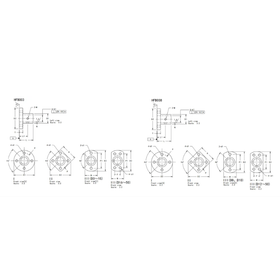
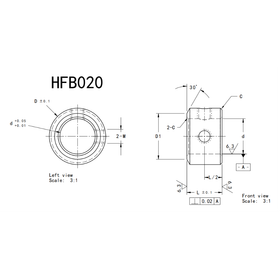
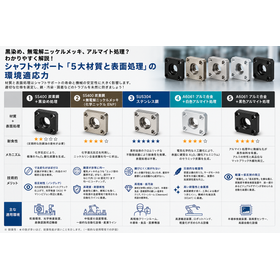
The shaft holder is a component that supports stable linear motion and axial loads. If the selection of materials and surface treatments is incorrect, it can lead to rust, contamination, and seizure. The characteristics of the five main standards are as follows: SS400 + Black Dye (Rust Prevention: Moderate): Forms an extremely thin chemical oxidation film. Maintains H7 tolerance without thickness variation. The matte black color is less reflective, making it ideal for AOI optical inspection. SS400 + ENP (Rust Prevention: Good): Nickel-phosphorus alloy layer is deposited through chemical reduction. Provides uniform coverage even in deep holes, with excellent hardness and wear resistance, making it ideal for humid environments. SUS304 Stainless Steel (Rust Prevention: Excellent): Coating is unnecessary due to a unique passive film. No peeling due to friction, making it an essential standard for clean rooms, medical applications, and food machinery. A6061 + Anodized (Rust Prevention: Good): Generates a hard ceramic layer. One-third the weight of steel, reducing motor load and increasing acceleration, making it ideal for EOAT. A6061 + Black Anodized (Rust Prevention: Good): Adsorbs black dye into fine pores for a matte finish. Balances lightweight design with low reflectivity, making it ideal for semiconductor inspection equipment.
Added to bookmarks
Bookmarks listBookmark has been removed
Bookmarks listYou can't add any more bookmarks
By registering as a member, you can increase the number of bookmarks you can save and organize them with labels.
Free membership registration
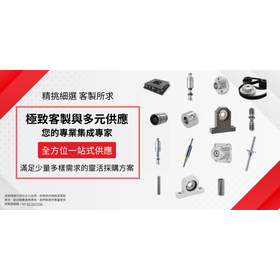
Are you struggling with [not finding special specifications], [being turned away for small lots], or [long delivery times] in the development of automation equipment? HEADWAY, based in Taiwan, is a parts integration partner with over 10 years of experience in OEM for Europe. Two reasons why HEADWAY is chosen: Cost reduction through one-stop supply: We cover key components that meet international standards, such as linear bearings and ball screws. Our specialized team supports initial specification evaluations, dramatically shortening the development cycle. Variety in small quantities and advanced customization: We respond to needs that others shy away from. - Small lots welcome: Flexible responses from the prototyping stage. - Precision alterations: We have extensive experience in handling special materials and high-precision secondary processing. Ultimate quality assurance: In precision automation, even slight errors are unacceptable. With rigorous inspections and highly transparent technical support, we strongly support your supply chain. To avoid halting your project due to parts shortages or specification mismatches, please consult HEADWAY now.
Added to bookmarks
Bookmarks listBookmark has been removed
Bookmarks listYou can't add any more bookmarks
By registering as a member, you can increase the number of bookmarks you can save and organize them with labels.
Free membership registration
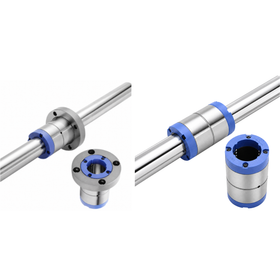
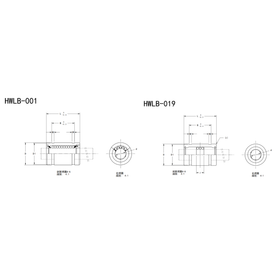
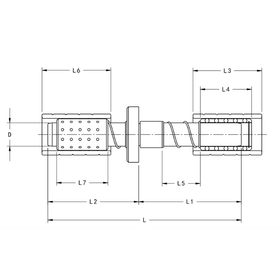
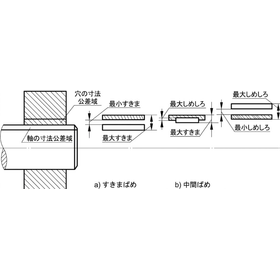
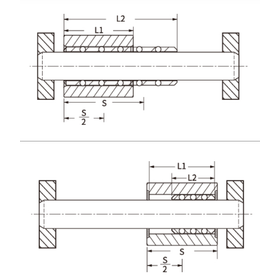
In the design of precision machinery and micromechanisms, it is important to achieve optimal linear motion strokes within limited space. The selection of microcomponents significantly impacts not only size but also operational accuracy and maintenance cycles. To improve reliability, understanding the relationship between contact length (L1: guide bushing, L2: steel ball retainer) and stroke is essential. HEADWAY offers the following two types according to design needs. Open-type guide bushings ensure flexible strokes by maintaining L2≥L1, with S=2×(L2−L1). Closed-type guide bushings enhance stability with a structure where L1>L2, with S=2×(L1−L2). In terms of performance, they can handle high-frequency operations of 30 million to 50 million cycles, and the optimized steel ball circulation structure increases operational efficiency to about three times that of standard products. The low-wear design maintains a lifespan of 2 to 3 years, contributing to reduced maintenance costs. Additionally, the SUS440C stainless steel specification allows for compatibility with special environments such as oil-free (food industry), anti-volatile (optical equipment), and high vacuum (semiconductors). Selecting the appropriate guide bushing and adopting components based on actual measurement data are key to maximizing the accuracy and long-term productivity of the equipment.
Added to bookmarks
Bookmarks listBookmark has been removed
Bookmarks listYou can't add any more bookmarks
By registering as a member, you can increase the number of bookmarks you can save and organize them with labels.
Free membership registration
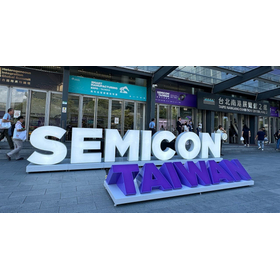
Event Date: 2026/09/02-09/04 Venue: Taipei Nangang Exhibition Center Halls 1 & 2 (TaiNEX) Organizer: SEMI Overview SEMICON Taiwan 2026 is a global semiconductor exhibition. The supply chain converges in Taiwan, focusing on AI, advanced packaging (CPO/CoWoS), and green manufacturing. SEMICON Taiwan 2026 is one of the most influential semiconductor technology festivals in the world. Top-tier exhibiting companies and decision-makers from around the globe will gather in Taiwan, which plays a central role in the global semiconductor supply chain. The 2026 exhibition will focus on AI computing infrastructure, next-generation packaging technologies (CPO/CoWoS), and green manufacturing solutions, providing guidelines for the industry to achieve the two major goals of digital transformation (DX) and net zero (green transformation). To ensure stability during manufacturing, it is essential to select optimized components. https://www.hdw.com.tw/ja/mold-guide.html
Added to bookmarks
Bookmarks listBookmark has been removed
Bookmarks listYou can't add any more bookmarks
By registering as a member, you can increase the number of bookmarks you can save and organize them with labels.
Free membership registration
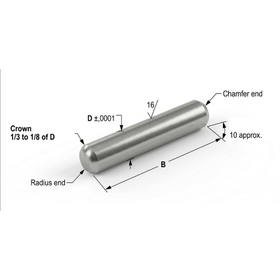
Assembly troubles with positioning pins are largely due to the geometry of the ends. Choosing the appropriate chamfer (C face) or radius (R face) can make a significant difference in assembly efficiency and component lifespan. C face (Chamfer): Excellent for guiding initial contact and correcting position, it allows for smooth guidance. It reduces seizing and deformation, and minimizes positional misalignment during press-fitting. It pairs well with ANSI standard hardened steel, making it ideal for high-precision press fits and improving stability in automated lines. R face (Radius): The curved surface disperses stress, reducing the risk of damage to hole walls and fatigue cracks. It is suitable for ISO/DIN standard non-hardened stainless steel, and is ideal for slip fits, frequent assembly and disassembly, and use with soft materials like aluminum and plastics. It ensures durability and stability even with long-term use. Selection summary: For efficiency, choose C face; for durability, choose R face; for critical structural components or high-precision equipment, a combined design of C + R is appropriate.
Added to bookmarks
Bookmarks listBookmark has been removed
Bookmarks listYou can't add any more bookmarks
By registering as a member, you can increase the number of bookmarks you can save and organize them with labels.
Free membership registration