Unraveling Precision Machinery Tolerances: The Impact of "Geometric Tolerances" on Positioning Accuracy as Seen from the Drawings of Shaft Collars
 HEADWAY 本社
In automated equipment, shaft collars are responsible for preventing parts from coming loose and for axial positioning. The standard products feature a precise "gap-fit" design that does not damage the rod and generates high holding power during set screw tightening.
"End Face Squareness Geometric Tolerance" that affects precision and lifespan
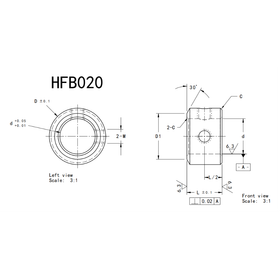
The end face squareness geometric tolerance on the drawing (0.02|A) is set to keep runout within 20 micrometers. Poor quality products that have not been inspected for geometric tolerance (with squareness exceeding 50 micrometers) generate diagonal force components, leading to bending of the guide rod and eccentric loads on the bearings. As a result, vibration and heat generation increase, significantly reducing the machine's MTBF (Mean Time Between Failures).
Handway's Strengths
We thoroughly manage geometric tolerances that comply with international standards and provide top-class products made from the following materials:
S45C
SUS304
Aluminum alloys, etc.
Upgrades through additional processing
For high-vibration environments, we recommend additional processing such as D-cuts or pilot hole machining on the rod. The tips of the set screws can mesh together, allowing for a reliable upgrade in fixation.
For optimal solutions, please consult Handway.
Inquiry about this news
Contact Us OnlineMore Details & Registration
Details & Registration
Related Links
Distributors