Is the retaining ring too loose or too tight, making it impossible to determine its position? A selection mistake in the "fit tolerance" between the shaft and the hole cannot be resolved no matter how much you tighten it.
 HEADWAY 本社
Despite using the same drawings and contractors, there have been occasional issues with the assembly of retaining rings being either too loose or too tight. All parts passed inspection within the drawing dimensions (Φ20mm). The cause was that the drawings did not specify fit tolerance grades, leading to the dimensions of the shaft and hole drifting within the tolerance range, which caused the tightness to become erratic due to cumulative differences. To resolve this, it is necessary to specify tolerance grades during the design phase and to establish a range for tightness.
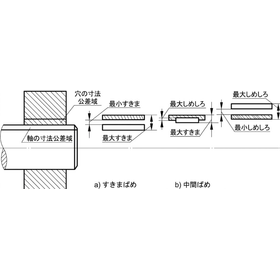
Gap fit (H7/g6, etc.): The tolerance range of the shaft is below that of the hole, creating a gap. It can be disassembled without load. Suitable for rotating or movable parts and areas that are frequently disassembled.
Interference fit (H7/k6, etc.): The tolerance ranges partially overlap, resulting in a very small gap or interference. It is assembled using press-fitting or light tapping, preventing misalignment with high precision.
The drawings should include not only symbols but also the upper and lower limits of dimensional tolerances, which should be managed by the contractors.
FAQ
Q1: Mixing? Mixing different shaft stages of the same axis is possible depending on functionality.
Q2: Readjustment? Disassembling an interference fit is not recommended as it can damage the surface and change the tolerances. A gap fit is recommended.
Q3: What do the numbers mean? IT tolerance grades. The smaller the number (g6), the higher the precision and uniformity, but costs will rise.
Inquiry about this news
Contact Us OnlineMore Details & Registration
Details & Registration
Related Links
Distributors