Unraveling the "hard shell soft core" of linear shafts: Why is the depth of high-frequency quenching the key to resistance to bending and prevention of peeling?
 HEADWAY 本社
In automated equipment, the stability of linear mechanisms affects the lifespan of the machinery. However, there are many cases where only the dimensions are prioritized when selecting linear shafts, overlooking the "depth of high-frequency hardening."
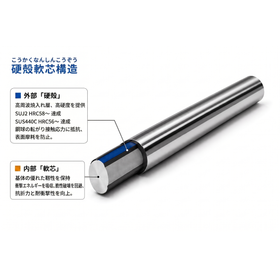
Linear shafts are subjected to high-frequency rolling loads from steel balls, making it crucial to balance wear resistance and breakage resistance. The key to this is the "hard shell soft core" structure.
The outer hardened layer prevents wear due to its high hardness (SUJ2: HRC58 and above, SUS440C: HRC56 and above), while the inner soft core absorbs shocks and prevents brittle fracture.
The hardening depth is optimized to about 0.5 to 1.0 mm depending on the outer diameter. If it is too shallow, flaking can occur; if too deep, the risk of fracture due to reduced toughness increases.
Additionally, selection must be based on dynamic loads and vibration environments, and secondary processing after heat treatment is not recommended as it can cause deformation and micro-cracks.
Inquiry about this news
Contact Us OnlineMore Details & Registration
Details & Registration
Related Links
Distributors