What are the environmental risks posed by the interaction between microplastics and PFAS? (Posted in August 2026)
 Ramboll Japan K.K. 本社
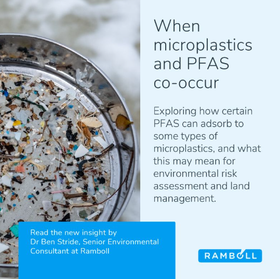
When microplastics coexist with perfluoroalkyl and polyfluoroalkyl substances (PFAS) in the environment, it has been reported that some PFAS may adsorb to specific microplastic surfaces. This interaction arises from complex physicochemical processes, and the extent of adsorption is influenced by the characteristics of the PFAS and microplastics, as well as environmental conditions. In the spring of 2026, microplastics will be added to the environmental quality standards of the European Union (EU) and the monitoring list of the U.S. Environmental Protection Agency (EPA), leading to enhanced monitoring and risk management by regulatory authorities.
Against this backdrop, we are facing the following challenges:
- How do microplastics and PFAS behave in the environment?
- Where do these pollutants move, and in what environmental media do they accumulate?
- How can we assess and manage the risks?
To answer these questions, it is necessary to identify the sources and accumulation points of microplastics and PFAS, as well as to conduct further research on environmental risk assessment and management methods. Understanding the interaction between the two will be a key factor in future environmental management and regulatory responses.
Inquiry about this news
Contact Us Online