- Publication year : 2026
1~10 item / All 10 items
Displayed results

Added to bookmarks
Bookmarks listBookmark has been removed
Bookmarks listYou can't add any more bookmarks
By registering as a member, you can increase the number of bookmarks you can save and organize them with labels.
Free membership registration
Contact this company
Inquiry FormBefore making an inquiry
Download Profile1~10 item / All 10 items
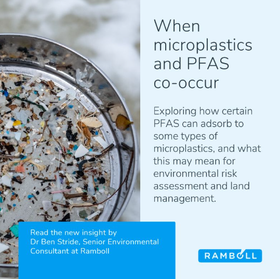
When microplastics coexist with perfluoroalkyl and polyfluoroalkyl substances (PFAS) in the environment, it has been reported that some PFAS may adsorb to specific microplastic surfaces. This interaction arises from complex physicochemical processes, and the extent of adsorption is influenced by the characteristics of the PFAS and microplastics, as well as environmental conditions. In the spring of 2026, microplastics will be added to the environmental quality standards of the European Union (EU) and the monitoring list of the U.S. Environmental Protection Agency (EPA), leading to enhanced monitoring and risk management by regulatory authorities. Against this backdrop, we are facing the following challenges: - How do microplastics and PFAS behave in the environment? - Where do these pollutants move, and in what environmental media do they accumulate? - How can we assess and manage the risks? To answer these questions, it is necessary to identify the sources and accumulation points of microplastics and PFAS, as well as to conduct further research on environmental risk assessment and management methods. Understanding the interaction between the two will be a key factor in future environmental management and regulatory responses.
Added to bookmarks
Bookmarks listBookmark has been removed
Bookmarks listYou can't add any more bookmarks
By registering as a member, you can increase the number of bookmarks you can save and organize them with labels.
Free membership registration
Did you know that it is possible to change the Only Representative (OR) in South Korea? This is just one aspect of the significant changes occurring in South Korea's chemical regulations in recent years. With multiple systems involved, such as K-REACH, K-BPR, K-OSHA, and the Chemical Substances Control Act, the importance of understanding the latest regulatory trends is increasing for companies doing business in the South Korean market. In an interview with MJ Kim from Ramboll and Eunhee T. from Chemtopia, we discuss in detail the practical responses to OR changes and the latest trends in South Korean chemical regulations. Be sure to check out the long version.
Added to bookmarks
Bookmarks listBookmark has been removed
Bookmarks listYou can't add any more bookmarks
By registering as a member, you can increase the number of bookmarks you can save and organize them with labels.
Free membership registration
Is the PPWR merely a regulatory compliance issue, or is it an opportunity for enhancing competitiveness? The new EU Packaging and Packaging Waste Regulation (PPWR) brings new obligations for many companies, but it also presents an excellent opportunity to reassess packaging strategies and sustainability strategies. Willi Muenninghoff from Ramboll explains the key points that companies need to keep in mind, including compliance assessment, heavy metal declarations, PFAS documentation requirements, and packaging identification. The application start date of August 12, 2026, is just around the corner. Compliance with the PPWR is no longer optional; it has become a necessary requirement for business continuity.
Added to bookmarks
Bookmarks listBookmark has been removed
Bookmarks listYou can't add any more bookmarks
By registering as a member, you can increase the number of bookmarks you can save and organize them with labels.
Free membership registration
After August 12, 2026, the EU will require documented evidence of the management status of substances of concern such as PFAS and SVHC in food contact packaging materials. Companies will need to establish a chemical management system and technical documentation throughout the entire supply chain, not just a declaration of conformity. Key points to check: - Are you aware of which packaging materials of your products are subject to regulation? - Does the information obtained from suppliers include sufficient supporting documentation for regulatory compliance, beyond just a declaration of conformity? - Are the technical documents (Technical Files) and declarations of conformity aligned with the requirements of Article 5 of the PPWR? - Are you prepared to comply by the implementation date of August 12, 2026? If you have any questions or need assistance, please feel free to contact us. Another deadline is approaching: #FCM & #PPWR
Added to bookmarks
Bookmarks listBookmark has been removed
Bookmarks listYou can't add any more bookmarks
By registering as a member, you can increase the number of bookmarks you can save and organize them with labels.
Free membership registration
In March 2026, China announced a new "Ecological Environment Law." This fundamental national law will come into effect on August 15, 2026. The law covers natural resources, biodiversity, ecosystem conservation, and green, low-carbon development, while also addressing new challenges such as environmental pollution and climate change. The "New Chemical Substances Registration Regulations for Environmental Management" (MEE Order No. 12) is one of the related regulations subject to revision. Currently, the draft amendment is in the public comment stage, with the deadline for submitting opinions set for July 12, 2026 (China time).
Added to bookmarks
Bookmarks listBookmark has been removed
Bookmarks listYou can't add any more bookmarks
By registering as a member, you can increase the number of bookmarks you can save and organize them with labels.
Free membership registration
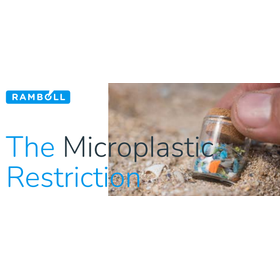
As of October 17, 2023, the EU is restricting the introduction of products containing intentionally added microplastics (synthetic polymer particles) into the EU market, establishing a phased transition period for specific applications and product groups. Measures are being implemented to prevent the release of microplastics, requiring the removal or reformulation of these polymers, or the implementation of effective containment measures.
Added to bookmarks
Bookmarks listBookmark has been removed
Bookmarks listYou can't add any more bookmarks
By registering as a member, you can increase the number of bookmarks you can save and organize them with labels.
Free membership registration
All substances manufactured or placed on the market in Turkey based on KKDIK must be registered by September 30, 2026, regardless of tonnage category.
Added to bookmarks
Bookmarks listBookmark has been removed
Bookmarks listYou can't add any more bookmarks
By registering as a member, you can increase the number of bookmarks you can save and organize them with labels.
Free membership registration
The Department for Environment, Food and Rural Affairs (DEFRA) has published a response to the public consultation on the draft Alternative Transition Registration Model (ATRm) regarding UK REACH. This consultation was conducted from May 16, 2024, to July 25, 2024.
Added to bookmarks
Bookmarks listBookmark has been removed
Bookmarks listYou can't add any more bookmarks
By registering as a member, you can increase the number of bookmarks you can save and organize them with labels.
Free membership registration
In May 2024, the Department for Environment, Food and Rural Affairs (DEFRA) proposed significant changes to the UK REACH regulations, including an alternative transitional registration model (ATRm). The aim is to reduce the costs and complexities associated with chemical substance registration for businesses by decreasing reliance on expensive EU REACH data. This also included proposals to update registration deadlines.
Added to bookmarks
Bookmarks listBookmark has been removed
Bookmarks listYou can't add any more bookmarks
By registering as a member, you can increase the number of bookmarks you can save and organize them with labels.
Free membership registration
New EU requirements regarding plastic food contact materials have been announced (Regulation (EU) 2025/351). This update applies to all plastic materials and products, including recycled materials, monomers, and additives used in adhesives, coatings, and printing inks. Compliance is required not only for finished products but at all stages of production.
Added to bookmarks
Bookmarks listBookmark has been removed
Bookmarks listYou can't add any more bookmarks
By registering as a member, you can increase the number of bookmarks you can save and organize them with labels.
Free membership registration