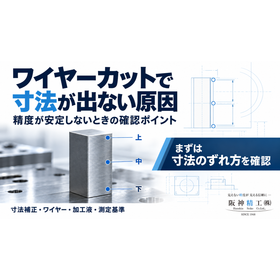
What are the causes of dimensional issues in wire cutting? An explanation of the differences in thickness, die shape, and key points to check.
阪神精工
Hanshin Seiko Co., Ltd. has published a technical article titled "Causes of Dimension Issues in Wire Cutting | Checkpoints When Precision is Unstable."
Issues such as "not achieving the desired dimensions," "dimensions differing between the top and bottom," and "only the intermediate section not matching the shape" highlight the importance of distinguishing whether there is a consistent dimensional deviation overall or if the shape of the machined surface is changing in the thickness direction.
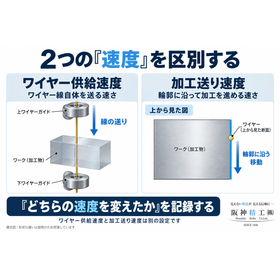
The article introduces factors to check, including correction amounts, wire deflection and vibration, machining fluids, material deformation, and temperature. It also explains our response examples, where we checked the top, middle, and bottom of thick materials and adjusted the machining feed rate and wire tension based on the measurement results.
Please consider the approach of understanding the nature of the deviations and reviewing machining conditions rather than judging solely by correction values or the number of finishing passes.
For inquiries regarding machining of thick materials with strict tolerances, please contact us with the drawings, material, thickness, and required precision. If you have already machined parts, please also provide the actual measurements and remaining machining allowances.
Inquiry about this news
Contact Us OnlineMore Details & Registration
Details & Registration
Related Links
Separate confirmation of certain dimensional deviations and shape differences in the plate thickness direction. This introduces the approach of reviewing correction amounts, tension, processing speed, and processing fluids, along with examples of how Hanshin Seiko addresses these issues.
Distributors