Season 5: [Expansion] Chapter 6: The Optimal Solution for Version Control: Visualizing Design Change History through PLM Integration
T3Japan
This document explains solutions to the challenges of design changes and version management in the manufacturing field, focusing on the integration of PLM (Product Lifecycle Management).
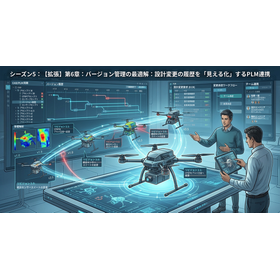
Manual management based on individual local environments and file names (such as "NAS dumping") carries risks such as file corruption, the black-boxing of history, and overwriting accidents, which are "time bombs." The key to escaping this maze is seamless integration with a PLM system. By enforcing strict check-in and check-out processes, automatically creating historical trees, and linking ECOs (Engineering Change Orders), we can embed data that records "who changed what, when, and why."
Additionally, the "visualization of changes" through the overlay comparison of 3D shapes enables immediate sharing with downstream processes and reduces rework. On the other hand, it emphasizes the importance of maintaining a balance of "flexibility and rigor" in operational design to ensure that strict management does not hinder speed in the early stages of design. The content presents a framework for management that encourages embracing changes and transforming their history into corporate assets.
Inquiry about this news
Contact Us OnlineMore Details & Registration
Details & Registration
Related Links
Nice to meet you, I'm Takachan, working in sales (which is more like a pre-sales role) at ThinkDesign. Usually, I listen to clients' desires of "I want to create a service like this" and bridge the gap to turn those ideas into a "concrete blueprint" that engineers and designers can easily realize.
Distributors