[Seminar] Introduction to Quality Management - Advancing with the Five Gen Principles and Quality Response

Quality creates the future. A serious commitment to quality starts today.
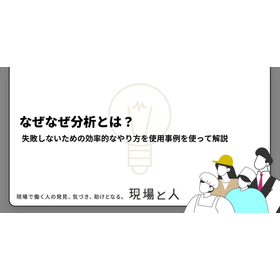
Understanding the essence through the "Five Gen" principle The first step in quality assurance is to have the right mindset. By thoroughly implementing the "Five Gen" principle, which incorporates the actual site, actual items, and reality along with points of change and fundamental principles, we can discern the essence of problems. Let's aim for quality improvement through the dual approach of "quality assurance," which creates a system to prevent defective products, and "quality control," which focuses on early detection and correction. Furthermore, collaboration with related departments, from development to manufacturing and sales, is essential. We will establish a preventive system through "front-loading," which incorporates quality from the design stage, not just responding after problems occur. Enhancing problem-solving capabilities with a framework When a quality issue arises, the first step is to understand the current situation and implement "temporary measures," followed by identifying the root cause and planning "permanent measures." A powerful tool in this process is "5 Whys analysis." We must consciously avoid blaming others and objectively pursue the true cause. The problem-solving process can be effectively advanced using a systematic framework like DMAIC (Define, Measure, Analyze, Improve, Control). Let’s acquire practical skills through specific case studies.

Inquire About This Product
basic information
1. Quality Response / Mindset: Five Gen Principles 1-1. Five Gen Principles / Three Gen Principles 1-2. Quality Assurance and Quality Control 1-3. Importance of Interdepartmental Collaboration 1-4. Aim for the Introduction of Front-Loading Process 2. Examples of Quality Response / Basics: Use and Combination of Frameworks 2-1. Situation Confirmation: Temporary Measures / Permanent Measures 2-1-1. Let's Advance the Why-Why Analysis: The Key is Not to Blame People! 2-1-2. How to Organize After Conducting the Why-Why Analysis 2-1-3. Let's Analyze Using the Why-Why Analysis 2-2. Be Aware of the Order of Progression: Using DMAIC as an Example 2-2-1. Case Study: Defective Case Screws / Use of Insert Nuts 2-2-2. Case Study: Defective Appearance at Panel Edges / Variation Due to Changes in Processing Specifications 2-3. What is the Latest Hou-Ren-Sou? / Organizational Building and Communication 3. Summary: Important Aspects of Quality Response (How to Act as a Whole Company) 3-1. People, Processes, Systems (Environment)
Price range
Delivery Time
Applications/Examples of results
You can systematically understand the overall picture of quality management: From the mindset when quality issues arise to the formulation of specific solutions and the implementation of recurrence prevention measures, you can comprehensively learn the entire flow. You can acquire practical frameworks: Through actual case studies, you can practically learn effective problem-solving frameworks such as the "5 Whys" analysis and DMAIC. You will develop the ability to identify root causes: You can cultivate a thought process to pinpoint true causes without being distracted by superficial phenomena and to establish permanent countermeasures. You will understand the importance of interdepartmental collaboration and improve communication: You will recognize the significance of collaboration with other departments in quality management and gain insights to contribute to overall quality improvement in the organization through smooth communication. You can seize the opportunity to transform your company's quality culture: By understanding the concept of front-loading and the importance of people, processes, and systems, you can enhance the overall quality awareness of the organization and take the first step towards building a better quality culture.
catalog(1)
Download All Catalogs
Company information

We are a technical consulting partner that aims to rebuild "design quality" and "compliance" in the manufacturing industry from the upstream. Kamikami Corporation prioritizes three specialized areas: waterproofing, thermal and mechanical design, compliance with quality management standards, and green procurement and chemical substance regulation compliance. Additionally, we provide AI utilization support services for the manufacturing industry. Our representative, Takashi Suzuki, is a mechanical design expert who has worked on world-class ultra-thin smartphone waterproof designs at Fujitsu. He has supported over 100 manufacturing companies in improving design quality, mass production yield, regulatory compliance, and on-site AI implementation. The year 2026 saw significant changes in regulations and systems surrounding the manufacturing industry, including the addition of chemical substance regulations (with the number of SVHC candidate substances increasing to 253 as of February 2026) and the revision of AI-related guidelines (AI business operator guidelines version 1.2 in March 2026). Our company continuously keeps up with these developments and provides support based on the latest information to ensure that our clients do not experience "unintentional compliance gaps." "Our stance is to fundamentally improve design quality and mass production yield." We invite you to start with a free consultation (60 minutes) and feel free to reach out to us. Updated June 2026.




![Basic Seminar for Obtaining the China CCC Mark [December 20, Tokyo]](https://image.mono.ipros.com/public/product/image/bf6/2000122724/IPROS8595059909811374036.png?w=280&h=280)