[Supervised by a Tax Accountant] Will that capital investment leave money for the company?

[Supervised by a Tax Accountant] Will that capital investment leave money for the company? How to create a system that leaves money for the president and the company.
To manufacturing business owners considering equipment investment and DX implementation. Sales increase, subsidies, tax savings, ROI. All of these are important. However, if you make decisions based solely on these factors, you may find that "even though you implemented it, your available cash decreases" or "repayment of loans becomes burdensome." This document explains three key points on how to create a "system that leaves money in the company" that the president should check before making equipment investments. If you want to avoid mistakes in decision-making before investing, please make use of this document.

Inquire About This Product
basic information
■Document Type Tax Accountant Supervised Downloadable Material / Booklet for Business Owners ■Target Audience Business owners, representatives, successors, executives, and financial officers of manufacturing, processing, and manufacturing companies ■Theme How to create a "system that leaves money for the president and the company" to check before capital investment, DX implementation, and market expansion ■Main Content - Reasons why increasing sales does not leave money in the company - Financial perspectives to check before capital investment - How to find hidden funds within the company - Correct thinking about tax savings and cash on hand - Repayment sources and cash flow when utilizing loans - 10 questions the president should confirm before capital investment ■Expected Scenarios Can be used as decision-making materials before capital investment, DX implementation, machinery purchases, system implementation, outsourcing selection, market expansion, new investments, loan considerations, and subsidy utilization ■Recommended For - Those considering capital investment but are anxious about cash flow - Those with sales but no money left in the company - Those wanting to organize priorities for tax savings, loans, and investment decisions - Those wanting to review their financial structure before product selection - Those wanting to acquire management decisions that leave money in the company ■Format PDF Document ■Supervision Supervised by a Tax Accountant
Price range
Delivery Time
※Immediate delivery
Applications/Examples of results
■Purpose This can be used as reference material for management and financial decisions when considering capital investment, DX implementation, machinery purchases, system implementation, selecting outsourcing partners, and expanding sales channels. Before comparing products and services, it organizes the impact on investment recovery, cash flow, loan repayment, tax savings, and available funds to confirm whether it is an investment that leaves money in the company. ■Usage Scenarios - Before introducing new equipment or machinery - Before implementing DX tools or business efficiency systems - When considering investments utilizing subsidies - When contemplating capital investments involving loans - When wanting to clarify the reasons for having sales but not retaining cash - When wanting to reassess the balance between tax strategies and cash flow - When wanting to share investment decision criteria with successors, executives, and management ■Examples of Achievements and Usage - Before capital investment, confirming the balance between investment recovery period and loan repayment - Before DX implementation, organizing not only initial costs but also monthly expenses and operational burdens - Before utilizing subsidies, confirming the self-burden portion and its impact on available funds - Before expanding sales, organizing key points for reviewing inventory, accounts receivable, and cash flow - Confirming whether expenditures for tax-saving purposes are resulting in decisions that leave money in the company - Used as investment decision materials in meetings with management, successors, and the board of directors
Detailed information
-
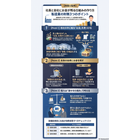
[Supervised by a Tax Accountant] Will that capital investment leave money for the company? How to create a system that leaves money for the president and the company.
catalog(1)
Download All Catalogs![[Supervised by a tax accountant] Will that capital investment leave money in the company?](https://image.mono.ipros.com/public/catalog/image/2116293/IPROS11004448433936191073.jpeg?w=120&h=170)
Company information

In manufacturing equipment investment, decisions may be made based solely on manufacturers' estimates and the possibility of subsidies. However, when introducing high-cost equipment, it is necessary to confirm the "total investment amount," which includes not only the main price but also transportation, installation, construction, tools, jigs, and maintenance costs. Additionally, one must consider the funds until the subsidy is received, cash reserves after the investment, monthly repayment amounts, investment recovery periods, order forecasts, production plans, and gross profit estimates, as neglecting these can strain cash flow after implementation. Our company organizes the figures that should be confirmed before equipment investment based on experience in manufacturing and financial analysis. Before ordering high-cost equipment such as machining centers, CNC lathes, 5-axis machining machines, and 3D measuring instruments, we provide materials for the manufacturing industry that highlight often-overlooked aspects such as cash flow, repayment sources, and investment recovery. Equipment investment is not merely a machine purchase; it is a management decision that changes the way a company competes. We will provide insights to confirm subsidies, loans, self-funding, repayment plans, and order forecasts before placing an equipment order. Supervised by Toshirou Ooyama, a former successor of a machining company and tax accountant.