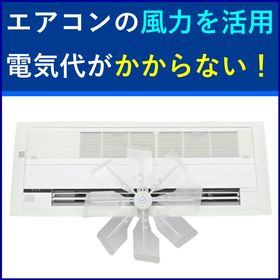
[Air Conditioning Energy Saving Office Note 5] The Relationship Between Air Conditioning Capacity Selection and Energy Efficiency

Selecting a model that matches the required heating and cooling capacity is important.
In selecting air conditioning equipment, the idea that simply increasing the "capacity" on the catalog specifications ensures reliability, or that selecting a smaller capacity leads to energy savings, is a significant misconception. Air conditioning units have a "rated operating range" (approximately 80-100%) where they can achieve the highest energy efficiency. This time, I will explain from a technical perspective the impacts that arise when the capacity selection is inappropriate for the actual air conditioning load. 1. The impact of "excess or insufficient" air conditioning capacity on efficiency Understanding the heating and cooling load for each space is essential for selecting the capacity of the air conditioning unit. In the case of insufficient capacity (selecting a model below the rated capacity): The unit will always operate at full capacity (100%), making it difficult to reach the target temperature and likely increasing power consumption. This leads to decreased efficiency and higher electricity costs. In the case of excessive capacity (selecting a model that is larger than necessary): The unit will continue to operate at low load (approximately 50-70%). Depending on the model, there is a risk of decreased efficiency or frequent ON/OFF cycling. In the case of appropriate capacity (selecting a model that fits the load): The unit can maintain operation near the rated capacity (80-100%), resulting in the highest efficiency and excellent energy-saving performance.

Inquire About This Product
basic information
2. Guidelines for Selecting the Optimal Model Air conditioning units operate most efficiently (COP/APF) when running near their rated capacity. Basic Concept: If the cooling load is 8 kW, it is ideal to select a model in the range of 8.0 to 9.0 kW. Response to Load Fluctuations: In environments with significant load fluctuations, a design with a margin of about 10-20% (e.g., 9-10 kW class) is reassuring. Considerations for Heating: The same principles apply during heating; selecting according to the required capacity is key to energy conservation.
Price range
Delivery Time
Applications/Examples of results
To achieve energy savings in air conditioning units through appropriate design based on on-site diagnostics, it is essential to select models that match the heating and cooling loads of the actual environment, not just the specification numbers. We provide optimal model recommendations and maintenance based on on-site load diagnostics. If you have any inquiries such as "I am unsure if the capacity settings of the current air conditioning equipment are appropriate" or "I want to reduce unnecessary electricity costs," please feel free to contact us.
catalog(3)
Download All Catalogs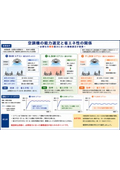
![[Introduction Materials] AIP's Energy-Saving Air Conditioning](https://image.mono.ipros.com/public/catalog/image/2093615/IPROS11612919406512588569.jpeg?w=120&h=170)
Company information

AIP Corporation provides eco-friendly and comfortable solutions for social and living environments, focusing on air conditioning. 〇 Air Conditioning Business We handle the sales, installation, and maintenance of air conditioning equipment for new construction and renovation projects in stores, supermarkets, drugstores, hospitals, nursing facilities, hotels, buildings, factories, and residences, as well as for the replacement and upgrade of air conditioning units. 〇 Energy Conservation Business We propose plans to reduce energy costs for our customers' facilities through various methods such as equipment performance recovery devices, indoor control systems, and visualization, achieving reductions in running costs and CO2 emissions. 〇 Aqua Power Business We produce and sell a weakly acidic hypochlorous acid water solution called CELA. We offer suggestions on how to utilize CELA and provide support in terms of hygiene management. Additionally, we handle special purification materials and water purifiers.