
Bayesian Optimization with the Statistical Analysis Software JMP Pro

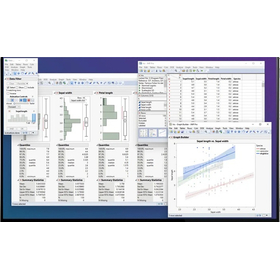
Hands-on workshop for manufacturing researchers and engineers: Bayesian optimization using the statistical analysis software JMP Pro conducted with no code.
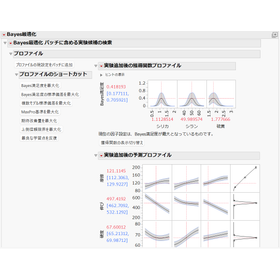
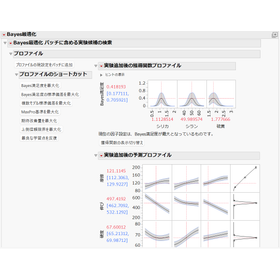
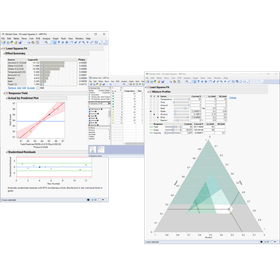
Bayesian optimization is gaining attention as a method for efficiently developing new products and processes. It is characterized by its ability to efficiently explore optimal conditions through sequential experiments. In this seminar, we will introduce the Bayesian optimization platform included in JMP Pro 19, explain its basic concepts, and then provide hands-on experience with the software. 【Target Audience】 - Individuals involved in product and process development in the manufacturing industry - Those who conduct experiments in their work - Individuals considering or interested in utilizing Bayesian optimization 【Overview】 - Introduction / Overview of Bayesian Optimization - Basic concepts and application scenarios - Operation explanation using JMP Pro 19 - Hands-on session (condition exploration using simulation examples) - Summary and Q&A Participants are requested to bring their own laptops and will operate JMP Pro using a virtual environment (virtual lab). For details on system requirements, please check the application page below. https://www.jmp.com/ja/events/seminars/non-series/2026/09-01-bayes
Inquire About This Product
basic information
Date and Time: September 1, 2026 (Tuesday) 14:00 - 16:00 (Reception starts at 13:30) Venue: SAS Institute Japan, Inc. Tokyo Headquarters 11th Floor, Roppongi Hills Mori Tower, 6-10-1 Roppongi, Minato-ku, Tokyo Nearest Station: Toei Subway / Tokyo Metro "Roppongi" Capacity: 20 people (first come, first served) Applications will be accepted on a first-come, first-served basis, and a confirmation email will be sent after your application.
Price information
Free (Pre-registration is required from the page below)
Delivery Time
Applications/Examples of results
"Democratization of Data" and Sharing the "Wisdom" of Manufacturing Across the Company - TOTO's New Exploration of "Good Products and Homogeneity" [Challenge] The manufacturing of sanitary ceramics using natural materials involves approximately 13% shrinkage during the drying and firing processes. As products become larger and more complex, how can we maintain "homogeneous" high quality and transform the "tacit knowledge" of skilled artisans into "explicit knowledge" to pass on to the next generation? This has been a critical issue at TOTO Ltd., which has a history of over 100 years and is fundamental to the company's manufacturing. [Solution] We introduced "exploratory data analysis" using JMP on the manufacturing data from our advanced Shiga factory. By deepening the high yield achieved through the introduction of the first barcode system in the sanitary ceramics factory, we quantified the "good product conditions" using visual verification with graph builders and techniques such as partitioning and cluster analysis, leading to improvements in direct yield and overall yield. Additionally, we adopted JMP for the foundational education of our "in-house study abroad program" over two years, aiming to elevate company-wide data science skills. [Results] Please check the following page for details! https://www.jmp.com/ja/customer-stories/toto
catalog(2)
Download All Catalogs

News about this product(1)
Company information
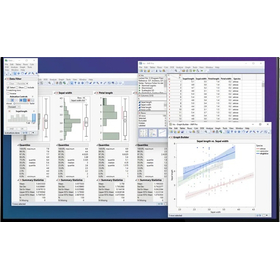
The JMP story goes back to 1989 when John Sall decided to combine statistical analysis capabilities with graphical visualizations to animate and visualize data. For more than 35 years now, John Sall has led JMP R&D, making each version of JMP more visual, more interactive, and more practical to help users understand their data. What started as a passion project has grown by leaps and bounds. It’s now a family of statistical software products designed with scientists and engineers in mind and used worldwide in nearly every industry.




![Multivariate Statistical Analysis Software [Vector]](https://image.mono.ipros.com/public/product/image/bc3/2000660349/IPROS1029472634200329094.gif?w=280&h=280)


