Steel material selection for liners, chutes, and wear components in high-temperature environments.
SB480 and other SB materials, Mo-added SB materials, SCMV materials, heat-resistant stainless steel, etc.

Wear-resistant steel also softens with temperature rise. Check the wear amount and the actual steel temperature separately.
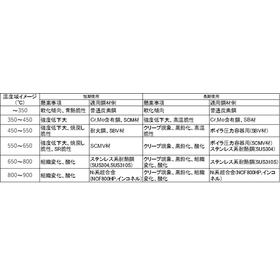
In liners, chutes, and screens where hot materials or products come into contact, in addition to wear, the reduction in hardness and strength due to high temperatures becomes a problem. Even steel plates that excel in wear resistance at room temperature may soften if the operating temperature rises, so it is not always possible to simply select standard wear-resistant steel. Generally, standard wear-resistant steel is often assumed to be used below 300°C, and specialized grades that suppress softening are candidates for temperatures around 300 to 450°C. However, the required performance varies depending on the mode of wear, impact, temperature distribution, and holding time. Areas prioritizing wear resistance are separated from support structures prioritizing high-temperature strength, allowing for the selective use of wear-resistant steel, alloy steel, and heat-resistant steel.
Inquire About This Product
Related Videos
basic information
If you are experiencing the following issues with the use of steel materials in wear parts under high temperatures, please feel free to contact us: - The wear of liners at high temperatures is occurring faster than expected. - I would like to confirm the maximum temperature for using wear-resistant steels like ABREX. - I want to differentiate the use of high-temperature strength and wear resistance by specific parts. Candidate materials: Wear-resistant steel for specific applications, Cr-Mo alloy steel, heat-resistant steel, etc. For the usable temperature of specific brands including ABREX, please refer to the manufacturer's documentation, which indicates the steel type, plate thickness, and load conditions.
Price range
Delivery Time
P3
※Kumagai Special Steel has an immediate delivery system centered around SB410, including cutting and processing, so it typically takes about one week depending on the lot. However, for more specialized specifications or large lots, it may take longer. Please contact us via email or phone for inquiries!!
Applications/Examples of results
The following explains the applications and practical examples of SB materials (SB410, SB450, SB480). Boiler and pressure vessel steel plates are designed for equipment that requires safety and reliability under high temperature and high pressure conditions. They are manufactured under strict standard management and are adopted as core materials supporting various plants and energy-related facilities. 1. Main Applications and Practical Examples - Power generation equipment: Boiler body, drums, piping components - Chemical plants: Pressure vessels, reaction tanks, storage tanks - Thermal-related equipment: Heat exchangers, heating furnace components - Energy sector: Oil and gas-related equipment - Industrial equipment: Structures for high temperature and high pressure compatible devices 2. Evaluation Points in Practical Use - Stable mechanical performance under high temperature and high pressure - High safety based on strict standards - Suitable for welded structures, compatible with equipment fabrication 3. Expected Future Market Areas - Renewal and advancement of energy infrastructure - Hydrogen and ammonia-related equipment - Longevity and safety improvement of plants - Industrial equipment aiming for higher efficiency Boiler and pressure vessel steel plates are expected to maintain stable demand as important materials primarily in the energy and plant sectors, based on safety and durability.
Line up(4)
| Model number | overview |
|---|---|
| SB480 (carbon steel plate with high strength (480-620 MPa grade)) | Selected for conditions with high design loads and pressures. As strength increases, attention to welding conditions and processing management becomes important. |
| JIS G4109 SCMV material | It is a low-alloy heat-resistant steel used in high-temperature and high-pressure environments, such as boilers in thermal power plants and desulfurization reaction towers in oil refining plants. It demonstrates excellent high-temperature strength and environmental resistance in the temperature range of approximately 350°C to 600°C, exceeding the usage limit of carbon steel (around 350°C to 400°C). |
| JIS G4312 SUS310S-HR | It is a fully austenitic heat-resistant stainless steel of the 25Cr-20Ni system. It boasts significantly higher oxidation resistance and high-temperature creep strength compared to general-purpose austenitic steels (such as SUS304), and can be used in atmospheric (oxidizing environment) conditions without structural stresses other than its own weight to prevent oxidative wear, with a maximum usage temperature of 1,100°C to 1,150°C (although measures against deflection due to its own weight are necessary). |
| JIS G4902 NCF800HP | This is a Fe-Ni-Cr-based austenitic heat-resistant superalloy equivalent to Alloy 800H (UNS N08810) according to U.S. standards. It exhibits excellent high-temperature strength, carburization resistance, and oxidation resistance in the high-temperature creep range (approximately 600°C to over 900°C), exceeding the service limits of stainless steels (such as SUS310S), and is applied to critical components in petrochemical plant cracking furnaces, reforming furnaces, power plants, and nuclear-related equipment. |
catalog(1)
Download All Catalogs
Company information
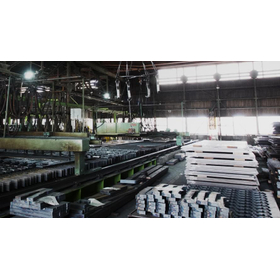
**Expanding Our Global Steel Business!** We support both **CIF and EX Works (EXW)** terms. **Delivering Japanese Specialty Steel to the World.** Since our establishment in 1913, we have been a specialized trading company of special steel for nearly a century, listening to the needs of many customers and building an ideal relationship between customers and steel manufacturers as a conductor of steel distribution. As a trading company with various processing equipment, including cutting machines and laser cutting machines, we also contribute to reducing our customers' capital investment. Please feel free to contact us if you have any requests.