

Proposal for the development of dedicated hardware to simplify the complexity of drivetrain component testing.
In the evaluation tests of automotive drive system components, multiple sensors are installed on motors, gearboxes, shafts, etc., to collect data under conditions close to actual operating states, measuring temperature, vibration, pressure, acceleration, speed, torque, and air-fuel ratio. However, in the field, the following issues have become apparent: - The addition of general-purpose amplifiers and signal converters for each sensor has complicated the site. - The increase in wiring requires labor for connecting units removed from the actual machine and the ECU surroundings. Seagoat Inc. provides "development, design, and manufacturing of dedicated hardware" by designing and producing specialized control boards optimized for field specifications. This consolidates sensor signal amplification, A/D conversion, I/O processing, and operational interfaces onto a single board, achieving both miniaturization and high precision. By re-evaluating the wiring structure itself, it simultaneously reduces preparation labor for tests, stabilizes measurement accuracy, and saves space. Not only software but also hardware is redesigned for the testing environment. This is Seagoat Inc.'s strength.
Inquire About This Product
basic information
In the evaluation tests of automotive drive system components, data is collected using various sensors for: - Motor winding temperature - Shaft speed fluctuations - Torque fluctuations in the gear section - Case acceleration - Air-fuel ratio in the exhaust system As the complexity of the test themes increases, the physical quantities to be measured also increase, leading to the addition of amplifiers and signal conversion units for each measurement. As a result, the measurement environment has become more complex. In a configuration where general-purpose amplifiers are installed for each sensor, large units line up in racks or equipment, occupying limited space. Additionally, since wiring is done individually from the sensor to the amplifier and from the amplifier to the measuring device, the number of wires increases, and there may be cases where reconnection work is necessary each time the test theme changes. In a configuration centered on analog outputs, there is also a susceptibility to noise and offset effects, leaving challenges in the stability of measurement accuracy. Thus, the traditional configuration of adding amplifiers and signal converters in response to the increase in sensors creates problems such as space constraints, complicated wiring, increased preparation time for tests, and variations in data quality. In reality, the operational burden of the measurement system has become a significant issue in a field that should ideally focus on the evaluation itself.
Price range
Delivery Time
Applications/Examples of results
Traditionally, there are many sites where sensor signals are amplified using general-purpose amplifiers and obtained as analog outputs. However, an analog-centric configuration is susceptible to noise and offset effects, and the wiring becomes complicated. Our company designs a configuration that processes signals from sensors in a dedicated control board using both analog and digital methods. We carry out everything from circuit diagram design, IC selection, board design, implementation, to operation verification consistently, allowing multiple physical quantities such as vibration, pressure, speed, torque, and air-fuel ratio to be consolidated onto a single board. In cases where commercially available amplifiers cannot be physically installed or integrated into the specimen, we provide a compact board optimized for the application, enabling high-precision measurements within limited space. A key feature is our ability to design original boards tailored to the specific site requirements based on the data to be acquired.
Detailed information
-
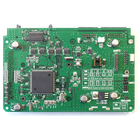
In the dedicated control board designed by our company, the amplification of sensor signals and A/D conversion are completed within the board. By appropriately amplifying minute voltages and digitizing them with an A/D converter on the board before outputting the data to a computer, we minimize external influences as much as possible. For example, by increasing the resolution from 10 bits (1024 divisions) to 16 bits (65535 divisions) and performing analog conversion, we can accurately capture fine voltage changes, allowing for high-precision acquisition of subtle fluctuations in vibration and pressure, while also enhancing temperature compensation to reduce offsets caused by external temperatures. Furthermore, through analog and digital filtering processes, we achieve a measurement configuration that is less affected by external noise. As a result, stable data acquisition that does not rely on correction work becomes possible, supporting more reliable test evaluations.
Company information

Our company is engaged in measurement and control applications, test simulation proposals, replacement and functional enhancement of test equipment and measurement, and the provision of original hardware. With the mission of "making the world simpler and better" through software and electronics technology, we create value through technological development and will continue to contribute sustainably to various industrial fields. Please feel free to contact us when you need our services.


