1~12 item / All 12 items
Displayed results

Added to bookmarks
Bookmarks listBookmark has been removed
Bookmarks listYou can't add any more bookmarks
By registering as a member, you can increase the number of bookmarks you can save and organize them with labels.
Free membership registration
Contact this company
Inquiry FormBefore making an inquiry
Download Profile1~12 item / All 12 items
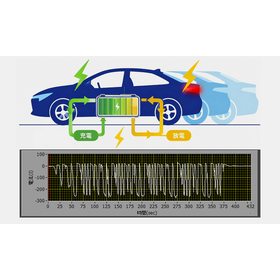
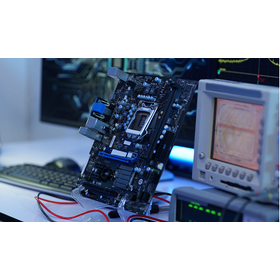
The company introducing this case study is a manufacturer developing electric vehicles (EVs) in Japan. They are engaged in various testing and evaluation tasks daily to assess the performance and durability of lithium-ion batteries installed in their vehicles. To evaluate battery behavior in the actual operating environment of electric vehicles, they required tests that replicate the fluctuations of charge and discharge associated with acceleration and deceleration during driving. Particularly for EVs, the discharge during acceleration and regenerative charging during deceleration occur repeatedly in a short time, making it essential to reproduce and repeatedly evaluate such dynamic charge and discharge behaviors. However, traditionally, reproducing these behaviors relied on driving tests using actual vehicles, which required significant labor and costs for driving on test courses, vehicle preparation, installation of measurement equipment, and securing test drivers and measurement personnel. Seagull Co., Ltd. proposed software modifications to existing testing facilities to create a testing environment capable of reproducing battery evaluations that were previously dependent on actual vehicle operation. The core of this approach is a control technology that utilizes charge and discharge current data measured during actual driving to faithfully reproduce the time axis with high resolution.
Added to bookmarks
Bookmarks listBookmark has been removed
Bookmarks listYou can't add any more bookmarks
By registering as a member, you can increase the number of bookmarks you can save and organize them with labels.
Free membership registration
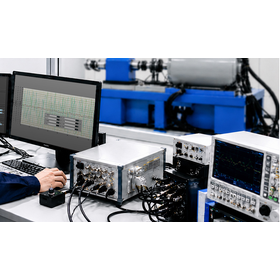
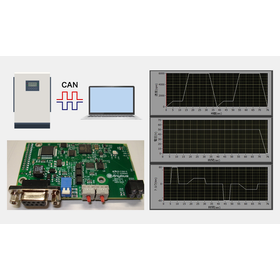
The company introducing this case study is a manufacturer developing drive units for electric vehicles in Japan. They are engaged in the development and evaluation of motors and inverters for EVs, and there was a demand for advanced performance verification using dynamometer testing machines. Within this context, there was a request to link the inverter, which is the test specimen, with the testing machine, sending command values from the testing machine side via CAN communication for integrated control. In the evaluation field for motors and inverters for electric vehicles, speed or torque was input from the testing machine side, and load tests for the inverter and motor were conducted. However, in the conventional testing environment, it was necessary to operate the inverter on the test specimen side and the testing machine side using separate PCs, leading to the complexity of setting, starting, and monitoring individually. It was burdensome for the site to have to operate two PCs back and forth for each test. At SeaGoTo Co., Ltd., in order to integrate the control systems that were separated between the testing machine side and the test specimen side for load testing of motors and inverters for electric vehicles, a modification of the control system utilizing CAN communication was implemented.
Added to bookmarks
Bookmarks listBookmark has been removed
Bookmarks listYou can't add any more bookmarks
By registering as a member, you can increase the number of bookmarks you can save and organize them with labels.
Free membership registration
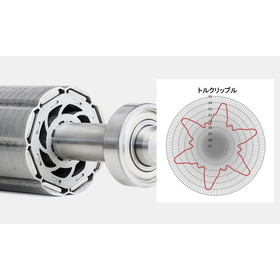
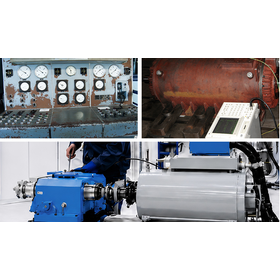
The company introducing this case study is a Tier 1 supplier supporting a major domestic automotive OEM. This company is responsible for the development and manufacturing of permanent magnet synchronous motors (IPM motors), primarily for hybrid vehicles, and has been facing increasing demands for more advanced performance evaluation and quality verification as electrification progresses. In the development of hybrid IPM motors, the need for more precise evaluation of motor characteristics has grown, but the company has been challenged by the lack of an environment capable of accurately measuring torque ripple. While existing testing equipment allowed for basic performance evaluation during rotation, it could not quantitatively capture torque variations, such as "torque ripple," which are directly related to the quality of motor rotation. Seagoat Co., Ltd. developed a dedicated measurement control application that integrates rotational control and torque measurement in angle units to accurately evaluate torque ripple in hybrid IPM motors. This system establishes an evaluation environment that quantitatively visualizes torque variations at different angles by integrally controlling the rotational angle of the test motor, torque measurement, and data acquisition and storage.
Added to bookmarks
Bookmarks listBookmark has been removed
Bookmarks listYou can't add any more bookmarks
By registering as a member, you can increase the number of bookmarks you can save and organize them with labels.
Free membership registration
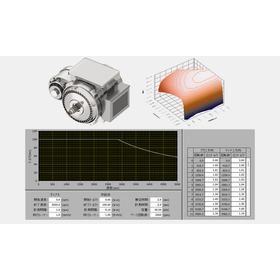
The company introducing this case study is a Tier 1 supplier to a major domestic automotive OEM. As electrification progresses, the company is responsible for the development and evaluation of permanent magnet (IPM) motors for HEVs (hybrid electric vehicles), and there was a need to establish a high-precision verification system for motor performance. In particular, they regularly conducted efficiency measurements along the TN curve, making it essential to balance the improvement of testing accuracy with the efficiency of evaluation operations. In their current operation for efficiency measurement along the motor's TN curve, the company manually inputs command values for the rotational speed and load torque at several hundred operating points for measurement. Additionally, manual operation leads to fluctuations in input values and measurement timing, resulting in a lack of reproducibility and an unrealistic situation where it takes more than a day to complete testing. Thus, the current efficiency measurement operation based on the TN curve faces challenges in both workload increase and reproducibility and safety, making the automation of testing highly sought after. Seagull Co., Ltd. has newly established a control system that consistently executes everything from generating speed and torque commands at each operating point to control, measurement, and data acquisition in order to automate motor efficiency measurement along the TN curve.
Added to bookmarks
Bookmarks listBookmark has been removed
Bookmarks listYou can't add any more bookmarks
By registering as a member, you can increase the number of bookmarks you can save and organize them with labels.
Free membership registration
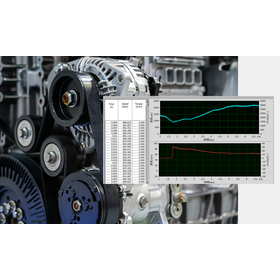
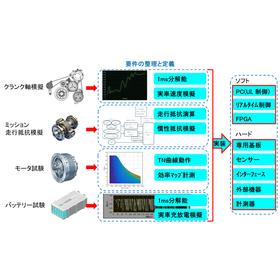
The company introducing this case study is a major automotive OEM with a presence overseas. This company is engaged in durability and performance testing that replicates the behavior during actual vehicle operation in the department responsible for the development and evaluation of drive system components such as auxiliary devices and belts around the engine. They faced challenges in reproducing the load behavior that occurs during vehicle launch when evaluating drive system components like auxiliary devices and belts around the engine. The crankshaft experiences periodic fluctuations in speed and torque due to the combustion motion of the piston. Particularly during vehicle launch, these fluctuations are significant, placing a heavy load on the belts and auxiliary components. However, traditional testing environments have been limited to constant-speed rotation or controlled patterns, making it difficult to adequately replicate such unsteady rotational behavior. Seagull Co., Ltd. proposed an extension of control functions through software modifications to establish a test environment that can replicate the evaluation of drive system components like auxiliary devices and belts, which had relied on engine-based testing. The core of this proposal is a control technology that utilizes rotation data from the crankshaft obtained during actual vehicle operation, including the unsteady speed fluctuations that occur during vehicle launch.
Added to bookmarks
Bookmarks listBookmark has been removed
Bookmarks listYou can't add any more bookmarks
By registering as a member, you can increase the number of bookmarks you can save and organize them with labels.
Free membership registration
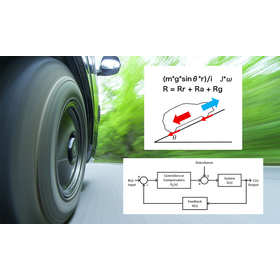
At the testing site for drive-related components, when conducting simulations, we assign computational elements such as air resistance, rolling resistance, gradient resistance, and acceleration/deceleration resistance, along with site-specific testing specifications and coefficients, to calculation formulas to derive load torque. However, the existing methods were insufficient to accurately reproduce the load torque generated during actual vehicle operation in response to changes in vehicle models and testing content, necessitating the flexible addition, modification, and deletion of elements, coefficients, and calculation formulas. Integrated computation of physical parameters according to acceleration and deceleration states At Seagull Co., Ltd., we adopted a method that allows for the flexible addition, modification, and deletion of calculation formulas and necessary physical parameters for accurately reproducing load torque for each driving state, such as vehicle models and acceleration/deceleration. Specifically, parameters such as rotational speed (rpm), incline angle (°), gravitational acceleration (m/s²), vehicle weight (kg), tire radius (m), reduction ratio, inertia (kg·m²), and coefficients, along with calculation formulas corresponding to the states during acceleration and deceleration, are set for each vehicle model. The load torque is output to the testing machine through real-time computational processing in milliseconds by the CPU and FPGA of the embedded unit.
Added to bookmarks
Bookmarks listBookmark has been removed
Bookmarks listYou can't add any more bookmarks
By registering as a member, you can increase the number of bookmarks you can save and organize them with labels.
Free membership registration
In the evaluation tests of automotive drive system components, multiple sensors are installed on motors, gearboxes, shafts, etc., to collect data under conditions close to actual operating states, measuring temperature, vibration, pressure, acceleration, speed, torque, and air-fuel ratio. However, in the field, the following issues have become apparent: - The addition of general-purpose amplifiers and signal converters for each sensor has complicated the site. - The increase in wiring requires labor for connecting units removed from the actual machine and the ECU surroundings. Seagoat Inc. provides "development, design, and manufacturing of dedicated hardware" by designing and producing specialized control boards optimized for field specifications. This consolidates sensor signal amplification, A/D conversion, I/O processing, and operational interfaces onto a single board, achieving both miniaturization and high precision. By re-evaluating the wiring structure itself, it simultaneously reduces preparation labor for tests, stabilizes measurement accuracy, and saves space. Not only software but also hardware is redesigned for the testing environment. This is Seagoat Inc.'s strength.
Added to bookmarks
Bookmarks listBookmark has been removed
Bookmarks listYou can't add any more bookmarks
By registering as a member, you can increase the number of bookmarks you can save and organize them with labels.
Free membership registration
In the field of development and evaluation, it is common to combine multiple measuring instruments such as power analyzers, data recorders, and multimeters to acquire data. However, there are challenges on-site, including: - Different communication specifications for each measuring instrument, resulting in acquired data not being aligned on the same time axis. - A significant amount of labor required for manual data matching and organization. - The desire to refresh the measurement environment while utilizing existing measuring instrument assets and idle equipment. Seagoat Co., Ltd. offers "measurement retrofitting and function expansion" that integrates the measurement environment through software while leveraging existing measuring instrument assets. By synchronizing and integrating measurement data on the same time axis based on LabVIEW, we build an integrated measurement environment that utilizes existing equipment. This enables a reduction in labor for measurement tasks, rapid system response, and the realization of high functionality while keeping investments low.
Added to bookmarks
Bookmarks listBookmark has been removed
Bookmarks listYou can't add any more bookmarks
By registering as a member, you can increase the number of bookmarks you can save and organize them with labels.
Free membership registration
In the field of research, development, and testing related to automotive drive system components, there are cases where control systems that have been in operation for many years have become idle equipment without being utilized. On the other hand, in recent years, there has been a significant shift in demand from engine-centered evaluations to testing of motors and inverters for HEVs and EVs. Issues such as the aging of existing equipment, lack of flexibility due to dedicated designs, and difficulties in ongoing maintenance have become constraints in advancing testing environments and improving development efficiency. Furthermore, attempting to build new testing systems involves substantial capital investment, making it difficult to decide on updates, and there are not a few pieces of equipment that remain unused. Seagoat Co., Ltd. addresses these on-site challenges by providing "retrofit and functional enhancement of testing equipment," which modernizes the control, measurement, and interface while leveraging the existing mechanical and electrical hardware of testing facilities. This enables the reconstruction of a highly versatile testing environment that can flexibly respond to changes in testing themes and evaluation targets.
Added to bookmarks
Bookmarks listBookmark has been removed
Bookmarks listYou can't add any more bookmarks
By registering as a member, you can increase the number of bookmarks you can save and organize them with labels.
Free membership registration
In the field of research, development, and testing related to automotive drive system components, performance verification and reproduction of defects through actual vehicle test drives are still important evaluation methods. On the other hand, in the field: - Repeated driving by test drivers requires a lot of time and cost. - Variability in test conditions and measurement deficiencies lead to the occurrence of retests. - It is difficult to reproduce transient phenomena and defects that only appear under specific conditions multiple times. These challenges constrain the improvement of development efficiency and the advancement of quality verification. Seagoat Inc. supports addressing these field challenges by constructing "test simulations" that replicate actual vehicle behavior in a test bench environment. By integrating the analysis of actual driving data, generation of command waveforms, deterministic control using real-time OS/FPGA, and reproduction of actual loads through inverters into a single application, we provide a highly reproducible testing environment even for individual components.
Added to bookmarks
Bookmarks listBookmark has been removed
Bookmarks listYou can't add any more bookmarks
By registering as a member, you can increase the number of bookmarks you can save and organize them with labels.
Free membership registration
In the research, development, and testing fields of automotive drive system components that we have seen so far, it is still common to encounter configurations where the control of testing machines, the control of test specimens, and the operation of various sensors and measuring instruments must be handled separately on different devices or screens. As a result: - The separation of control and measurement makes it cumbersome to reproduce test conditions and synchronize data. - Tests are sometimes conducted by multiple people, leading to low productivity. - After testing, it is necessary to organize, evaluate, and create reports from multiple data sets, which does not allow sufficient time for consideration and analysis. These issues are accepted as the "norm" in the field. Seagoat Co., Ltd. provides solutions to these challenges through an approach focused on the development of measurement and control applications. By combining software such as C#, LabVIEW, VC, VB, and Verilog-HDL with HMI, real-time control, and FPGA, we integrate the control of testing machines, test specimens, measuring instruments, etc., into a single application. This establishes control and measurement with high certainty and synchronization, creating an environment that allows for seamless automation of testing, data acquisition, evaluation, and report creation.
Added to bookmarks
Bookmarks listBookmark has been removed
Bookmarks listYou can't add any more bookmarks
By registering as a member, you can increase the number of bookmarks you can save and organize them with labels.
Free membership registration
Our company provides systems centered around software for "control" and "measurement." We consistently develop, design, and manufacture HMI (Human Machine Interface), embedded software, FPGA, and hardware to build systems. We offer software, hardware, and maintenance for the systems. To provide value such as ease of use, efficiency, and flexibility, we propose simple systems. Please utilize us as your system engineer. 【Business Description】 ■ Planning, development, design, manufacturing, and sales of testing systems ■ Development, design, manufacturing, and sales of hardware and software ■ Contract development of hardware and software *For more details, please download the PDF or feel free to contact us.
Added to bookmarks
Bookmarks listBookmark has been removed
Bookmarks listYou can't add any more bookmarks
By registering as a member, you can increase the number of bookmarks you can save and organize them with labels.
Free membership registration