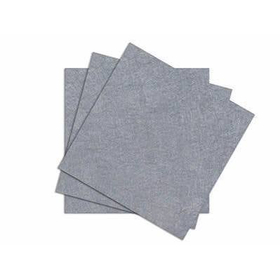
The stainless steel fiber sintered felt market is rapidly growing and is expected to reach a scale of 211 million USD by 2026.
Global Market Size of Stainless Steel Fiber Sintered Felt According to the latest research report published by Global Reports titled "Global Market Size, Share, Company Rankings, Sales, and Demand Trend Forecast for Stainless Steel Fiber Sintered Felt (2026-2032)," the global market size for stainless steel fiber sintered felt is expected to expand from approximately 200 million USD in 2025 to about 211 million USD in 2026. It is projected to continue growing at a compound annual growth rate (CAGR) of 5.0%, reaching approximately 283 million USD by 2032.
Inquire About This Product
basic information
Demand for Polymer Melt Filtration of Stainless Steel Fiber Sintered Felt One of the main demands for stainless steel fiber sintered felt is polymer melt filtration in chemical fiber, film, and resin processing. In high-viscosity molten resins, foreign substances such as gels, carbides, and unmelted particles can affect product quality and the stability of spinning and extrusion processes. Stainless steel fiber sintered felt, with its three-dimensional deep filtration structure, is more capable of retaining contaminants internally compared to wire mesh materials that capture particles on the surface, thus ensuring longer filtration cycles. In fact, by 2026, products with filtration accuracy ranging from 0.5 to 200 μm will be available using sintered fiber felt made of 316L for polymer melt filters.
Price range
Delivery Time
Applications/Examples of results
Design and High Precision of Pore Structure in Stainless Steel Fiber Sintered Felt In stainless steel fiber sintered felt, the design of filtration performance combining fiber diameter, thickness, stacking density, and pore diameter distribution is crucial. Products are classified into high-precision types with ultra-fine fibers, medium-precision general-purpose types, and high-flow types with coarse fibers, with thicknesses differentiated into 0.3–0.5mm, 0.5–1.0mm, and over 1.0mm. In recent years, there has been a shift from a uniform pore structure to a gradient structure that combines coarse and dense layers. FUJI FILTER has also developed a multilayer structure that combines coarse fiber layers and fine fiber layers, achieving both filtration precision and contamination retention.
Company information
Global Reports integrates industrial information from around the world and provides highly accurate market intelligence to support corporate decision-making. We deliver in-depth analyses based on numerical data and facts, including market size, share, industry structure, price trends, growth forecasts, rankings of major companies, and competitive trends, with clear information categorized by country, region, and application. Leveraging a rich database that has supported the business growth of over 65,000 companies and an international research network, we accompany our clients in their global expansion and continuous growth.


![Heat-resistant felt [Feltex series]](https://image.mono.ipros.com/public/product/image/e7b/2000578607/IPROS51717064970770681254.png?w=280&h=280)