1~45 item / All 638 items
Displayed results
Added to bookmarks
Bookmarks listBookmark has been removed
Bookmarks listYou can't add any more bookmarks
By registering as a member, you can increase the number of bookmarks you can save and organize them with labels.
Free membership registrationContact this company
Inquiry FormBefore making an inquiry
Download Profile1~45 item / All 638 items
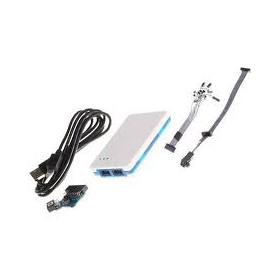
What is a chip programmer? A chip programmer is a dedicated device that writes program code, firmware, configuration data, serial numbers, encryption keys, calibration parameters, and more to programmable semiconductors such as MCUs, MPUs, memory, FPGAs, various logic ICs, and security chips. The range of supported devices, writing speed, data verification, writing quality during mass production, traceability, security features, and integration performance with automated lines are the main evaluation criteria for chip programmers. Global Market Size of Chip Programmers According to the latest research report published by Global Reports titled "Global Market Size, Share, Company Rankings, Sales, and Demand Trend Forecast for Chip Programmers (2026-2032)," the global market size for chip programmers is expected to expand from approximately 1.681 billion USD in 2025 to about 1.768 billion USD in 2026, growing at a compound annual growth rate (CAGR) of 5.4% from 2026 to 2032, and is projected to reach approximately 2.419 billion USD by 2032. The global production volume in 2025 is estimated to be around 592,000 units, with an average selling price of about 2,840 USD per unit.
Added to bookmarks
Bookmarks listBookmark has been removed
Bookmarks listYou can't add any more bookmarks
By registering as a member, you can increase the number of bookmarks you can save and organize them with labels.
Free membership registration
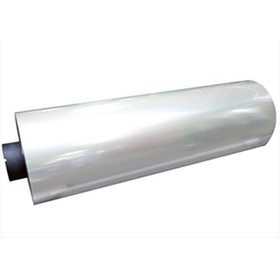
What is PET Optical Base Film? PET optical base film is a biaxially stretched polyester film primarily made from polyethylene terephthalate (PET) for optical applications, used as a substrate for polarizers, diffusion films, brightness enhancement films, and release films for electronic components. Important quality requirements include high light transmittance, low haze, low defects, uniform thickness, surface smoothness, heat resistance, dimensional stability, and coating adhesion. Global Market Size of PET Optical Base Film According to the latest research report published by Global Reports titled "Global Market Size, Share, Company Rankings, Sales, and Demand Trend Forecast for PET Optical Base Film (2026-2032)," the global market size for PET optical base film is expected to expand from approximately $1.27 billion in 2025 to about $1.34 billion in 2026, growing at a compound annual growth rate (CAGR) of 6.1% from 2026 to 2032, and is projected to reach around $1.915 billion by 2032. The global production volume in 2025 is estimated to be about 407,000 tons, with an average selling price of approximately $3,120 per ton.
Added to bookmarks
Bookmarks listBookmark has been removed
Bookmarks listYou can't add any more bookmarks
By registering as a member, you can increase the number of bookmarks you can save and organize them with labels.
Free membership registration
What is DL-Lactic Acid? DL-Lactic acid is a racemic mixture of 2-hydroxypropanoic acid that contains approximately equal amounts of D-lactic acid and L-lactic acid. It is generally supplied as a colorless to pale yellow viscous liquid and is used for flavor adjustment in foods where optical purity is not required, as well as in pharmaceutical raw materials, cosmetics, industrial cleaning, metal scale removal, leather and textile processing, and chemical synthesis. World Market Size of DL-Lactic Acid According to the latest research report published by Global Reports titled "World Market Size, Share, Company Rankings, Sales, and Demand Trend Forecast for DL-Lactic Acid (2026-2032)," the global market size for DL-lactic acid is expected to expand from approximately 119 million USD in 2025 to about 123 million USD in 2026, growing at a compound annual growth rate (CAGR) of 4.8% from 2026 to 2032, and is projected to reach around 162 million USD by 2032. The global sales volume in 2025 is estimated to be about 72,000 tons, with an average selling price of approximately 1,650 USD per ton.
Added to bookmarks
Bookmarks listBookmark has been removed
Bookmarks listYou can't add any more bookmarks
By registering as a member, you can increase the number of bookmarks you can save and organize them with labels.
Free membership registration
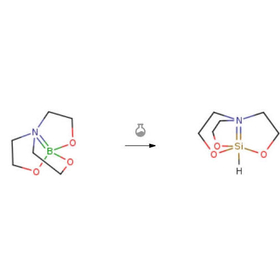
Triethanolamine Borate is a functional chemical material containing nitrogen and boron, obtained by reacting triethanolamine with boric acid (CAS number 283-56-7). It is generally supplied as a colorless to light yellow transparent viscous liquid, is water-soluble, and imparts properties such as rust prevention, lubrication, wear resistance, pH buffering, and low foaming in metalworking oils and industrial lubricants. The global effective production capacity in 2025 is estimated to be about 31,000 tons, with production and actual consumption estimated at around 20,364 tons, resulting in an equipment utilization rate of approximately 65.7%. The average factory shipment price is about $1,910 per ton, and the industry's gross profit margin is expected to be around 20-29%.
Added to bookmarks
Bookmarks listBookmark has been removed
Bookmarks listYou can't add any more bookmarks
By registering as a member, you can increase the number of bookmarks you can save and organize them with labels.
Free membership registration
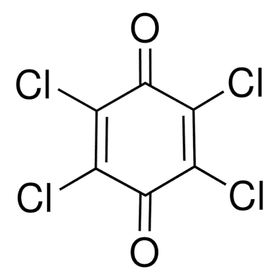
Tetraclorobenzoquinone is a fine chemical in the chlorinated quinone family identified by the CAS number 118-75-2, typically supplied as a yellow to brown crystalline powder. It possesses electron-accepting properties and oxidation/dehydrogenation capabilities, used as a reagent and chemical intermediate in organic synthesis, and also participates in crosslinking reactions depending on the application. The global effective production capacity in 2025 is estimated to be approximately 9,200 tons, with sales volume around 4,087 tons, and the average factory gate price is estimated at about $5,823 per ton, with the industry's gross profit margin generally ranging from 20% to 28%. According to the latest research report published by Global Reports titled "Global Market Size, Share, Company Rankings, Sales, and Demand Trend Forecast for Tetraclorobenzoquinone (2026-2032)," the global market size for tetraclorobenzoquinone is expected to expand from approximately $23.8 million in 2025 to about $24.7 million in 2026, growing at a compound annual growth rate (CAGR) of 3.8% from 2026 to 2032, and reaching approximately $30.89 million by 2032.
Added to bookmarks
Bookmarks listBookmark has been removed
Bookmarks listYou can't add any more bookmarks
By registering as a member, you can increase the number of bookmarks you can save and organize them with labels.
Free membership registration
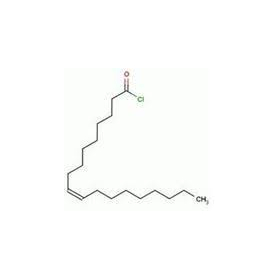
Cocoyl chloride is a mixture made from multiple fatty acid chlorides, produced by replacing the carboxyl group of fatty acids derived from palm oil with an acyl chloride group. It is generally supplied as a colorless to pale yellow reactive liquid and is used in the synthesis of low-irritation surfactants such as cocoyl glycinate, cocoyl glutamate, cocoyl sarcosinate, and taurates. Additionally, it is also utilized in special additives, pharmaceutical intermediates, and pesticide intermediates. Factors that influence the product characteristics of cocoyl chloride include purity, carbon chain distribution, reactivity, and storage/transport conditions. Depending on the application, products are categorized into those with 98% and 99% purity, standard palm fatty acid compositions ranging from C8 to C18, grades containing a higher proportion of C12 to C14, and custom products adjusted to narrow carbon chain ranges. In downstream surfactants, the fatty acid composition affects product performance and reaction conditions, making it important to design raw materials that fit the customer's formulation and manufacturing processes.
Added to bookmarks
Bookmarks listBookmark has been removed
Bookmarks listYou can't add any more bookmarks
By registering as a member, you can increase the number of bookmarks you can save and organize them with labels.
Free membership registration
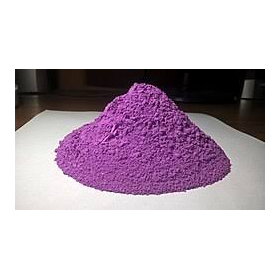
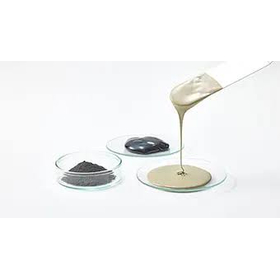
What is ultrafine cobalt carbonate? Ultrafine cobalt carbonate is a cobalt compound characterized by fine particles, produced through processes such as precipitation, washing, filtration, drying, and grinding/classification from cobalt salt aqueous solutions. It is generally supplied as a fine powder ranging from pink to reddish-purple, with small particle sizes, excellent dispersibility and reactivity, and a tendency to achieve stable sintering and reduction behavior in subsequent processes. In quality evaluation, important factors include cobalt content, median particle size (D50), specific surface area, bulk density, as well as the concentration of impurities such as sodium, chlorine, and sulfates, and variability between batches. Particularly, to achieve both fine particle size and low impurity levels, it is essential to control precipitation reactions and crystal growth, optimize washing conditions, and refine drying and classification processes.
Added to bookmarks
Bookmarks listBookmark has been removed
Bookmarks listYou can't add any more bookmarks
By registering as a member, you can increase the number of bookmarks you can save and organize them with labels.
Free membership registration
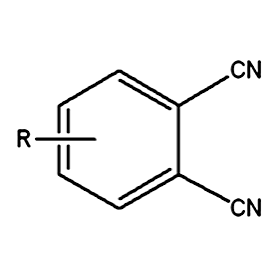
Phthalonitrile resin is a thermosetting resin that contains reactive phthalonitrile groups and forms a highly cross-linked aromatic heterocyclic structure through addition polymerization at high temperatures. It possesses excellent heat resistance, thermal oxidative stability, flame retardancy, chemical resistance, and low moisture absorption, making it easier to maintain mechanical properties even in high-temperature environments. The product forms vary widely, including solid resins, low-melting-point prepolymers, one-component formulations, and high-viscosity liquid products. In temperature ranges and usage conditions where traditional epoxy resins, bismaleimide resins, cyanate ester resins, and some polyimide resins struggle to perform, phthalonitrile resins are candidates for alternative materials. Its properties are particularly valued in structural components and thermal protection materials where high-temperature strength and resistance to thermal oxidative degradation are simultaneously required.
Added to bookmarks
Bookmarks listBookmark has been removed
Bookmarks listYou can't add any more bookmarks
By registering as a member, you can increase the number of bookmarks you can save and organize them with labels.
Free membership registration
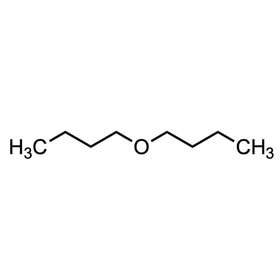
Dibutyl Ether is an organic ether compound represented by the chemical formula C₈H₁₈O, commonly treated as a colorless, flammable liquid. It has low solubility in water and can be used as an organic solvent, as well as a component in extraction agents, reaction media, fuel additives, and intermediates for specialty chemicals. There is demand in fields that require solvent performance tailored to applications, such as pharmaceuticals, pesticides, paints and coatings, and various organic syntheses. In particular, its use as a reaction medium suitable for specific organometallic reactions and in extraction processes that utilize the separation of aqueous and organic phases is notable. In syntheses using Grignard reagents or organolithium compounds, the compatibility with reaction conditions influences solvent selection. Therefore, there are processes where simple substitution with general-purpose solvents is difficult, and stable quality and supply can be crucial depending on the application.
Added to bookmarks
Bookmarks listBookmark has been removed
Bookmarks listYou can't add any more bookmarks
By registering as a member, you can increase the number of bookmarks you can save and organize them with labels.
Free membership registration
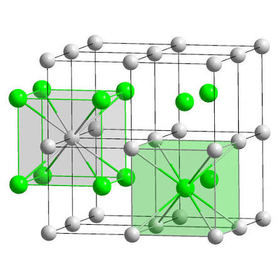
What is cesium bromide? Cesium bromide (CsBr) is an inorganic halide composed of cesium ions and bromide ions, typically supplied as a hygroscopic white crystalline powder. It is a necessary raw material for the growth of perovskite photovoltaic materials and CsPbBr₃ crystals, and is also used in scintillation materials, X-ray detection materials, infrared optical crystals, and beam splitters for spectrophotometers. Global market size of cesium bromide According to the latest research report published by Global Reports titled "Global Market Size, Share, Company Rankings, Sales, and Demand Trend Forecast for Cesium Bromide (2026-2032)," the global market size for cesium bromide is estimated to be approximately 32.45 million USD in 2025, expected to reach about 33.12 million USD in 2026, and around 40.24 million USD by 2032. The compound annual growth rate (CAGR) from 2026 to 2032 is projected to be 3.3%.
Added to bookmarks
Bookmarks listBookmark has been removed
Bookmarks listYou can't add any more bookmarks
By registering as a member, you can increase the number of bookmarks you can save and organize them with labels.
Free membership registration
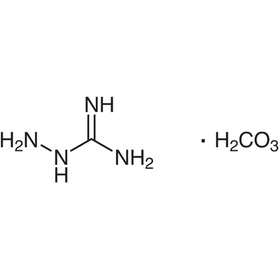
Aminoguanidine Bicarbonate is a fine chemical intermediate that contains guanidino and hydrazino groups, supplied as a white to off-white crystalline powder. It is used as a synthetic raw material for pharmaceuticals, pesticides, dyes, photographic chemicals, and plays an important role in the production of nitrogen-containing heterocyclic compounds. According to the latest research report published by Global Reports titled "Global Market Size, Share, Company Rankings, Sales, and Demand Trends Forecast for Aminoguanidine Bicarbonate (2026-2032)," the global market size is expected to expand from 53.75 million USD in 2025 to 56.02 million USD in 2026, reaching 78.48 million USD by 2032. The compound annual growth rate (CAGR) from 2026 to 2032 is projected to be 5.8%, driven by the growing demand for pharmaceutical intermediates.
Added to bookmarks
Bookmarks listBookmark has been removed
Bookmarks listYou can't add any more bookmarks
By registering as a member, you can increase the number of bookmarks you can save and organize them with labels.
Free membership registration
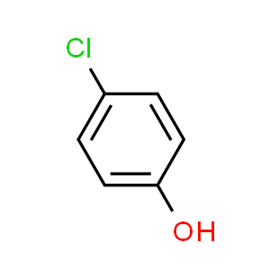
Para-chlorophenol (PCP) is a chlorinated phenolic organic compound also known as 4-chlorophenol, with the molecular formula C₆H₅ClO. It has a chlorine atom at the para position relative to the hydroxyl group of the benzene ring and is typically supplied as a white to light-colored crystalline solid. It is slightly soluble in water but readily dissolves in organic solvents such as alcohols, ethers, and aromatic hydrocarbons. According to the latest research report published by Global Reports titled "Global Market Size, Share, Company Rankings, Sales, and Demand Trend Forecast for Para-chlorophenol (PCP) (2026-2032)," the global market is expected to expand from approximately 156 million USD in 2025 to about 163 million USD in 2026. The compound annual growth rate (CAGR) from 2026 to 2032 is projected to be 4.0%, with an expected reach of approximately 260 million USD by 2032.
Added to bookmarks
Bookmarks listBookmark has been removed
Bookmarks listYou can't add any more bookmarks
By registering as a member, you can increase the number of bookmarks you can save and organize them with labels.
Free membership registration
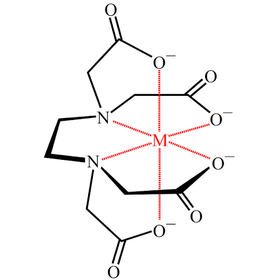
Aminopolycarboxylic acids refer to a class of organic chelating agents that possess amino groups and multiple carboxyl groups, capable of binding with metal ions such as calcium, magnesium, iron, and copper. Representative products include EDTA, DTPA, NTA, and MGDA, which are used in water treatment, detergents, agriculture, pulp and paper, textiles, pharmaceuticals, and industrial cleaning. According to the latest research report published by Global Reports titled "Global Market Size, Share, Company Rankings, Sales, and Demand Trend Forecast for Aminopolycarboxylic Acids (2026-2032)," the global market size is expected to expand from approximately 2.72 billion USD in 2025 to about 2.86 billion USD in 2026. The compound annual growth rate (CAGR) from 2026 to 2032 is projected to be 5.2%, with an estimated market size of around 3.877 billion USD by 2032.
Added to bookmarks
Bookmarks listBookmark has been removed
Bookmarks listYou can't add any more bookmarks
By registering as a member, you can increase the number of bookmarks you can save and organize them with labels.
Free membership registration
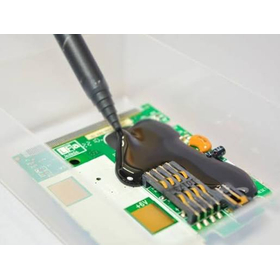
What is PCB encapsulant? PCB encapsulant is a functional material used to protect, insulate, secure, and seal printed circuit boards (PCBs) and electronic components. It is primarily composed of polymer materials such as epoxy, silicone, polyurethane, and acrylic, and is used through methods such as potting, sealing, surface coating, and localized filling. It enhances moisture resistance, dust resistance, chemical resistance, vibration resistance, thermal shock resistance, and electrical insulation, contributing to the reliability and lifespan of electronic devices. Global Market Size of PCB Encapsulant According to the latest research report published by Global Reports titled "Global Market Size, Share, Company Rankings, Sales, and Demand Trend Forecast for PCB Encapsulants (2026-2032)," the global market size is expected to expand from 6.971 billion USD in 2025 to 7.105 billion USD in 2026. The compound annual growth rate (CAGR) from 2026 to 2032 is projected to be 5.4%, with an expected reach of 9.719 billion USD by 2032.
Added to bookmarks
Bookmarks listBookmark has been removed
Bookmarks listYou can't add any more bookmarks
By registering as a member, you can increase the number of bookmarks you can save and organize them with labels.
Free membership registration
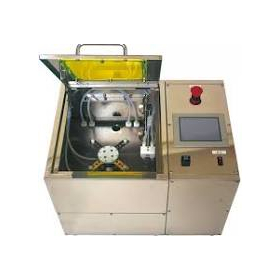
What is a photolithography device? A photolithography device is a manufacturing equipment that forms fine circuit and structural patterns on silicon wafers or substrates coated with photosensitive materials using light or electron beams. Against the backdrop of semiconductor miniaturization, the production of advanced chips for AI, and the advancement of cutting-edge packaging, the photolithography device market is expected to expand. Global market size of photolithography devices According to the latest research report published by Global Reports, "Global Market Size, Share, Company Rankings, Sales, and Demand Trend Forecast for Photolithography Devices (2026-2032)," the global market is expected to expand from 31.53 billion USD in 2025 to 40.44 billion USD in 2026, with an average annual growth rate (CAGR) of 9.1% from 2026 to 2032, and is projected to reach 68.12 billion USD by 2032.
Added to bookmarks
Bookmarks listBookmark has been removed
Bookmarks listYou can't add any more bookmarks
By registering as a member, you can increase the number of bookmarks you can save and organize them with labels.
Free membership registration
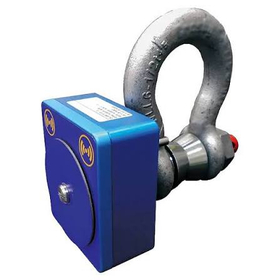
A shackle load cell is a force measurement device that incorporates a load sensor into a shackle structure to measure suspended loads, tensile forces, and pulling forces in real-time. It consists of components such as the shackle body made of alloy steel, strain gauges, a Wheatstone bridge circuit, a signal processing unit, cables or wireless communication modules, a protective housing, pins, and sealing parts. Because it integrates mechanical connection and load measurement, it is suitable for lifting operations in harsh environments such as cranes, marine construction, port cargo handling, construction, mining, logistics, and industrial rigging.
Added to bookmarks
Bookmarks listBookmark has been removed
Bookmarks listYou can't add any more bookmarks
By registering as a member, you can increase the number of bookmarks you can save and organize them with labels.
Free membership registration
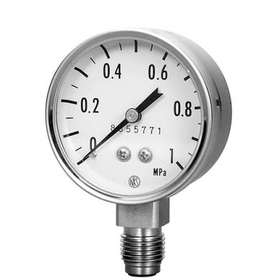
What is a pressure gauge for the semiconductor industry? A pressure gauge for the semiconductor industry is a measuring instrument that measures, displays, transmits, and monitors the pressure of gases and liquids in high-purity manufacturing environments such as semiconductor wafer manufacturing, advanced packaging, displays, and solar cells. It includes electronic pressure sensors, mechanical pressure gauges, pressure switches, and products compatible with high purity, and is used for pressure management of special gases, bulk gases, ultra-pure water, cooling water, temperature control fluids, and chemical solutions. Global market size of pressure gauges for the semiconductor industry According to the latest research report published by Global Reports titled "Global Market Size, Share, Company Rankings, Sales, and Demand Trend Forecast for Semiconductor Industry Pressure Gauges (2026-2032)," the global market size for semiconductor industry pressure gauges is expected to expand from approximately 285 million USD in 2025 to about 304 million USD in 2026, with an average annual growth rate (CAGR) of 6.2% from 2026 to 2032, reaching approximately 436 million USD by 2032.
Added to bookmarks
Bookmarks listBookmark has been removed
Bookmarks listYou can't add any more bookmarks
By registering as a member, you can increase the number of bookmarks you can save and organize them with labels.
Free membership registration
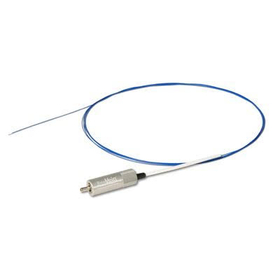
Surgical laser fibers are medical optical fiber consumables that transmit laser energy to the affected area during surgeries and minimally invasive treatments. They are primarily manufactured by combining optical transmission materials such as quartz glass with protective coatings, outer casings, connectors, handles, tip irradiation structures, and sterilization packaging. According to the latest research report published by Global Reports titled "Global Market Size, Share, Company Rankings, Sales, and Demand Trend Forecast for Surgical Laser Fibers (2026-2032)," the global market size for surgical laser fibers is expected to expand from approximately 430 million USD in 2025 to around 480 million USD in 2026, with a compound annual growth rate (CAGR) of 10.9% from 2026 to 2032, reaching approximately 893 million USD by 2032.
Added to bookmarks
Bookmarks listBookmark has been removed
Bookmarks listYou can't add any more bookmarks
By registering as a member, you can increase the number of bookmarks you can save and organize them with labels.
Free membership registration
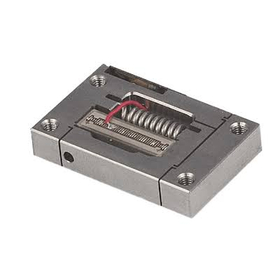
A small piezoelectric linear actuator is a solid-state drive device that utilizes the inverse piezoelectric effect generated when a voltage is applied to piezoelectric materials, converting electrical signals into minute displacements or precise linear motion. With a compact structure, it achieves high-speed response, high positioning accuracy, low electromagnetic interference, and nanometer-level displacement control, making it suitable for applications in semiconductor manufacturing equipment, precision optical instruments, medical devices, automotive electronics, inkjet printing, industrial automation, and scientific measurement instruments.
Added to bookmarks
Bookmarks listBookmark has been removed
Bookmarks listYou can't add any more bookmarks
By registering as a member, you can increase the number of bookmarks you can save and organize them with labels.
Free membership registration
What is polypropylene composite material? Polypropylene composite material (PP compound) is a polymer material based on polypropylene (PP) resin, blended with inorganic fillers, glass fibers, rubber components, and functional additives, and its performance is adjusted through compounding, filling, and reinforcement. Global market size of polypropylene composite materials According to the latest research report published by Global Reports titled "Global Market Size, Share, Company Rankings, Sales, and Demand Trend Forecast for Polypropylene Composites (2026-2032)," the global market size is estimated to be approximately 25.364 billion USD in 2025 and is expected to expand to about 26.538 billion USD in 2026. The compound annual growth rate (CAGR) from 2026 to 2032 is projected to be 4.6%, with an expected market size of approximately 34.819 billion USD by 2032. The global production volume in 2025 is estimated to be about 14.92 million tons, with a production capacity of approximately 22.5 million tons, an average market price of around 1,700 USD per ton, and an industry average gross profit margin of about 23%. These indicators suggest that polypropylene composites are maintaining their foundation as mass-produced general-purpose materials while expanding into high-value-added products.
Added to bookmarks
Bookmarks listBookmark has been removed
Bookmarks listYou can't add any more bookmarks
By registering as a member, you can increase the number of bookmarks you can save and organize them with labels.
Free membership registration
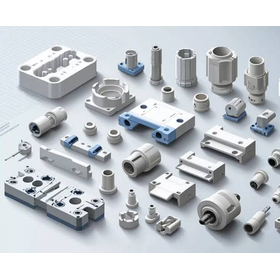
Plastic components for semiconductor devices refer to high-performance resin parts that are incorporated into semiconductor manufacturing equipment and factory facilities, responsible for functions such as chemical transport, flow control, wafer transport, insulation, sealing, wear prevention, and contamination suppression. Materials used include fluororesins such as PFA, PTFE, and PVDF, as well as PEEK, PPS, PI/PAI, PVC, PP, PE, and POM. According to the latest research report published by Global Reports titled "Global Market Size, Share, Company Rankings, Revenue, and Demand Trend Forecast for Plastic Components for Semiconductor Devices (2026-2032)," the global market is expected to expand from 3.839 billion USD in 2025 to 4.097 billion USD in 2026, growing at a CAGR of 7.2%, and is projected to reach 6.221 billion USD by 2032.
Added to bookmarks
Bookmarks listBookmark has been removed
Bookmarks listYou can't add any more bookmarks
By registering as a member, you can increase the number of bookmarks you can save and organize them with labels.
Free membership registration
An outdoor full-color LED display is an electronic display device that uses light-emitting diodes (LEDs) to show color images and information in outdoor environments. It is characterized by high brightness, high contrast, and weather resistance, and is used in advertising media, sports facilities, traffic guidance, and urban landscapes. According to the latest research report published by Global Reports titled "Global Market Size, Share, Company Rankings, Sales, and Demand Trend Forecast for Outdoor Full-Color LED Displays (2026-2032)," the global market is expected to expand from 2.196 billion USD in 2025 to 2.376 billion USD in 2026, with a compound annual growth rate (CAGR) of 9.1% from 2026 to 2032, reaching 4.007 billion USD by 2032. The global production volume in 2025 is estimated to be approximately 1.46 million square meters, with an average price reported to be about 1,500 USD per square meter.
Added to bookmarks
Bookmarks listBookmark has been removed
Bookmarks listYou can't add any more bookmarks
By registering as a member, you can increase the number of bookmarks you can save and organize them with labels.
Free membership registration
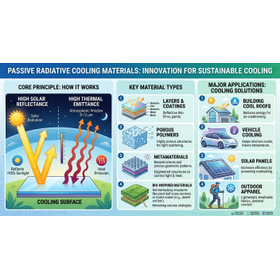
Passive radiative cooling materials are functional materials that reflect sunlight efficiently and release surface heat as infrared radiation into space through the atmospheric window, thereby suppressing temperature rise without the use of electricity or mechanical cooling. These materials include paints, films, and sheets, and are being applied to building roofs and exterior walls, vehicles, electronic devices, and energy equipment. According to the latest research report published by Global Reports titled "Global Market Size, Share, Company Rankings, Sales, and Demand Trend Forecast for Passive Radiative Cooling Materials (2026-2032)," the global market is expected to expand from 50.77 million USD in 2025 to 89.45 million USD in 2026, with a compound annual growth rate (CAGR) of 26.8% from 2026 to 2032, reaching 371 million USD by 2032.
Added to bookmarks
Bookmarks listBookmark has been removed
Bookmarks listYou can't add any more bookmarks
By registering as a member, you can increase the number of bookmarks you can save and organize them with labels.
Free membership registration
Grease for injection molding machines refers to a high-performance lubricant used in the movable and sliding parts, bearings, and other components of injection molding machines, which suppresses friction, wear, and corrosion. It withstands high loads, high temperatures, and repetitive operations, supporting the maintenance of equipment precision and improving operational rates. The global market is expected to expand from 125 million USD in 2025 to 133 million USD in 2026, with a compound annual growth rate (CAGR) of 6.5% from 2026 to 2032, reaching 194 million USD by 2032. The production capacity is approximately 50,000 tons worldwide, with sales volume in 2024 estimated at about 44,800 tons, and the average price needs to be verified due to inconsistencies in the original text. The gross profit margin is estimated to be around 29%.
Added to bookmarks
Bookmarks listBookmark has been removed
Bookmarks listYou can't add any more bookmarks
By registering as a member, you can increase the number of bookmarks you can save and organize them with labels.
Free membership registration
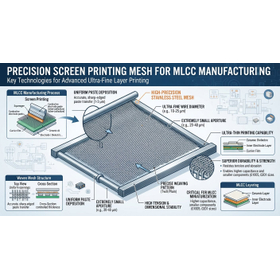
Screen printing mesh for MLCC refers to a high-precision mesh material used in the manufacturing process of multilayer ceramic capacitors (MLCC) to transfer electrode paste and ceramic paste onto a specified pattern. It is used for printing internal electrodes, external electrodes, and some functional layers, with uniformity of opening dimensions, tension, dimensional stability, and wear resistance affecting print quality. According to the latest research report published by Global Reports titled "Global Market Size, Share, Company Rankings, Sales, and Demand Trend Forecast for Screen Printing Mesh for MLCC (2026-2032)," the global market is expected to expand from 56.63 million USD in 2025 to 62.98 million USD in 2026, growing at a compound annual growth rate (CAGR) of 6.5% from 2026 to 2032, and is projected to reach 916.9 million USD by 2032. The global production volume in 2025 is estimated to be approximately 343,000 square meters, with an average market price of about 165 USD per square meter.
Added to bookmarks
Bookmarks listBookmark has been removed
Bookmarks listYou can't add any more bookmarks
By registering as a member, you can increase the number of bookmarks you can save and organize them with labels.
Free membership registration
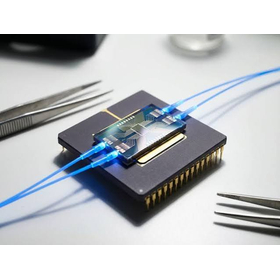
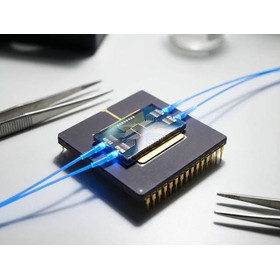
A silicon photonics integrated chip is an optical integrated circuit that integrates optical devices such as optical waveguides, optical modulators, photodetectors, optical couplers, and wavelength division multiplexers/demultiplexers on a single chip, based on silicon or silicon-based materials. It utilizes CMOS-compatible processes to perform transmission, modulation, detection, and wavelength control of optical signals. By combining with electronic ICs, lasers, driver ICs, transimpedance amplifiers (TIAs), DSPs, and advanced packaging technologies, it enables high-density, low-power optical communication.
Added to bookmarks
Bookmarks listBookmark has been removed
Bookmarks listYou can't add any more bookmarks
By registering as a member, you can increase the number of bookmarks you can save and organize them with labels.
Free membership registration
What is an RF Coaxial Probe? An RF coaxial probe is a precision measurement component used to accurately measure high-frequency and millimeter-wave signals on semiconductor wafers, IC chips, and printed circuit boards (PCBs). It features a coaxial structure consisting of a central conductor, external shield, and insulating layer, allowing for electrical contact with the measurement target while minimizing signal loss. With the advancement of 5G and 6G communications, millimeter-wave radar, RF front-end, and satellite communications, the importance of RF coaxial probes with low loss, low crosstalk, impedance stability, and contact reproducibility is increasing. Global Market Size of RF Coaxial Probes According to the latest research report published by Global Reports titled "Global Market Size, Share, Company Rankings, Sales, and Demand Trend Forecast for RF Coaxial Probes (2026-2032)," the global market is estimated to be valued at approximately 45 million USD in 2025 and is expected to expand to about 47.57 million USD in 2026. The compound annual growth rate (CAGR) from 2026 to 2032 is projected to be 5.8%, reaching approximately 66.72 million USD by 2032.
Added to bookmarks
Bookmarks listBookmark has been removed
Bookmarks listYou can't add any more bookmarks
By registering as a member, you can increase the number of bookmarks you can save and organize them with labels.
Free membership registration
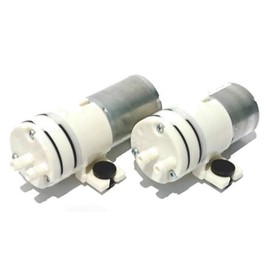
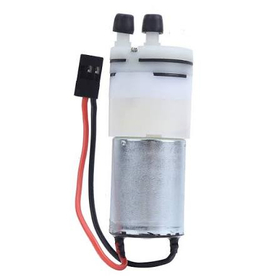
What is a liquid-cooled micro pump? A liquid-cooled micro pump is a small precision pump that circulates coolant within a micro liquid cooling circuit. It sends coolant to components such as cold plates, microchannels, heat exchangers, radiators, and piping, efficiently removing heat from chips, power devices, and battery modules. Compared to conventional pumps, it emphasizes compact design, low noise, low power consumption, stable flow rate, and high reliability. There are various types, including piezoelectric, diaphragm, electromagnetic, small centrifugal, and brushless motor-driven pumps, and it is not a standalone cooling device but a core component of a liquid cooling system that works in conjunction with cooling plates and control electronic components. Global market size of liquid-cooled micro pumps According to the latest research report published by Global Reports titled "Global Market Size, Share, Company Rankings, Sales, and Demand Trend Forecast for Liquid-Cooled Micro Pumps (2026-2032)," the global market is expected to expand from approximately 34.55 million USD in 2025 to about 45.31 million USD in 2026. The compound annual growth rate (CAGR) from 2026 to 2032 is projected to be 23.2%, reaching approximately 158 million USD by 2032.
Added to bookmarks
Bookmarks listBookmark has been removed
Bookmarks listYou can't add any more bookmarks
By registering as a member, you can increase the number of bookmarks you can save and organize them with labels.
Free membership registration
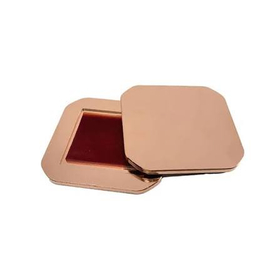
What is a microchannel cooling plate? A microchannel cooling plate is a liquid cooling component that efficiently removes heat by forming fine flow channels inside and circulating coolant near the heat source. It is manufactured through precision machining, chemical etching, brazing, diffusion bonding, and metal additive manufacturing, and is characterized by an increased heat transfer area and a shortened heat conduction distance compared to conventional liquid cooling plates. It has become an important cooling technology for high-heat-generating devices such as AI servers, CPUs, GPUs, high-performance computing (HPC), and power semiconductors, achieving reduced thermal resistance and uniform temperature distribution. Global market size of microchannel cooling plates According to the latest research report published by Global Reports titled "Global Market Size, Share, Company Rankings, Sales, and Demand Trend Forecast for Microchannel Cooling Plates (2026-2032)," the global market is estimated to be valued at approximately 171 million USD in 2025 and is expected to reach around 196 million USD in 2026. The compound annual growth rate (CAGR) from 2026 to 2032 is projected to be 14.9%, with an expansion to approximately 452 million USD by 2032.
Added to bookmarks
Bookmarks listBookmark has been removed
Bookmarks listYou can't add any more bookmarks
By registering as a member, you can increase the number of bookmarks you can save and organize them with labels.
Free membership registration
A small liquid cooling pump is a compact precision device that circulates coolant within a micro liquid cooling circuit to remove heat from heat-generating components such as semiconductor chips, power conversion devices, and battery modules. It is used in combination with components like cold plates, microchannels, heat exchangers, and piping, and is not a standalone device for cooling. Key design requirements include miniaturization, low noise, low power consumption, stable flow rate, and high reliability. According to the latest research report published by Global Reports titled "Global Market Size, Share, Company Rankings, Sales, and Demand Trend Forecast for Small Liquid Cooling Pumps (2026-2032)," the global market is estimated to reach 34.55 million USD in 2025 and 45.31 million USD in 2026, with a compound annual growth rate (CAGR) of 23.2% from 2026 to 2032, expected to reach 158 million USD by 2032. The production volume in 2025 is approximately 874,700 units, with a production capacity of about 1 million units, and the average selling price is estimated to be around 39.5 USD per unit. The product of production volume and average price closely matches the estimated market size.
Added to bookmarks
Bookmarks listBookmark has been removed
Bookmarks listYou can't add any more bookmarks
By registering as a member, you can increase the number of bookmarks you can save and organize them with labels.
Free membership registration
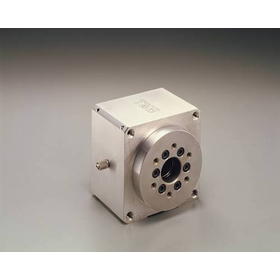
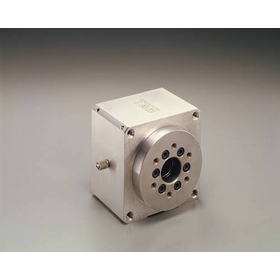
Precision air bearings for semiconductors are high-precision bearings and positioning mechanisms that support and guide moving parts non-contact using a thin air film created by clean compressed air. They are used in semiconductor inspection and measurement, wafer processing, and advanced packaging equipment. Their features include reduced friction and wear, minimized dust generation, smooth scanning motion, and high positioning accuracy. According to the latest research report published by Global Reports titled "Global Market Size, Share, Company Rankings, Sales, and Demand Trend Forecast for Precision Air Bearings for Semiconductors (2026-2032)," the global market is expected to expand from approximately 278 million USD in 2025 to around 305 million USD in 2026, with an average annual growth rate (CAGR) of 8.2% from 2026 to 2032, reaching approximately 490 million USD by 2032.
Added to bookmarks
Bookmarks listBookmark has been removed
Bookmarks listYou can't add any more bookmarks
By registering as a member, you can increase the number of bookmarks you can save and organize them with labels.
Free membership registration
What is a high-temperature mica capacitor? A high-temperature mica capacitor is a fixed capacitor that uses natural mica or regenerated mica paper as the dielectric, maintaining stable electrical characteristics even in high-temperature environments of around 150 to 200°C. It features high insulation resistance, low dielectric loss, excellent Q value, voltage withstand performance, and stability of capacitance, making it suitable for high-reliability electronic circuits in aerospace, defense, oil drilling, and industrial heating equipment. Global market size of high-temperature mica capacitors According to the latest research report published by Global Reports titled "Global Market Size, Share, Company Ranking, Sales, and Demand Trend Forecast for High-Temperature Mica Capacitors (2026-2032)," the global market is expected to expand from approximately 225 million USD in 2025 to about 246 million USD in 2026, growing at a compound annual growth rate (CAGR) of 3.7% from 2026 to 2032, and is projected to reach around 306 million USD by 2032.
Added to bookmarks
Bookmarks listBookmark has been removed
Bookmarks listYou can't add any more bookmarks
By registering as a member, you can increase the number of bookmarks you can save and organize them with labels.
Free membership registration
What is greenhouse anti-fog film? Greenhouse anti-fog film is a high-performance plastic film used as a covering material for agricultural greenhouses. It is designed to suppress the reduction of light transmittance due to condensation and the dripping of water droplets onto crops. By incorporating anti-fog agents and hydrophilic coatings, it maintains a state that minimizes the formation of water droplets on the film surface, contributing to improved light transmission, humidity management within the greenhouse, and reduced risk of diseases. Global market size for greenhouse anti-fog film According to the latest research report published by Global Reports, titled "Global Market Size, Share, Company Rankings, Sales, and Demand Trend Forecast for Greenhouse Anti-Fog Film (2026-2032)," the global market is expected to expand from approximately 6.143 billion USD in 2025 to about 6.499 billion USD in 2026, growing at a compound annual growth rate (CAGR) of 5.8% from 2026 to 2032, and is projected to reach approximately 9.115 billion USD by 2032.
Added to bookmarks
Bookmarks listBookmark has been removed
Bookmarks listYou can't add any more bookmarks
By registering as a member, you can increase the number of bookmarks you can save and organize them with labels.
Free membership registration
Automotive thick film paste refers to a paste-like material used to form functional films on the surfaces of substrates for automotive electronic components, ceramic circuits, various sensors, heaters, and power control modules. With the backdrop of the electrification of vehicles, the advancement of electronic control, and the enhancement of safety performance, the demand for high-reliability materials with conductivity, resistance characteristics, insulation, and heat resistance is expanding. According to the latest research report published by Global Reports titled "Global Market Size, Share, Company Rankings, Sales, and Demand Trend Forecast for Automotive Thick Film Paste (2026-2032)," the global market size for automotive thick film paste is expected to expand from approximately 1,577 million USD in 2025 to about 1,755 million USD in 2026. It is projected to continue growing at a compound annual growth rate (CAGR) of 5.1%, reaching approximately 2,372 million USD by 2032.
Added to bookmarks
Bookmarks listBookmark has been removed
Bookmarks listYou can't add any more bookmarks
By registering as a member, you can increase the number of bookmarks you can save and organize them with labels.
Free membership registration
Reinforced thermoplastic composite pipes (RTP pipes) are flexible pipes made from thermoplastic resins such as polyethylene and polyamide as the base material, reinforced with aramid fibers, polyester fibers, glass fibers, and steel wires. They possess corrosion resistance, pressure resistance, lightweight properties, and ease of transport in rolls, and are used in the transportation of oil and gas, pressurized water and accompanying water, chemical fluids, as well as in mining and water supply and drainage systems. According to the latest research report published by Global Reports titled "Global Market Size, Share, Company Rankings, Revenue, and Demand Trend Forecast for Reinforced Thermoplastic Composite Pipes (RTP Pipes) (2026-2032)," the global market is expected to expand from approximately $4.459 billion in 2025 to about $4.637 billion in 2026, growing at a compound annual growth rate (CAGR) of 4.3% from 2026 to 2032, and is projected to reach approximately $5.969 billion by 2032.
Added to bookmarks
Bookmarks listBookmark has been removed
Bookmarks listYou can't add any more bookmarks
By registering as a member, you can increase the number of bookmarks you can save and organize them with labels.
Free membership registration
Poly(methyl methacrylate) film (PMMA film) is a transparent thermoplastic resin film made primarily from poly(methyl methacrylate) resin, also known as acrylic film. It has excellent light transmission, weather resistance, ultraviolet (UV) shielding properties, and is lightweight, making it suitable for applications in a wide range of fields such as consumer electronics, construction, automotive, advertising signage, and reflective sheets, as well as for heating molding and lamination processes.
Added to bookmarks
Bookmarks listBookmark has been removed
Bookmarks listYou can't add any more bookmarks
By registering as a member, you can increase the number of bookmarks you can save and organize them with labels.
Free membership registration
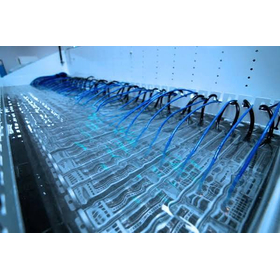
What is an immersion cooling system? An immersion cooling system is a cooling facility for data centers that directly immerses servers, storage, and network equipment in an insulating cooling liquid to remove heat from the entire equipment. It is characterized by its ability to accommodate high-density implementations, reduce reliance on fans, stabilize component temperatures, and design heat dissipation methods according to the facility. The market supply capacity is approximately 560,000 kW, the average selling price is estimated at about $900 per kW on an ex-works (EXW) basis, and the system's gross profit margin is estimated to be around 35%. Global market size of immersion cooling systems According to the latest research report published by Global Reports titled "Global Market Size, Share, Company Rankings, Sales, and Demand Trend Forecast for Immersion Cooling Systems (2026-2032)," the immersion cooling system market is expected to expand rapidly due to the increasing heat density of AI servers and the growing power and cooling loads of data centers. The global market is projected to grow from $505 million in 2025 to $610 million in 2026, expanding at a compound annual growth rate (CAGR) of 19.3% from 2026 to 2032, and is expected to reach $1.729 billion by 2032.

Added to bookmarks
Bookmarks listBookmark has been removed
Bookmarks listYou can't add any more bookmarks
By registering as a member, you can increase the number of bookmarks you can save and organize them with labels.
Free membership registration
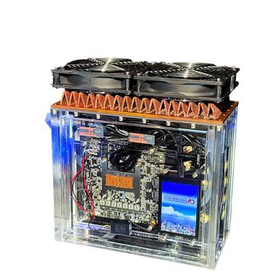
What is a two-phase cooling system? A two-phase cooling system involves immersing servers, storage, and network equipment in an insulating cooling liquid with a low boiling point, using the heat generated to evaporate the liquid. The resulting vapor is cooled in a condenser and returned to liquid form, circulating back into the tank through a phase change cycle, efficiently removing heat from the entire equipment. It is characterized by its ability to maintain a uniform temperature distribution while reducing reliance on fans, supporting high-density computing environments. Global Market Size of Two-Phase Cooling Systems According to the latest research report published by Global Reports titled "Global Market Size, Share, Company Rankings, Revenue, and Demand Trend Forecast for Two-Phase Cooling Systems (2026-2032)," the global market for two-phase cooling systems is expected to expand from $156 million in 2025 to $187 million in 2026, with a projected compound annual growth rate (CAGR) of 19.8% from 2026 to 2032, reaching $553 million by 2032. With the rise of generative AI, GPU clusters, and high-performance computing (HPC), demand is expected to grow as a cooling technology that addresses the high heat density of servers.
Added to bookmarks
Bookmarks listBookmark has been removed
Bookmarks listYou can't add any more bookmarks
By registering as a member, you can increase the number of bookmarks you can save and organize them with labels.
Free membership registration
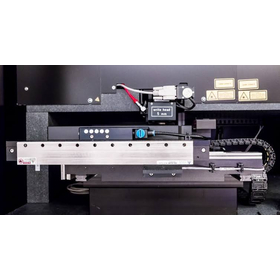
A direct-write exposure device is a machine that uses controllable energy beams such as lasers or electron beams to directly draw circuits or fine structures on a substrate coated with photoresist. It is suitable for small-batch production, prototyping, and accommodating design changes, as it can form patterns without the need for traditional photomasks. It is used in semiconductor research and development, MEMS, advanced packaging, display masks, microfluidic chips, and optoelectronic devices.
Added to bookmarks
Bookmarks listBookmark has been removed
Bookmarks listYou can't add any more bookmarks
By registering as a member, you can increase the number of bookmarks you can save and organize them with labels.
Free membership registration
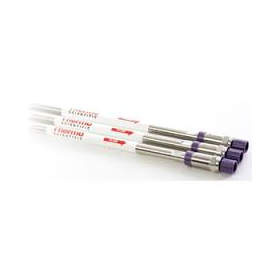
What is HPLC column packing material? HPLC column packing material is a functional material filled inside high-performance liquid chromatography (HPLC) columns, used for the separation, analysis, and purification of sample components. The main substrates include silica, polymers, and hybrid particles, and by introducing bonded phases, ion exchange groups, and hydrophilic/hydrophobic functional groups, it accommodates various separation mechanisms. The design of particle size, pore size, and surface chemistry affects separation efficiency, selectivity, peak shape, pressure resistance, chemical stability, and lifespan. Global Market Size of HPLC Column Packing Material According to the latest research report published by Global Reports titled "Global Market Size, Share, Company Rankings, Sales, and Demand Trend Forecast for HPLC Column Packing Material (2026-2032)," the global market for HPLC column packing materials is growing against the backdrop of increasing demand for high-precision separation in pharmaceutical development, biotechnology, food safety testing, and environmental analysis. The market size is expected to expand from 1.175 billion USD in 2025 to 1.242 billion USD in 2026, with a projected average annual growth rate (CAGR) of 5.9% from 2026 to 2032, reaching 1.749 billion USD by 2032.
Added to bookmarks
Bookmarks listBookmark has been removed
Bookmarks listYou can't add any more bookmarks
By registering as a member, you can increase the number of bookmarks you can save and organize them with labels.
Free membership registration
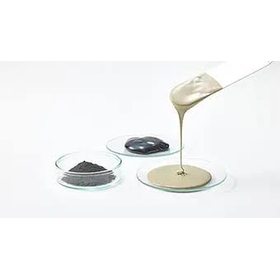
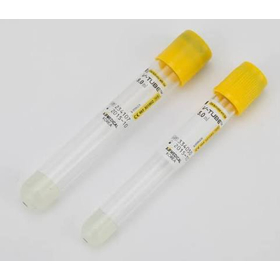
What is serum separation gel? The global market for serum separation gel is expected to expand against the backdrop of stable demand for clinical testing. The market size is projected to increase from approximately 133 million USD in 2025 to about 140 million USD in 2026, with an average annual growth rate (CAGR) of 5.8% from 2026 to 2032, reaching approximately 196 million USD by 2032. The global production volume in 2025 is estimated to be around 7,380 tons, supported by continuous demand as an essential consumable material for blood tests. Global Market Size of Serum Separation Gel According to the latest research report published by Global Reports, titled "Global Market Size, Share, Company Rankings, Sales, and Demand Trend Forecast for Serum Separation Gel (2026-2032)," the global market size for serum separation gel is expected to expand from approximately 133 million USD in 2025 to about 140 million USD in 2026. It is forecasted to continue growing at an average annual growth rate (CAGR) of 5.8%, reaching approximately 196 million USD by 2032.
Added to bookmarks
Bookmarks listBookmark has been removed
Bookmarks listYou can't add any more bookmarks
By registering as a member, you can increase the number of bookmarks you can save and organize them with labels.
Free membership registration
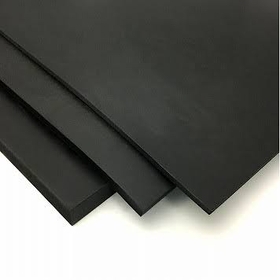
What are wear-resistant rubber products? The global market for wear-resistant rubber products is expected to expand from 408 million USD in 2025 to 439 million USD in 2026, with a compound annual growth rate (CAGR) of 5.5% from 2026 to 2032, reaching approximately 605 million USD by 2032. The sales volume is also projected to increase from 91,144 tons in 2025 to 127,287 tons by 2032, with a CAGR of 4.87% during the same period. In mining, metallurgy, power generation, and bulk material handling, wear and impact from ores and gravel significantly affect equipment lifespan, making wear-resistant rubber products crucial for reducing maintenance costs and downtime. Global Market Size of Wear-Resistant Rubber Products According to the latest research report published by Global Reports, titled "Global Market Size, Share, Company Rankings, Sales, and Demand Trend Forecast for Wear-Resistant Rubber Products (2026-2032)," the global market size for wear-resistant rubber products is expected to expand from approximately 408 million USD in 2025 to about 439 million USD in 2026. It is anticipated to continue growing at a CAGR of 5.5%, reaching around 605 million USD by 2032.
Added to bookmarks
Bookmarks listBookmark has been removed
Bookmarks listYou can't add any more bookmarks
By registering as a member, you can increase the number of bookmarks you can save and organize them with labels.
Free membership registration
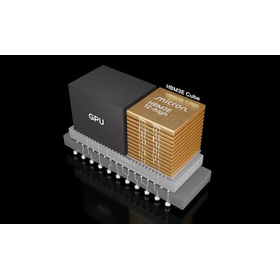
What is HBM3E chip? The global market for HBM3E chips is expected to expand from 652 million USD in 2025 to 906 million USD in 2026, with a compound annual growth rate (CAGR) of 39.0% from 2026 to 2032, reaching 6.535 billion USD by 2032. The production volume in 2025 is estimated to be around 930,000 units, with a production capacity of approximately 1.16 million units, and the industry average gross profit margin is said to be between 50% and 70%. HBM3E (High Bandwidth Memory 3 Extended) is a high-performance memory that extends the fourth generation of high bandwidth memory, and its importance is increasing for applications that require high-speed processing of vast amounts of data, such as AI learning, large-scale inference, and scientific computing.
Added to bookmarks
Bookmarks listBookmark has been removed
Bookmarks listYou can't add any more bookmarks
By registering as a member, you can increase the number of bookmarks you can save and organize them with labels.
Free membership registration
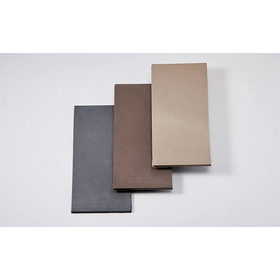
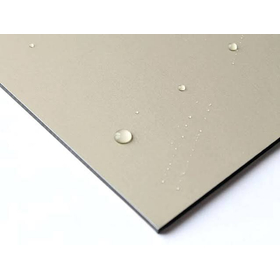
PVDF aluminum composite panels (PVDF ACP) refer to a type of metal composite building material that combines lightweight properties, workability, smoothness, weather resistance, and color retention. The global market for PVDF aluminum composite panels is expected to expand from USD 2.862 billion in 2025 to USD 3.012 billion in 2026, growing at a compound annual growth rate (CAGR) of 5.2% from 2026 to 2032, and reaching USD 4.078 billion by 2032. The global effective production capacity in 2025 is estimated to be approximately 21.8 million square meters, with sales volume around 14.736 million square meters. The average factory shipment price is estimated to be about USD 19.42 per square meter, and the industry's gross profit margin is estimated to be around 18-28%. PVDF aluminum composite panels are utilized in building exteriors, roofs, signage, and other applications.
Added to bookmarks
Bookmarks listBookmark has been removed
Bookmarks listYou can't add any more bookmarks
By registering as a member, you can increase the number of bookmarks you can save and organize them with labels.
Free membership registration
Polyvinylidene fluoride (PVDF) fluoropolymer coatings refer to a type of coating that is expected to expand from $895 million in 2025 to $943 million in 2026, with a compound annual growth rate (CAGR) of 5.3% from 2026 to 2032, reaching $1.286 billion by 2032. The global effective production capacity in 2025 is estimated to be approximately 138,000 tons, with sales volume around 104,681 tons and an average factory shipment price of about $8,547 per ton, while the industry's gross profit margin is estimated to be around 28-38%. Polyvinylidene fluoride (PVDF) fluoropolymer coatings are high-performance coatings that support the longevity of building exteriors, featuring excellent weather resistance, color retention, chalk resistance, corrosion resistance, and chemical resistance.
Added to bookmarks
Bookmarks listBookmark has been removed
Bookmarks listYou can't add any more bookmarks
By registering as a member, you can increase the number of bookmarks you can save and organize them with labels.
Free membership registration