Immersion Cooling System Market Size 2026-2032: Significant Expansion with a Growth Rate of 19.3%
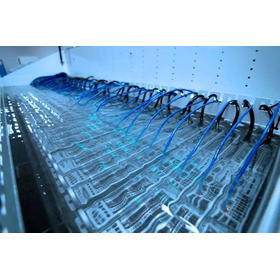
What is an immersion cooling system? An immersion cooling system is a cooling facility for data centers that directly immerses servers, storage, and network equipment in an insulating cooling liquid to remove heat from the entire equipment. It is characterized by its ability to accommodate high-density implementations, reduce reliance on fans, stabilize component temperatures, and design heat dissipation methods according to the facility. The market supply capacity is approximately 560,000 kW, the average selling price is estimated at about \$900 per kW on an ex-works (EXW) basis, and the system's gross profit margin is estimated to be around 35%. Global market size of immersion cooling systems According to the latest research report published by Global Reports titled "Global Market Size, Share, Company Rankings, Sales, and Demand Trend Forecast for Immersion Cooling Systems (2026-2032)," the immersion cooling system market is expected to expand rapidly due to the increasing heat density of AI servers and the growing power and cooling loads of data centers. The global market is projected to grow from \$505 million in 2025 to \$610 million in 2026, expanding at a compound annual growth rate (CAGR) of 19.3% from 2026 to 2032, and is expected to reach \$1.729 billion by 2032.
Inquire About This Product
basic information
Structure of Expansion and Implementation Costs for AI Infrastructure The main demand sources for immersion cooling systems are hyperscale clouds, AI training clusters, HPC, colocation facilities, cryptocurrency mining, enterprise computing facilities, edge locations, and government computing infrastructure. In particular, the upgrade of GPUs and the establishment of large-scale clusters serve as opportunities to transition to immersion cooling in conjunction with server updates, rather than overhauling existing air-cooled facilities. Procurement conditions vary by customer. Large-scale cloud operators prioritize long-term verification, supply chain audits, comprehensive contracts, and phased implementation. In HPC and government agencies, bidding, performance verification, and acceptance testing are crucial, while mining operators prioritize cooling capacity, compatibility with electrical equipment, delivery times, and installation speed. In enterprise and edge applications, there is expected demand for integrated packages that include servers, racks, monitoring devices, cooling distribution units (CDUs), and on-site trial operations.
Price range
Delivery Time
Applications/Examples of results
Competition between Single-phase and Two-phase Systems and Equipment Design Immersion cooling systems can be classified into single-phase cooling, two-phase cooling, open-bus type, sealed chassis type, and hybrid type. The main categories based on capacity are under 100 kW, 100-200 kW, and over 200 kW. In large-scale deployment of commercial equipment, the single-phase system, which excels in scalability, is a strong contender, while in HPCs with extremely high heat density and specialized AI clusters, the two-phase system also becomes an option. In the future, a gradual decrease in average selling prices is expected due to tank manufacturing, CDU integration, and mass production of control equipment. However, in AI and HPC facilities that require high redundancy, the high price range may be maintained. Challenges in implementation include compatibility of the coolant and materials, server warranties, maintainability, coolant management, connection with facility-side water cooling systems, and local commissioning capabilities. Retrofitting existing air-cooled data centers will require changes in equipment layout and piping, making it crucial to assess the timing for upgrades and the associated costs.
Company information

Global Reports integrates industrial information from around the world and provides highly accurate market intelligence to support corporate decision-making. We deliver in-depth analyses based on numerical data and facts, including market size, share, industry structure, price trends, growth forecasts, rankings of major companies, and competitive trends, with clear information categorized by country, region, and application. Leveraging a rich database that has supported the business growth of over 65,000 companies and an international research network, we accompany our clients in their global expansion and continuous growth.