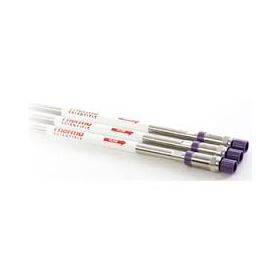
HPLC column packing materials in the Japanese market: projected to reach 1,242 million USD by 2026, with a growth rate of 5.9%.
What is HPLC column packing material? HPLC column packing material is a functional material filled inside high-performance liquid chromatography (HPLC) columns, used for the separation, analysis, and purification of sample components. The main substrates include silica, polymers, and hybrid particles, and by introducing bonded phases, ion exchange groups, and hydrophilic/hydrophobic functional groups, it accommodates various separation mechanisms. The design of particle size, pore size, and surface chemistry affects separation efficiency, selectivity, peak shape, pressure resistance, chemical stability, and lifespan. Global Market Size of HPLC Column Packing Material According to the latest research report published by Global Reports titled "Global Market Size, Share, Company Rankings, Sales, and Demand Trend Forecast for HPLC Column Packing Material (2026-2032)," the global market for HPLC column packing materials is growing against the backdrop of increasing demand for high-precision separation in pharmaceutical development, biotechnology, food safety testing, and environmental analysis. The market size is expected to expand from 1.175 billion USD in 2025 to 1.242 billion USD in 2026, with a projected average annual growth rate (CAGR) of 5.9% from 2026 to 2032, reaching 1.749 billion USD by 2032.
Inquire About This Product
basic information
Demand for Pharmaceutical Analysis and Separation of Complex Samples The main demand sources for HPLC column packing materials are pharmaceutical companies, contract research and manufacturing organizations (CROs and CMOs), biotechnology companies, third-party testing organizations, and universities and research institutions. Important applications also include food safety testing, environmental monitoring, and clinical research. With advancements in new drug development and the increasing sophistication of quality control requirements, the need for high-precision separation of active ingredients, related substances, and degradation products is growing. In particular, for complex samples containing biomolecules such as peptides and proteins, as well as trace impurities, it is crucial to achieve both separation selectivity and reproducibility. HPLC column packing materials are required to minimize the impact of changes in analytical method conditions and to maintain stable retention times and peak shapes across different manufacturing lots.
Price range
Delivery Time
Applications/Examples of results
Technology Development by Particle Size and Substrate Type HPLC column packing materials are classified into silica-based, polymer-based, and other materials. By particle size, they are divided into conventional particles and sub-2µm particles, and by intended use, into analytical and preparative purposes. Sub-2µm particles are suitable for high separation efficiency and reduced analysis time, but require optimization of device performance and packing structure to handle the increased pressure within the column. In silica-based packing materials, control of surface silanol groups and uniformity of the bonded phase are important design factors, while in polymer-based materials, chemical resistance and pH applicability range are crucial. Hybrid particles are positioned as an option that balances mechanical strength and chemical stability. In competition among manufacturers, the ability to optimize packing materials according to the separation target, in addition to particle size distribution, pore structure, and surface modification technology, leads to differentiation.
Company information

Global Reports integrates industrial information from around the world and provides highly accurate market intelligence to support corporate decision-making. We deliver in-depth analyses based on numerical data and facts, including market size, share, industry structure, price trends, growth forecasts, rankings of major companies, and competitive trends, with clear information categorized by country, region, and application. Leveraging a rich database that has supported the business growth of over 65,000 companies and an international research network, we accompany our clients in their global expansion and continuous growth.