World Semiconductor Precision Air Bearing Industry Outlook 2026-2032: Analyzing the Background of Increasing Demand and a Growth Rate of 8.2%
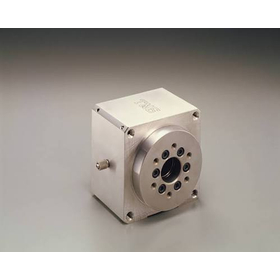
Precision air bearings for semiconductors are high-precision bearings and positioning mechanisms that support and guide moving parts non-contact using a thin air film created by clean compressed air. They are used in semiconductor inspection and measurement, wafer processing, and advanced packaging equipment. Their features include reduced friction and wear, minimized dust generation, smooth scanning motion, and high positioning accuracy. According to the latest research report published by Global Reports titled "Global Market Size, Share, Company Rankings, Sales, and Demand Trend Forecast for Precision Air Bearings for Semiconductors (2026-2032)," the global market is expected to expand from approximately 278 million USD in 2025 to around 305 million USD in 2026, with an average annual growth rate (CAGR) of 8.2% from 2026 to 2032, reaching approximately 490 million USD by 2032.
Inquire About This Product
basic information
Demand and Market Growth Factors for Precision Air Bearings in Semiconductors The global production volume in 2025 is estimated to be approximately 1.16 million units. The main applications supporting market expansion are wafer inspection and measurement, dicing, grinding, thinning, exposure and alignment, and advanced packaging. Particularly, with the advancement of semiconductor technologies for artificial intelligence, advanced logic, memory, and high-bandwidth memory-related equipment, the importance of motion control technologies that suppress minute positional deviations and vibrations is increasing. In precision air bearings for semiconductors, stability of scanning speed, geometric accuracy, low particle generation, and repeatability significantly influence measurement quality and the processing capability of the equipment. Product Structure and Technical Differentiation of Precision Air Bearings for Semiconductors Precision air bearings for semiconductors are classified into standalone porous bearing components, air bearing spindles, planar stages, and multi-axis positioning systems. While standalone components are relatively easy to standardize, spindles and stages require custom designs based on wafer diameter, travel distance, load capacity, speed, straightness, thermal stability, vibration, and cleanroom conditions. Competitiveness is determined not only by bearing shape and taper structure but also by ultra-precision machining, air film control, structural dynamics, direct drive, integration with measurement instruments, error correction, and design capabilities tailored to specific applications.
Price range
Delivery Time
Applications/Examples of results
In recent product development, integrated motion modules that combine air bearings with iron core-less linear motors, high-resolution encoders, feedback from interferometers, granite structures, and multi-axis control are being emphasized. For equipment manufacturers, this leads to a reduction in design and adjustment periods, while the supply side is required to ensure the performance of the entire system. On the other hand, equipment manufacturers with proprietary control technologies continue to find it important to procure individual components and incorporate them into their own designs. Precision Classification and Technical Challenges of Air Bearings for Semiconductors Positioning accuracy is classified into standard accuracy, accuracy of 1μm or more, high precision of 0.2 to 1μm, ultra-high precision of 0.05 to 0.2μm, and nanoscale accuracy of less than 0.05μm. For precision air bearings used in semiconductors, it is necessary to comprehensively optimize not only static positioning accuracy but also dynamic stiffness during acceleration and deceleration, thermal displacement, control bandwidth, air consumption, and foreign matter management. Particularly in the processing of wafer thinning and compound semiconductors such as silicon carbide (SiC), rotational accuracy and vibration control are directly linked to processing quality. While magnetic levitation systems and high-performance mechanical guides are also competing, air bearings become a strong option for applications that require low wear and low dust generation in a clean environment under atmospheric pressure.
Company information

Global Reports integrates industrial information from around the world and provides highly accurate market intelligence to support corporate decision-making. We deliver in-depth analyses based on numerical data and facts, including market size, share, industry structure, price trends, growth forecasts, rankings of major companies, and competitive trends, with clear information categorized by country, region, and application. Leveraging a rich database that has supported the business growth of over 65,000 companies and an international research network, we accompany our clients in their global expansion and continuous growth.