Forecast for the small piezoelectric linear actuator market size 2026: Expected to reach 1,122 million USD by 2032.
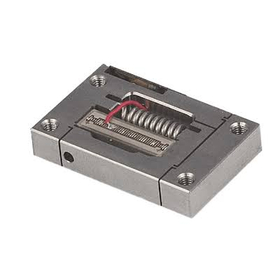
A small piezoelectric linear actuator is a solid-state drive device that utilizes the inverse piezoelectric effect generated when a voltage is applied to piezoelectric materials, converting electrical signals into minute displacements or precise linear motion. With a compact structure, it achieves high-speed response, high positioning accuracy, low electromagnetic interference, and nanometer-level displacement control, making it suitable for applications in semiconductor manufacturing equipment, precision optical instruments, medical devices, automotive electronics, inkjet printing, industrial automation, and scientific measurement instruments.
Inquire About This Product
basic information
Global Market Size of Small Piezoelectric Linear Actuators According to the latest research report published by Global Reports titled "Global Market Size, Share, Company Rankings, Sales, and Demand Trend Forecast for Small Piezoelectric Linear Actuators (2026-2032)," the global market is estimated to be approximately 787 million USD in 2025 and is expected to expand to about 827 million USD in 2026. The compound annual growth rate (CAGR) from 2026 to 2032 is projected to be 5.2%, with an expected reach of approximately 1.122 billion USD by 2032. The global production volume in 2025 is estimated to be around 11,579,000 units, with an average market price of about 68 USD per unit, and the industry's gross profit margin generally ranges from 30% to 40%.
Price range
Delivery Time
Applications/Examples of results
Driving methods and technical challenges supporting ultra-precision positioning Small piezoelectric linear actuators can be classified into laminated, bending, shear, tube, displacement amplification, and piezoelectric motor types. Based on the driving principle, they can be categorized into stepping, inertial, and ultrasonic methods, and materials used include lead zirconate titanate (PZT) piezoelectric ceramics, single crystal piezoelectric materials, polyvinylidene fluoride (PVDF) piezoelectric polymers, and composite piezoelectric materials. Depending on the application, a design that balances displacement, generated force, response speed, durability, and control accuracy is required. In electromagnetic motors and pneumatic/hydraulic actuators, friction, backlash, device size, and response delay can complicate the control of ultra-small displacements. In contrast, the piezoelectric method directly utilizes material deformation, making it suitable for high-speed and highly reproducible positioning. However, actual performance is influenced by the compositional stability of piezoelectric ceramics, yield rates of multilayer co-firing, polarization treatment, suppression of micro-cracks, preloading design of packages, long-term change testing, and the accuracy of closed-loop calibration. As miniaturization progresses, even slight variations in the manufacturing process can significantly impact displacement characteristics and reliability.
Company information

Global Reports integrates industrial information from around the world and provides highly accurate market intelligence to support corporate decision-making. We deliver in-depth analyses based on numerical data and facts, including market size, share, industry structure, price trends, growth forecasts, rankings of major companies, and competitive trends, with clear information categorized by country, region, and application. Leveraging a rich database that has supported the business growth of over 65,000 companies and an international research network, we accompany our clients in their global expansion and continuous growth.