The greenhouse anti-fog film market is rapidly growing and is expected to reach a scale of 6,499 million USD by 2026.
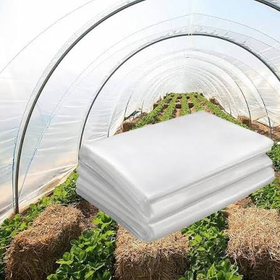
What is greenhouse anti-fog film? Greenhouse anti-fog film is a high-performance plastic film used as a covering material for agricultural greenhouses. It is designed to suppress the reduction of light transmittance due to condensation and the dripping of water droplets onto crops. By incorporating anti-fog agents and hydrophilic coatings, it maintains a state that minimizes the formation of water droplets on the film surface, contributing to improved light transmission, humidity management within the greenhouse, and reduced risk of diseases. Global market size for greenhouse anti-fog film According to the latest research report published by Global Reports, titled "Global Market Size, Share, Company Rankings, Sales, and Demand Trend Forecast for Greenhouse Anti-Fog Film (2026-2032)," the global market is expected to expand from approximately 6.143 billion USD in 2025 to about 6.499 billion USD in 2026, growing at a compound annual growth rate (CAGR) of 5.8% from 2026 to 2032, and is projected to reach approximately 9.115 billion USD by 2032.
Inquire About This Product
basic information
Factors Supporting the Market Size and Demand for Greenhouse Anti-Fog Films The global sales volume in 2025 is estimated to be around 3.15 million tons, with an average selling price of $950 per ton. The global production capacity is estimated to be about 4.2 million tons, and the industry average gross profit margin is estimated to be around 22%. The background for this market expansion includes the spread of facility horticulture, demand for stable crop production, and the high functionality of agricultural materials. Greenhouse anti-fog films reduce light scattering and shading caused by condensation droplets, which are issues with conventional films, creating a cultivation environment that allows crops to utilize light more effectively. Improving photosynthesis conditions can lead to increased yield and quality, making it significant for production sites aiming to reduce the use of fertilizers and pesticides.
Price range
Delivery Time
Applications/Examples of results
Types and Material Technology of Anti-Fog Films for Greenhouses Anti-fog films for greenhouses can be broadly classified into surface coating type and internal additive type based on the method of imparting anti-fog functionality. The coating type enhances the hydrophilicity of the film surface to spread condensation water as a thin water film, where the uniformity and durability of the surface treatment affect performance. The internal additive type incorporates anti-fog agents into the resin, demonstrating anti-fog properties through the surface migration of the components. Since the durability of the effect varies depending on the formulation design and usage environment, it is necessary to evaluate not only the initial performance but also the anti-fogging and transparency during long-term use. The main materials include polyethylene (PE), linear low-density polyethylene (LLDPE), polyolefin, ethylene-vinyl acetate copolymer (EVA), and polyvinyl chloride (PVC). Ultraviolet stabilizers, anti-fog agents, antioxidants, and light stabilizers are also important components, and the combination of materials affects weather resistance, optical performance, and product lifespan. The market offers products with a usage period ranging from 12 to 18 months to those designed for 3 to 5 years, requiring selection based on the applications and renewal cycles of the greenhouse.
Company information

Global Reports integrates industrial information from around the world and provides highly accurate market intelligence to support corporate decision-making. We deliver in-depth analyses based on numerical data and facts, including market size, share, industry structure, price trends, growth forecasts, rankings of major companies, and competitive trends, with clear information categorized by country, region, and application. Leveraging a rich database that has supported the business growth of over 65,000 companies and an international research network, we accompany our clients in their global expansion and continuous growth.