Future Trends of the Global Automotive Thick Film Paste Industry 2026: Growth Path from 1,755 Million USD to 2,372 Million USD
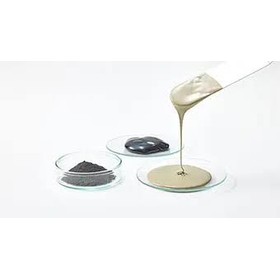
Automotive thick film paste refers to a paste-like material used to form functional films on the surfaces of substrates for automotive electronic components, ceramic circuits, various sensors, heaters, and power control modules. With the backdrop of the electrification of vehicles, the advancement of electronic control, and the enhancement of safety performance, the demand for high-reliability materials with conductivity, resistance characteristics, insulation, and heat resistance is expanding. According to the latest research report published by Global Reports titled "Global Market Size, Share, Company Rankings, Sales, and Demand Trend Forecast for Automotive Thick Film Paste (2026-2032)," the global market size for automotive thick film paste is expected to expand from approximately 1,577 million USD in 2025 to about 1,755 million USD in 2026. It is projected to continue growing at a compound annual growth rate (CAGR) of 5.1%, reaching approximately 2,372 million USD by 2032.
Inquire About This Product
basic information
Product Composition and Basic Functions of Automotive Thick Film Paste Automotive thick film paste is classified into conductor paste, resistor paste, dielectric paste, insulating paste, heater paste, and sensor electrode paste. It is applied to substrates such as ceramics, glass, and metallized substrates, and by firing or curing, it forms conductive pathways, electrodes, resistor layers, insulating layers, protective layers, and sensing function layers. Compared to general electronic materials, automotive thick film paste is required to maintain performance even in environments subjected to prolonged temperature changes, vibrations, humidity, voltage loads, and exposure to chemicals. The performance of automotive thick film paste cannot be evaluated solely by conductivity or resistance values. Adhesion to the substrate, compatibility of thermal expansion coefficients, uniformity of film thickness, electrical characteristics after firing, and stability during long-term use are also important evaluation criteria. In product design, it is necessary to optimize the formulation of the paste, substrate materials, printing processes, and firing conditions in an integrated manner.
Price range
Delivery Time
Applications/Examples of results
Quality and Cost Influenced by Raw Materials and Manufacturing Processes The main raw materials for thick film paste used in automobiles include conductive metal powders such as silver, palladium, platinum, gold, copper, and nickel. For resistor applications, ruthenium-based compounds and metal oxide powders are used, while for dielectric and insulation applications, glass frit, alumina, silica, barium titanate, and zirconia are utilized. Additionally, resins, solvents, dispersants, plasticizers, thickeners, and rheology modifiers are blended to adjust printability and film formation characteristics. To stabilize the quality of thick film paste for automobiles, it is essential to strictly manage the purity of raw materials, particle size distribution of powders, dispersion state, thermal expansion properties, and variations between batches. Fluctuations in the prices of conductive metal powders affect manufacturing costs, while merely reducing material costs may lead to a decline in conductivity and durability. Therefore, comprehensively managing material usage, printing yield, firing energy, and defect rates is crucial for enhancing the profitability of manufacturers.
Company information

Global Reports integrates industrial information from around the world and provides highly accurate market intelligence to support corporate decision-making. We deliver in-depth analyses based on numerical data and facts, including market size, share, industry structure, price trends, growth forecasts, rankings of major companies, and competitive trends, with clear information categorized by country, region, and application. Leveraging a rich database that has supported the business growth of over 65,000 companies and an international research network, we accompany our clients in their global expansion and continuous growth.