Triethanolamine Borate Market Size 2026-2032: Significant Expansion with a Growth Rate of 4.2%
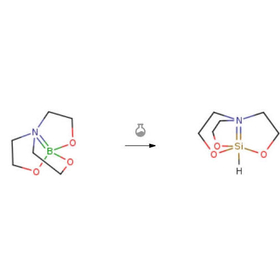
Triethanolamine Borate is a functional chemical material containing nitrogen and boron, obtained by reacting triethanolamine with boric acid (CAS number 283-56-7). It is generally supplied as a colorless to light yellow transparent viscous liquid, is water-soluble, and imparts properties such as rust prevention, lubrication, wear resistance, pH buffering, and low foaming in metalworking oils and industrial lubricants. The global effective production capacity in 2025 is estimated to be about 31,000 tons, with production and actual consumption estimated at around 20,364 tons, resulting in an equipment utilization rate of approximately 65.7%. The average factory shipment price is about \$1,910 per ton, and the industry's gross profit margin is expected to be around 20-29%.
Inquire About This Product
basic information
Manufacturing Characteristics and Quality Control of Triethanolamine Borate The main raw materials for triethanolamine borate are triethanolamine, boric acid, process water, reaction aids, and packaging materials. In manufacturing, it is necessary to properly manage reaction ratios and dehydration conditions to ensure product stability and performance according to its intended use. In the market, products are categorized into standard grade and modified grade, standard concentrated products (with active ingredient concentration below 90%) and high-content grade (90% or more), as well as liquid, paste, and solid forms. It is difficult to assess performance based solely on product name and price; quality indicators such as active ingredient concentration, free triethanolamine, free boric acid, color tone, and storage stability influence suitability for applications. While Chinese manufacturers play a central role in commercial supply, there are also production capabilities for specialty amine borates and production bases for self-consumption in regions like North America. In the triethanolamine borate market, not only basic reaction technology but also consistency of quality between batches, resistance to hard water, low-temperature fluidity, foaming properties, and compatibility with metals determine competitiveness. Downstream manufacturers need to verify rust prevention and lubricity under actual formulation conditions, making it important to provide stable supply systems along with application-specific test data and technical support.
Price range
Delivery Time
Applications/Examples of results
Applications and Market Growth of Triethanolamine Borate The largest demand sector for triethanolamine borate is in metalworking oils and lubricants. In the manufacturing processes of automotive parts, general machinery, bearings, molds, and metalworking products, there is a need for corrosion inhibition, friction reduction, and protection of tools and workpieces during processing. With the spread of water-based metalworking oils, the importance of multifunctional additives that combine rust prevention, lubrication, and pH buffering is increasing. Emphasis is also placed on longevity, low foaming, reduction of residues, and compatibility with multiple metals such as steel, copper, and aluminum, and triethanolamine borate is expected to play a role in supporting the performance and stability of the entire formulation.
Company information
Global Reports integrates industrial information from around the world and provides highly accurate market intelligence to support corporate decision-making. We deliver in-depth analyses based on numerical data and facts, including market size, share, industry structure, price trends, growth forecasts, rankings of major companies, and competitive trends, with clear information categorized by country, region, and application. Leveraging a rich database that has supported the business growth of over 65,000 companies and an international research network, we accompany our clients in their global expansion and continuous growth.