Market Size of Abrasion-Resistant Rubber Products 2026-2032: Significant Expansion with a Growth Rate of 5.5%
What are wear-resistant rubber products? The global market for wear-resistant rubber products is expected to expand from 408 million USD in 2025 to 439 million USD in 2026, with a compound annual growth rate (CAGR) of 5.5% from 2026 to 2032, reaching approximately 605 million USD by 2032. The sales volume is also projected to increase from 91,144 tons in 2025 to 127,287 tons by 2032, with a CAGR of 4.87% during the same period. In mining, metallurgy, power generation, and bulk material handling, wear and impact from ores and gravel significantly affect equipment lifespan, making wear-resistant rubber products crucial for reducing maintenance costs and downtime. Global Market Size of Wear-Resistant Rubber Products According to the latest research report published by Global Reports, titled "Global Market Size, Share, Company Rankings, Sales, and Demand Trend Forecast for Wear-Resistant Rubber Products (2026-2032)," the global market size for wear-resistant rubber products is expected to expand from approximately 408 million USD in 2025 to about 439 million USD in 2026. It is anticipated to continue growing at a CAGR of 5.5%, reaching around 605 million USD by 2032.
Inquire About This Product
basic information
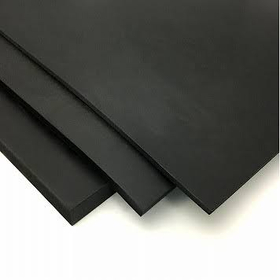
Material Technology and Product Classification of Wear-Resistant Rubber Products Wear-resistant rubber products use materials such as natural rubber, styrene-butadiene rubber (SBR), nitrile rubber, chloroprene rubber, butadiene rubber, and EPDM. The product forms are broadly classified into rubber sheets, linings, hoses, and screens, with wear resistance, impact resistance, and tear strength adjusted according to their applications. In recent years, ceramic-rubber composites and metal-reinforced rubber products have also been adopted, advancing applications in high-wear environments that are difficult to address with conventional rubber alone. Growth Opportunities and Technical Challenges for Wear-Resistant Rubber Products The main demand sectors are mineral processing, construction materials, steel, energy, oil and gas, logistics, and general industry. Particularly in ore conveying equipment, sliding wear and drop impact occur simultaneously, making composite linings that combine a hard ceramic layer, a rubber layer that absorbs impact, and a steel backing plate effective. On the other hand, material selection must consider particle size, moisture content, impact velocity, temperature, and chemical resistance. Changes in U.S. tariff policies and countermeasures from various countries are also risk factors that affect international procurement, capital investment, and supply chain restructuring.
Price range
Delivery Time
P4
Applications/Examples of results
Regional Trends and Competitive Environment of Wear-Resistant Rubber Products Market The Asia-Pacific region is forming an important market backed by manufacturing infrastructure and mining demand. In North America and Europe, the demand is supported by the renewal of mineral processing equipment and improvements in maintenance efficiency. Major companies include REMA TIP TOP, The Weir Group, Polycorp, Trelleborg, Oriental Rubber, Zenith Rubber, TEGA Industries, and LeBracs. Factors determining competitiveness include not only material prices but also durability, ease of replacement, delivery times, and the ability to customize designs for specific sites.
Company information

Global Reports integrates industrial information from around the world and provides highly accurate market intelligence to support corporate decision-making. We deliver in-depth analyses based on numerical data and facts, including market size, share, industry structure, price trends, growth forecasts, rankings of major companies, and competitive trends, with clear information categorized by country, region, and application. Leveraging a rich database that has supported the business growth of over 65,000 companies and an international research network, we accompany our clients in their global expansion and continuous growth.