Japan Passive Radiative Cooling Materials Industry Report 2026: Growth Outlook to 89.45 Million USD Scale
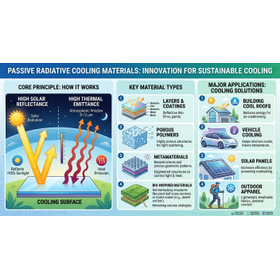
Passive radiative cooling materials are functional materials that reflect sunlight efficiently and release surface heat as infrared radiation into space through the atmospheric window, thereby suppressing temperature rise without the use of electricity or mechanical cooling. These materials include paints, films, and sheets, and are being applied to building roofs and exterior walls, vehicles, electronic devices, and energy equipment. According to the latest research report published by Global Reports titled "Global Market Size, Share, Company Rankings, Sales, and Demand Trend Forecast for Passive Radiative Cooling Materials (2026-2032)," the global market is expected to expand from 50.77 million USD in 2025 to 89.45 million USD in 2026, with a compound annual growth rate (CAGR) of 26.8% from 2026 to 2032, reaching 371 million USD by 2032.
Inquire About This Product
basic information
Price and Revenue Structure of Passive Radiative Cooling Materials The average price of paint products is approximately $7.46 per square meter, while film products are around $26.19 per square meter. The overall gross profit margin for the industry is about 25-45%, reaching 35-55% for high-performance architectural films, heat dissipation films, and weather-resistant composite films, while general-purpose reflective films have margins of about 20-35%. For high value-added products, formulation technology, weather resistance evaluation, certification compliance, and construction track record significantly influence profitability. Manufacturing Process and Technical Challenges of Passive Radiative Cooling Materials Upstream, resins such as PVDF, PMMA, PE, PET, and TPU, along with titanium dioxide, barium sulfate, silica, alumina, infrared radiation fillers, and UV-resistant additives are used. The midstream process includes formulation design, extrusion molding, biaxial stretching, precision coating, composite lamination, adhesive processing, and slitting. For practical application, it is essential to achieve a balance between solar reflectivity and infrared emissivity, as well as to ensure dirt resistance, waterproofing, UV resistance, abrasion resistance, flame retardancy, and adhesion to substrates. A critical challenge is whether the cooling performance demonstrated in the laboratory can be maintained in real-world environments with dust, rainfall, and long-term outdoor exposure.
Price range
Delivery Time
Applications/Examples of results
Expansion of Applications and Demand Trends for Passive Radiative Cooling Materials The driving forces behind demand are the frequent occurrence of extreme heat, increased air conditioning loads, and energy efficiency in buildings. In factories, logistics warehouses, commercial facilities, schools, and hospitals, the ease of installation on existing roofs and the fact that they do not consume electricity during operation are advantages for adoption. Furthermore, applications in refrigerated logistics, communication base stations, energy storage systems, solar power generation systems, and outdoor electronic devices are also anticipated. By combining with waterproof roofing materials, insulating paints, and integrated building material solar power generation, there is potential to transition from the sale of standalone materials to comprehensive thermal management solutions for buildings.
Company information

Global Reports integrates industrial information from around the world and provides highly accurate market intelligence to support corporate decision-making. We deliver in-depth analyses based on numerical data and facts, including market size, share, industry structure, price trends, growth forecasts, rankings of major companies, and competitive trends, with clear information categorized by country, region, and application. Leveraging a rich database that has supported the business growth of over 65,000 companies and an international research network, we accompany our clients in their global expansion and continuous growth.