Japan LED Bulb Filament Industry Report 2026: Growth Outlook to Reach 1,703 Million USD
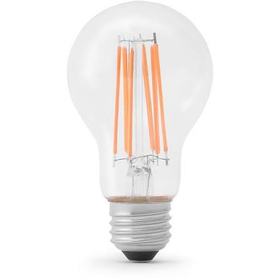
What is LED bulb filament? LED bulb filament is a linear light source that arranges multiple LED chips in series on a transparent substrate such as glass, sapphire, or ceramic, and seals them with materials like silicone containing phosphors. It easily spreads light in all directions and is suitable for Edison bulbs, candle-shaped lamps, and transparent glass lighting fixtures. The production volume in 2025 is estimated to be about 16,000 tons, with a production capacity of approximately 19,000 tons, an average selling price of about 95,000 US dollars per ton, and a gross profit margin of around 28%. Global market size of LED bulb filament According to the latest research report published by Global Reports titled "Global Market Size, Share, Company Rankings, Sales, and Demand Trend Forecast for LED Bulb Filament (2026-2032)," the LED bulb filament market is expected to grow primarily in residential and decorative lighting as a light source that combines the appearance of incandescent bulbs with energy-saving performance. The global market size is projected to expand from approximately 1.52 billion US dollars in 2025 to about 1.73 billion US dollars in 2026, with a compound annual growth rate (CAGR) of 5.9% from 2026 to 2032, reaching approximately 2.4 billion US dollars by 2032.
Inquire About This Product
basic information
Substrate materials and sealing technology influence product performance. In the manufacturing of LED bulb filaments, key upstream materials include LED chips, transparent substrates, phosphors, sealing silicone, bonding wires, and conductive materials. Midstream package manufacturers are responsible for chip mounting, phosphor coating, sealing, and filament module manufacturing, while downstream, bulb manufacturers and lighting brands incorporate these into products for residential, commercial, and decorative lighting. Products are classified into single color, dual color, glass, sapphire, ceramic substrates, linear, flexible, spiral, and irregular shapes. Factors determining competitiveness include the uniformity of phosphor coating, thermal resistance, color temperature stability, luminous efficiency, and long-term reliability. High-density chip mounting contributes to increased brightness but may lead to localized heat generation and degradation of sealing materials, making it essential to balance optical design and heat dissipation design.
Price range
Delivery Time
Applications/Examples of results
Decorative lighting and the demand for LED upgrades are expanding market opportunities. The demand for LED bulb filaments is spreading not only in residential and commercial lighting but also in vintage-style store lighting and spaces that emphasize design. In Japan, in July 2026, the Yano Economic Research Institute estimated the total domestic lighting market size for 2025 to be approximately 1.09 trillion yen, an increase of 3.8% compared to the previous year, citing the conversion of existing lighting to LED as a factor driving demand expansion. The demand for upgrades from fluorescent lights is a supporting element for the entire LED lighting market, but in the case of LED bulb filaments, factors such as energy-saving performance, light diffusion, and the design of the bulb itself influence the decision-making process.
Company information

Global Reports integrates industrial information from around the world and provides highly accurate market intelligence to support corporate decision-making. We deliver in-depth analyses based on numerical data and facts, including market size, share, industry structure, price trends, growth forecasts, rankings of major companies, and competitive trends, with clear information categorized by country, region, and application. Leveraging a rich database that has supported the business growth of over 65,000 companies and an international research network, we accompany our clients in their global expansion and continuous growth.