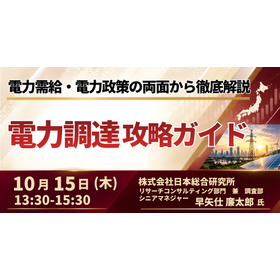
A thorough explanation from both the perspective of electricity supply and demand and electricity policy, considering capacity contributions, carbon pricing, and the current composition of electricity rates to future directions.
The procurement of electricity is an important element for corporate activities, while the structure of the electricity market is complex, with many aspects to understand, such as PPA, self-delivery, renewable energy surcharges, capacity contribution fees, and carbon pricing. 【Practical Insights Gained from the Seminar】 - The current structure of electricity rates, including JEPX, capacity contribution fees, renewable energy surcharges, and non-fossil certificates. - How to forecast future electricity rates and environmental values based on supply and demand for electricity and energy policies. - Criteria for evaluating company policies by comparing retail contracts, off-site PPAs, and procurement of environmental values. 【Target Industries and Departments】 - General affairs, purchasing, and procurement departments - Corporate planning and business planning departments - Sustainability and decarbonization promotion departments - Energy management and facility management personnel - Businesses with high electricity consumption, such as manufacturing, logistics, commercial facilities, and data centers. 【Seminar Details】 ■ Date and Time: October 15, 2026 (Thursday) 13:30 - 15:30 (Doors open at 13:00) ■ Venue: JPI Conference Square ■ Instructor: Mr. Rentaro Hayashi, Senior Manager, Research Consulting Division, Japan Research Institute, Ltd. *For more details, please refer to the PDF document or feel free to contact us.
Inquire About This Product
basic information
**Lecture Overview** Although the decarbonization boom has settled down, the outlook for supply and demand of renewable energy in the medium to long term remains uncertain due to factors such as the sustained high fuel prices resulting from the blockade of the Strait of Hormuz that began in March 2026, and the fluctuations in JEPX prices following the end of wholesale transactions among major power companies after April. It is a challenging situation to make decisions on how much electricity that includes environmental value should be procured to balance the procurement of inexpensive electricity and the achievement of carbon neutrality goals. This lecture is aimed at electricity procurement personnel in companies who are struggling with the procurement of electricity and associated environmental values on a daily basis. For those who are new to the assignment, we will start with the basics of the electricity business while also considering advanced participants, explaining the important considerations regarding future electricity prices that are crucial for decision-making on off-site PPAs. By attending this lecture, we hope that participants will gain the necessary industry knowledge for electricity procurement and hints for optimal electricity procurement methods. **Lecture Topics** ■ Understanding Electricity ■ Forecasting Future Electricity Prices from a Future Perspective ■ Considerations Companies Should Make with an Eye on the Future ■ Conclusion ■ Related Q&A ■ Business Card Exchange and Networking (In-person attendees only)
Price information
【Course Fee】 1 person: 37,920 yen (tax included) From 2 people onwards: 32,920 yen (tax included / same organization, simultaneous application) *For those affiliated with local public organizations, up to 2 people can attend for 11,000 yen (tax included / venue and live streaming only, same attendance format)
Delivery Time
Applications/Examples of results
For more details, please refer to the PDF document or feel free to contact us.
catalog(1)
Download All Catalogs
Company information

JPI Corporation (Japan Planning Institute) has been providing valuable information for executives and senior management involved in the execution of national policies and national projects, supporting the dissemination of state policies as a 'bridge of knowledge' between 'government', 'administration', and 'citizens' in the form of exclusive real seminars for participants for half a century, aiming to create national knowledge.