

Approach to Automating Visual Inspections | First Confirm If It Can Be Captured
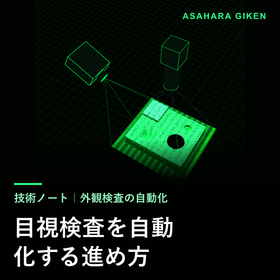
The automation of visual inspection begins by confirming whether the defects you want to find can be captured by the camera, before selecting AI. The process involves determining the defects, taking pictures of the actual items to see how they appear, establishing criteria for good and bad, creating a judgment mechanism, and testing on the production line. By ensuring that you can stop at the stage where you identify defects that cannot be captured, you can avoid waste. 【Key Points】 ■ The first step is not selecting AI, but confirming whether it can capture the images. ■ The criteria should be solidified with physical samples, not just words. ■ Structuring the process so that you can stop at each stage minimizes losses. *For detailed explanations, please refer to the technical notes and downloadable materials in the related links.
Inquire About This Product
basic information
**Contents of this Technical Note** - Automation of visual inspection begins with confirming whether it can be captured. - The approach consists of five stages, each of which can be paused. - Stage 2: Change the lighting and take a picture of the actual object. - Stage 3: Establish standards based on samples rather than words. - Cases where it is unsuitable and the limits of automation. - Common misconception: Attaching a camera will replace the inspector. - How to proceed when verifying with the actual object. **Consultation** We will confirm whether it can be measured or captured with the work at hand using the actual object. Please consult us with a single photo.
Price information
The technical notes can be read by anyone from the related links. We will discuss the costs of development and testing based on the details you provide.
Delivery Time
※It varies depending on the content. Please contact us.
Applications/Examples of results
【Frequently Asked Questions】 Q. There are almost no defective products. Can we start? A. Yes, you can start. Even with only good products, you can check the way the surface shines and reflections in advance. To determine if defects are visible, we need the actual items, so we will check the defective products we have collected and inform you of any missing types. Q. Can we directly teach the current inspector's judgments to the machine? A. If the boundaries can be aligned with samples, we can approximate them. For boundaries where judgments differ among inspectors, the first step is to standardize the criteria. Q. Is there a method to decide how much automation is needed? A. We will replace defects in order of visibility. Defects that are hard to see or vary in type each time will still require some human involvement. We will make decisions based on the results of Stage 2.
catalog(1)
Download All Catalogs![[Technical Document] Automation of Visual Inspection: Approach and Common Pitfalls, How to Capture Images and Choose Lighting Before AI](https://image.mono.ipros.com/public/catalog/image/2115800/IPROS9310882243773939791.png?w=120&h=170)
Company information

We specialize in 2D and 3D inspection and measurement technologies using cameras. We possess a wide range of knowledge in optics, mechanics, electronics, and software, enabling us to provide technical support for both hardware and software. Not only do we have personnel with experience working as researchers at image inspection device manufacturers, major electronic component manufacturers, and universities, but we also have numerous successful implementations of developed products in actual production environments, making our ability to adapt advanced technology to on-site needs a strong point. Additionally, we are skilled not only in developing proprietary algorithms but also in using off-the-shelf products such as image processing controllers from Keyence and Omron, allowing us to excel in selecting and utilizing the most suitable equipment for specific needs. In recent years, while AI technology has garnered attention, there are cases where utilizing 2D and 3D technologies can be implemented more easily than AI, and cases where optical devices and mechanical jigs can improve performance and reduce software load. We offer services related to image systems, including "equipment selection," "implementation support," "performance improvement of existing equipment," "technology development," and "joint development," so please feel free to consult with us first.

