A dosing pump that delivers "a fixed amount" of medication. This explains how the discharge amount is determined, the characteristics of diaphragm type pumps, and how to prevent injection troubles.
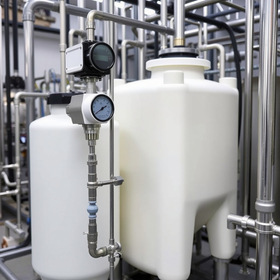
A metering pump is a pump designed to deliver a specific amount of liquid at a time. In water treatment facilities, it is used in processes that involve gradually injecting chemicals for disinfection. ■ What is the relationship with dosing pumps? "Dosing" is a shortened term for chemical injection. Even when looking at guidelines for wastewater treatment by municipalities, there are various terms such as "dosing pump," "chemical injection pump," and "injection pump." In other words, a dosing pump is named for its role in delivering chemicals. The type of metering pump commonly used for this purpose is the dosing metering pump. ■ Why is "metering" important? If there is not enough chemical, the treatment will not proceed adequately. Conversely, if too much is added, it can hinder the treatment process. The ability to consistently deliver the targeted amount supports the results of water treatment. ■ What about thinking of a syringe? If you push the piston the same distance each time, you will get almost the same amount each time. Increasing the number of pushes will increase the total amount delivered. A metering pump also determines the amount delivered based on the combination of the amount pushed out in one stroke and the number of strokes. Please feel free to consult us.
Inquire About This Product
basic information
■How is the discharge volume determined? In a reciprocating positive displacement pump, the discharge volume is mainly adjusted by the following two factors: 1. Stroke length: The magnitude of one movement. 2. Stroke count: The number of movements in a given time. These are adjusted using knobs on the main unit. There are also methods to change the motor's rotation speed or to vary the number of pulses with an electromagnetic system. ■What are the characteristics of diaphragm pumps? Diaphragm pumps work by moving a membrane (diaphragm) back and forth to change the volume of the pump chamber and deliver liquid. Due to the structure that seals the liquid side with the membrane, it is characterized by a low likelihood of liquid leakage. ■The delivery is "pulsating." Since suction and discharge alternate, the flow is not constant and varies in strength, resembling a pulse. ■Preventing overfeeding with a back pressure valve! In a pulsating flow, there may be instances where excess momentum causes liquid to continue flowing even during intervals when it should stop. This is referred to as overfeeding, and it can be controlled by applying appropriate pressure on the discharge side using a back pressure valve. Additionally, if the outlet of the discharge piping is lower than the liquid level in the tank, a siphoning phenomenon may occur, causing chemicals to be drawn out even when the pump is stopped. This is also typically prevented by a valve on the discharge side.
Price range
Delivery Time
Applications/Examples of results
■Where is it used in water treatment? A typical example is the process of adding sodium hypochlorite for disinfection. A dosing pump is used for the injection of sodium hypochlorite. The amount injected is a critical factor that affects the quality of the treatment. ■What should you be careful about with sodium hypochlorite? Sodium hypochlorite can generate gases such as oxygen through decomposition. If air bubbles accumulate in the pump, it can cause a "gas lock," preventing the liquid from being drawn in or expelled, which may stop the injection. The higher the temperature, the more likely it is to foam, so extra caution is needed during the summer or in direct sunlight. There are models available that have mechanisms to release air bubbles or structures that make it difficult for gas to accumulate. ■Check the tank's remaining amount regularly A simple daily inspection is to check the remaining amount in the chemical tank. Keep a record of the remaining amount, and if it decreases less than usual, suspect a blockage or malfunction in the pump or piping. Additionally, it is reassuring to occasionally review whether the amount and concentration of the chemicals being used are appropriate. The suitable pump and accessories will vary depending on the chemicals injected, the amount, and the installation location. Please feel free to consult us first.
catalog(3)
Download All Catalogs


Company information

Since our founding, we have continued to provide flexible services with the motto of accurately supplying a diverse range of products that respond to changes in the times and the diversification of consumer needs, tailored to various applications and requirements. With the corporate slogan "Chemical Engineering Partner," we, as a group of experts in chemical technology, actively discover ideas to solve our customers' problems from advanced technologies both domestically and internationally, and propose them.