iPROS Manufacturing
  • Search for products by classification category

    • Electronic Components and Modules
      Electronic Components and Modules
      63019items
    • Machinery Parts
      Machinery Parts
      76249items
    • Manufacturing and processing machinery
      Manufacturing and processing machinery
      103115items
    • Scientific and Physics Equipment
      Scientific and Physics Equipment
      36987items
    • Materials
      Materials
      38214items
    • Measurement and Analysis
      Measurement and Analysis
      55122items
    • Image Processing
      Image Processing
      15526items
    • Control and Electrical Equipment
      Control and Electrical Equipment
      55211items
    • Tools, consumables, and supplies
      Tools, consumables, and supplies
      66169items
    • Design and production support
      Design and production support
      12763items
    • IT/Network
      IT/Network
      46678items
    • Office
      Office
      14237items
    • Business support services
      Business support services
      28466items
    • Seminars and Skill Development
      Seminars and Skill Development
      6647items
    • Pharmaceutical and food related
      Pharmaceutical and food related
      35565items
    • others
      68347items
  • Search for companies by industry

    • Manufacturing and processing contract
      7367
    • others
      5046
    • Industrial Machinery
      4502
    • Machine elements and parts
      3402
    • Other manufacturing
      2909
    • Trading company/Wholesale
      2809
    • IT/Telecommunications
      2582
    • Industrial Electrical Equipment
      2338
    • Building materials, supplies and fixtures
      1816
    • software
      1703
    • Electronic Components and Semiconductors
      1618
    • Resin/Plastic
      1505
    • Service Industry
      1501
    • Testing, Analysis and Measurement
      1141
    • Ferrous/Non-ferrous metals
      1006
    • environment
      697
    • Chemical
      654
    • Automobiles and Transportation Equipment
      622
    • Printing Industry
      517
    • Information and Communications
      485
    • Consumer Electronics
      414
    • Energy
      341
    • Rubber products
      322
    • Food Machinery
      309
    • Optical Instruments
      285
    • robot
      284
    • fiber
      264
    • Paper and pulp
      233
    • Pharmaceuticals and Biotechnology
      178
    • Electricity, Gas and Water Industry
      169
    • Warehousing and transport related industries
      151
    • Food and Beverage
      140
    • Glass and clay products
      140
    • CAD/CAM
      126
    • Educational and Research Institutions
      119
    • Medical Devices
      116
    • retail
      111
    • Ceramics
      98
    • wood
      86
    • Transportation
      84
    • Petroleum and coal products
      67
    • Medical and Welfare
      62
    • Shipbuilding and heavy machinery
      52
    • Aviation & Aerospace
      50
    • equipment
      46
    • Fisheries, Agriculture and Forestry
      43
    • Materials
      41
    • Research and development equipment and devices
      37
    • Public interest/special/independent administrative agency
      32
    • Government
      23
    • self-employed
      23
    • Finance, securities and insurance
      17
    • Mining
      17
    • cosmetics
      16
    • Restaurants and accommodations
      10
    • Individual
      10
    • Police, Fire Department, Self-Defense Forces
      7
    • Raw materials for reagents and chemicals
      5
    • Laboratory Equipment and Consumables
      5
    • Contracted research
      5
  • Special Features
  • Ranking

    • Overall Products Ranking
    • Overall Company Ranking
Search for Products
  • Search for products by classification category

  • Electronic Components and Modules
  • Machinery Parts
  • Manufacturing and processing machinery
  • Scientific and Physics Equipment
  • Materials
  • Measurement and Analysis
  • Image Processing
  • Control and Electrical Equipment
  • Tools, consumables, and supplies
  • Design and production support
  • IT/Network
  • Office
  • Business support services
  • Seminars and Skill Development
  • Pharmaceutical and food related
  • others
Search for Companies
  • Search for companies by industry

  • Manufacturing and processing contract
  • others
  • Industrial Machinery
  • Machine elements and parts
  • Other manufacturing
  • Trading company/Wholesale
  • IT/Telecommunications
  • Industrial Electrical Equipment
  • Building materials, supplies and fixtures
  • software
  • Electronic Components and Semiconductors
  • Resin/Plastic
  • Service Industry
  • Testing, Analysis and Measurement
  • Ferrous/Non-ferrous metals
  • environment
  • Chemical
  • Automobiles and Transportation Equipment
  • Printing Industry
  • Information and Communications
  • Consumer Electronics
  • Energy
  • Rubber products
  • Food Machinery
  • Optical Instruments
  • robot
  • fiber
  • Paper and pulp
  • Pharmaceuticals and Biotechnology
  • Electricity, Gas and Water Industry
  • Warehousing and transport related industries
  • Food and Beverage
  • Glass and clay products
  • CAD/CAM
  • Educational and Research Institutions
  • Medical Devices
  • retail
  • Ceramics
  • wood
  • Transportation
  • Petroleum and coal products
  • Medical and Welfare
  • Shipbuilding and heavy machinery
  • Aviation & Aerospace
  • equipment
  • Fisheries, Agriculture and Forestry
  • Materials
  • Research and development equipment and devices
  • Public interest/special/independent administrative agency
  • Government
  • self-employed
  • Finance, securities and insurance
  • Mining
  • cosmetics
  • Restaurants and accommodations
  • Individual
  • Police, Fire Department, Self-Defense Forces
  • Raw materials for reagents and chemicals
  • Laboratory Equipment and Consumables
  • Contracted research
Special Features
Ranking
  • Overall Products Ranking
  • Overall Company Ranking
  • privacy policy
  • terms of service
  • About Us
  • Careers
  • Advertising
  1. Home
  2. environment
  3. トリイ
  4. Product/Service List
environment
  • Added to bookmarks

    Bookmarks list

    Bookmark has been removed

    Bookmarks list

    You can't add any more bookmarks

    By registering as a member, you can increase the number of bookmarks you can save and organize them with labels.

    Free membership registration

トリイ

addressAichi/Nishio-shi/36 Emukae, Ajihama, Isshikimachi
phone0563-72-8220
  • Special site
  • Official site
last updated:Sep 04, 2026
トリイlogo
  • Contact this company

    Inquiry Form
  • Before making an inquiry

    Download Profile
  • Company information
  • Products/Services(356)
  • catalog(62)
  • news(0)

トリイ Product Lineup

  • category

1~45 item / All 356 items

Displayed results

Filter by category

純水・超純水・工業用水 純水・超純水・工業用水
工場の困りごと解決事例 工場の困りごと解決事例
活性汚泥・汚泥処理 活性汚泥・汚泥処理
水質検査の項目・依頼先 水質検査の項目・依頼先
食品・薬品の基礎知識 食品・薬品の基礎知識
食品表示・添加物の基礎知識 食品表示・添加物の基礎知識
甘味料・うま味の基礎知識 甘味料・うま味の基礎知識
設備部品の基礎知識 設備部品の基礎知識
水道水・井戸水・水質基準 水道水・井戸水・水質基準
水質測定(pH・電気伝導率) 水質測定(pH・電気伝導率)
ボイラーの薬品・スケール対策 ボイラーの薬品・スケール対策
軟水・硬水の基礎知識 軟水・硬水の基礎知識
凝集剤・フロックの基礎知識 凝集剤・フロックの基礎知識
排水処理の基礎知識 排水処理の基礎知識
排水処理場の点検・保全サービス 排水処理場の点検・保全サービス
排水処理のトラブル事例 排水処理のトラブル事例
冷却塔の基礎知識とメンテナンス 冷却塔の基礎知識とメンテナンス
ボイラーの構造・運転・法規制 ボイラーの構造・運転・法規制
ボイラーの整備・点検・メンテナンス ボイラーの整備・点検・メンテナンス
ボイラーの更新・省エネ・コスト削減 ボイラーの更新・省エネ・コスト削減
class="retina-image"

What is the water quality test for utility water? Standards for building reclaimed water [Basic Knowledge]

What are the differences between water for sprinkling and water for toilets? This explains the inspection items and frequency for miscellaneous water under the Building Sanitation Law, as well as management to prevent accidental ingestion.

In specific buildings under the Building Sanitation Act (Law concerning the assurance of sanitary environments in buildings), rainwater, well water, and treated wastewater are used for purposes such as irrigation and toilet flushing. The enforcement regulations define water used for purposes other than drinking, cooking, and bathing (excluding bathing in inns) as "general use water." Regulations regarding the quality and management of general use water were added in April 2003. ■ General use water is divided into two categories: 1. For irrigation, landscaping, and cleaning: Water used for irrigating plants, landscaping such as fountains, and cleaning floors. 2. For flushing toilets: Water used for cleaning toilets. ■ Which buildings are subject to this? Specific buildings are those with a total floor area of 3,000 square meters or more, such as offices, stores, department stores, and inns. Schools defined under the School Education Act are subject if they have a total floor area of 8,000 square meters or more. ■ Is it exempt if only tap water is used? This regulation does not apply to general use water that is sourced solely from municipal water supply or dedicated water supply. If rainwater or well water is mixed in any amount, it is advisable to check whether the regulation applies based on the water source. Please feel free to consult with us first.

  • Water quality testing
  • Residual chlorine meter
  • Simple water quality test

Added to bookmarks

Bookmarks list

Bookmark has been removed

Bookmarks list

You can't add any more bookmarks

By registering as a member, you can increase the number of bookmarks you can save and organize them with labels.

Free membership registration

What is pure water silica? Reasons it's hard to obtain and countermeasures [Basic Knowledge]

Why is silica likely to remain in pure water systems? This will explain its properties as a weak acid, its impact on boilers, how to choose resins, and how to measure it.

Silica, in the context of pure water and boiler water, refers to the silicic acid that is dissolved in water. The silica mentioned in discussions about drinking water is in a different context, and here we will look at it as a component that we want to reduce in order to protect equipment. ■ Why is it likely to remain with ion exchange? Silicic acid is a very weak acid with a low degree of dissociation. The pKa of silicic acid is about 9.5, and near neutral pH, it is mostly not ionized. Because the proportion of ionized silicic acid is low, it is less likely to be exchanged for resin compared to components like chlorides. ■ Weakly basic resins are insufficient Among anion exchange resins, weakly basic resins cannot exchange weak acids like silicic acid or carbonic acid. To reduce silica, strong basic anion exchange resins are necessary. There are Type I and Type II strong basic resins, and Type I is chosen for applications where low silica levels are desired. ■ What components leak out first? As the exchange capacity of the resin approaches its end, silica is one of the components that leaks into the treated water at an early stage. Therefore, in addition to monitoring resistivity (the difficulty of conducting electricity), there is a method of using silica concentration as a guideline for regeneration. Please feel free to consult with us first.

  • Pure water production equipment
  • Water treatment equipment and technology
  • Water treatment filters and consumables

Added to bookmarks

Bookmarks list

Bookmark has been removed

Bookmarks list

You can't add any more bookmarks

By registering as a member, you can increase the number of bookmarks you can save and organize them with labels.

Free membership registration

What is factory wastewater treatment? In-house processing vs. outsourcing, how to choose a contractor [Basic Knowledge]

Does handing it over to a contractor end the responsibility? Does the handling change for waste acid with a pH of 2.0 or lower? This explains the rules for treating factory wastewater as industrial waste.

In the production process of factories, various types of waste liquids, such as used acids and alkalis, are generated. There are two methods for treating waste liquids: processing them with in-house equipment or outsourcing to a licensed contractor. Regardless of the choice, it is necessary to handle them in accordance with the regulations of the Waste Management Law. ■ Are waste liquids considered industrial waste? Waste acids and waste alkalis generated from business activities are classified as industrial waste under the Waste Management Law. Waste oil is also classified as industrial waste. Article 3 of the law stipulates that businesses must properly manage the waste generated from their activities under their own responsibility. ■ Is a pH of 2.0 or lower subject to special management? Waste acids and waste alkalis with significant corrosiveness are classified as specially managed industrial waste. The criteria are that waste acids have a pH of 2.0 or lower, and waste alkalis have a pH of 12.5 or higher. When storing these substances, measures must be taken to prevent corrosion, such as using partitions to avoid mixing with other materials and sealing them in containers. These waste acids and waste alkalis cannot be disposed of in landfills. ■ There are two methods of treatment 1. In-house treatment: Neutralization and other disposal methods using in-house equipment. 2. Outsourcing: Entrusting transportation and disposal to a licensed contractor. Please feel free to consult with us first.

  • Wastewater/wastewater treatment equipment
  • Hazardous material processing
  • Wastewater treatment equipment, technology and maintenance

Added to bookmarks

Bookmarks list

Bookmark has been removed

Bookmarks list

You can't add any more bookmarks

By registering as a member, you can increase the number of bookmarks you can save and organize them with labels.

Free membership registration

What is the water quality testing sampling method? Containers and transportation time [Basic knowledge]

Bacteria for 12 hours, metals for 2 weeks? This explains the sampling containers specified for each item in water quality testing of tap water, as well as the storage times until testing.

In water quality testing of tap water, the container used for sampling and the time frame for testing are specified for each item. The basis for this is the "methods established by the Minister of the Environment based on the provisions of the Ordinance on Water Quality Standards" (Ministry of Health, Labour and Welfare Notification No. 261 of 2003), which includes a section on "sample collection and preservation" for each testing method. ■ Different containers for different items 1. Sterilized sampling bottles: general bacteria, E. coli 2. Polyethylene bottles washed with nitric acid: metals 3. Screw-cap bottles: volatile organic compounds 4. Glass bottles or polyethylene bottles: color, turbidity, pH, etc. For some items, specific materials are designated, such as polyethylene bottles for fluoride and glass bottles for taste and odor. Even if the water comes from the same tap, different items require separate containers for sampling. ■ Is "promptly" the basic principle? For all items, the principle is that the collected samples should be tested promptly. If immediate testing is not possible, samples should be stored in a cool, dark place or refrigerated, and tested within the specified time frame. The date and time of sampling should be determined by calculating backward from the reception hours of the testing facility to avoid any issues. Please feel free to consult us first.

  • Water quality testing
  • Contract Inspection
  • Other water quality analysis

Added to bookmarks

Bookmarks list

Bookmark has been removed

Bookmarks list

You can't add any more bookmarks

By registering as a member, you can increase the number of bookmarks you can save and organize them with labels.

Free membership registration

What is chlorine dioxide? Properties and comparison with sodium hypochlorite [Basic Knowledge]

Why is chlorine dioxide produced on-site? This explains its properties in water treatment, how it is generated, the byproduct chlorous acid, and management guidelines.

Chlorine dioxide (ClO2) is a reddish-yellow gas with a pungent odor. It has a low boiling point of 11°C and dissolves 0.8g in 100ml of water at 20°C. The density of its vapor relative to air is 2.3, making it a heavier gas than air. Its main uses are for water disinfection and taste control, as well as bleaching in paper pulp and other applications. The concentration used in water treatment is typically 1 to 2 mg/L. ■ What are the differences from sodium hypochlorite? 1. Form of supply: Sodium hypochlorite is transported as a liquid chemical and stored in tanks. Chlorine dioxide is generated at the point of use. 2. Trihalomethanes: Chlorine dioxide produces almost none even in the presence of organic matter in the source water. 3. By-products to be cautious of: Hypochlorous acid (chlorine dioxide) and chloric acid (sodium hypochlorite). ■ How is it handled in water supply? In water supply systems, chlorine dioxide is used as a disinfectant. Both chlorine dioxide and hypochlorous acid, which is produced during its decomposition, are not included in the water quality standards but are part of the water quality management goals. Hypochlorous acid can also arise from sodium hypochlorite that has been stored for a long time. Please feel free to consult us first.

  • Disinfectant
  • Water Treatment Chemicals
  • Chemicals

Added to bookmarks

Bookmarks list

Bookmark has been removed

Bookmarks list

You can't add any more bookmarks

By registering as a member, you can increase the number of bookmarks you can save and organize them with labels.

Free membership registration

Second Opinion on Ion Exchange Resin Prices | Review of Procurement Costs

Is the purchase price of the ion exchange resin appropriate? Based on the product you are currently using, we will compare prices and specifications with products from other manufacturers and suggest the most suitable product.

■Do you have any of these concerns? The purchase and sales prices of ion exchange resins are rising. Is the current quality really optimal? I want to reassess costs compared to products from other manufacturers. I am worried about whether I can receive a stable supply, including delivery times and inventory status. I want to compare prices, performance, and supply systems to find better options. ■Second Opinion on Pricing We will compare the prices and specifications of alternative candidates based on the products you are currently using. Why not start by reviewing procurement costs with a quote? We will propose the most suitable products according to your needs, including those from manufacturers in the United States and Germany. ■For example, the following requests are possible: - Confirm the specifications of the products you are currently using and compare prices and performance with those from other manufacturers. - We can also accommodate sample provision and evaluation tests. - Propose the most suitable products according to your application. ■Not just resin sales, but a partner in solving challenges Using ion exchange resins as an entry point, we can also propose related products such as water treatment chemicals, analytical instruments, equipment, and maintenance. *For more details, please download and view the catalog.

  • Pure water production equipment
  • Water purifiers/water softeners
  • Water treatment filters and consumables

Added to bookmarks

Bookmarks list

Bookmark has been removed

Bookmarks list

You can't add any more bookmarks

By registering as a member, you can increase the number of bookmarks you can save and organize them with labels.

Free membership registration

What is ferrous chloride solution? How to use it in wastewater treatment and points to note [Basic Knowledge]

What can be made by adding it to water? Is it dangerous when mixed with sodium hypochlorite? I will summarize the properties of ferric chloride solution and its use in wastewater treatment.

Ferric chloride is another name for iron(III) chloride (FeCl3). Solid iron(III) chloride dissolves well in water, with about 92g dissolving in 100mL of water at 20°C. In wastewater treatment, it is primarily used as an inorganic coagulant in the form of an aqueous solution. ■ What happens when it is added to water? When ferric chloride is added to water, iron(III) ions undergo hydrolysis to form iron(III) hydroxide. Fe(3+) + 3H2O → Fe(OH)3 + 3H(+) Suspended particles in wastewater often have negatively charged surfaces. Iron hydroxide has a positive charge near neutral pH, which helps to aggregate the particles together. At the same time, hydrogen ions are produced, causing the pH of the wastewater to decrease. ■ Hydroxides are relatively heavy Iron hydroxide has a slightly higher specific gravity than aluminum hydroxide. This is one reason why iron-based coagulants are widely used in wastewater treatment. ■ Are there other uses besides wastewater treatment? 1. Electronic materials: Manufacturing of printed circuits, semiconductors 2. Chemistry: Catalysts, raw materials for pharmaceuticals 3. Food: Food additives as iron fortifiers Please feel free to consult with us first.

  • Water Treatment Chemicals
  • Wastewater treatment equipment, technology and maintenance
  • Sludge treatment equipment and technology

Added to bookmarks

Bookmarks list

Bookmark has been removed

Bookmarks list

You can't add any more bookmarks

By registering as a member, you can increase the number of bookmarks you can save and organize them with labels.

Free membership registration

What is a defoamer? Types and disadvantages/risks [Basic knowledge]

Why can defoamers eliminate foam? This will explain the types such as silicone-based, the disadvantages of using too much, how to check for dangers, and how to choose them for wastewater treatment.

Defoamers are agents added to eliminate bubbles formed in liquids or to suppress foaming. They are used in manufacturing processes and wastewater treatment in factories to prevent issues such as bubbles overflowing from tanks or halting operations. ■ Does pure water not foam? Bubbles are gases wrapped in a thin film of liquid. Pure water does not form stable bubbles even when stirred. Bubbles persist longer when substances with high surface activity are present in the liquid, stabilizing the bubble film. ■ Main types of defoamers 1. Mineral oil-based: Primarily composed of mineral oil, offering high cost efficiency. 2. Silicone-based: Primarily composed of silicone oil, with particularly low surface tension. 3. Polyether-based: Primarily composed of polymers that are not easily soluble in water. In all cases, the main components are oil-like liquids that do not mix well with water. Many products also include fine solid particles like silica to enhance their effectiveness. ■ There are also differences in form! Even with the same ingredients, there are oil types used in their concentrated form and emulsion types that are finely dispersed in water. Emulsion types are commonly used in water-based liquids. Please feel free to consult us first.

  • Water Treatment Chemicals
  • Chemicals
  • Wastewater treatment equipment, technology and maintenance

Added to bookmarks

Bookmarks list

Bookmark has been removed

Bookmarks list

You can't add any more bookmarks

By registering as a member, you can increase the number of bookmarks you can save and organize them with labels.

Free membership registration

What is caustic soda? Uses, dangers, and rules for selling and purchasing【Basic Knowledge】

Does diluted liquid harm the skin? Does the 48% product solidify in winter? We will explain the properties and uses of caustic soda, as well as its handling as a hazardous substance.

Caustic soda is the common name for sodium hydroxide (NaOH). Its aqueous solution exhibits strong alkalinity and is known as a representative strong alkali substance. In addition to neutralizing acids, it is used in a wide range of industries as a raw material and reagent for various chemical products. ■Produced by the electrolysis of saltwater Industrially, it is produced by the electrolysis of saltwater. In Japan, the ion exchange membrane method is mainstream, using an electrolytic cell divided by a cation exchange membrane. Sodium ions move through the membrane to the cathode side, where caustic soda and hydrogen are produced, while chlorine is generated on the anode side. 2NaCl + 2H2O → 2NaOH + Cl2 + H2 Caustic soda and chlorine are produced simultaneously in the ratio determined by this reaction equation. ■What applications is it used for? 1. Chemical industry: Production of organic chemicals, inorganic chemicals, pharmaceuticals, etc. 2. Textiles and paper: Production of chemical fibers and paper/pulp. 3. Food: Manufacturing processes for food. 4. Water treatment: pH adjustment of sewage and wastewater, regeneration of ion exchange resins. The property of strong alkalinity is utilized in many applications. Please feel free to consult us first.

  • Chemicals
  • Water Treatment Chemicals
  • pH meter

Added to bookmarks

Bookmarks list

Bookmark has been removed

Bookmarks list

You can't add any more bookmarks

By registering as a member, you can increase the number of bookmarks you can save and organize them with labels.

Free membership registration

What is hydrochloric acid? The dangers and handling of industrial hydrochloric acid [Basic Knowledge]

What is the difference between hydrochloric acid and hydrogen chloride? This will explain the uses and dangers of industrial hydrochloric acid, regulations to check with SDS, and how to respond to storage and leaks.

Hydrochloric acid is an aqueous solution of hydrogen chloride (HCl) dissolved in water. It has strong acidity and is used in a wide range of fields, including neutralizing wastewater (pH adjustment), regenerating ion exchange resins used in pure water systems, metal etching, and food production. ■ Industrial grade is about 35% liquid For industrial use, hydrochloric acid containing about 35% hydrogen chloride is used. Its specific gravity is approximately 1.18, making it a liquid heavier than water. ■ What is the difference between hydrochloric acid and hydrogen chloride? Hydrogen chloride is a gas at room temperature with a pungent odor and is also referred to as anhydrous hydrochloric acid. Its boiling point is about -85°C, and it is handled as a high-pressure gas packed in cylinders. In contrast, hydrochloric acid is its aqueous solution. Although the components are the same, the regulations and handling precautions differ depending on whether it is a gas or a liquid. ■ Does hydrochloric acid burn? Hydrochloric acid itself does not burn or explode. However, it can corrode many metals and generate hydrogen gas, which can ignite and explode when mixed with air. To prevent rusting, it is essential to choose suitable materials and implement anti-corrosion measures for equipment handling hydrochloric acid. Please feel free to consult us first.

  • Chemicals
  • Water Treatment Chemicals
  • pH meter

Added to bookmarks

Bookmarks list

Bookmark has been removed

Bookmarks list

You can't add any more bookmarks

By registering as a member, you can increase the number of bookmarks you can save and organize them with labels.

Free membership registration

What is hexavalent chromium? Toxicity and standard values [Basic knowledge]

What does hexavalent chromium contain? This will explain the differences in toxicity compared to trivalent chromium, the standard values for water and soil, handling in wastewater, and precautions during work.

Hexavalent chromium is a general term for compounds containing chromium with an oxidation state of +6. In water, it mainly exists in the form of anions such as chromate ions (CrO4 2-) and dichromate ions (Cr2O7 2-). ■ Natural chromium is mostly trivalent Chromium in nature exists primarily in a trivalent state. Hexavalent chromium is rarely found in nature and is mainly produced by human activities. ■ What contains hexavalent chromium? It is used in metal surface treatments such as chrome plating and chromates, pigments, rust-proof paints, leather tanning, and wood preservatives. It is also found in cement, as some of the trivalent chromium in the raw materials is oxidized to hexavalent chromium during the firing process. ■ What is the difference from trivalent chromium? Trivalent chromium is considered an essential nutrient and is found in various foods. In contrast, hexavalent chromium easily passes through cell membranes, while trivalent chromium does not. The International Agency for Research on Cancer (IARC) classifies hexavalent chromium as Group 1 (carcinogenic to humans) and trivalent chromium as Group 3. Please feel free to consult us first.

  • Wastewater/wastewater treatment equipment
  • Water quality testing
  • Hazardous material processing

Added to bookmarks

Bookmarks list

Bookmark has been removed

Bookmarks list

You can't add any more bookmarks

By registering as a member, you can increase the number of bookmarks you can save and organize them with labels.

Free membership registration

What is chromaticity? Causes and measurement of water color [Basic Knowledge]

What determines the yellowing of water? This explains the meaning of the standard of 5 degrees for tap water, how to measure using platinum and cobalt, and how to distinguish between humic substances, iron, and manganese.

Colorimetry is an indicator that represents the degree of yellowish to brownish color exhibited by substances dissolved in water or colloidal substances. It mainly measures the same hue as the color caused by humic substances derived from geology, with the water quality standard for tap water set at below 5 degrees. The values set by the WHO (World Health Organization) and the U.S. Environmental Protection Agency are 15, while Japan's standard is lower than this. For chemicals used in drinking water and water supply systems, there is an even stricter standard of 0.5 degrees. ■ How is 1 degree determined? The color of a standard solution containing 1 mg of platinum and 0.5 mg of cobalt in 1 liter of purified water is defined as 1 degree. This approach does not quantify the color itself but seeks to determine what degree it corresponds to in comparison to the standard solution. ■ How is it different from turbidity? Turbidity indicates the degree of cloudiness caused by particles in water. Colorimetry represents the degree of color due to dissolved components, etc. The color measured with turbidity included is called "apparent color," while the color measured after removing particles is referred to as "true color," and they are distinguished. In water with high turbidity, the values for both can differ significantly due to the particles, so it is important to verify which method was used for measurement. Please feel free to consult us first.

  • Turbidity meter/color meter
  • Water quality testing
  • Other water quality analysis

Added to bookmarks

Bookmarks list

Bookmark has been removed

Bookmarks list

You can't add any more bookmarks

By registering as a member, you can increase the number of bookmarks you can save and organize them with labels.

Free membership registration

What is water purification treatment at a water treatment plant? From coagulation to disinfection [Basic Knowledge]

How does river water become tap water? This explains the flow of the rapid filtration process and the roles of chemicals such as the coagulant PAC and sodium hypochlorite.

The rapid filtration method is a process that solidifies and sinks small turbidity and bacteria in water using coagulants, and then purifies the supernatant by passing it quickly through a layer of sand. In the fiscal year 2022, the annual water purification volume for water supply systems was approximately 14.8 billion cubic meters, with 77.4% of that volume accounted for by the rapid filtration method, making it the primary method. The method that relies solely on disinfection accounts for 16.6%, slow filtration for 3.1%, and membrane filtration for 2.8%. In the rapid filtration method, regular washing of the sand layer is essential. ■ How does the process flow? 1. Raw water intake: This is where the raw water from rivers and other sources is initially received, and some purification plants add chemicals here. 2. Mixing tank: Coagulants are added and mixed quickly. 3. Floc formation tank: The mixture is stirred slowly to promote the growth of floc aggregates. 4. Sedimentation tank: The larger, heavier aggregates sink to the bottom, and the supernatant is sent to the filtration tank. 5. Rapid filtration tank: Fine aggregates that did not settle are removed by the sand layer. 6. Disinfection: Chlorine agents are added to the filtered water before it is sent out. The mud and other materials removed in the sedimentation and filtration tanks are concentrated and dewatered at wastewater treatment facilities. Please feel free to consult with us first.

  • Water treatment equipment and technology
  • Filtration Equipment
  • Water Treatment Chemicals

Added to bookmarks

Bookmarks list

Bookmark has been removed

Bookmarks list

You can't add any more bookmarks

By registering as a member, you can increase the number of bookmarks you can save and organize them with labels.

Free membership registration

What is turbidity water treatment? Measures for turbidity water and pH at construction sites [Basic Knowledge]

Is it acceptable to discharge the muddy water from the construction site as it is? This will explain the methods of sedimentation and neutralization, as well as considerations for each discharge destination related to the work that generates muddy water.

Turbid water is water that has become cloudy due to fine particles such as sediment being mixed in. In large construction projects like dams, turbid water is generated not only from the construction of the dam itself but also from the extraction of raw materials, dumping sites, and the construction of tunnels and roads. Since the characteristics and sources of the water vary, it may be necessary to consider separate treatment facilities for each source. ■ What types of work generate turbid water? 1. Washing: Water used to wash concrete manufacturing equipment and transportation machinery. 2. Boring: Waste milk and mixer wash water generated from boring and grouting. 3. Surface treatment: Drainage from green cutting and laitance treatment during concrete placement. 4. Excavation: Water flowing from excavated areas or water used to wash rock formations. 5. Aggregate production: Water used for washing and screening raw materials. ■ Concrete water is alkaline In construction, strong alkaline wastewater containing suspended solids is generated, such as washing water from concrete. The production of fresh concrete and concrete products also produces highly alkaline sludge. It is not enough to simply settle the turbidity; neutralization to bring the pH back to neutral is also necessary. Please feel free to consult with us first.

  • Wastewater treatment equipment, technology and maintenance
  • pH meter
  • Water Treatment Chemicals

Added to bookmarks

Bookmarks list

Bookmark has been removed

Bookmarks list

You can't add any more bookmarks

By registering as a member, you can increase the number of bookmarks you can save and organize them with labels.

Free membership registration

What is the treatment of livestock wastewater? Wastewater from pig farms and activated sludge [Basic Knowledge]

Why is it difficult to treat wastewater from pig farms? This explains the high concentration of organic matter and nitrogen, as well as the color of the treated water, from the perspective of the activated sludge method.

Livestock wastewater is contaminated water that includes manure and wash water from livestock facilities. The raw wastewater from pig farms is much more concentrated than sewage, with BOD levels in the thousands of mg/L and total nitrogen exceeding 1,000 mg/L in some cases. Much of this is ammonia nitrogen. The purification treatment for pig farms mainly uses the activated sludge method. A prefectural survey targeting pig farms found that almost all of them used the activated sludge method with aeration tanks. ■ In what forms is nitrogen present? Most of the nitrogen in wastewater is in the form of ammonia. It is converted to nitrate through nitrification and removed as nitrogen gas through denitrification. Nitrification requires sufficient aeration and water temperature, while denitrification requires conditions without oxygen and the presence of organic matter. Nitrification is affected by water temperature, so management is particularly necessary in winter when temperatures drop. ■ Relationship with discharge standards The values for nitrate nitrogen, etc., are calculated as 0.4 times the ammonia nitrogen, plus the values for nitrite nitrogen and nitrate nitrogen. It is important to note that, unlike total nitrogen regulations, this applies regardless of the volume of wastewater discharged. The provisional discharge standards for livestock agriculture are time-limited, so preparations for treatment that removes nitrogen are required. Please feel free to consult with us first.

  • Wastewater treatment equipment, technology and maintenance
  • Aeration equipment
  • Wastewater/wastewater treatment equipment

Added to bookmarks

Bookmarks list

Bookmark has been removed

Bookmarks list

You can't add any more bookmarks

By registering as a member, you can increase the number of bookmarks you can save and organize them with labels.

Free membership registration

What is dialysis drainage? Treatment before flowing into the sewer system [Basic knowledge]

Why is the wastewater from dialysis equipment likely to exceed sewage standards? This will explain the standards for pH and temperature, as well as key points for managing neutralization systems.

Dialysis wastewater is the effluent that comes from dialysis machines in medical institutions. Acidic cleaning agents and alkaline chemicals are used to remove scale from the internal plumbing of the machines. If discharged directly, there is a risk that it may not meet the sewer standards of having a pH above 5 and below 9. There have been incidents of damage to sewer pipes caused by dialysis wastewater, making it essential to pay attention to pH and temperature before considering BOD and SS. Since pH can vary significantly during cleaning hours, it is important to be aware of these changes throughout the day. ■ What is the problem with acidic wastewater? Acidic wastewater can damage concrete sewer pipes and cause issues such as road subsidence. Under Article 18 of the Sewerage Act, the responsible party may be required to bear the costs of repairs. Those discharging wastewater also have a responsibility for management. ■ Neutralizing before discharge is fundamental If the wastewater does not meet the standards, a treatment facility must be established for neutralization. Notification to the local government is required for the installation or renewal of treatment facilities. Since the standard values may vary by municipality, it is advisable to check in advance. Please feel free to consult us first.

  • Wastewater treatment equipment, technology and maintenance
  • Wastewater/wastewater treatment equipment
  • pH meter

Added to bookmarks

Bookmarks list

Bookmark has been removed

Bookmarks list

You can't add any more bookmarks

By registering as a member, you can increase the number of bookmarks you can save and organize them with labels.

Free membership registration

What are the standards for factory wastewater? Rules determined by the discharge destination [Basic Knowledge]

River, sea, or sewage system? The standards for factory wastewater become clear when tracing the destination of the water and the conditions of the facility in order.

The standards that apply to factory wastewater are not determined solely by the name of the industry. Whether to refer to the wastewater standards of the Water Pollution Prevention Act, sewer standards, or prefectural ordinances depends first on where the wastewater is discharged. After that, conditions are checked in the order of facilities, water volume, region, and industry. ■ The first point of divergence is the discharge destination The Water Pollution Prevention Act regulates water discharged into public water areas such as rivers, lakes, and coastal waters. On the other hand, public sewers and watershed sewers with wastewater treatment facilities are excluded from public water areas. Water discharged into such sewers is subject to the standards set by the Sewer Act or the ordinances of the municipality where it is discharged. Conversely, even if it is called a sewer, those without a wastewater treatment facility do not meet the exclusion criteria. ■ Are external waterways also public water areas? According to the definition of the law, public ditches, irrigation canals, and other waterways that connect to water areas such as rivers and coastal waters are also included in public water areas. It is important to trace where the water that leaves the site ultimately flows to, using plans or on-site checks. Please feel free to consult with us first.

  • Wastewater treatment equipment, technology and maintenance
  • Wastewater/wastewater treatment equipment
  • Water quality testing

Added to bookmarks

Bookmarks list

Bookmark has been removed

Bookmarks list

You can't add any more bookmarks

By registering as a member, you can increase the number of bookmarks you can save and organize them with labels.

Free membership registration

What is the treatment of ammonia wastewater? Three methods [Basic Knowledge]

What are the differences between biological treatment, stripping, and chlorine treatment? This explains the conditions and points to note for the three methods based on the equilibrium of ammonia.

Ammonia in wastewater exists in a state of equilibrium between ammonium ions (NH4+) and ammonia (NH3). When the pH is raised, this equilibrium shifts towards the NH3 side. Here, we will discuss three representative treatment methods. ■ What are the differences among the three methods? 1. Biological treatment: Converts nitrogen into nitrogen gas through nitrification and denitrification. 2. Ammonia stripping method: Raises the pH to release it as gas. 3. Discontinuous chlorine treatment method: Oxidizes with chlorine to produce nitrogen gas and others. ■ Chlorine treatment progresses in stages Generally, nitrogen gas is produced through the following reactions: NH3 + HClO → NH2Cl + H2O NH2Cl + HClO → NHCl2 + H2O NH2Cl + NHCl2 → N2 + 3HCl ■ Should pH be raised or maintained? The stripping method increases NH3 by raising the pH. On the other hand, the bacteria responsible for nitrification in biological treatment are sensitive to pH and water temperature, so careful management of pH and maintenance of water temperature are necessary for efficient treatment. The target pH varies depending on the method. Please feel free to consult us first.

  • Wastewater treatment equipment, technology and maintenance
  • Wastewater/wastewater treatment equipment
  • Hazardous material processing

Added to bookmarks

Bookmarks list

Bookmark has been removed

Bookmarks list

You can't add any more bookmarks

By registering as a member, you can increase the number of bookmarks you can save and organize them with labels.

Free membership registration

What is chlorine disinfection of well water? Sterilizers and injection amounts [Basic knowledge]

A chlorine disinfection device that injects sodium hypochlorite into well water. This explains the structure of the device, the concept of the injection amount, and the reasons why the injection stops.

Chlorine disinfection of well water is a method that involves injecting a disinfectant into the pumped water to maintain residual chlorine. The disinfectant primarily used is a solution of sodium hypochlorite. Here, we will explain the equipment and the concept of injection amounts. ■ What is the disinfectant made of? A well water chlorine disinfection system mainly consists of the following components: 1. Chemical tank: Holds the sodium hypochlorite solution 2. Injection pump: Draws the chemical from the tank and pressurizes it for delivery 3. Injection pipe: Directs the chemical into the well water piping ■ Can you notice if the injection stops? If the injection stops due to a malfunction of the injection pump or pipe, the water used during that time will not be disinfected. There have been incidents at water treatment plants where alarms for low residual chlorine did not activate due to incorrect settings. It is essential to regularly check that alarms are functioning properly. ■ Operation of the disinfection system includes inspections The injection equipment and the remaining amount of disinfectant should be checked and recorded daily. Following incidents at drinking wells, daily checks and records have been implemented as a response. The amount of chemical, injection pump, and injection pipe should also be inspected daily. Please feel free to consult with us first.

  • Residual chlorine meter
  • Water Treatment Chemicals
  • Disinfectant

Added to bookmarks

Bookmarks list

Bookmark has been removed

Bookmarks list

You can't add any more bookmarks

By registering as a member, you can increase the number of bookmarks you can save and organize them with labels.

Free membership registration

What is the testing for Legionella bacteria? Water sampling from cooling towers and guidelines [Basic Knowledge]

How many times a year, when to collect samples, and how many days it takes to get results. An explanation of the process for testing Legionella bacteria in cooling water from cooling towers and how to interpret the reference values.

In cooling towers, if the cooling water is contaminated with bacteria, the bacteria can disperse into the air as aerosols during evaporation. Therefore, cooling towers are one of the building facilities that require the most attention in preventing Legionnaires' disease. The level of bacteria can be confirmed through testing of the cooling water. ■ Is inspection and cleaning mandated by law? For specific buildings, the enforcement regulations of the Building Sanitation Act stipulate that inspections of the cooling tower and the contamination of cooling water must be conducted once every month, and cleaning of the cooling tower and water pipes must be done once every year. ■ The frequency of inspections varies by municipality The frequency of bacterial testing varies by municipality. Cooling towers located within 10 meters of patient areas, such as windows of hospital rooms, are considered high-risk. In addition to monthly cleaning, regular bacterial testing or the addition of anti-Legionella air conditioning water treatment agents after chemical cleaning are recommended measures. ■ When is the best time to sample? First, investigate the type and location of the cooling tower and the management situation to create a management sheet. The timing and frequency of sampling are determined based on the management plan and the explanations from the testing agency. Please feel free to consult with us.

  • cooling tower
  • Cooling system
  • Water quality testing

Added to bookmarks

Bookmarks list

Bookmark has been removed

Bookmarks list

You can't add any more bookmarks

By registering as a member, you can increase the number of bookmarks you can save and organize them with labels.

Free membership registration

What are the water quality standards for cooling water? Management items and reference values [Basic knowledge]

pH, electrical conductivity, chloride ions, hardness, silica. This explains the guideline values for cooling water and makeup water in cooling towers, as well as how to measure them monthly.

The cooling water in cooling towers can gradually concentrate salts such as calcium and silicates due to evaporation, which may lead to scaling and corrosion. As water evaporates, the concentration of salts in the remaining water increases. So, how concentrated can it become? ■ How are the guidelines for cooling water determined? The guidelines for cooling water used in air conditioning are based on the "Water Quality Guidelines for Refrigeration and Air Conditioning Equipment" (JRA-GL-02-1994) established by the Japan Refrigeration and Air Conditioning Industry Association. The quality standards for cooling water and make-up water are outlined in this guideline, and in building maintenance operations, water for air conditioning equipment is managed according to these guidelines. ■ How many items are there in total? The guideline lists 15 items that represent typical factors for corrosion and scaling. ■ Standard items and reference items The 15 items are divided into standard items such as pH and electrical conductivity, and reference items such as iron, copper, and residual chlorine. Reference items also include sulfide ions and ammonium ions. In the case of closed cooling towers, the spray water is treated the same as this circulating cooling water. Please feel free to consult us first.

  • cooling tower
  • Cooling system
  • Water Treatment Chemicals

Added to bookmarks

Bookmarks list

Bookmark has been removed

Bookmarks list

You can't add any more bookmarks

By registering as a member, you can increase the number of bookmarks you can save and organize them with labels.

Free membership registration

What is wastewater quality testing? Frequency and items to measure [Basic Knowledge]

Self-monitoring by measuring and recording wastewater within the company. We will organize the number of measurements, the time and location of sampling, and the duration of record retention, which vary depending on whether the water is discharged into a river or a sewer.

In the water quality testing of factory effluent, there are requirements set by law for businesses to measure and record the data themselves. According to materials from the Ministry of the Environment, this is referred to as self-monitoring. The specific law governing the measurements depends on whether the effluent is discharged into public water bodies such as rivers or seas, or into public sewage systems. The former falls under the Water Pollution Prevention Act, while the latter is governed by the Sewage Act. ■ How are the measurement items determined? Under the Water Pollution Prevention Act, measurements are taken for the items listed in the notification form (Appendix 4 of Form 1) regarding the establishment of specific facilities among the effluent standards. Items not reported may be measured as necessary. If there are any discrepancies in the reported items, a change notification must be submitted. The items measured are linked to the content of the notification. ■ Which factories discharge into sewage systems? The Sewage Act requires businesses that continuously discharge effluent into sewage systems after establishing specific facilities to measure and record water quality. The measurement methods are determined according to the ministerial ordinance concerning the testing methods for sewage water quality. ■ Is there a significant difference in frequency even for the same factory? When the discharge destination changes, the required frequency of measurements can vary greatly. We will compare them side by side in the next section. Please feel free to consult us first.

  • Wastewater treatment equipment, technology and maintenance
  • Water quality testing
  • pH meter

Added to bookmarks

Bookmarks list

Bookmark has been removed

Bookmarks list

You can't add any more bookmarks

By registering as a member, you can increase the number of bookmarks you can save and organize them with labels.

Free membership registration

What is school water quality testing? Daily inspections and regular tests [Basic Knowledge]

Inspection of drinking water as determined by school environmental health standards. This explains who checks, at which faucet, and what is verified during inspections on every school day and regular inspections each academic year.

The management of drinking water in schools is established by the school environmental health standards announced by the Ministry of Education, Culture, Sports, Science and Technology based on the School Health and Safety Act. Water testing consists of two types: daily inspections conducted on every school day and periodic inspections carried out a set number of times each academic year. ■ What is the difference between daily inspections and periodic inspections? Daily inspections primarily use sensory methods, meaning they check for abnormalities using human sight, smell, and taste, and the results are utilized for periodic inspections and emergency checks. Periodic inspections are conducted to objectively and scientifically grasp the actual conditions of each item and to take follow-up measures based on the results. ■ Who conducts the daily inspections? It is necessary to clearly define the roles of faculty and staff through school duties and ensure that inspections are carried out reliably. ■ Who conducts the periodic inspections? Periodic inspections can be conducted by the school pharmacist themselves, by faculty and staff under the guidance and advice of the school pharmacist, or by consulting with the school pharmacist to request an external testing agency. Even when relying on a testing agency, it is important not to delegate everything; the school community should take the lead in planning the inspections, collecting samples, and evaluating the results. Please feel free to consult with us first.

  • Water quality testing
  • Residual chlorine meter
  • Simple water quality test

Added to bookmarks

Bookmarks list

Bookmark has been removed

Bookmarks list

You can't add any more bookmarks

By registering as a member, you can increase the number of bookmarks you can save and organize them with labels.

Free membership registration

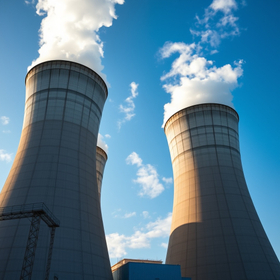
What is a power plant cooling tower? The structure of a giant tower [Basic Knowledge]

A massive cooling tower of a power plant with a waist in the middle. This explains the mechanism of air flow without fans and how to dispose of the heat from the warmed cooling water.

The large tower often seen in photos of overseas power plants, which has a wide base and a narrow middle, is called a natural draft cooling tower. It looks like a chimney, but it is not a facility that emits exhaust gases from burning fuel; rather, it is a facility designed to cool heated cooling water from power generation using the atmosphere. ■ Why do power plants need to cool? In nuclear power plants, steam that has finished turning the turbines is sent to a condenser, where it is cooled by cooling water and returned to water. At this time, a large amount of cooling water is required, and the cooling water absorbs heat and warms up. ■ How do Japan's nuclear power plants cool? In domestic nuclear power plants, seawater is used as cooling water, and the warmed seawater is returned to the sea as warm discharge. The cooling water goes through the power plant and then directly returns to the sea. ■ What do power plants far from the sea do? In addition to returning heat to the sea or rivers, there are cooling ponds and cooling towers. In cooling ponds, warm water loses heat to the atmosphere as it flows through the pond, while in cooling towers, heat is transferred to the air inside the tower. In both cases, the cooled water is reused for cooling. On the other hand, warm discharge can sometimes raise concerns about its impact on aquatic life. Please feel free to consult with us first.

  • cooling tower
  • Cooling system
  • Water Treatment Chemicals

Added to bookmarks

Bookmarks list

Bookmark has been removed

Bookmarks list

You can't add any more bookmarks

By registering as a member, you can increase the number of bookmarks you can save and organize them with labels.

Free membership registration

What is groundwater quality testing? Environmental standards and monitoring research [Basic Knowledge]

Is the measurement the same as that for drinking water? We will summarize the 28 environmental standards for groundwater, the monitoring surveys conducted by the national and local governments, and the key points to consider in factories and businesses.

The purpose of investigating groundwater can be broadly divided into two categories: testing whether well water can be used as drinking water, and examining whether the groundwater itself is contaminated from an environmental perspective. The former is assessed based on water quality standards for tap water, while the latter is judged according to environmental standards for groundwater. The drinking water tests will be covered in a separate article, and this article will focus on the latter. ■ What are the environmental standards for groundwater? Based on the Basic Environmental Law, the government has established desirable standards for protecting human health through official notifications. There are 28 criteria values set for all groundwater. Measurements are conducted at locations that accurately capture the contamination situation, taking into account factors such as groundwater flow. ■ Main contents of the 28 items 1. Metals, etc.: Cadmium, lead, hexavalent chromium, arsenic, total mercury, etc. 2. Volatile organic compounds: Trichloroethylene, tetrachloroethylene, benzene, etc. 3. Others: Nitrate nitrogen and nitrite nitrogen, fluoride, boron, 1,4-dioxane, thiuram, etc. Please feel free to consult us first.

  • Water quality testing
  • Other water quality analysis
  • Contract Inspection

Added to bookmarks

Bookmarks list

Bookmark has been removed

Bookmarks list

You can't add any more bookmarks

By registering as a member, you can increase the number of bookmarks you can save and organize them with labels.

Free membership registration

What is a water quality survey? Differences from water quality testing and how to proceed [Basic Knowledge]

Just taking a sample once and measuring it won't give you a grasp of the water's condition? This explains how to conduct water quality surveys by assembling data from locations, times, frequencies, and on-site records.

When you want to know the condition of the river flowing near the site, or the water in the ponds and waterways on the premises, taking a single water sample for analysis will only provide you with the values at that moment. In this article, we will refer to each instance of taking and analyzing water as "inspection," while the overall effort to determine the condition by deciding when, where, and how many times to sample will be called "survey." ■ What does the "principle method" indicated by the government mean? The Environmental Agency (now the Ministry of the Environment) provided a notification in 1971 titled "Water Quality Survey Methods," which outlines the fundamental methods that prefectures should adhere to for the continuous monitoring of public water areas and the investigation of wastewater from factories and businesses. It is stipulated that while this method serves as a principle, effective surveys should be conducted considering the specific conditions of the water area in question. The targets include rivers, lakes, coastal areas, and wastewater from factories and businesses, with guidelines for timing and sampling locations specified for each. ■ Surveys are categorized by purpose This notification categorizes surveys into monitoring measurement surveys to grasp the status of environmental standards, standard-setting surveys to obtain data for establishing criteria, and sediment surveys to examine the mud at the bottom. If the purposes differ, the items to be measured will also change. Please feel free to consult with us first.

  • Water quality testing
  • Other water quality analysis
  • Contract measurement

Added to bookmarks

Bookmarks list

Bookmark has been removed

Bookmarks list

You can't add any more bookmarks

By registering as a member, you can increase the number of bookmarks you can save and organize them with labels.

Free membership registration

What is water quality testing for bathtubs? Standards and frequency for public baths [Basic Knowledge]

How many times a year for the four items: turbidity, organic matter, E. coli, and Legionella bacteria? We will explain the frequency of tests that varies depending on how the bathtub is used, as well as guidelines for daily chlorine management.

Bathwater refers to the water in the bathtub. Public baths and ryokans conduct water quality tests on their bathwater a specified number of times each year and keep the results on record. ■ Standards are set by prefectures According to the Public Bathhouse Law, operators must take necessary measures for the hygiene of bathers, and these standards are established by prefectural ordinances. The national government provides guidelines on water quality standards and testing methods for public baths, urging local governments to use them as a reference for their guidance. ■ What are the four items and standard values for bathwater? 1. Turbidity: 5 degrees or less 2. Organic matter: Total Organic Carbon (TOC) 8 mg/L or less, or potassium permanganate consumption of 25 mg/L or less 3. E. coli: 1 colony-forming unit/mL or less 4. Legionella bacteria: Not detectable (less than 10 cfu/100 mL) ■ Are the standards the same for the water before entering the bathtub? The water poured into the bathtub, such as the source water or shower water, has different standards, including six items that cover color and pH values. Turbidity must be 2 degrees or less, and E. coli must not be detectable, which are stricter than the standards for bathwater. Please feel free to consult us first.

  • Water quality testing
  • Residual chlorine meter
  • Disinfectant

Added to bookmarks

Bookmarks list

Bookmark has been removed

Bookmarks list

You can't add any more bookmarks

By registering as a member, you can increase the number of bookmarks you can save and organize them with labels.

Free membership registration

What is sludge treatment? The process from concentration to disposal [Basic Knowledge]

To "reduce" sludge, there are two methods: removing water and decomposing solid materials. This explains the roles of concentration, digestion, dewatering, and incineration, as well as the concept of minimizing generation.

Sludge treatment refers to a series of processes aimed at reducing the amount of sludge separated from wastewater treatment, making it easier to handle, and then sending it off for disposal or recycling. In food factories, most of the sludge generated from wastewater treatment is disposed of as industrial waste after being reduced in volume through methods such as dewatering, drying, and incineration. ■ Sequence of Sludge Treatment Processes At sewage treatment plants, sludge is processed in the following order: 1. Concentration: Increasing the concentration of solids by settling or using machinery. 2. Digestion: In an oxygen-free tank, anaerobic microorganisms break down some of the organic matter into gas. 3. Dewatering: Adding coagulants and squeezing out water with machinery. 4. Drying/Incineration: Further reducing moisture and organic matter. 5. Disposal/Recycling: In addition to landfilling, it can be used for construction materials or fertilizers. The specific processes involved may vary by facility. ■ Is the Weight of Sludge the Same? Sludge from settling tanks is categorized based on its characteristics. Light sludge, such as organic sludge or aluminum hydroxide, has an apparent specific gravity close to that of water and a lower concentration when extracted from the settling tank. Heavy sludge, such as sand or iron oxide, tends to have a higher concentration. Please feel free to consult with us first.

  • Sludge treatment equipment and technology
  • Compression dehydrator
  • Wastewater treatment equipment, technology and maintenance

Added to bookmarks

Bookmarks list

Bookmark has been removed

Bookmarks list

You can't add any more bookmarks

By registering as a member, you can increase the number of bookmarks you can save and organize them with labels.

Free membership registration

What is a wastewater treatment plant? Arrangement and flow of equipment [Basic Knowledge]

From the raw water tank to the reaction tank, sedimentation tank, and monitoring tank. This explains the order of the equipment lined up in the factory's wastewater treatment facility and the inspection points that should be checked daily at each stage.

A wastewater treatment plant is a collection of facilities within a factory or business that processes wastewater to meet the quality standards for discharge. In facilities that discharge into the sewer system, it is also referred to as a pollution control facility. The arrangement of the equipment varies depending on the nature of the wastewater, but a tank for collecting wastewater at the entrance and a tank for checking treated water at the exit are commonly included as basic components. Below, we will examine the process from the entrance to the exit. ■ Does the raw water tank reduce pollution? The concentration and volume of wastewater vary depending on the production time. Even if the wastewater is mixed and equalized in the raw water tank (equalization tank), the total amount of pollution does not decrease. However, the peaks in concentration are smoothed out, which stabilizes the subsequent treatment and makes operation easier. It is important to note that if highly concentrated waste liquid is discharged all at once, there is a risk of exceeding the standards even after equalization, so it is collected for separate disposal or stored in a dedicated tank for gradual treatment. ■ What is the guideline for storage time? For continuous treatment, some municipalities recommend a storage time of more than two hours of maximum wastewater volume or a retention time of more than two hours. It is important to check that these guidelines may vary by region and can be revised. Please feel free to consult us first.

  • Wastewater treatment equipment, technology and maintenance
  • Wastewater/wastewater treatment equipment
  • Aeration equipment

Added to bookmarks

Bookmarks list

Bookmark has been removed

Bookmarks list

You can't add any more bookmarks

By registering as a member, you can increase the number of bookmarks you can save and organize them with labels.

Free membership registration

What is daily inspection? How to check color, turbidity, and residual chlorine [Basic Knowledge]

Daily inspections are mandated by the Water Supply Act to be conducted at least once a day. This explains who measures, at which faucet, using what method, and how to respond if the standards are exceeded.

Daily inspection refers to the inspections specified in Article 15 of the Water Supply Act Enforcement Regulations, which are required to be conducted "at least once a day." The focus is on the color and turbidity of the water, as well as the residual effect of disinfection (residual chlorine). ■ Can inspections be skipped on weekends and holidays? Since the frequency is set to "at least once a day," inspections are conducted every day, including holidays. In fact, inspections are carried out daily, including on weekends and holidays. Additionally, some municipalities conduct sensory tests to check taste and odor, which are performed daily alongside the legally mandated items. ■ Who conducts the measurements? It is not limited to the staff of water supply operators. Some municipalities conduct daily inspections at various water supply points throughout the city with the cooperation of citizens or by outsourcing the inspections. ■ Is it acceptable to use automatic equipment for measurements? Using continuous automatic measuring devices is one of the methods specified by national notifications. These devices must have a performance capability of measuring below a quantifiable lower limit of 0.05 mg/L, and regular cleaning, maintenance, and calibration are required to maintain accuracy within ±0.05 mg/L during operation. Please feel free to consult us first.

  • Residual chlorine meter
  • Water quality testing
  • Simple water quality test

Added to bookmarks

Bookmarks list

Bookmark has been removed

Bookmarks list

You can't add any more bookmarks

By registering as a member, you can increase the number of bookmarks you can save and organize them with labels.

Free membership registration

What is water quality management for school pools? Daily procedures [Basic knowledge]

What should be checked before use, when to retest during class, and what to leave behind after it's finished? We will follow the water quality management of the school pool for one day according to the standards.

The water in the school's swimming pool is managed in accordance with the school environmental health standards established by the government based on the School Health and Safety Act. In addition to regular water quality tests, daily inspections for the days of use are also specified by the standards. Here, we will organize the checks according to the daily flow of the person in charge. ■ Four items to check before use 1. In the water: Ensure there are no hazardous substances or abnormalities. 2. Free residual chlorine: At least 0.4 mg/L in any part. 3. pH value: Maintained at the standard level. 4. Clarity: The wall should be clearly visible from a distance of 3 meters underwater. Before swimming, also check that the covers of the drainage and circulation water intake are secured with screws or bolts. This is an important check related to the safety of swimmers. ■ What if there is not enough chlorine? If it is below the standard, stop swimming and increase the amount of chlorine agent injected. Allow swimming only after confirming it has returned to above 0.4 mg/L. ■ What if the wall is hard to see? If the wall 3 meters ahead is not clearly visible underwater, operate the circulation filtration system sufficiently until it becomes visible, or replace the water. Please feel free to consult us first.

  • Water quality testing
  • Residual chlorine meter
  • Water Treatment Chemicals

Added to bookmarks

Bookmarks list

Bookmark has been removed

Bookmarks list

You can't add any more bookmarks

By registering as a member, you can increase the number of bookmarks you can save and organize them with labels.

Free membership registration

What is building drinking water testing? Management and records under the Building Sanitation Act [Basic Knowledge]

Is it not just the end after the inspection? The drinking water for specified buildings involves a continuous process that includes notification, appointment of a manager, and record-keeping.

The Building Sanitation Act (Law on Ensuring Sanitary Environments in Buildings) designates certain buildings used by many people as "specified buildings" and establishes standards for the maintenance and management of air quality, water supply and drainage, cleaning, and more. The inspection of drinking water in buildings is part of this management system. ■ Does bath water count as drinking water? The enforcement regulations define drinking water as water used for living purposes, such as drinking, cooking, and bathing (excluding bathing in inns). Water used for cooking and bathing, in addition to drinking water, is subject to the same management standards. ■ Are condominiums included? The government ordinance lists uses considered as specified buildings, including theaters, department stores, shops, offices, schools, and inns, but does not include residential buildings. If a condominium's water tank receives only tap water and has a usable capacity exceeding 10 cubic meters, it will be managed as a simple dedicated water supply under the Water Supply Act. ■ If it's not included, is no action required? The law requires that even buildings not classified as specified buildings, if used by many people, should be maintained and managed according to the same standards by those who have the authority to manage them, such as owners. Please feel free to consult with us first.

  • Water quality testing
  • Residual chlorine meter
  • Simple water quality test

Added to bookmarks

Bookmarks list

Bookmark has been removed

Bookmarks list

You can't add any more bookmarks

By registering as a member, you can increase the number of bookmarks you can save and organize them with labels.

Free membership registration

What is a water quality test for a water storage tank? Items to check after cleaning [Basic Knowledge]

After cleaning the water tank and refilling it, we check for residual chlorine, color, turbidity, odor, and taste. We will explain the standard values and the handling of small-scale water storage tanks.

Water quality testing of storage tanks includes regular inspections and tests conducted after refilling the tank following cleaning. Here, we will focus on the latter. This is a confirmation performed as part of the cleaning process and is separate from the annual statutory inspection of dedicated water supply systems. For specific buildings (subject to the Building Sanitation Act), regulations stipulate that cleaning of storage tanks must be conducted at least once every year. ■Flow from Cleaning to Inspection The process from cleaning to inspection proceeds in the following order: 1. Cleaning: As a general rule, elevated water tanks should be cleaned on the same day as the receiving tank. 2. Disinfection: Use a sodium hypochlorite solution with effective chlorine levels of 50-100 mg/L for at least two applications, followed by a wait of more than 30 minutes, and completely remove any chlorine agents used. 3. Refilling: This should be done after draining the cleaning water, ensuring that stagnant water from the inlet pipe and rust is not introduced. 4. Inspection: Conduct water quality testing and residual chlorine measurement using water from both the supply faucet and the storage tank. ■Which Water to Sample? As a standard for cleaning operations, it is stipulated that both the water from the supply faucet and the water inside the storage tank should be tested after refilling. This approach ensures that water not only from within the tank but also from the piping is verified. Please feel free to consult with us first.

  • Water quality testing
  • Residual chlorine meter
  • Simple water quality test

Added to bookmarks

Bookmarks list

Bookmark has been removed

Bookmarks list

You can't add any more bookmarks

By registering as a member, you can increase the number of bookmarks you can save and organize them with labels.

Free membership registration

What to do if E. coli is detected? Well water treatment and disinfection [Basic Knowledge]

What should you suspect if "E. coli detected" appears in the well water test? This explains the steps from stopping consumption to inspecting the area around the well, disinfection, and confirming safety.

The water quality standards for tap water stipulate that E. coli must be "not detected." According to the testing methods established by the government, a 100 mL water sample is mixed with a specific enzyme substrate medium and incubated for 24 to 28 hours. After exposure to ultraviolet light, the presence or absence of fluorescence is used to determine whether the result is positive or negative. In other words, the result indicates whether E. coli was present or absent in the 100 mL sample, rather than how many were present. It is also required to add sodium thiosulfate to the container when collecting water that contains residual chlorine to neutralize the chlorine. ■ What does "detection" mean? If E. coli is detected, there is a risk that the water has been contaminated with feces or pathogenic organisms. Examples of such pathogenic bacteria include O157. Such contamination cannot be detected by appearance or taste. ■ A different indicator from the E. coli group The previous water quality standard was "E. coli group." However, the E. coli group includes bacteria that can also grow in the environment, which poses a problem as an indicator of fecal contamination. Therefore, in the 2003 review, a policy was established to replace it with E. coli that directly originates from feces. The current water quality standard item is E. coli. Please feel free to consult us.

  • Disinfectant
  • Residual chlorine meter
  • Water quality testing

Added to bookmarks

Bookmarks list

Bookmark has been removed

Bookmarks list

You can't add any more bookmarks

By registering as a member, you can increase the number of bookmarks you can save and organize them with labels.

Free membership registration

What is the water quality inspection under the Food Sanitation Act? Business permits and items [Basic knowledge]

Water quality testing for facilities that produce food using well water and other sources. It organizes the differences between "water suitable for drinking" and "water for food production," along with 26 items and regular inspections.

The water quality inspection under the Food Sanitation Act is a test conducted by businesses that use water other than tap water for food production or cooking to verify the quality of that water. ■ Basis is Appendix Table 17 of the Enforcement Regulations The basis is Appendix Table 17 of the Food Sanitation Act Enforcement Regulations, which includes "management of water used, etc." as part of the general hygiene management standards that businesses must adhere to. Restaurants and food factories that use well water or spring water are the main targets. ■ Is it exempt if using tap water? According to Appendix Table 17, the water that can be used is that supplied from water supply businesses, dedicated water supply systems, or simple dedicated water supply systems, as well as other "water suitable for drinking." Inspections are required at least once a year when using the latter. If only tap water is used, this inspection is not required. ■ The two types of water do not mean the same thing! The national "standards for food, additives, etc." also includes the term "water for food manufacturing," which refers to either tap water or water that meets 26 specified criteria. This water for food manufacturing is different from the "water suitable for drinking" in Appendix Table 17. Furthermore, the inspection items and frequency for water suitable for drinking are determined by prefectures based on local water quality conditions. Please feel free to consult with us first.

  • Water quality testing
  • Simple water quality test
  • Other water quality analysis

Added to bookmarks

Bookmarks list

Bookmark has been removed

Bookmarks list

You can't add any more bookmarks

By registering as a member, you can increase the number of bookmarks you can save and organize them with labels.

Free membership registration

What is the difference between organic sludge and inorganic sludge? Treatment and disposal [Basic knowledge]

Is our company's sludge organic or inorganic? We will explain whether it reduces when burned, the standards for landfill, and the differences in reuse as fertilizer or raw material for cement.

The contents of sludge include a high amount of organic matter such as microbial cells, as well as a high amount of inorganic matter such as metal hydroxides and soil, and there are also mixtures of both. In estimates of the amount of industrial waste treatment and recycling, sludge is treated by separating it into organic and inorganic types. ■Both fall under the same category of "sludge" In the classification of industrial waste types under the Waste Management and Public Cleansing Law, both organic and inorganic types are included in the same category of "sludge." However, the enforcement order of the law has disposal standards that apply only to organic sludge, and the destination for recycling varies based on its characteristics. ■Which industries produce which type? The main industries producing organic sludge in manufacturing are food, beverages and feed, textiles, pulp and paper, and organic chemicals. Sewage sludge is also classified as organic. On the other hand, drinking water sludge, construction sludge, and mining sludge are treated as inorganic sludge. ■Why is plating sludge considered inorganic? In plating wastewater, the basic treatment involves using alkaline agents to convert heavy metals into hydroxides that are less soluble in water, which are then precipitated and dewatered to be extracted as sludge. Therefore, it results in sludge that contains a high amount of metal hydroxides. Please feel free to consult with us.
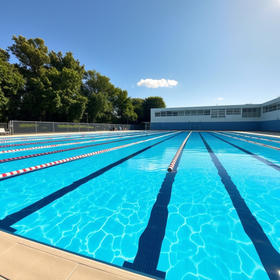
  • Sludge treatment equipment and technology
  • Compression dehydrator
  • Wastewater treatment equipment, technology and maintenance

Added to bookmarks

Bookmarks list

Bookmark has been removed

Bookmarks list

You can't add any more bookmarks

By registering as a member, you can increase the number of bookmarks you can save and organize them with labels.

Free membership registration

What is the disinfection of vegetables with hypochlorous acid? Concentration and soaking time [Basic Knowledge]

When sterilizing raw vegetables in food service facilities and food factories, I will explain the key points regarding the concentration and time indicated in the national manual, the order of pre-processing, and the management of the sterilizing solution.

Vegetables and fruits that are served without heating do not undergo a process to reduce bacteria at the center temperature like cooked foods do. Therefore, in school lunch facilities and food factories, there may be a process of sterilization using sodium hypochlorite solution after washing. ■ Which facilities does the national manual apply to? The national hygiene management manual for large-scale cooking facilities applies to cooking facilities that provide the same menu for 300 meals or more at one time or 750 meals or more in a day. When serving vegetables and fruits without heating, they should be thoroughly washed with running water and sterilized if necessary, followed by thorough rinsing with running water. ■ Some facilities cannot skip sterilization! Facilities that serve meals to the elderly, young children, or individuals with weakened immunity are required to perform sterilization when serving food without heating. If the skin is removed before serving, this requirement is excluded. ■ Concentration and time are set together When using sodium hypochlorite solution, if the concentration is 200 mg/L, the immersion time is 5 minutes; if it is 100 mg/L, the time is 10 minutes. In both cases, after immersion, they should be rinsed with running water. Please feel free to consult us first.

  • Disinfectant
  • Water Treatment Chemicals
  • Chemicals

Added to bookmarks

Bookmarks list

Bookmark has been removed

Bookmarks list

You can't add any more bookmarks

By registering as a member, you can increase the number of bookmarks you can save and organize them with labels.

Free membership registration

What is well water? Differences from tap water and inspection/disinfection [Basic Knowledge]

Even with the same groundwater, the extent to which tap water and well water are verified differs depending on who is responsible. This explains the realities of the water sources and the differences in responsibilities and costs for testing and disinfection.

Well water refers to water that is drawn from underground through a well dug into the ground. It is used in homes, factories, and stores for various purposes, including drinking water, irrigation, and cleaning. ■ Is tap water also sourced from groundwater? Of the total water intake for urban use, which includes both domestic and industrial water, 22.9% nationwide comes from groundwater (2022). In the Hokuriku region, this figure is 49.0%, while in Hokkaido, it is 9.0%, indicating regional differences. Even at the prefectural level, in Yamanashi Prefecture, 40.7% of the water intake for public water supply in fiscal year 2022 came from deep wells, while in Okayama Prefecture, 26.4% of the water source for tap water in fiscal year 2024 was groundwater. ■ So what is the difference? Unlike tap water, well water does not have verifiable sources or pathways. It is not subjected to purification treatment, chlorine disinfection, or water quality testing. The main difference lies in the treatment and verification processes rather than the source of the water. ■ Options for uses other than drinking For these reasons, some municipalities advise against using well water for drinking and recommend its use for non-potable purposes such as irrigation. The necessary management changes depending on whether the water is intended for drinking or other uses. Please feel free to consult with us first.
  • Water quality testing
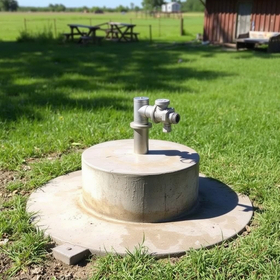
  • Residual chlorine meter
  • Disinfectant

Added to bookmarks

Bookmarks list

Bookmark has been removed

Bookmarks list

You can't add any more bookmarks

By registering as a member, you can increase the number of bookmarks you can save and organize them with labels.

Free membership registration

What are general bacteria? Causes of exceeding standards in water quality testing [Basic Knowledge]

What should you suspect if the general bacteria exceed the standard? This will explain the composition and meaning of the numbers, the causes from the perspective of chlorine and well management, and the flow of re-testing and disinfection.

General bacteria are one of the items defined in the water quality standards for tap water. It refers to the number of bacteria that form colonies when cultured using a specified method. The standard is "the number of colonies formed in 1 mL of the sample should be 100 or less." This is not the name of a specific bacterium, but rather a value that counts the bacteria that have grown under the specified conditions. ■ How is it counted? 1 mL of the sample is mixed with standard agar medium and solidified, then cultured in an incubator maintained at 35-37°C for 22-26 hours. After that, the number of colonies formed is counted. This procedure is the testing method defined by national regulations. ■ Are all bacteria in the water counted? Not all of them. General bacteria, due to these culturing conditions, only detect a portion of heterotrophic bacteria that grow by utilizing organic matter. Heterotrophic bacteria are diverse bacteria that require organic matter for growth. ■ Why are they cultured at a temperature close to body temperature? Bacteria found in feces and sewage grow rapidly around 36°C, while many environmental bacteria have a tendency to grow poorly. Therefore, in areas contaminated with feces, the number of general bacteria increases. Please feel free to consult us first.

  • Water quality testing
  • Simple water quality test
  • Other water quality analysis

Added to bookmarks

Bookmarks list

Bookmark has been removed

Bookmarks list

You can't add any more bookmarks

By registering as a member, you can increase the number of bookmarks you can save and organize them with labels.

Free membership registration

What are the methods for treating wastewater? Sewage systems and septic tanks [Basic knowledge]

Water from kitchens and toilets is treated by either the sewer system, agricultural community drainage, or septic tanks. This explains the differences in methods and the reasons for regional variations.

Domestic wastewater is the wastewater generated from daily activities such as cooking, bathing, laundry, and toilet use. In Japan, it is primarily treated through sewer systems, agricultural community drainage facilities, or septic tanks. The percentage of the population that can be treated by these facilities is referred to as the sewage treatment population coverage rate. ■ What are the proportions of each method? As of the end of fiscal year 2025, the sewage treatment population coverage rate is 94.0%. The proportions of the treated population are as follows: 1. Sewer systems: 82.2% 2. Septic tanks: 9.5% 3. Agricultural community drainage facilities, etc.: 2.2% 4. Community plants: 0.1% Approximately 7.4 million people still do not have access to sewage treatment facilities. Even though the coverage rate is high, it does not reach everyone. ■ Are smaller municipalities lower? The coverage rate for municipalities with a population of less than 50,000 is 85.1%, which is below the national average. ■ Collecting or treating on-site? Sewer systems and agricultural community drainage collect wastewater through pipes and treat it in one location, which is a centralized treatment method. On the other hand, septic tanks treat wastewater individually for each building, representing a decentralized wastewater treatment technology. Please feel free to consult with us first.

  • Wastewater treatment equipment, technology and maintenance
  • Wastewater/wastewater treatment equipment
  • Water quality testing

Added to bookmarks

Bookmarks list

Bookmark has been removed

Bookmarks list

You can't add any more bookmarks

By registering as a member, you can increase the number of bookmarks you can save and organize them with labels.

Free membership registration

What is ultrapure water? The difference from pure water and the meaning of 18.2 [Basic Knowledge]

18.2 MΩ·cm is the upper limit determined by water itself at 25°C. Ultrapure water is managed not only by specific resistance but also by multiple indicators such as organic substances and fine particles.

Ultra-pure water is water that has further reduced impurities from pure water, not only ions but also organic substances, fine particles, and even living bacteria. Depending on the application, it can also have low levels of dissolved oxygen. It is used for washing substrates in semiconductor manufacturing, equipment analysis in laboratories, and cell culture, among other uses. ■ What is the difference from pure water? The quality of pure water is primarily described by its resistivity (the inverse of electrical conductivity), which indicates the low presence of ions. In ultra-pure water, in addition to this, limits are set for indicators other than ions, such as TOC (total organic carbon) and the number of fine particles. The difference lies not only in the higher numbers but also in the number of indicators being measured. ■ Where does the number 18.2 come from? Water molecules slightly dissociate into hydrogen ions and hydroxide ions. Even after removing all impurities, these ions carry electricity, so the electrical conductivity does not reach zero. The theoretical value at 25°C is about 0.055μS/cm, and taking the inverse gives a resistivity of about 18.2MΩ·cm. ■ There is a ceiling to resistivity In other words, resistivity does not exceed the upper limit determined by the water itself, no matter how much it is purified at 25°C. Please feel free to consult with us.

  • Pure water production equipment
  • Tabletop pure water production equipment
  • Water treatment equipment and technology

Added to bookmarks

Bookmarks list

Bookmark has been removed

Bookmarks list

You can't add any more bookmarks

By registering as a member, you can increase the number of bookmarks you can save and organize them with labels.

Free membership registration

What is a water quality test for drinking water? Required tests by water source [Basic Knowledge]

Whether it is directly connected to the water supply, a water storage tank, or a well. The inspection of drinking water at the business location varies in frequency and regulations depending on the water source and the building.

When inspecting drinking water at a business facility, the first thing to confirm is "where the water comes from and what equipment it passes through to reach the faucet." Even for the same tap water, the inspection rules set by the installer vary depending on the size of the water tank and the purpose of the building. ■ Who inspects if it's directly connected to the water supply? In cases where the water supply is directly connected from the water pipe to the faucet without passing through a water tank, the water supply operator conducts regular inspections to comply with water quality standards based on the Water Supply Act. ■ Is there a capacity threshold for water tanks? 1. If the effective capacity of the tank exceeds a total of 10 cubic meters: classified as a simple dedicated water supply, requiring inspections at least once a year by a registered organization. 2. If it's 10 cubic meters or less: referred to as a small-scale water storage supply and is not subject to the Water Supply Act. ■ Regulations for 10 cubic meters or less are set by local governments. Even if it is not subject to the Water Supply Act, there are cases where local governments have established their own regulations. Some municipalities require annual inspections of the tank cleaning and the water's color, odor, taste, turbidity, and residual chlorine. There are also municipalities that mandate sanitary measures for tanks exceeding an effective capacity of 5 cubic meters through local ordinances. Please feel free to consult us first.

  • Water quality testing
  • Simple water quality test
  • Residual chlorine meter

Added to bookmarks

Bookmarks list

Bookmark has been removed

Bookmarks list

You can't add any more bookmarks

By registering as a member, you can increase the number of bookmarks you can save and organize them with labels.

Free membership registration

What happens when you ask the health department to test well water? Costs and process [Basic knowledge]

Can I request a water quality test for well water from the health department? This will explain how to check if they accept requests, how to receive the container, how to bring it in, and how to find out the costs.

Whether you can request a water quality test for well water from the health department varies by region. The "Guidelines for Sanitary Measures for Drinking Wells" indicated by the government stipulates that sanitary measures for drinking wells are to be conducted by prefectures, cities, and special wards, with the health department being responsible. The health department is one of the accessible points of contact. Additionally, there are regions where the testing is not conducted by the health department but rather by municipal research institutes or testing laboratories. ■ Can any health department conduct tests? While there are regions where health departments accept well water testing, some health departments do not conduct the tests themselves. In such cases, they may provide information on registered water quality testing organizations based on the Water Supply Act or on drinking water quality testing businesses based on the Building Sanitation Act. Even within the same prefecture, the reception days may differ from one health department to another. ■ Can I consult with health departments that do not conduct tests? Even in regions where testing is not conducted, there are instances where consultations regarding the sanitation of drinking wells are accepted at health departments. Furthermore, these guidelines state that prefectures should establish and disseminate desirable items for regular testing based on local test results. Please feel free to consult with us first.

  • Water quality testing
  • Simple water quality test
  • Other water quality analysis

Added to bookmarks

Bookmarks list

Bookmark has been removed

Bookmarks list

You can't add any more bookmarks

By registering as a member, you can increase the number of bookmarks you can save and organize them with labels.

Free membership registration

What is the water quality testing of tap water? Inspection under Article 20 of the Water Supply Act [Basic Knowledge]

Who tests tap water, where, and how often? This explains the inspections under Article 20 of the Water Supply Act and how to check the water from the faucet.

Water quality testing of tap water refers to the inspections conducted by water service providers based on Article 20 of the Water Supply Act. Regular and emergency tests are mandated to determine whether tap water meets water quality standards. Regular tests are conducted to continuously monitor water quality and check for any abnormalities. Emergency tests are carried out when there are anomalies in the water source, indicating a potential failure to meet standards. ■ Is water only taken from water purification plants? The water used for testing is generally taken from the water supply faucet (tap). This approach checks the water that has reached the end point after passing through distribution pipes. For certain items where it is clear that concentrations do not increase during transmission or distribution, sampling at the outlet of the purification facility is also permitted. ■ What is checked in daily tests? Color, turbidity, and the residual effect of disinfection are tested more than once a day. These are items that verify daily whether there are abnormalities in color or turbidity and whether the disinfection effect is maintained until the end point. Additionally, the regulations require that free residual chlorine be maintained at 0.1 mg/L (or 0.4 mg/L for combined residual chlorine) in tap water through chlorination. Please feel free to consult us first.

  • Water quality testing
  • Simple water quality test
  • Other water quality analysis

Added to bookmarks

Bookmarks list

Bookmark has been removed

Bookmarks list

You can't add any more bookmarks

By registering as a member, you can increase the number of bookmarks you can save and organize them with labels.

Free membership registration

What is pure water? Guidelines for purity and the concept of grades [Basic Knowledge]

How is the purity of water referred to as pure water determined? This explains the guidelines for electrical conductivity and how to interpret the grades A1 to A4 defined by JIS K 0557.

Pure water is water that has had impurities, such as ions found in tap water, removed through methods like distillation, ion exchange, and reverse osmosis. However, due to its wide range of applications, the required water quality is set according to its intended use. There are different standards for various fields, such as for analytical purposes and pharmaceuticals. ■ How is purity expressed? The purity of pure water is generally expressed in terms of electrical conductivity or its reciprocal, resistivity (specific resistance). The fewer ions remain in the water, the less current can flow. Electrical conductivity is a continuous indicator of the remaining ions observed at the outlet of the device. ■ What standards are used to determine specifications? The specifications for pure water not only include electrical conductivity but also set upper limits for items such as TOC (Total Organic Carbon). There are standards that classify the grades of pure water based on the differences in upper limits for each item. One such standard is JIS K 0557, which is introduced below. ■ Standards are not limited to domestic use There are also international standards for reagent water, such as ASTM D1193 from the United States. Additionally, there are separate standards established by CLSI for water used in clinical testing. Please feel free to consult us first.

  • Pure water production equipment
  • Water treatment equipment and technology
  • Water treatment filters and consumables

Added to bookmarks

Bookmarks list

Bookmark has been removed

Bookmarks list

You can't add any more bookmarks

By registering as a member, you can increase the number of bookmarks you can save and organize them with labels.

Free membership registration
Prev 12345...8 Next
  • 部品の残数管理、トレーサビリティを効率化! 検証キット(プリンター×周辺機器)無料貸出中 手作業の裁断・記入から脱却!システム改修なしでスマートに
  • UL Solutions セミナー 全15講座 データセンター・AI 自動車・サステナビリティ 他 最新規制対応 解説
    • Contact this company

      Inquiry Form
    • Before making an inquiry

      Download Profile

    Products

    • Search for Products

    Company

    • Search for Companies

    Special Features

    • Special Features

    Ranking

    • Overall Products Ranking
    • Overall Company Ranking

    support

    • site map
    IPROS
    • privacy policy Regarding external transmission of information
    • terms of service
    • About Us
    • Careers
    • Advertising
    IPROS Services
    • >IPROS GMS | Search site for the manufacturing industry
    • >IPROS | Search site for the B2B industry
    COPYRIGHT © 2001-2026 IPROS CORPORATION ALL RIGHTS RESERVED.
    Please note that the English text on this page is automatically translated and may contain inaccuracies.