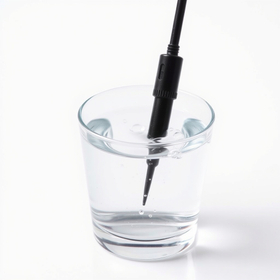
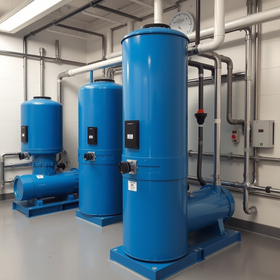
Water from kitchens and toilets is treated by either the sewer system, agricultural community drainage, or septic tanks. This explains the differences in methods and the reasons for regional variations.
Domestic wastewater is the wastewater generated from daily activities such as cooking, bathing, laundry, and toilet use. In Japan, it is primarily treated through sewer systems, agricultural community drainage facilities, or septic tanks. The percentage of the population that can be treated by these facilities is referred to as the sewage treatment population coverage rate. ■ What are the proportions of each method? As of the end of fiscal year 2025, the sewage treatment population coverage rate is 94.0%. The proportions of the treated population are as follows: 1. Sewer systems: 82.2% 2. Septic tanks: 9.5% 3. Agricultural community drainage facilities, etc.: 2.2% 4. Community plants: 0.1% Approximately 7.4 million people still do not have access to sewage treatment facilities. Even though the coverage rate is high, it does not reach everyone. ■ Are smaller municipalities lower? The coverage rate for municipalities with a population of less than 50,000 is 85.1%, which is below the national average. ■ Collecting or treating on-site? Sewer systems and agricultural community drainage collect wastewater through pipes and treat it in one location, which is a centralized treatment method. On the other hand, septic tanks treat wastewater individually for each building, representing a decentralized wastewater treatment technology. Please feel free to consult with us first.
Inquire About This Product
basic information
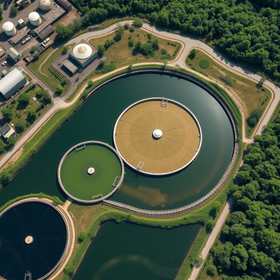
■What is done at a wastewater treatment plant? 1. Sedimentation tank: Settles large debris and sand. 2. Primary sedimentation tank: Settles small debris and sand. 3. Reaction tank: Adds activated sludge and supplies air to decompose pollutants. 4. Final sedimentation tank: Settles activated sludge to separate it from water. 5. Disinfection: Disinfects before discharging into rivers or the sea. The decomposition of pollutants in the reaction tank is carried out by various microorganisms contained in the activated sludge. ■Septic tanks have both anaerobic and aerobic stages! In a typical structure, the treatment proceeds in the following order: 1. Anaerobic filter tank: Separates solids and accumulates sludge, where anaerobic microorganisms decompose pollutants. 2. Aeration tank: Receives air from a blower, where aerobic microorganisms decompose pollutants and oxidize ammonia. 3. Sedimentation tank: Settles suspended solids. 4. Disinfection tank: Disinfects with chlorine before discharge. This system sequentially utilizes anaerobic and aerobic microorganisms to reduce pollutants. ■Role of agricultural community wastewater Agricultural community wastewater treatment is a small-scale decentralized treatment suited to the form of agricultural communities. It targets areas within agricultural promotion regions where collective treatment at the community level is efficient. The reuse of treated water for agricultural purposes and the return of sludge to farmland are also being promoted.
Price range
Delivery Time
Applications/Examples of results
■What determines the method? When comparing the total construction and maintenance costs, centralized treatment is more advantageous in areas with high population density, while individual treatment is more favorable in sparsely populated areas. Based on this, the prefectural plans are established, categorizing areas such as urban centers with sewer systems, rural villages with agricultural community drainage, and scattered houses with septic tanks. The basic numerical values used for comparison are standardized by three ministries and notified to local governments. ■Pit toilets must be converted to flush toilets within three years! According to the Sewerage Act, owners of buildings with pit toilets within the treatment area are obligated to convert them to flush toilets connected to the public sewer system within three years from the start date of sewage treatment. ■Are septic tanks resilient to disasters? Septic tanks are characterized by their ability to operate individually without the need for long pipelines, making them resilient to disasters such as earthquakes. ■In areas using septic tanks Under the Septic Tank Law, except for cases where sewage is treated by sewer systems, human waste cannot be discharged unless it has been treated by a septic tank. The same applies to wastewater generated by users of septic tanks. Our company offers consultations regarding the selection of chemicals used in septic tanks and wastewater treatment facilities. Please feel free to reach out to us for inquiries.
catalog(2)
Download All Catalogs

Company information

Since our founding, we have continued to provide flexible services with the motto of accurately supplying a diverse range of products that respond to changes in the times and the diversification of consumer needs, tailored to various applications and requirements. With the corporate slogan "Chemical Engineering Partner," we, as a group of experts in chemical technology, actively discover ideas to solve our customers' problems from advanced technologies both domestically and internationally, and propose them.